Accident And Injury Clinic In Collin
Description

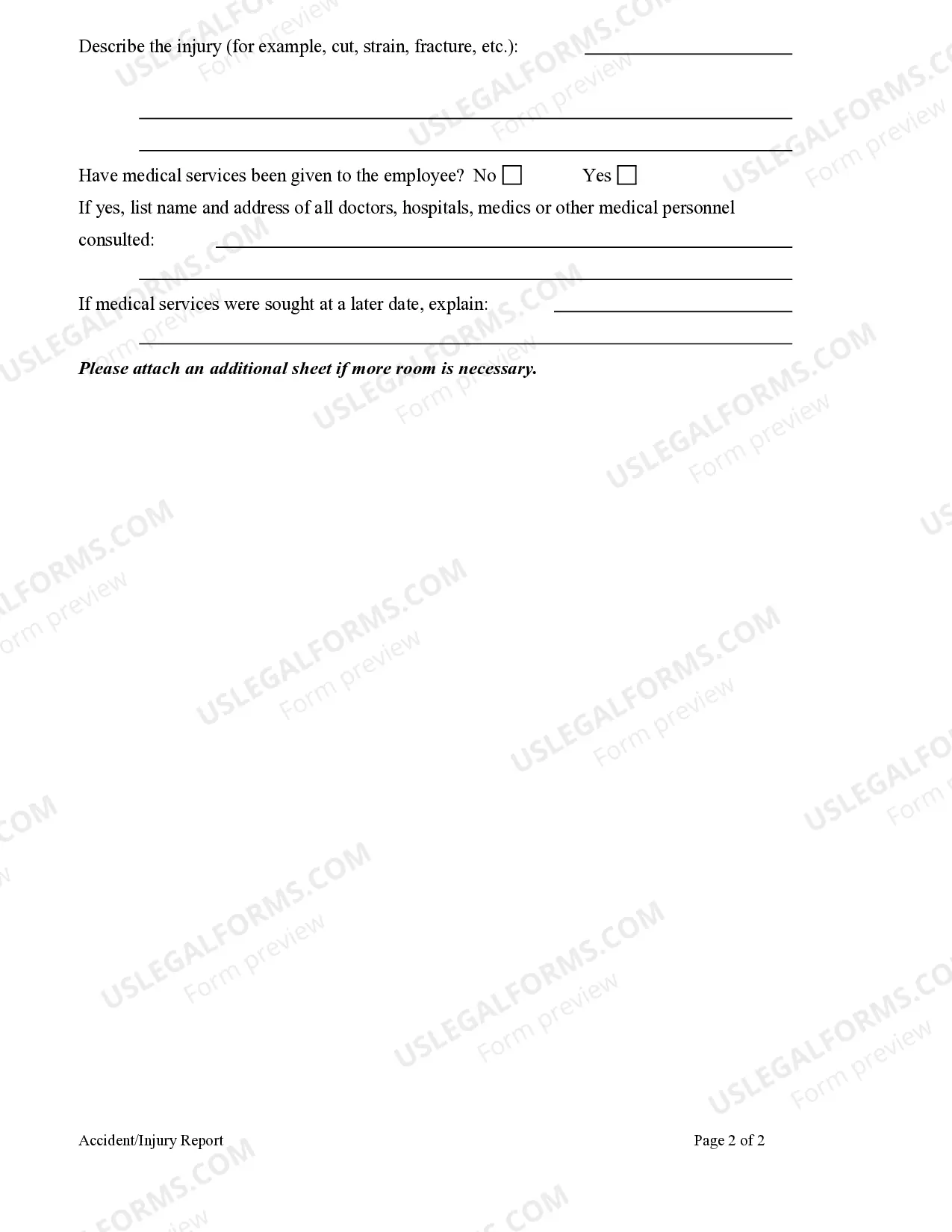
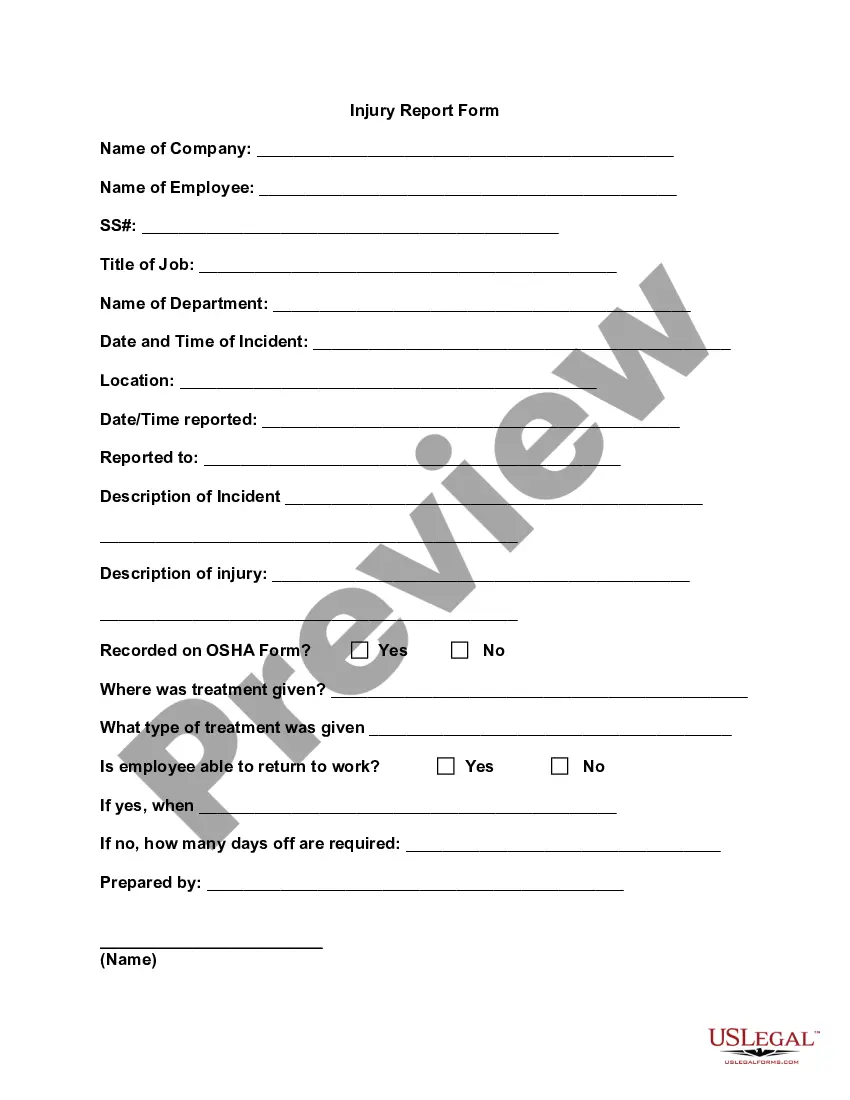
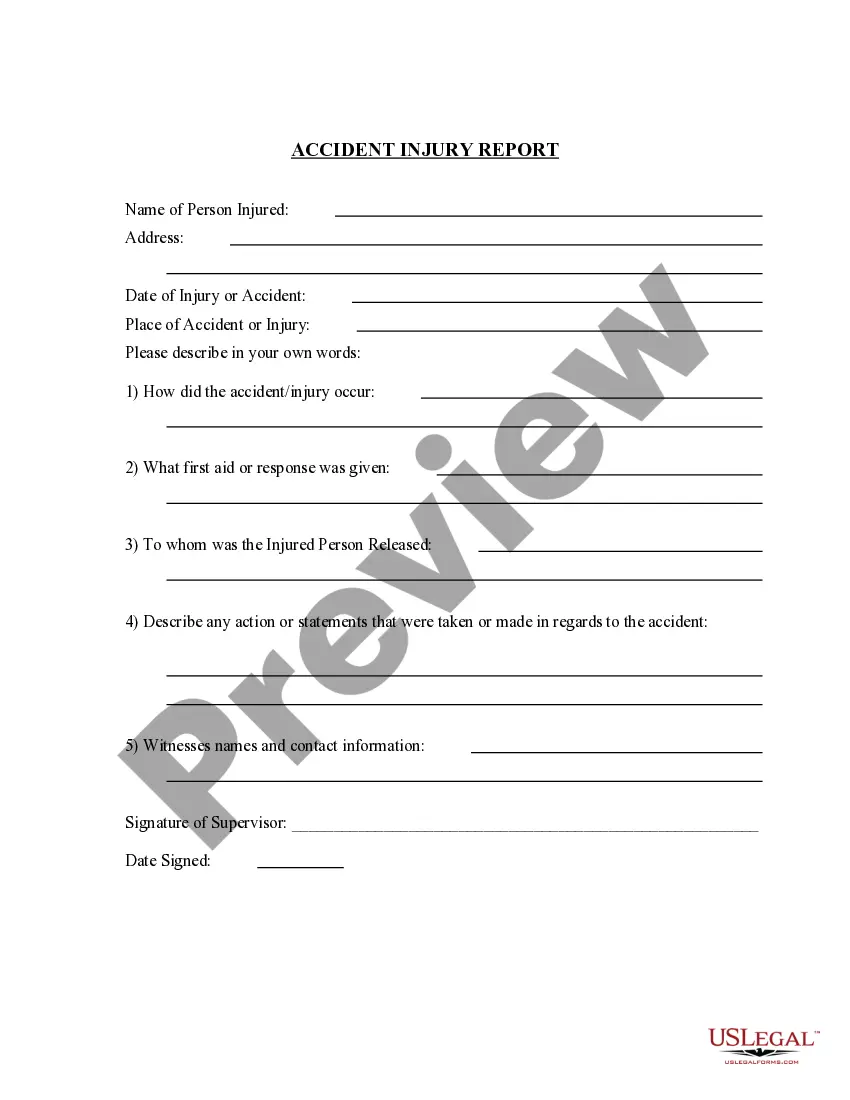
Get your form ready online
Our built-in tools help you complete, sign, share, and store your documents in one place.
Make edits, fill in missing information, and update formatting in US Legal Forms—just like you would in MS Word.
Download a copy, print it, send it by email, or mail it via USPS—whatever works best for your next step.
Sign and collect signatures with our SignNow integration. Send to multiple recipients, set reminders, and more. Go Premium to unlock E-Sign.
If this form requires notarization, complete it online through a secure video call—no need to meet a notary in person or wait for an appointment.
We protect your documents and personal data by following strict security and privacy standards.

Make edits, fill in missing information, and update formatting in US Legal Forms—just like you would in MS Word.

Download a copy, print it, send it by email, or mail it via USPS—whatever works best for your next step.

Sign and collect signatures with our SignNow integration. Send to multiple recipients, set reminders, and more. Go Premium to unlock E-Sign.

If this form requires notarization, complete it online through a secure video call—no need to meet a notary in person or wait for an appointment.

We protect your documents and personal data by following strict security and privacy standards.
Looking for another form?




Form popularity
FAQ
There are five key details of accidents legally required: Full name, address and occupation of the injured person (a) Date and time of the accident (b) Location of the accident (c) Cause and nature of the injury (d) Name, address and occupation of the person giving the notice, if other than the injured person (e).
To make a pain and suffering claim, you will need to send the insurance company a demand letter, which is a summary of your claim and damages. In your demand letter, you should discuss your pain and suffering damages, supported by relevant documents, recorded statements, and evidence.
Stick to the Facts Focus on the facts without adding opinions or assumptions. Describe what happened during the accident clearly and avoid discussing fault or other details. Never guess or estimate. If you don't know the answer to a question, admit that you don't know and move on.
What Should I Include In An Accident Report? Date, time, and location . Parties involved, including insurance information. Injuries and damages. Witness statements and contact information. Sequence of events – describe what happened. Photographs and sketches.
What to include in a work incident report The date and time of the incident. The name of the witness or author of the report. A detailed description of the events. The names of the affected parties. Other witness statements or important information. The result of the incident.
There are five key details of accidents legally required: Full name, address and occupation of the injured person (a) Date and time of the accident (b) Location of the accident (c) Cause and nature of the injury (d) Name, address and occupation of the person giving the notice, if other than the injured person (e).
Here are some details you'll want to include when writing a report for the car accident you were involved in: The Other Driver's Identity. The Time and Location of the Collision. Vehicle Information. Insurance Details. Eye-Witness Information. An Explanation of How the Collision Occurred. Seek Medical Attention.
You should wait 72 hours (3 days) after ANY injury before getting a massage. Otherwise you risk inflamming the tissue more. Make sure to tell the therapist that you were in an accident and how long it's been. Acute stages of healing can still be treated but they need to follow protocol and be very gentle.
People commonly visit the chiropractor three to five times per week immediately after auto injury. The car accident chiropractor tapers the visits to once or twice per week as your pain starts to subside. Follow up visits will continue until the complete absolution of symptoms.
We recommend you see a chiropractor after an auto accident for long-term relief. Chiropractors can ease tension headaches using spinal adjustments, soft tissue therapy, and therapeutic exercises. These treatment options address muscle tightness and spinal misalignment, which are the causes of tension headaches.
