Annual Meeting Requirements For Corporation In Wayne
Description



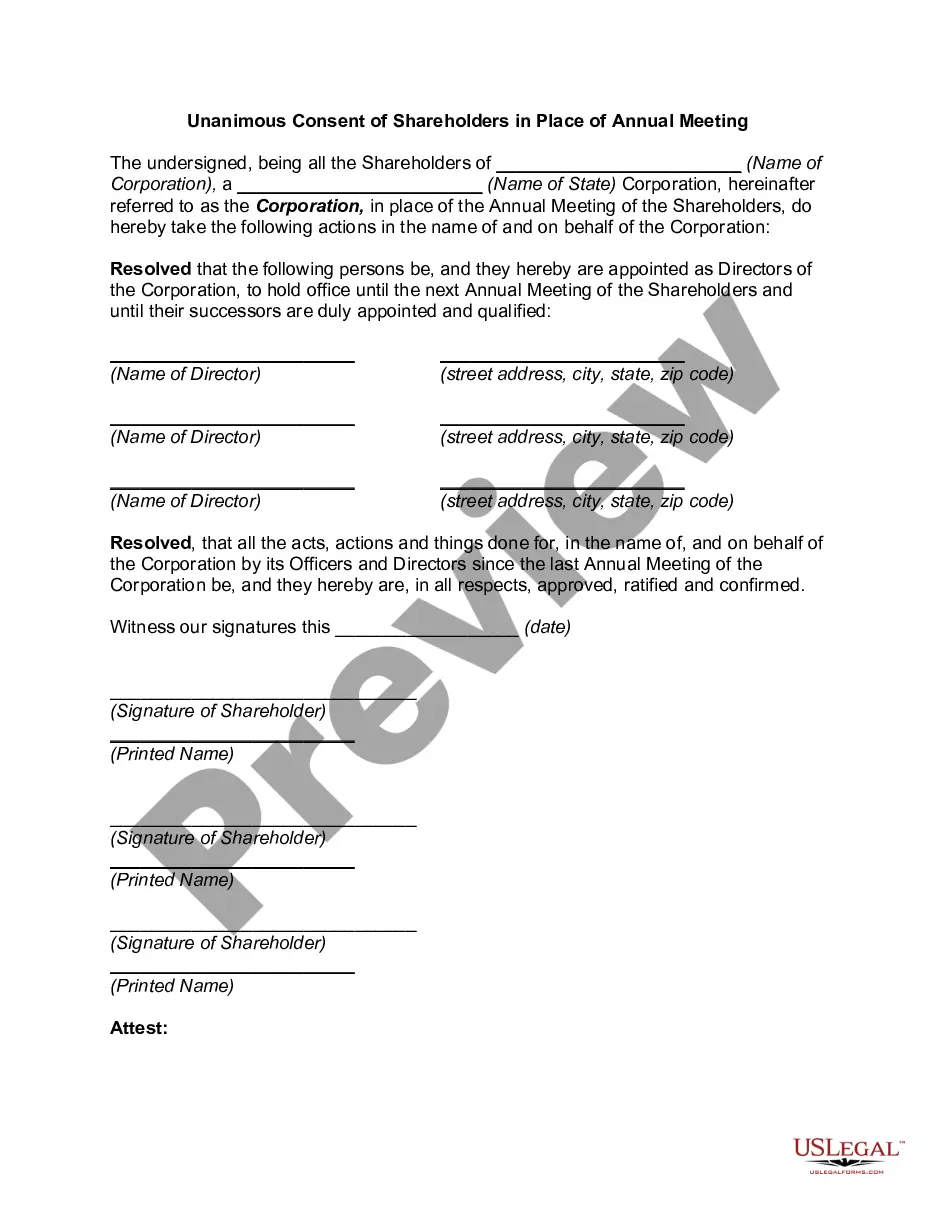
Get your form ready online
Our built-in tools help you complete, sign, share, and store your documents in one place.
Make edits, fill in missing information, and update formatting in US Legal Forms—just like you would in MS Word.
Download a copy, print it, send it by email, or mail it via USPS—whatever works best for your next step.
Sign and collect signatures with our SignNow integration. Send to multiple recipients, set reminders, and more. Go Premium to unlock E-Sign.
If this form requires notarization, complete it online through a secure video call—no need to meet a notary in person or wait for an appointment.
We protect your documents and personal data by following strict security and privacy standards.

Make edits, fill in missing information, and update formatting in US Legal Forms—just like you would in MS Word.

Download a copy, print it, send it by email, or mail it via USPS—whatever works best for your next step.

Sign and collect signatures with our SignNow integration. Send to multiple recipients, set reminders, and more. Go Premium to unlock E-Sign.

If this form requires notarization, complete it online through a secure video call—no need to meet a notary in person or wait for an appointment.

We protect your documents and personal data by following strict security and privacy standards.
Looking for another form?









Form popularity
FAQ
If your business is set up and registered as a Corporation, you're required by law to hold an annual shareholder meeting and to document the meeting with minutes.
While both the directors and the shareholders can meet more often, based on the notice provisions of the Bylaws of the Corporation, the annual meetings of both Directors and Shareholders is a minimum requirement.
When should I hold a shareholder meeting? An annual shareholder meeting is typically scheduled just after the end of the fiscal year. This allows for the previous year's financial performance to be fully assessed and discussed.
AGMs are mandatory for both public and private companies. All shareholders are legally obligated to receive an invitation to these meetings. The board of directors should also be represented. An auditor may also be present if the organization is subject to an audit requirement.
The annual shareholder and director meetings are typically held after the end of the corporation's fiscal year, with more details such as time and location dictated by the corporation's bylaws. Often, the shareholders meeting and directors meeting are held back-to-back.
Annual shareholder meetings require a notice period of at least 21 days. The notice period can be shortened with the expressed consent of all shareholders. The notice should include all the basic meeting details and other important pieces of documentation, such as the meeting agenda.
Both California Corporations and California S-Corps are required to hold an annual meeting for shareholders. These meetings are pivotal for fostering transparency, discussing business strategy, and making essential corporate decisions.
Does My Company Have to Have a Stockholder Meeting Every Year? A stockholder meeting should be held annually to elect directors and to transact any other proper business. DGCL §211(b).
Generally speaking, annual meetings are a formal discussion of a company's goals, strategy, financial situation, proposed changes to governance documents, or other pending decisions that require a vote by or approval of the business's owners.
Report on specific dialogue or personal opinions of what was said at the meeting. While some HOA Boards may be tempted to record this information in an effort to be transparent, this is a big no-no. This will also help to keep the length of minutes down. Include homeowner forum topics and discussion in the minutes.

