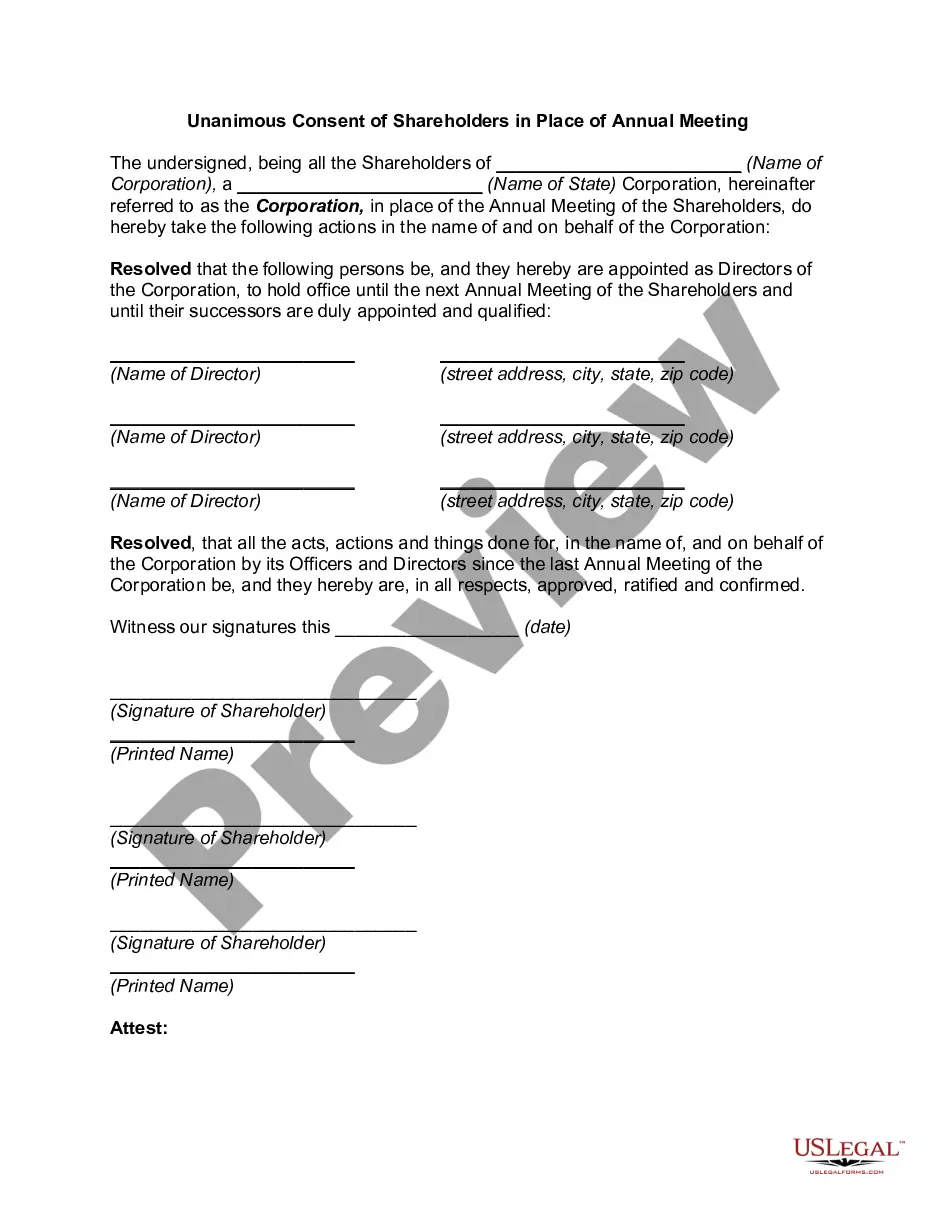
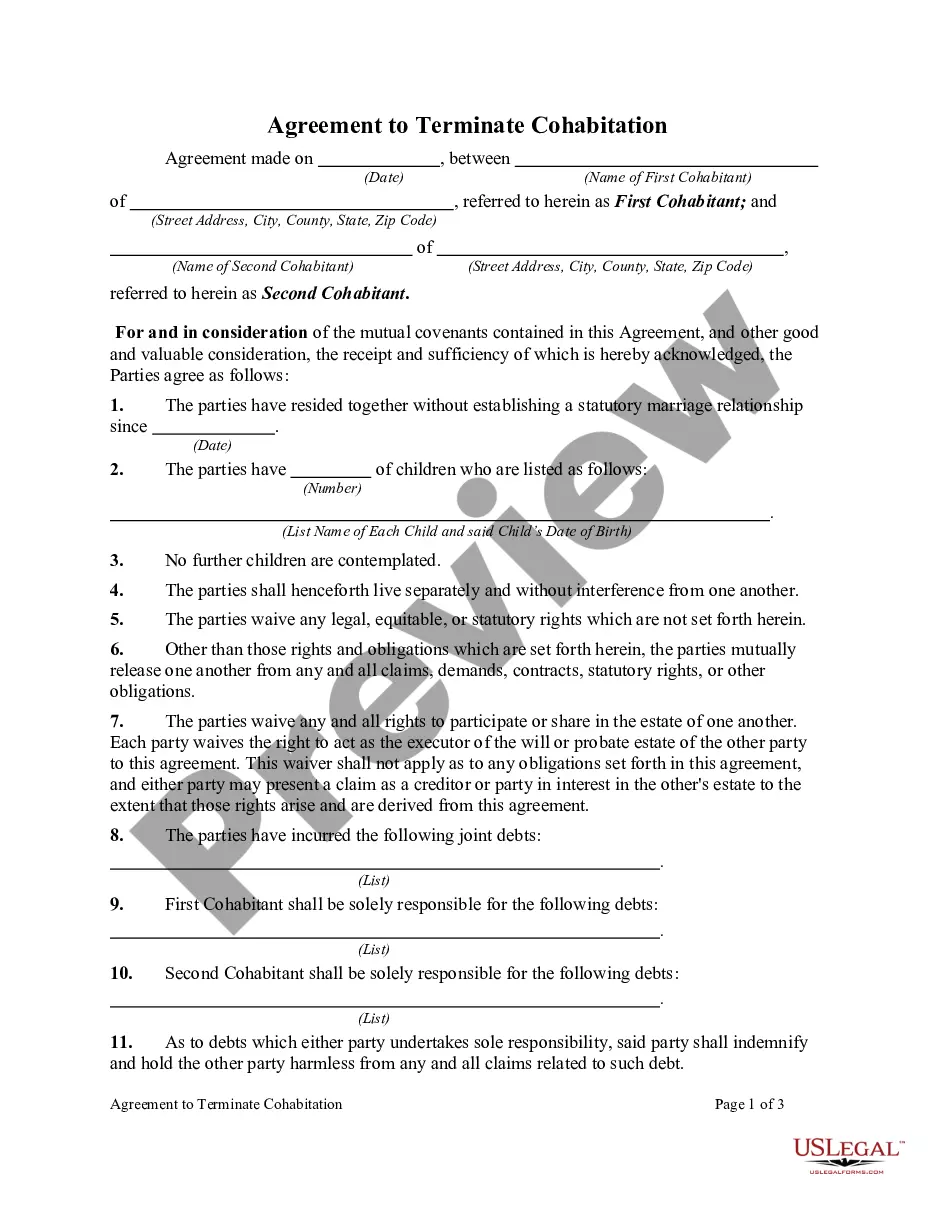
Annual Meeting Resolutions With Example In Orange
Description



Get your form ready online
Our built-in tools help you complete, sign, share, and store your documents in one place.
Make edits, fill in missing information, and update formatting in US Legal Forms—just like you would in MS Word.
Download a copy, print it, send it by email, or mail it via USPS—whatever works best for your next step.
Sign and collect signatures with our SignNow integration. Send to multiple recipients, set reminders, and more. Go Premium to unlock E-Sign.
If this form requires notarization, complete it online through a secure video call—no need to meet a notary in person or wait for an appointment.
We protect your documents and personal data by following strict security and privacy standards.

Make edits, fill in missing information, and update formatting in US Legal Forms—just like you would in MS Word.

Download a copy, print it, send it by email, or mail it via USPS—whatever works best for your next step.

Sign and collect signatures with our SignNow integration. Send to multiple recipients, set reminders, and more. Go Premium to unlock E-Sign.

If this form requires notarization, complete it online through a secure video call—no need to meet a notary in person or wait for an appointment.

We protect your documents and personal data by following strict security and privacy standards.
Looking for another form?









Form popularity
FAQ
An example of an AGM is the annual meeting of shareholders of a publicly traded company. At the AGM, shareholders are provided with financial statements, elect board members, and vote on important issues such as mergers and acquisitions.
A resolution in lieu of a meeting is a written resolution (signed by all shareholders who are entitled to vote at the meeting) that deals with all matters that need to be addressed at a shareholders' meeting. This resolution is just as valid as it would be if passed at a meeting of shareholders.
ORANGE SA (0OQV) Ownership Overview The ownership structure of ORANGE SA (GB:0OQV) stock is a mix of institutional, retail, and individual investors. Approximately 26.68% of the company's stock is owned by Institutional Investors, and 73.32% is owned by Public Companies and Individual Investors.
An ordinary resolution is the most common resolution at a general meeting and serves as the backbone for decisions in a scheme. An ordinary resolution is carried by a majority vote – if there are more yes votes than there are no votes, then the motion is carried.
Currently 95% of the OCP Group is owned by the Moroccan state and 5% by Banque Centrale Populaire investment funds.
Shareholders. The major shareholders of Orange as of 31 December 2015 are the state of France through Agence des participations de l'État and Banque publique d'investissement (replacing Fonds stratégique d'investissement) for 23.04%. As of mid-2013, Orange employees owned 4.81%, and the company itself owned 0.58%.
Shareholders: Harvey Norman Holdings Limited NameEquities% Gerald Harvey 38.01 % 473,624,226 38.01 % Estate Of Ian John Norman 16.49 % 205,525,565 16.49 % Margaret Lynette Harvey 4.702 % 58,592,289 4.702 % Kay Page 1.638 % 20,405,315 1.638 %1 more row
An AGM may be waived in some jurisdictions, only if a written resolution is passed. The resolution must be unanimously approved and signed by all members. Shareholders must be notified, and the financial statements need to be accepted.
Resolutions are typically proposed and passed during formal meetings such as the Annual General Meeting (AGM). However, companies also have the option to pass resolutions in writing. Written resolutions are typically used when directors and shareholders are unable to meet in person for any reason.
Resolutions can be passed by directors without holding a directors' meeting. These are called circulating resolutions. Check the rule book to see how this can be done. All directors entitled to vote on the resolution must sign a statement that says they are in favour of the resolution set out in the document.

