Annual Meeting Resolutions With Example In New York
Description



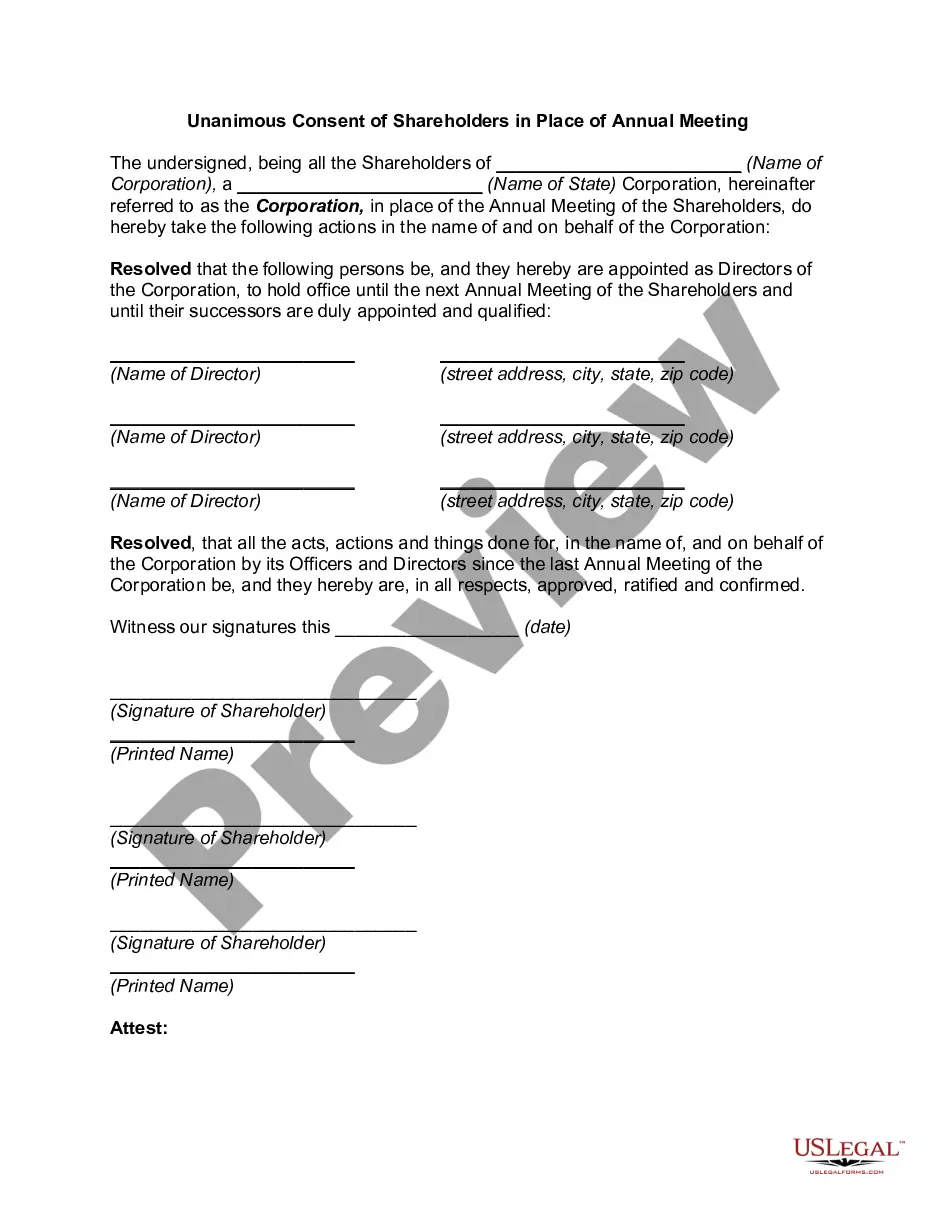
Get your form ready online
Our built-in tools help you complete, sign, share, and store your documents in one place.
Make edits, fill in missing information, and update formatting in US Legal Forms—just like you would in MS Word.
Download a copy, print it, send it by email, or mail it via USPS—whatever works best for your next step.
Sign and collect signatures with our SignNow integration. Send to multiple recipients, set reminders, and more. Go Premium to unlock E-Sign.
If this form requires notarization, complete it online through a secure video call—no need to meet a notary in person or wait for an appointment.
We protect your documents and personal data by following strict security and privacy standards.

Make edits, fill in missing information, and update formatting in US Legal Forms—just like you would in MS Word.

Download a copy, print it, send it by email, or mail it via USPS—whatever works best for your next step.

Sign and collect signatures with our SignNow integration. Send to multiple recipients, set reminders, and more. Go Premium to unlock E-Sign.

If this form requires notarization, complete it online through a secure video call—no need to meet a notary in person or wait for an appointment.

We protect your documents and personal data by following strict security and privacy standards.
Looking for another form?
Form popularity
FAQ
These types of shareholder decisions require shareholder resolutions, which can be passed at a general meeting or in writing. To pass a company resolution, which may be 'ordinary' or 'special', shareholders must cast their votes in favour of a proposed course of action.
Shareholders in a publicly traded company are entitled to introduce shareholder resolutions, or proposals, to the company management to be voted on in the next annual meeting. These resolutions may pertain to company policies and procedures, corporate governance or issues of social or environmental concern.
The body of a resolution is written as a long sentence, and starts with the name of the committee, followed by a comma. The remainder of the body of a resolution is divided into two parts: preambulatory clauses and operative clauses.
By having all of the shareholders record and sign their decision. If a meeting is held, an ordinary resolution must be passed by a majority of the votes cast by shareholders of the company entitled to vote on the resolution at the meeting in person or by proxy (if proxies are allowed).
An ordinary resolution passes if shareholders holding a simple majority (ie more than 50%) of the company's total voting rights approve the resolution (ie vote in its favour) a special resolution passes if shareholders holding at least 75% of the company's total voting rights approve the resolution.
You may, if you want, pass special resolutions - changes to the constitution, say, or anything else that isn't ordinary business.
The votes cast in favour of the resolution must exceed the votes cast against it. In other words, a simple majority in favour of the motion shall allow the resolution to be passed. Notice of the meeting must have been served to all the members in advance, complying with the provisions of the Companies Act, 2013.
Members must approve a resolution to accept the report. This resolution can be very simple, for example: “Be it resolved that the annual report of THE CO-OP be accepted as presented.”
Guidelines for Valid Corporate Resolutions. The certification must bear an original signature by an officer of the corporation, (preferably the secretary), and this signature must be someone other than the person who signed the RFP, RFQ, RFI, etc.
The resolution then becomes part of the company's record and is legally binding. For this reason, boards should document meeting resolutions in their meeting minutes and store them in their board portal.
