Meeting Resolution Example In Minnesota
Description



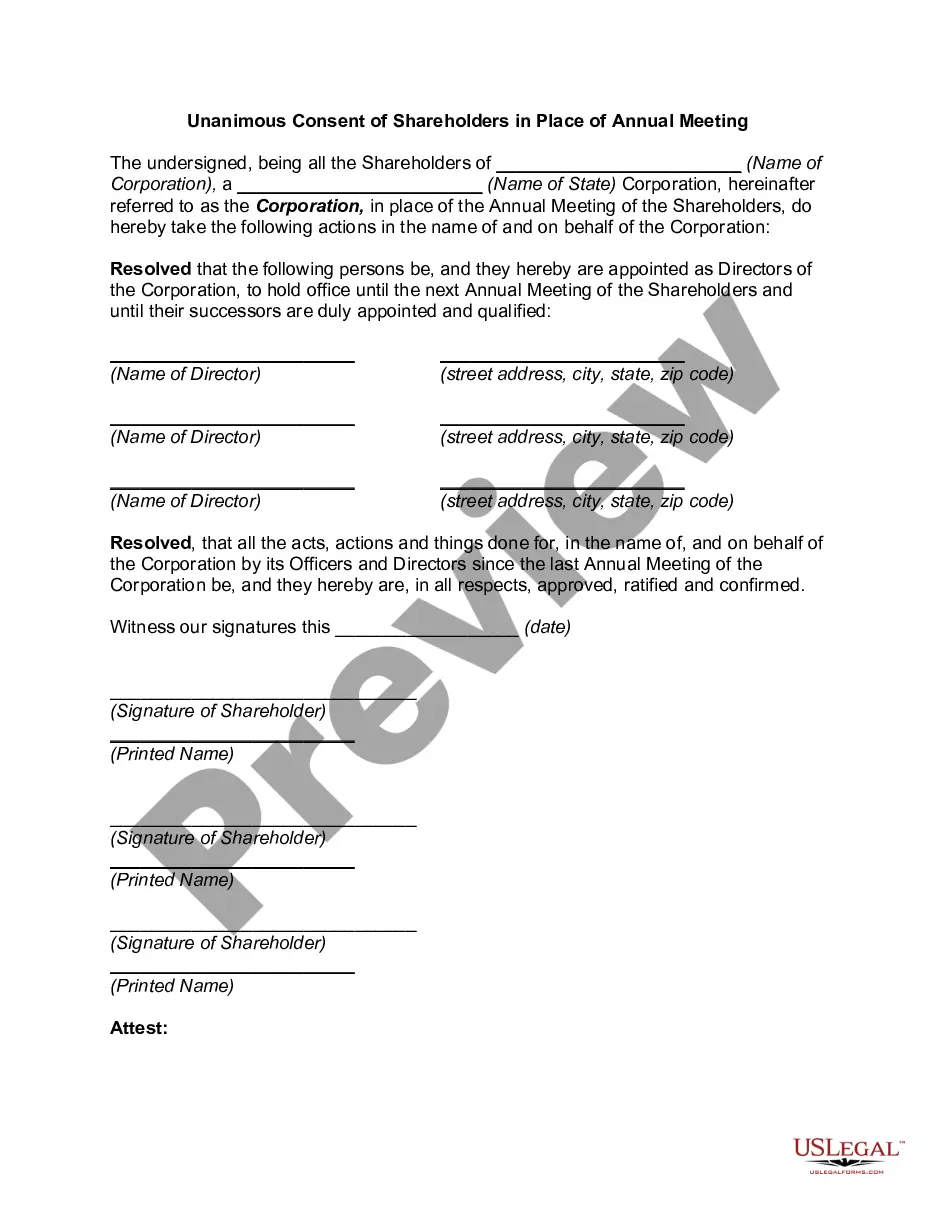
Get your form ready online
Our built-in tools help you complete, sign, share, and store your documents in one place.
Make edits, fill in missing information, and update formatting in US Legal Forms—just like you would in MS Word.
Download a copy, print it, send it by email, or mail it via USPS—whatever works best for your next step.
Sign and collect signatures with our SignNow integration. Send to multiple recipients, set reminders, and more. Go Premium to unlock E-Sign.
If this form requires notarization, complete it online through a secure video call—no need to meet a notary in person or wait for an appointment.
We protect your documents and personal data by following strict security and privacy standards.

Make edits, fill in missing information, and update formatting in US Legal Forms—just like you would in MS Word.

Download a copy, print it, send it by email, or mail it via USPS—whatever works best for your next step.

Sign and collect signatures with our SignNow integration. Send to multiple recipients, set reminders, and more. Go Premium to unlock E-Sign.

If this form requires notarization, complete it online through a secure video call—no need to meet a notary in person or wait for an appointment.

We protect your documents and personal data by following strict security and privacy standards.
Looking for another form?








Form popularity
FAQ
Resolutions have a particular format. Each resolution consists of one long single sentence. It begins with the name of the main organ that is adopting the resolution (e.g., the GA or the SC) and is followed by several preambular paragraphs. Preambular paragraphs are not really paragraphs, but clauses in the sentence.
The preamble almost always begins with “Whereas” followed by a comma. The preamble is followed by the operative clause or clauses. This tells the reader what action the committee should take to solve the problem set up in the preamble. This should be the strongest part of the resolution.
Resolutions begin with "Whereas" statements, which provides the basic facts and reasons for the resolution, and conclude with "Resolved" statements which, identifies the specific proposal for the requestor's course of action.
Exceptions to the law. A meeting may be closed based on a limited attorney-client privilege, and for the purposes of discussing labor negotiations strategy, evaluating employees, and discussing security issues and property transactions.
A resolution has two parts: the heading and the body. The heading is the administrative/organizational portion of a resolution and contains the name of the committee, the topic, and the names of the sponsoring countries, the countries that are signatories, and the committee code.
Many body corporate decisions have to be made at a general meeting. A decision is made at a general meeting if a motion is included on the agenda, and owners vote to pass the motion. This is called a resolution.
A written resolution is a formal decision made by shareholders without the need for a physical meeting. It allows shareholders to vote on company matters by indicating their agreement in writing, typically through signing a document or responding to an email.
7 steps for writing a resolution Put the date and resolution number at the top. Give the resolution a title that relates to the decision. Use formal language. Continue writing out each critical statement. Wrap up the heart of the resolution in the last statement.
How to Write a Board Resolution (Step-by-Step) Capture Board Meeting Date. The date goes at the top of the resolution. Assign Resolution Number. Establish Resolution Title. Document Resolution. Document Board of Director Votes. Leverage Board Meeting Technology.
Resolutions in private limited companies can be passed at a general meeting either by a poll or show of hands. Alternatively, they can be passed by a written resolution, in which the shareholder indicates their agreement in the manner the company requests.

