Meeting Resolution Example In Maryland
Description



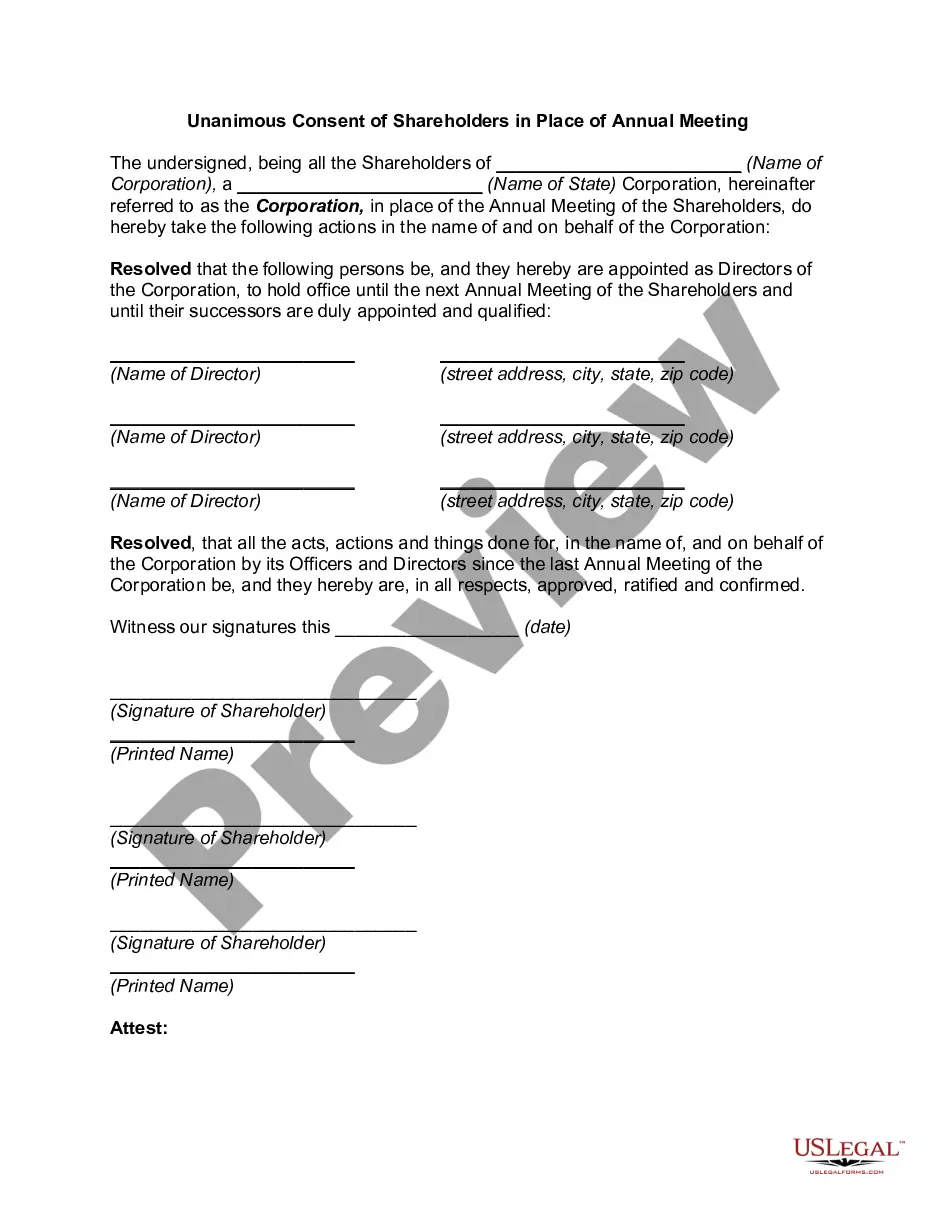
Get your form ready online
Our built-in tools help you complete, sign, share, and store your documents in one place.
Make edits, fill in missing information, and update formatting in US Legal Forms—just like you would in MS Word.
Download a copy, print it, send it by email, or mail it via USPS—whatever works best for your next step.
Sign and collect signatures with our SignNow integration. Send to multiple recipients, set reminders, and more. Go Premium to unlock E-Sign.
If this form requires notarization, complete it online through a secure video call—no need to meet a notary in person or wait for an appointment.
We protect your documents and personal data by following strict security and privacy standards.

Make edits, fill in missing information, and update formatting in US Legal Forms—just like you would in MS Word.

Download a copy, print it, send it by email, or mail it via USPS—whatever works best for your next step.

Sign and collect signatures with our SignNow integration. Send to multiple recipients, set reminders, and more. Go Premium to unlock E-Sign.

If this form requires notarization, complete it online through a secure video call—no need to meet a notary in person or wait for an appointment.

We protect your documents and personal data by following strict security and privacy standards.
Looking for another form?






Form popularity
FAQ
Passing a special resolution at a meeting For a special resolution to pass, at least 75% of the votes cast must be in favour.
A resolution is a legally binding agreement or decision made by company members or directors. The outcome of a resolution is determined by the votes cast for and against the decision. If the required majority is reached, the resolution is 'passed'.
An ordinary resolution passes if shareholders holding a simple majority (ie more than 50%) of the company's total voting rights approve the resolution (ie vote in its favour) a special resolution passes if shareholders holding at least 75% of the company's total voting rights approve the resolution.
7 steps for writing a resolution Put the date and resolution number at the top. Give the resolution a title that relates to the decision. Use formal language. Continue writing out each critical statement. Wrap up the heart of the resolution in the last statement.
A resolution of members (or a class of members) of a company passed by: On a show of hands at a general meeting, a simple majority of members who, being entitled to vote, do so in person or by proxy (section 282(3), Companies Act 2006Opens in a new window (CA 2006)).
How to Pass a Resolution at a Board Meeting The board chair reads the resolution (or asks another board director to do so) The board chair asks for a motion to adopt the resolution. A board director moves to adopt it, and another director seconds it.
A corporate resolution is a formal declaration made by a board of directors that officially records specific decisions that are material to a business. These resolutions are passed by the board, officially recorded by a corporate secretary and filed among a company's official records.
A motion is a proposed resolution or a recommendation which is formally placed by any member for the consideration of the members present. Normally a motion would become a resolution if it is approved through voting or unanimously. A resolution is a formal expression of the decision taken by the members in a meeting.
A resolution has two parts: the heading and the body. The heading is the administrative/organizational portion of a resolution and contains the name of the committee, the topic, and the names of the sponsoring countries, the countries that are signatories, and the committee code.
What's included in a corporate resolution? Legal company identification. Company legal name. Title and purpose of the resolution. Signatures of the individual(s) designated to sign resolutions (typically a chairman) List of board members present at the meeting. Date, time, and location of a board meeting.

