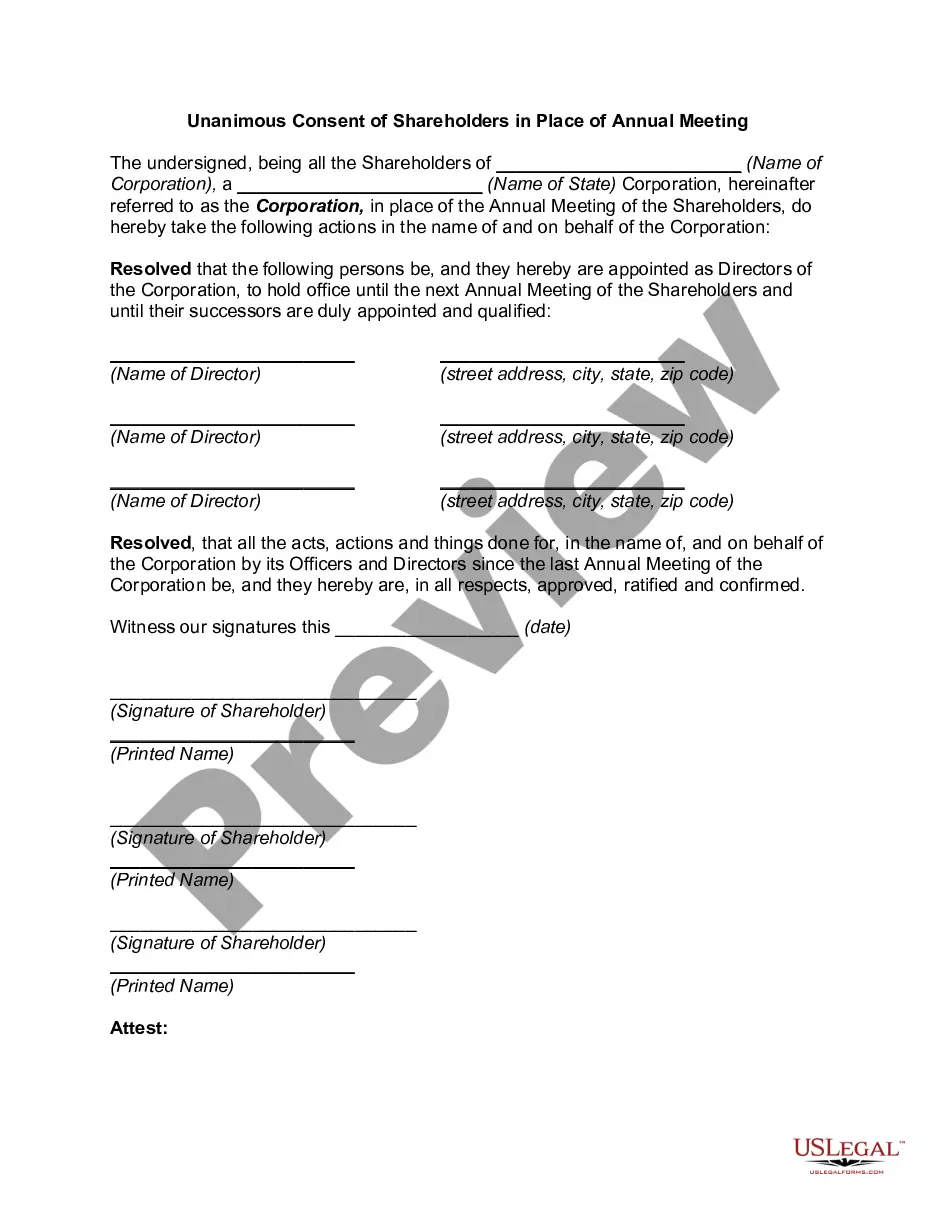
Annual General Meeting Resolution Format In Alameda
Description



Get your form ready online
Our built-in tools help you complete, sign, share, and store your documents in one place.
Make edits, fill in missing information, and update formatting in US Legal Forms—just like you would in MS Word.
Download a copy, print it, send it by email, or mail it via USPS—whatever works best for your next step.
Sign and collect signatures with our SignNow integration. Send to multiple recipients, set reminders, and more. Go Premium to unlock E-Sign.
If this form requires notarization, complete it online through a secure video call—no need to meet a notary in person or wait for an appointment.
We protect your documents and personal data by following strict security and privacy standards.

Make edits, fill in missing information, and update formatting in US Legal Forms—just like you would in MS Word.

Download a copy, print it, send it by email, or mail it via USPS—whatever works best for your next step.

Sign and collect signatures with our SignNow integration. Send to multiple recipients, set reminders, and more. Go Premium to unlock E-Sign.

If this form requires notarization, complete it online through a secure video call—no need to meet a notary in person or wait for an appointment.

We protect your documents and personal data by following strict security and privacy standards.
Looking for another form?





Form popularity
FAQ
The provisions of the Alameda County Noise Element limit noise sources associated with construction between 7 a.m. and 7 p.m. on weekdays and between 8 a.m. and 5 p.m. on weekends.
The Sunshine Ordinance was enacted in 1993 by the Board of Supervisors and later amended in 1999 by the voters. To keep government policy and procedures transparent by giving citizens the right to access government proceedings and records.
Section 6-58.55 of the Alameda Municipal Code requires that landlords provide an initial registration statement for each rental unit, including landlords of units that are subsidized through the Housing Choice Voucher (Section 8) program.
The Sunshine Ordinance is an ordinance to insure easier access to public records and to strengthen the open meeting laws.
An AGM may be waived in some jurisdictions, only if a written resolution is passed. The resolution must be unanimously approved and signed by all members. Shareholders must be notified, and the financial statements need to be accepted.
(1) Anything that may be done by a resolution of a company in general meeting may be done, without a meeting and without any previous notice being required, by a written resolution of the members of the company.
An ordinary resolution is defined in this Act (section 191) and means a resolution passed by a simple majority of the votes cast by the members, entitled to vote, to be voted in person or by proxy at a general meeting of the company.
An ordinary resolution is the most common resolution at a general meeting and serves as the backbone for decisions in a scheme. An ordinary resolution is carried by a majority vote – if there are more yes votes than there are no votes, then the motion is carried.

