Sample Letter Acknowledgment Of Complaint In Massachusetts
Description
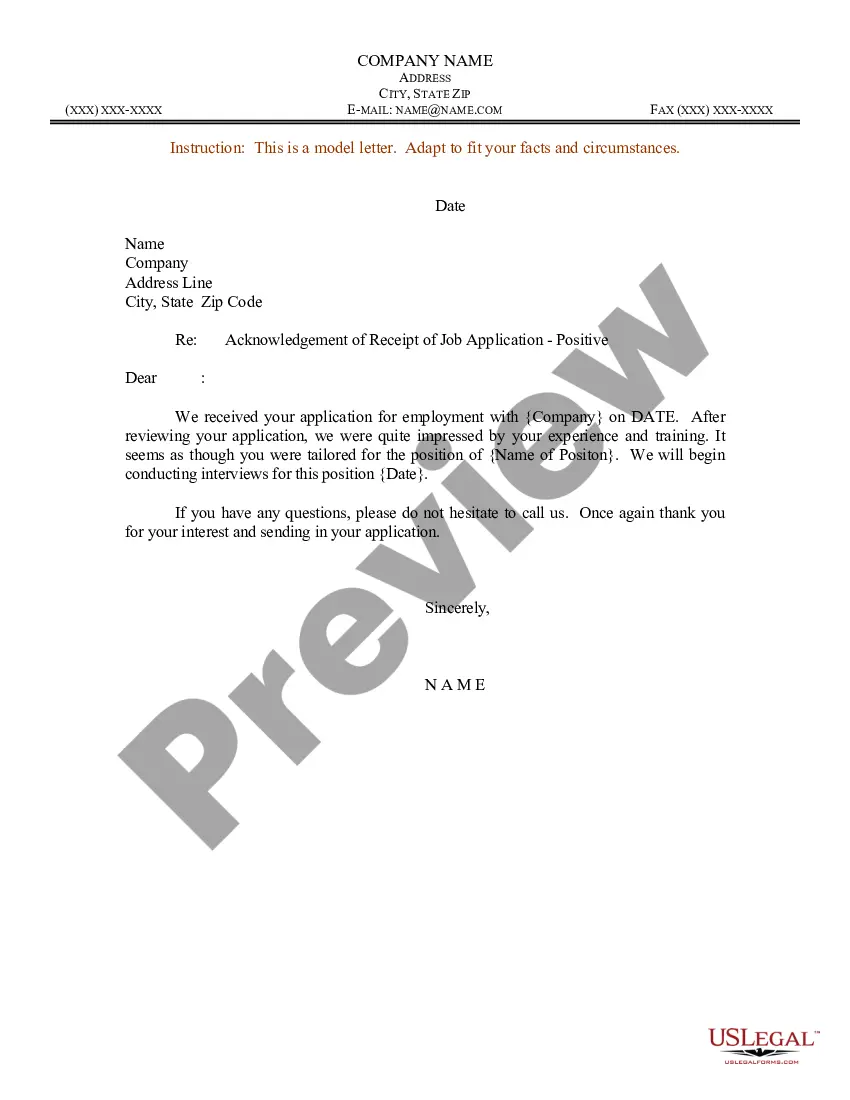


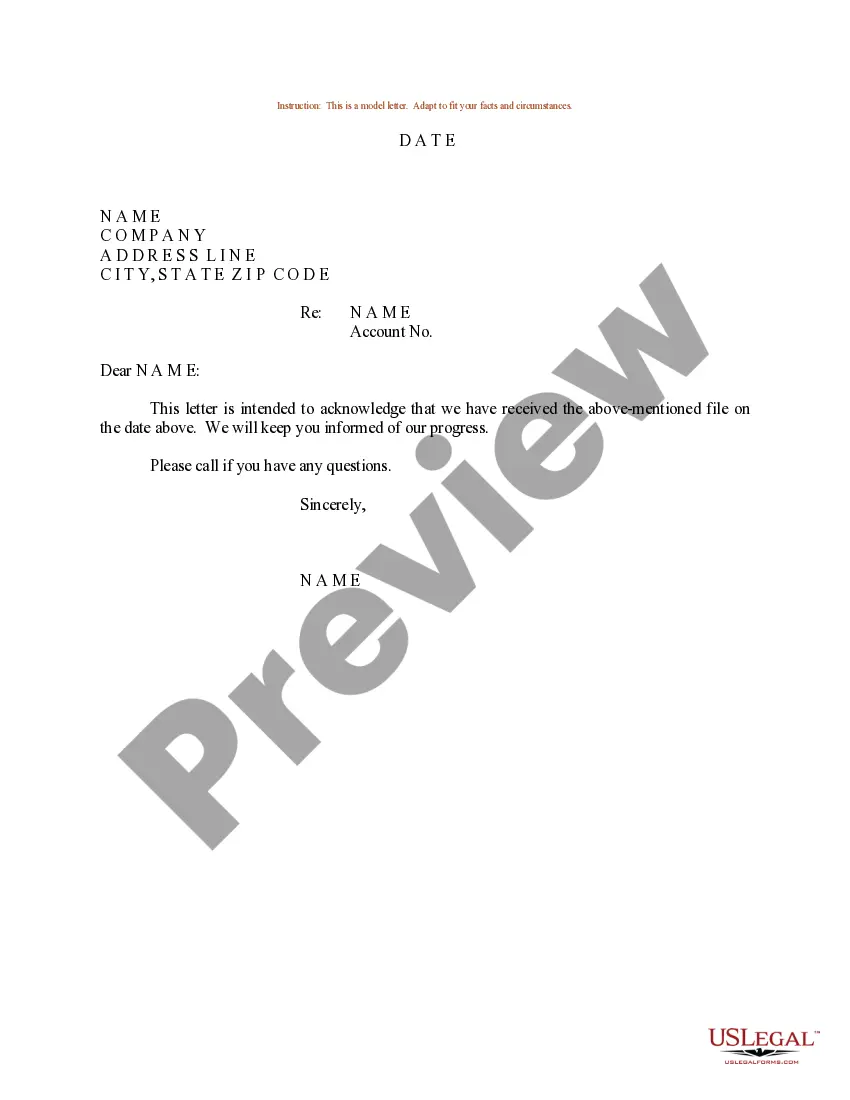
Get your form ready online
Our built-in tools help you complete, sign, share, and store your documents in one place.
Make edits, fill in missing information, and update formatting in US Legal Forms—just like you would in MS Word.
Download a copy, print it, send it by email, or mail it via USPS—whatever works best for your next step.
Sign and collect signatures with our SignNow integration. Send to multiple recipients, set reminders, and more. Go Premium to unlock E-Sign.
If this form requires notarization, complete it online through a secure video call—no need to meet a notary in person or wait for an appointment.
We protect your documents and personal data by following strict security and privacy standards.

Make edits, fill in missing information, and update formatting in US Legal Forms—just like you would in MS Word.

Download a copy, print it, send it by email, or mail it via USPS—whatever works best for your next step.

Sign and collect signatures with our SignNow integration. Send to multiple recipients, set reminders, and more. Go Premium to unlock E-Sign.

If this form requires notarization, complete it online through a secure video call—no need to meet a notary in person or wait for an appointment.

We protect your documents and personal data by following strict security and privacy standards.
Looking for another form?








Form popularity
FAQ
Upon finding a violation of the Open Meeting Law, the Attorney General may impose a civil penalty upon a public body of not more than $1,000 for each intentional violation.
From the date of notice of the denial or indication, the moving party (the party obligated to respond to the pleading) has 10 days to serve his response unless the court orders otherwise. If the court grants the motion, the pleading is stricken (that is, the complaint is dismissed or the answer is stricken).
If I get served with a complaint, what do I do? Read the summons and the complaint or petition. It is important to read both the summons (or citation) and the complaint (or petition) very carefully. Write and file an answer. Serve the other party with a copy of the answer.
The Open Meeting Law requires that most meetings of public bodies be held in public, and it establishes rules that public bodies must follow in the creation and maintenance of records relating to those meetings.
If you cannot find what you are looking for, please contact us at 617-963-2540 or at openmeeting@state.ma.
State law requires you to send the business a letter 30 days before filing a claim in court. The letter must outline your complaint, the harm you suffered, and how you want the problem resolved. This is called a 30 Day Demand Letter.
Open meeting laws, also called sunshine laws, require that, with notable exceptions, most meetings of federal and state government agencies and regulatory bodies be open to the public, along with their decisions and records.
The complaint must be filed using the Open Meeting Law complaint form available on the Attorney General's website. Public bodies, or in the case of local public bodies the municipal clerk, should provide members of the public with a copy of the complaint form upon request.
If I get served with a complaint, what do I do? Read the summons and the complaint or petition. It is important to read both the summons (or citation) and the complaint (or petition) very carefully. Write and file an answer. Serve the other party with a copy of the answer.
How to Respond to Complaints? 8 Useful Complaint Response Letter Examples Acknowledging the Complaint. Subject: Acknowledging Your Complaint. Apologising and Offering a Solution. Subject: Apology and Resolution for Your Complaint. Providing Detailed Instructions. Subject: Resolution Steps for Your Complaint.
