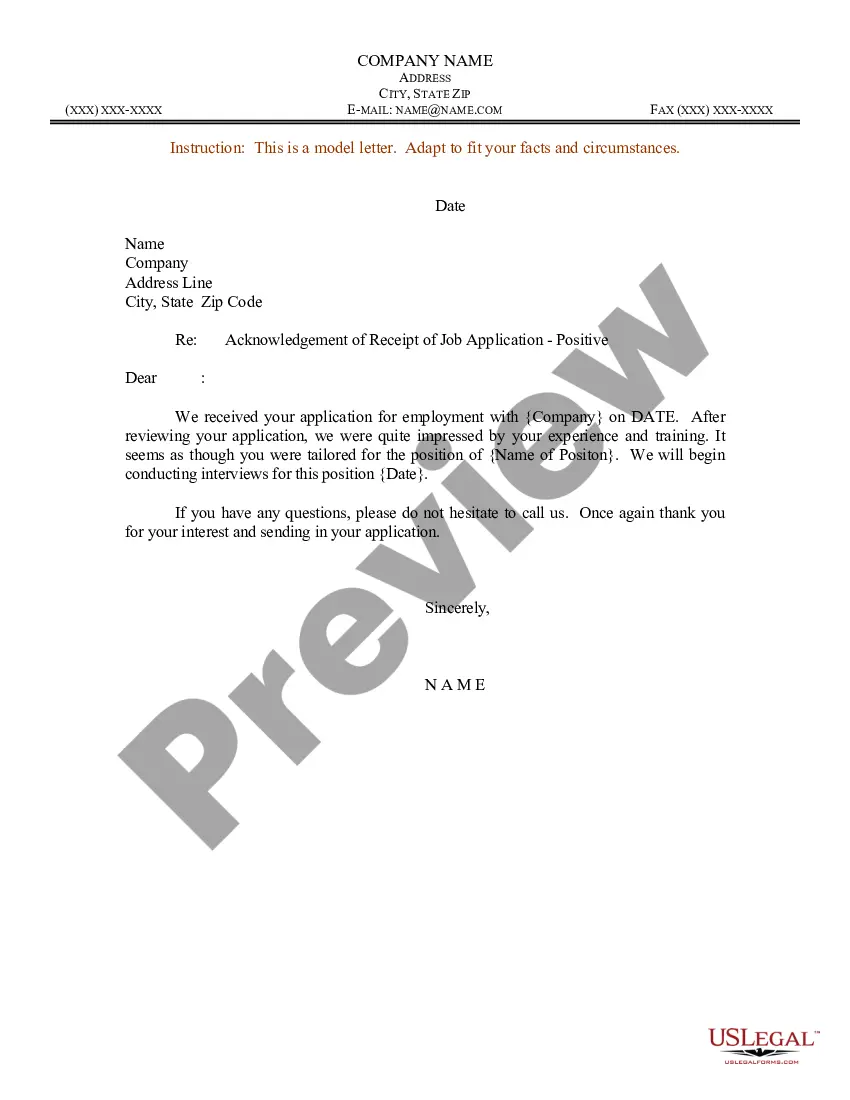
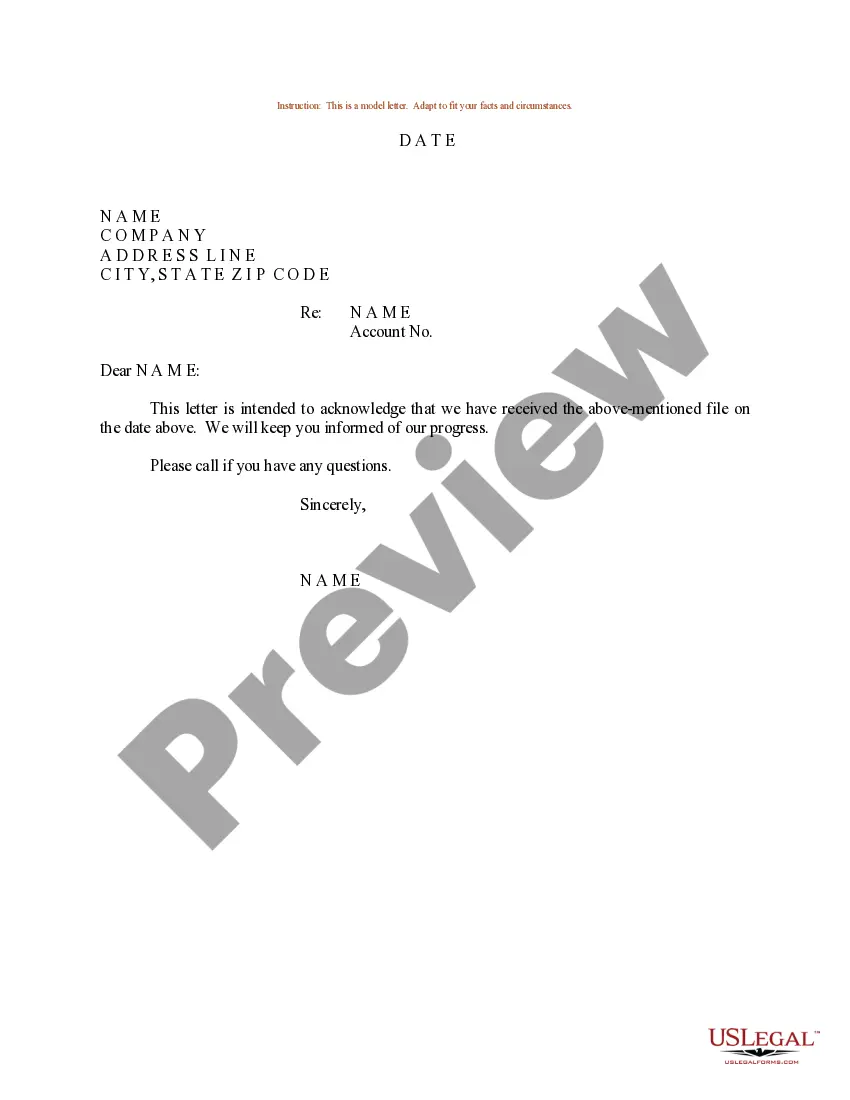
Sample Letter For Acknowledgement In Collin
Description


Get your form ready online
Our built-in tools help you complete, sign, share, and store your documents in one place.
Make edits, fill in missing information, and update formatting in US Legal Forms—just like you would in MS Word.
Download a copy, print it, send it by email, or mail it via USPS—whatever works best for your next step.
Sign and collect signatures with our SignNow integration. Send to multiple recipients, set reminders, and more. Go Premium to unlock E-Sign.
If this form requires notarization, complete it online through a secure video call—no need to meet a notary in person or wait for an appointment.
We protect your documents and personal data by following strict security and privacy standards.

Make edits, fill in missing information, and update formatting in US Legal Forms—just like you would in MS Word.

Download a copy, print it, send it by email, or mail it via USPS—whatever works best for your next step.

Sign and collect signatures with our SignNow integration. Send to multiple recipients, set reminders, and more. Go Premium to unlock E-Sign.

If this form requires notarization, complete it online through a secure video call—no need to meet a notary in person or wait for an appointment.

We protect your documents and personal data by following strict security and privacy standards.
Looking for another form?






Form popularity
FAQ
Here are the basic steps to create an acknowledgment receipt: Use a company letterhead. Give the receipt a title. Write the statement of acknowledgment. Create a place for signatures and the date of the transaction. Explain any next steps. Provide contact information for further questions.
Outline the information that needs to be included in the letter Start with a professional greeting. Identify the person the letter is acknowledging. Describe the action that is being acknowledged. Express gratitude for the action taken. Include any relevant details. Close with a professional sign-off. Add contact information.
For example: "I completely understand your frustration, and I appreciate your patience. I'll do my best to resolve this for you as quickly as possible." "I'm sorry to hear about your experience, and I appreciate you bringing this to our attention.
Opening statement: Start by expressing your overall gratitude. Individual recognitions: Acknowledge specific individuals and their contributions, such as mentors, colleagues, family, and friends. Organizational recognitions: Mention any institutions or organizations that provided support.
Start With a Greeting: Begin with a formal salutation, addressing a recipient respectfully. Clearly State a Purpose: Mention upfront that a letter is to acknowledge a receipt of a specific item, document, or support. Express Gratitude: Show appreciation for what has been received or support provided.
We write to advise that we have on Enter Date received delivery of Enter Detail of Item (“Name of Item”). The Name of Item has been inspected and we acknowledge that it has been received in good condition.
A request for an acknowledgement usually is best placed at the end of a letter, in the last paragraph, so it's less likely the recipient will forget it. Consider italicizing or boldfacing your request for an acknowledgement. This is a matter of personal choice, as some people consider this approach a bit heavy-handed.
I would like to express my profound gratitude to Mr./Mrs.____ (name of the HOD), of ____ (designation and department name) department, and Mr./Mrs. _____ (Dean) of _____ university for their contributions to the completion of my project titled _____.
Outline the information that needs to be included in the letter Start with a professional greeting. Identify the person the letter is acknowledging. Describe the action that is being acknowledged. Express gratitude for the action taken. Include any relevant details. Close with a professional sign-off. Add contact information.
A request for an acknowledgement usually is best placed at the end of a letter, in the last paragraph, so it's less likely the recipient will forget it. Consider italicizing or boldfacing your request for an acknowledgement. This is a matter of personal choice, as some people consider this approach a bit heavy-handed.