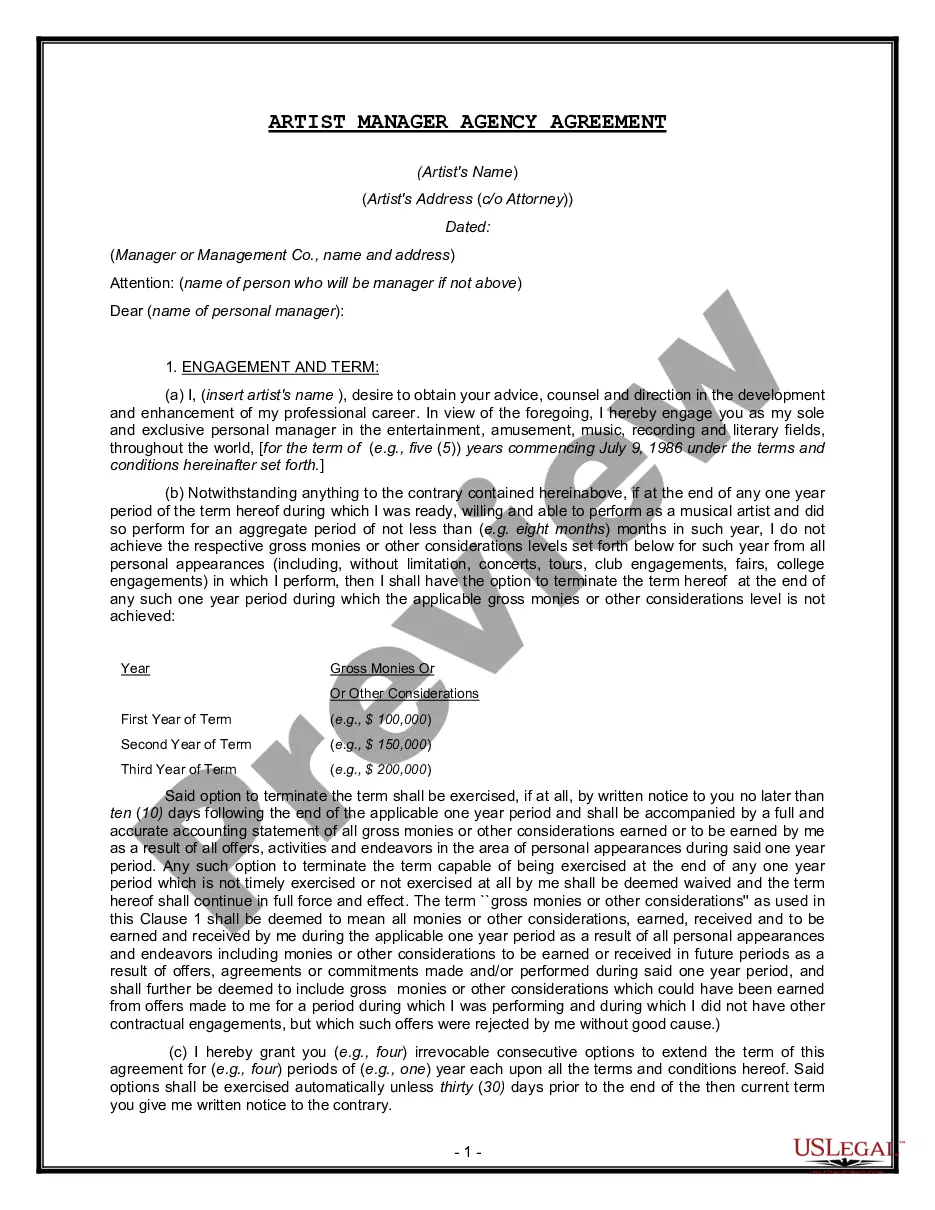
Artist Management Form Withdrawal In Washington
Description










Get your form ready online
Our built-in tools help you complete, sign, share, and store your documents in one place.
Make edits, fill in missing information, and update formatting in US Legal Forms—just like you would in MS Word.
Download a copy, print it, send it by email, or mail it via USPS—whatever works best for your next step.
Sign and collect signatures with our SignNow integration. Send to multiple recipients, set reminders, and more. Go Premium to unlock E-Sign.
If this form requires notarization, complete it online through a secure video call—no need to meet a notary in person or wait for an appointment.
We protect your documents and personal data by following strict security and privacy standards.

Make edits, fill in missing information, and update formatting in US Legal Forms—just like you would in MS Word.

Download a copy, print it, send it by email, or mail it via USPS—whatever works best for your next step.

Sign and collect signatures with our SignNow integration. Send to multiple recipients, set reminders, and more. Go Premium to unlock E-Sign.

If this form requires notarization, complete it online through a secure video call—no need to meet a notary in person or wait for an appointment.

We protect your documents and personal data by following strict security and privacy standards.
Looking for another form?






Form popularity
FAQ
Starting a Career in Artist Management: A Step-by-Step Guide Research the industry and understand the role of an artist manager. Gain experience by interning or assisting established artist managers. Build a strong network by attending industry events and connecting with artists.
Several online platforms are designed to connect artists with industry professionals, including managers. Sites like ReverbNation, Sonicbids, and Music Gateway offer opportunities to showcase your music and connect with potential managers. Use these platforms to expand your reach and network.
Comments Section Networking: Attend industry events, music conferences, and shows to meet people in the industry. Research: Look for managers who work with artists in your genre and have a track record of success. Referrals: Ask fellow musicians and industry contacts for recommendations.
This typically involves providing written notice within the specified timeframe and adhering to any other requirements stated in the agreement. Remember, getting out of a music management contract can be a complex process, and it's important to approach it carefully before terminating.
If you've been handling everything on your own and are hitting a wall getting past the proverbial industry waiting room, it might be time to hire a manager. A manager must constantly work at managing your own expectations and goals, while expanding your base of industry relationships, experience and knowledge.
Here are best practices for how to manage a music artist to help them achieve their goals while also being successful: Encourage development. Negotiate good deals. Book the right concerts. Offer professional support. Oversee the budget. Promote the musician and their work. Provide frequent updates. Set and achieve goals.
Here is a summary of the steps, and then we'll go into more detail: Choose 1 or 2 labels to target. Make GREAT music that's right for that label. Sort out a professional-looking SoundCloud profile. Research other artists on that label and make a list. Check their social media. Reach out and provide value to them.
As to when an artist might “need” a manager - it's smart to wait until the point where you literally can't manage your own career anymore. If you've got too many emails, phone calls, contracts to negotiate, tours to navigate and merch to sell to keep it all straight, then it might be time to bring someone on.
An unsigned artist, unsigned band or independent artist is a musician or musical group not under a contract with a record label. The terms are used in the music industry as a marketing technique. Bands that release their own material on self-published CDs can also be considered unsigned bands.
