Artist Agreement Form Sample With Music In Wake
Description

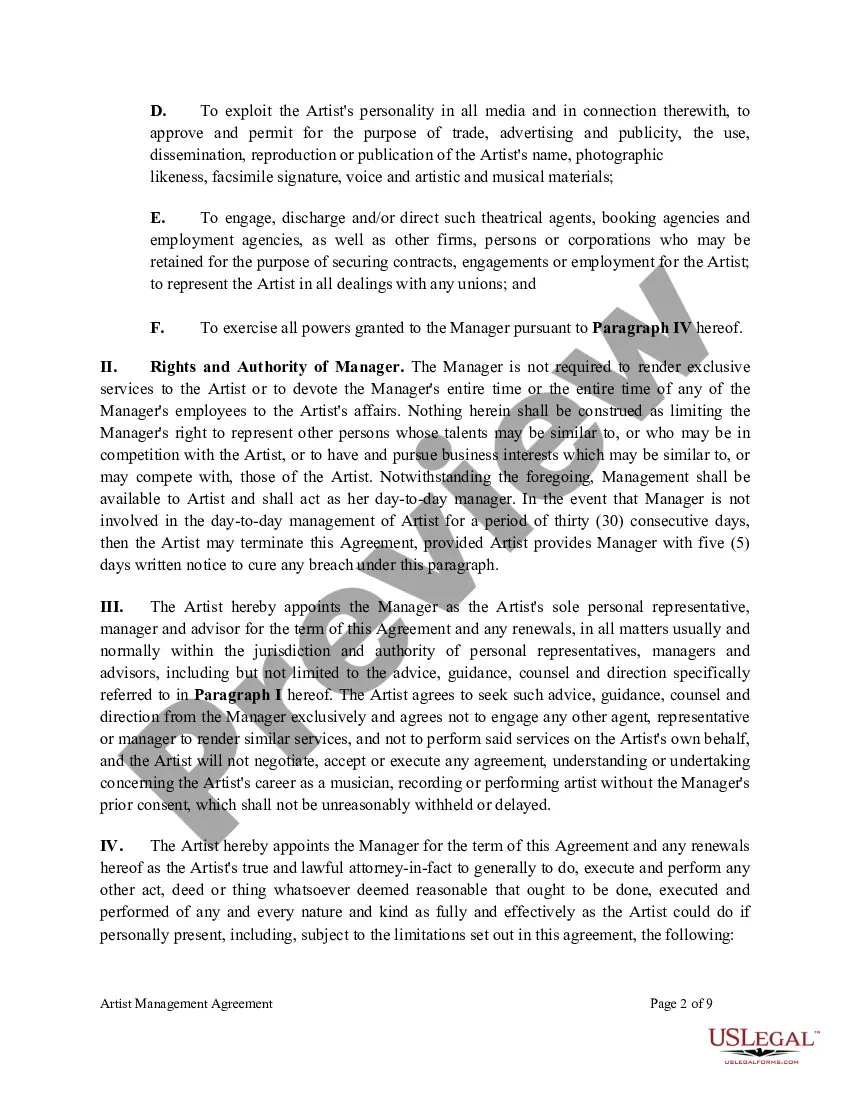
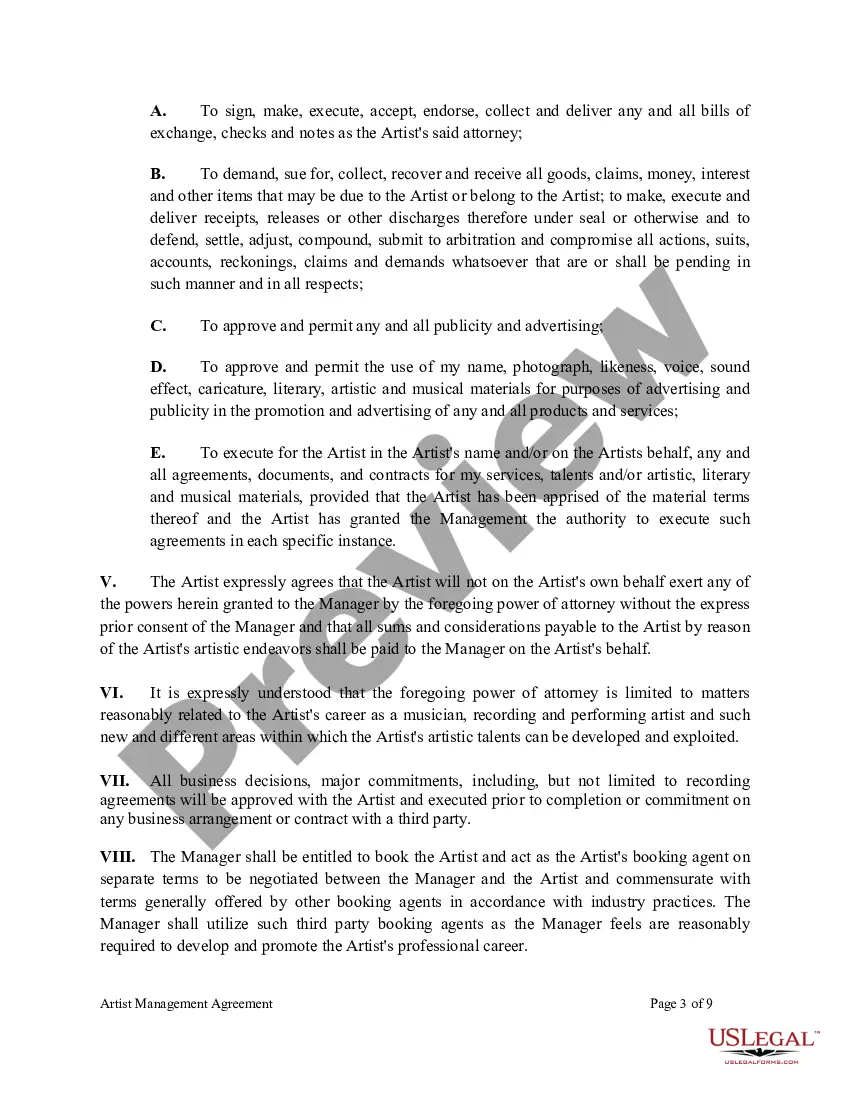
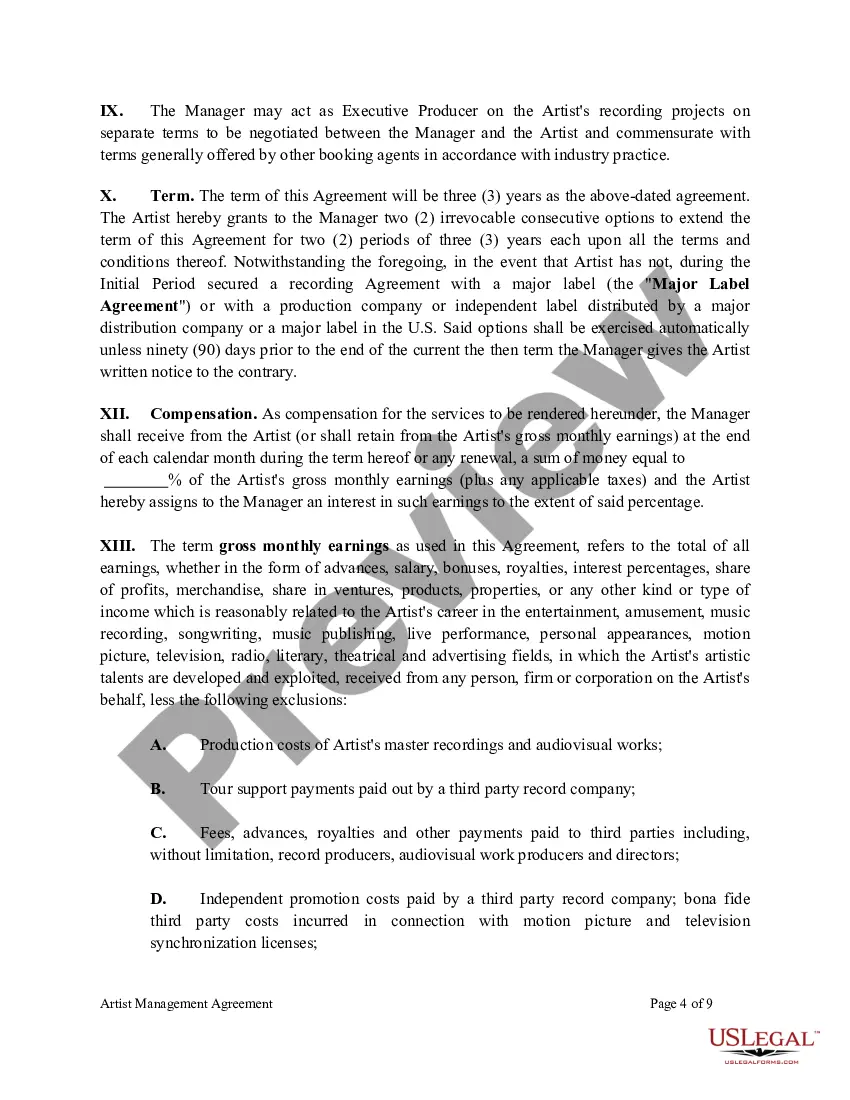
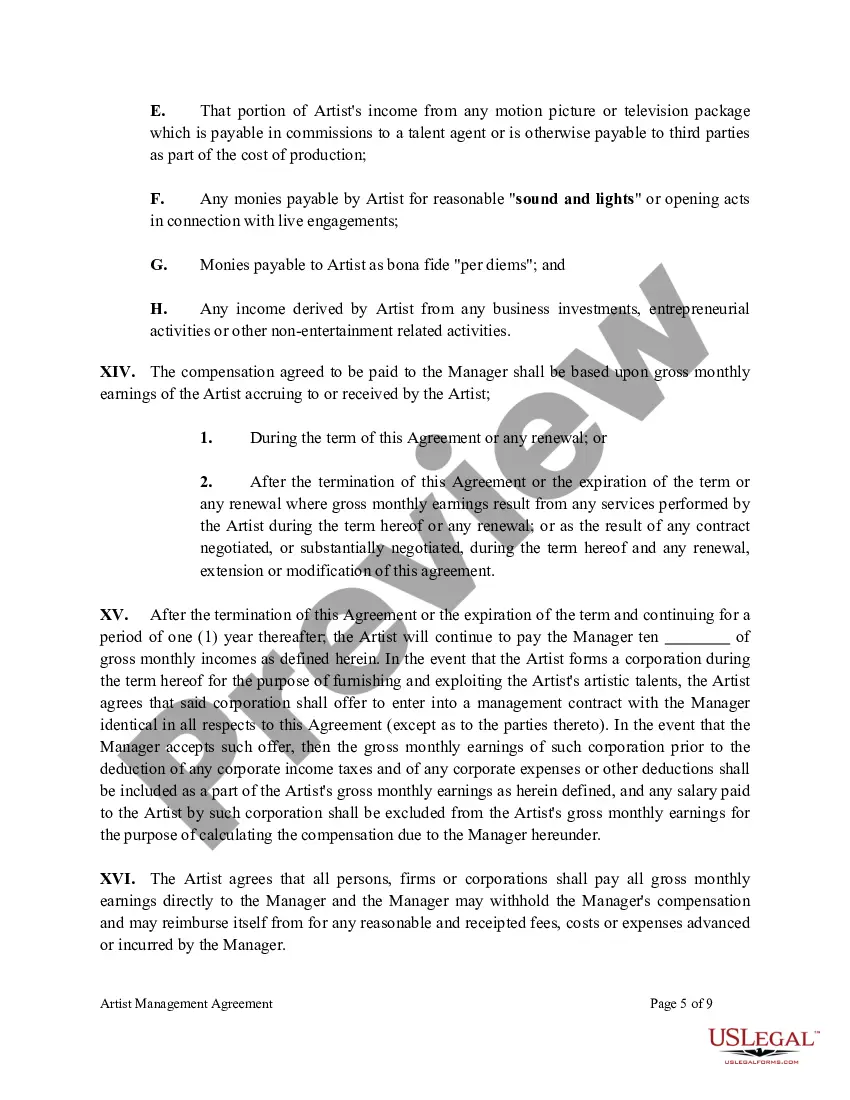
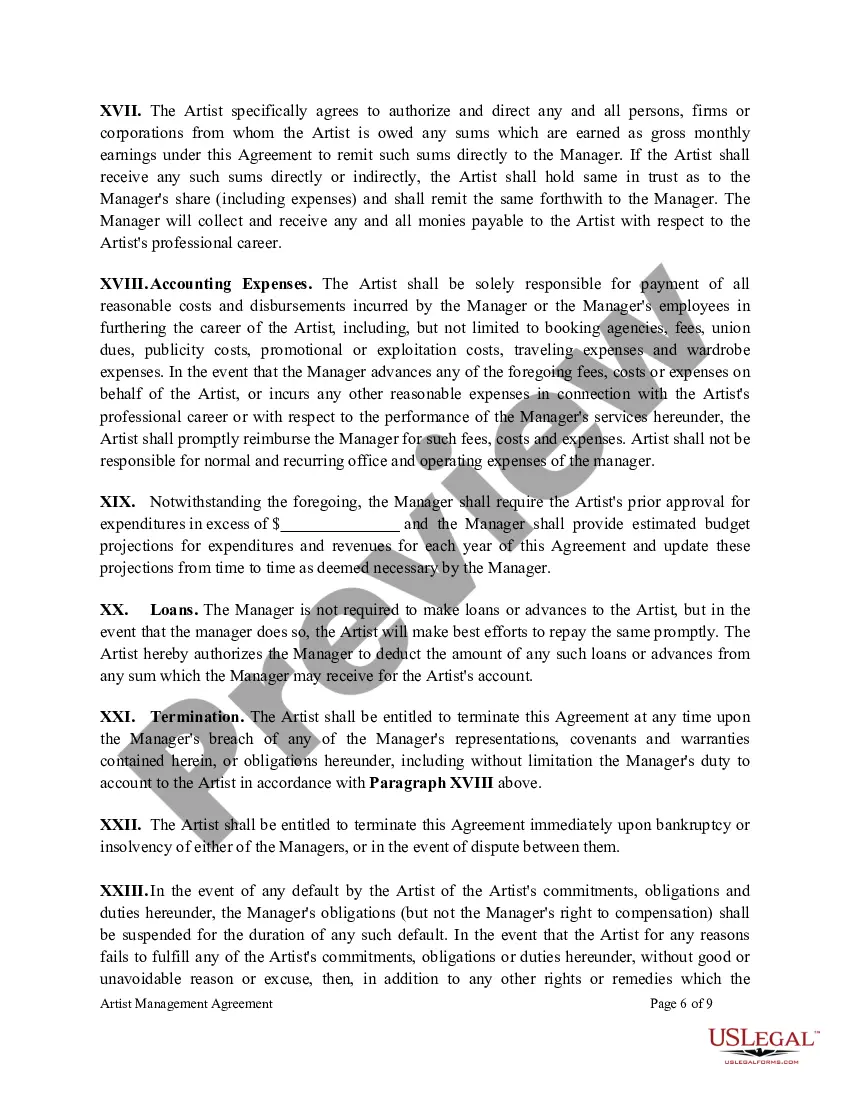
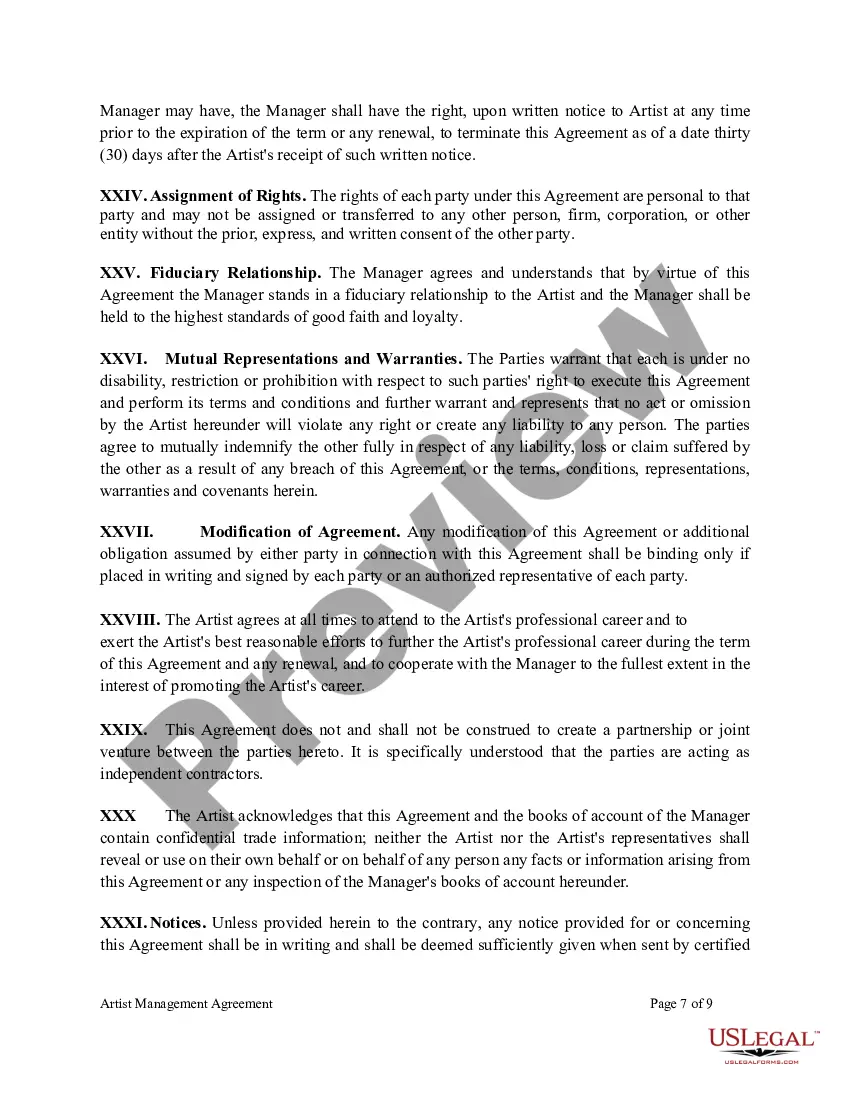
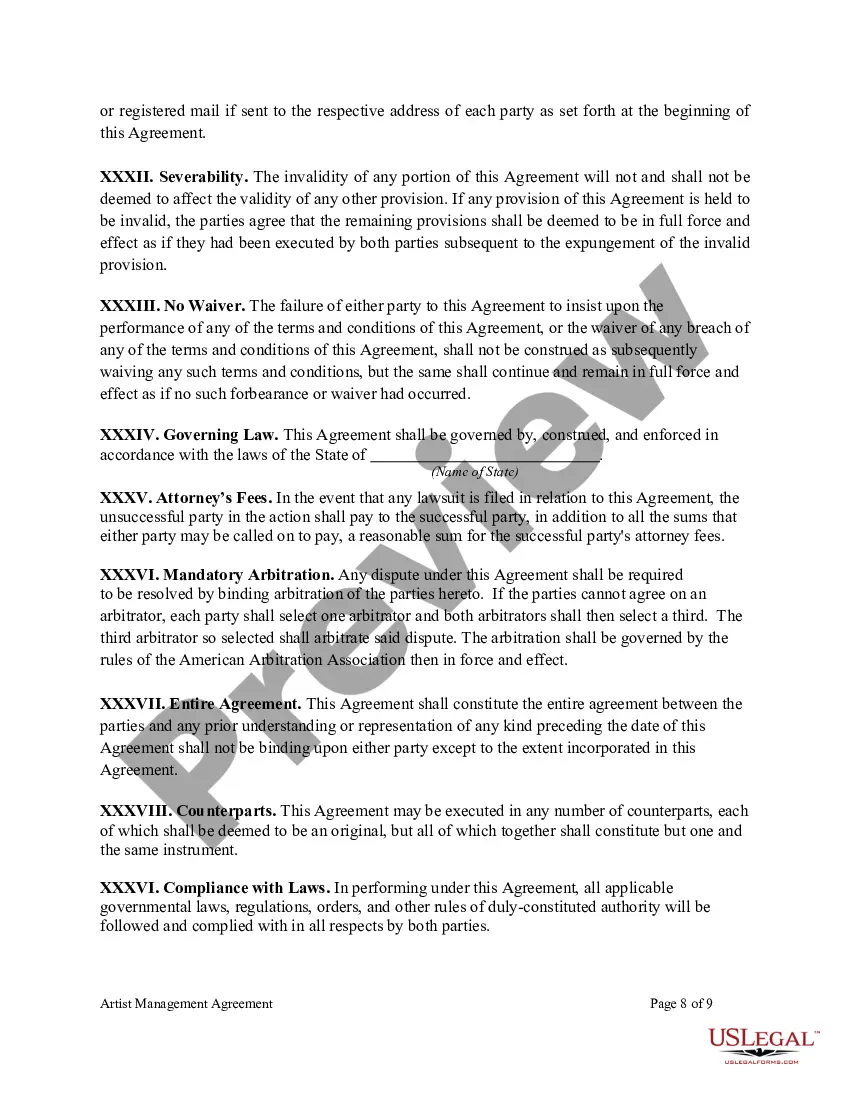
Get your form ready online
Our built-in tools help you complete, sign, share, and store your documents in one place.
Make edits, fill in missing information, and update formatting in US Legal Forms—just like you would in MS Word.
Download a copy, print it, send it by email, or mail it via USPS—whatever works best for your next step.
Sign and collect signatures with our SignNow integration. Send to multiple recipients, set reminders, and more. Go Premium to unlock E-Sign.
If this form requires notarization, complete it online through a secure video call—no need to meet a notary in person or wait for an appointment.
We protect your documents and personal data by following strict security and privacy standards.

Make edits, fill in missing information, and update formatting in US Legal Forms—just like you would in MS Word.

Download a copy, print it, send it by email, or mail it via USPS—whatever works best for your next step.

Sign and collect signatures with our SignNow integration. Send to multiple recipients, set reminders, and more. Go Premium to unlock E-Sign.

If this form requires notarization, complete it online through a secure video call—no need to meet a notary in person or wait for an appointment.

We protect your documents and personal data by following strict security and privacy standards.
Looking for another form?










Form popularity
FAQ
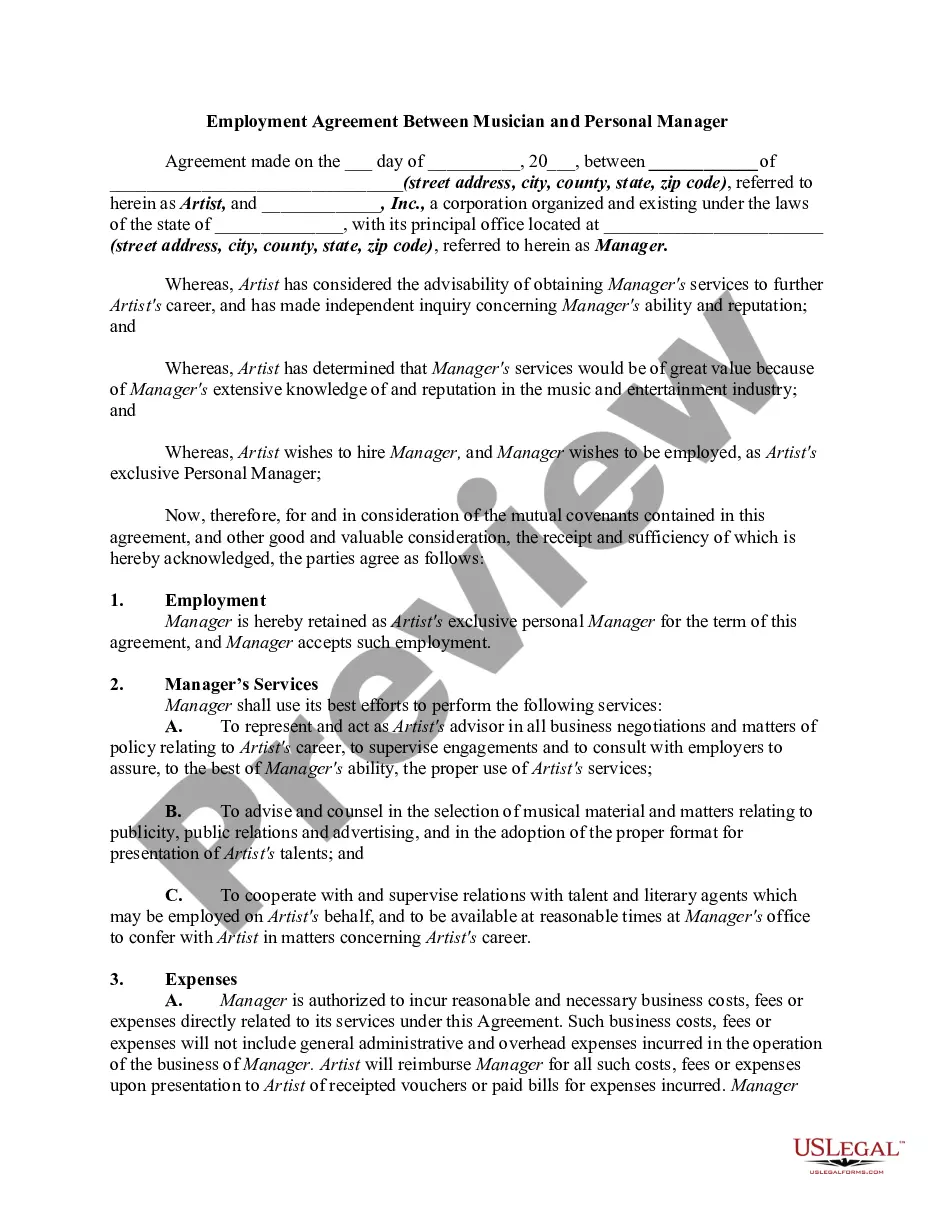
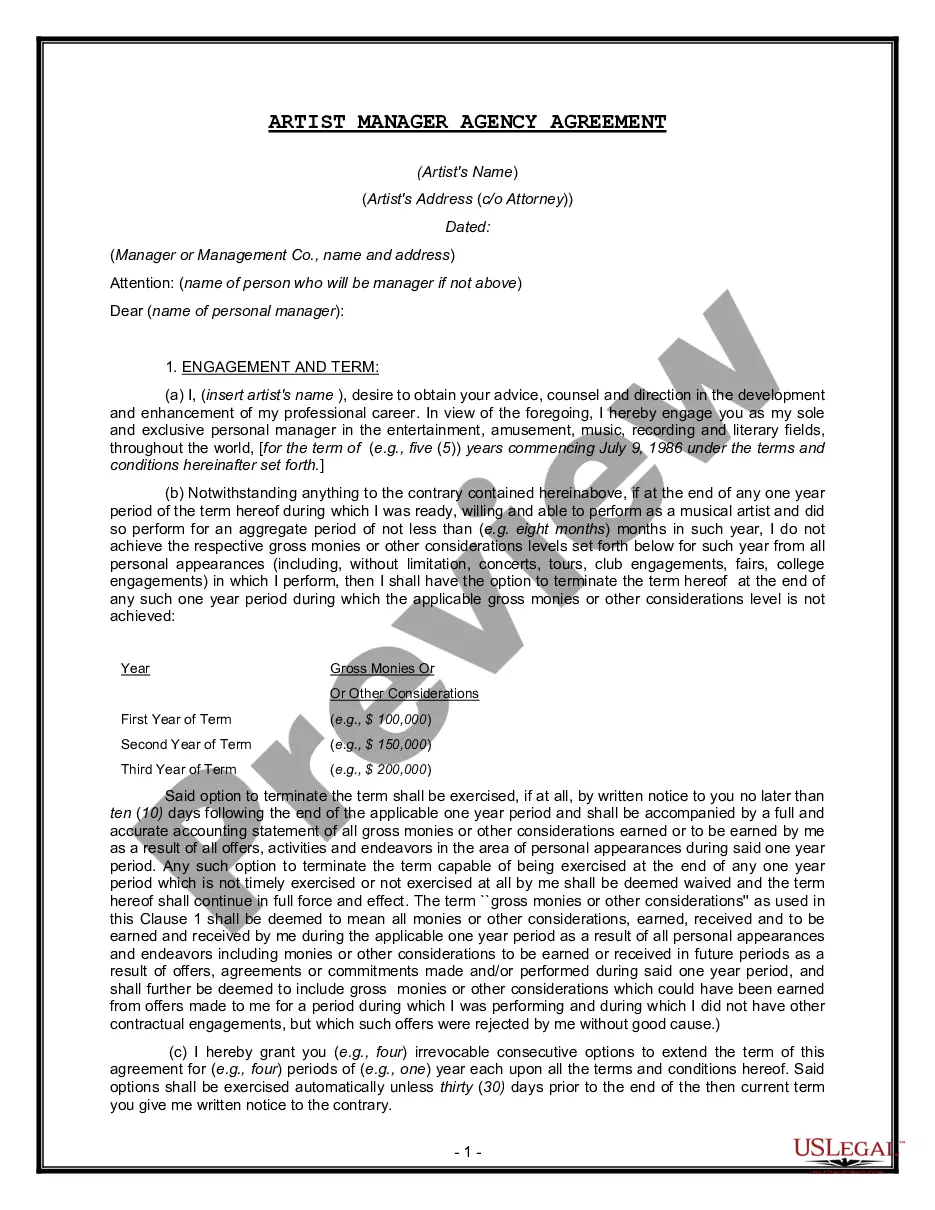
In the realm where artistry meets business, the cornerstone of every professional relationship between artists and labels is the music contract. These legal agreements not only outline the terms of collaboration but also define the rights, responsibilities, and financial arrangements that govern the partnership.
It is a legal agreement that binds the Artist and the Company to fulfill all the terms and conditions contained in it. All Individual Artist Agreements must be in compliance with the respective Collective Bargaining Agreement.
An agreement is a promise or arrangement between two or more parties to do, or not do, something. It's usually informal and sometimes unwritten (but not always). Some examples of agreements include a letter of intent, or a confidentiality agreement that precedes a commercial discussion.
Your Music Recording Contract should cover details like: Compensation and royalties. Where and when the album will be recorded. The album's release date. Who has creative control over specific elements of the album. The termination clause. The exclusive agreement clause. Dispute resolution. Promotional appearances.
An agreement is a manifestation of mutual assent by two or more persons to one another. It is a meeting of the minds with a common intention made through offer and acceptance . An agreement can be shown from words, conduct and in some cases, even silence.
Single song agreements are when the artist gives the rights to one song (or multiple individual songs) to the publishing company. Typically, the artist receives a one-time advance, and the publishing company can use the song(s) however they see fit.
Here are the steps to write a letter of agreement: Title the document. Add the title at the top of the document. List your personal information. Include the date. Add the recipient's personal information. Address the recipient. Write an introduction paragraph. Write your body. Conclude the letter.
Yes, you can write your own contract. However, including all necessary elements is crucial to make it legally binding.
It serves as a permission granted by the copyright holder, allowing you to use their music under specific terms. To use any piece of music, you need to work with a music licensing service or locate the manager of the license and develop a contract or agreement to obtain permission and use it.
Your Music Recording Contract should cover details like: Compensation and royalties. Where and when the album will be recorded. The album's release date. Who has creative control over specific elements of the album. The termination clause. The exclusive agreement clause. Dispute resolution. Promotional appearances.
