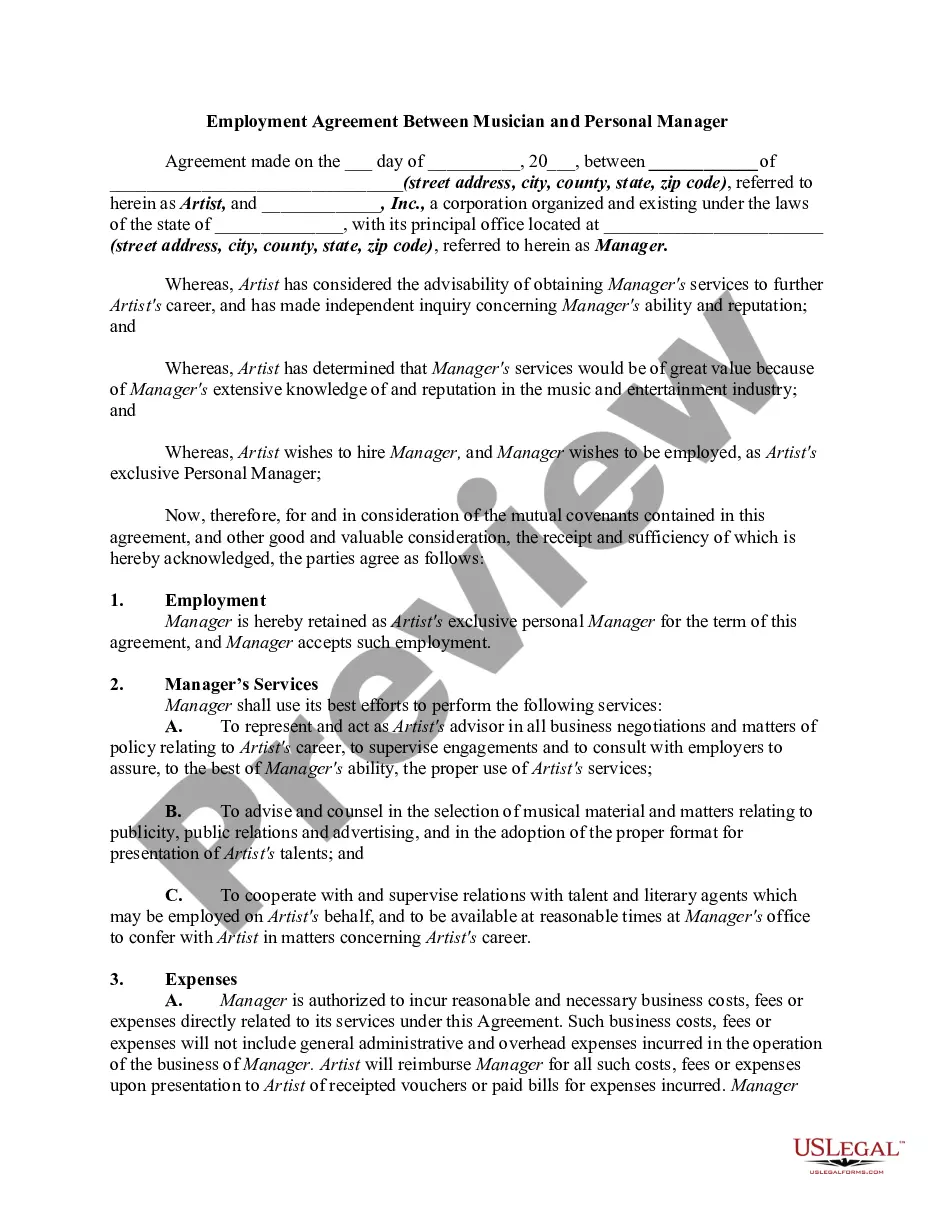
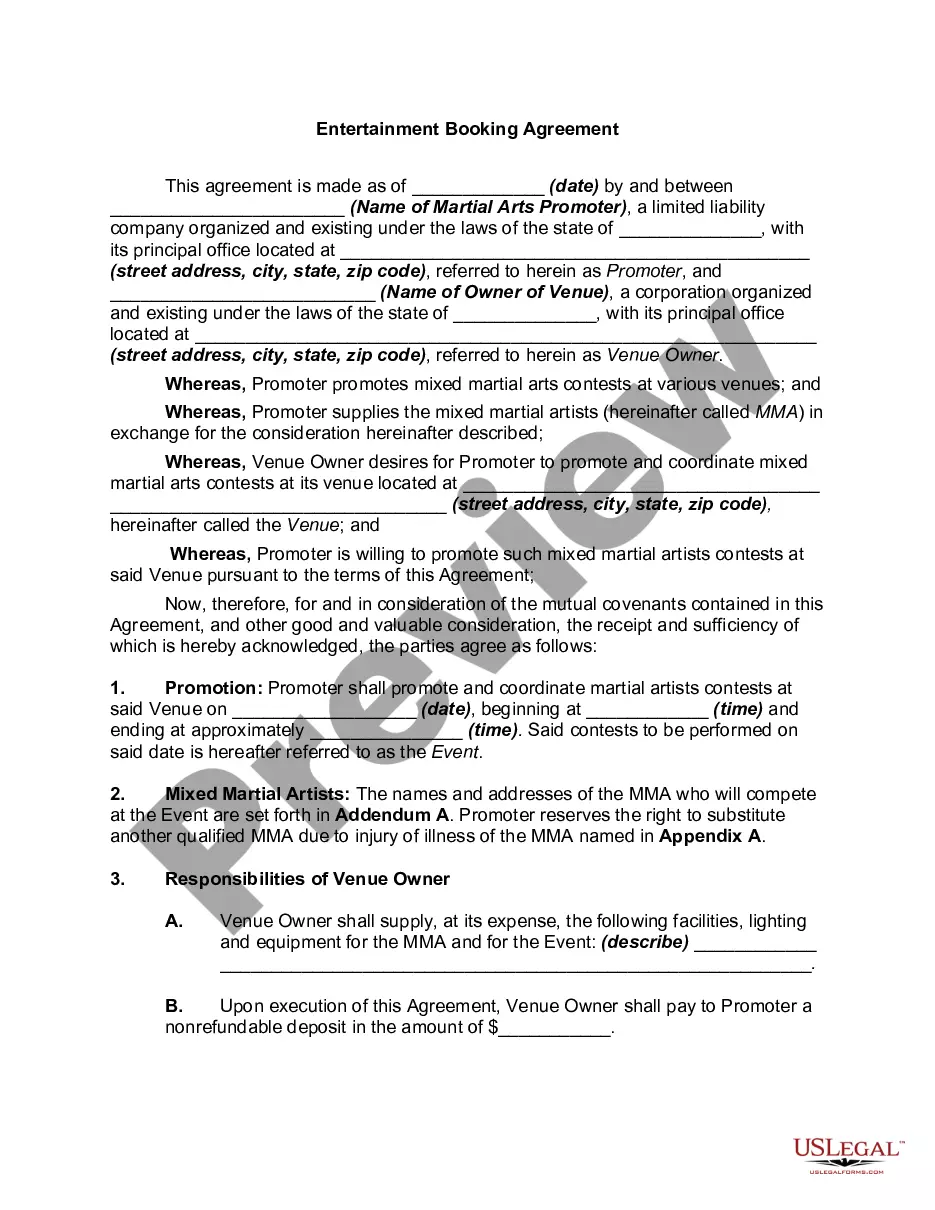
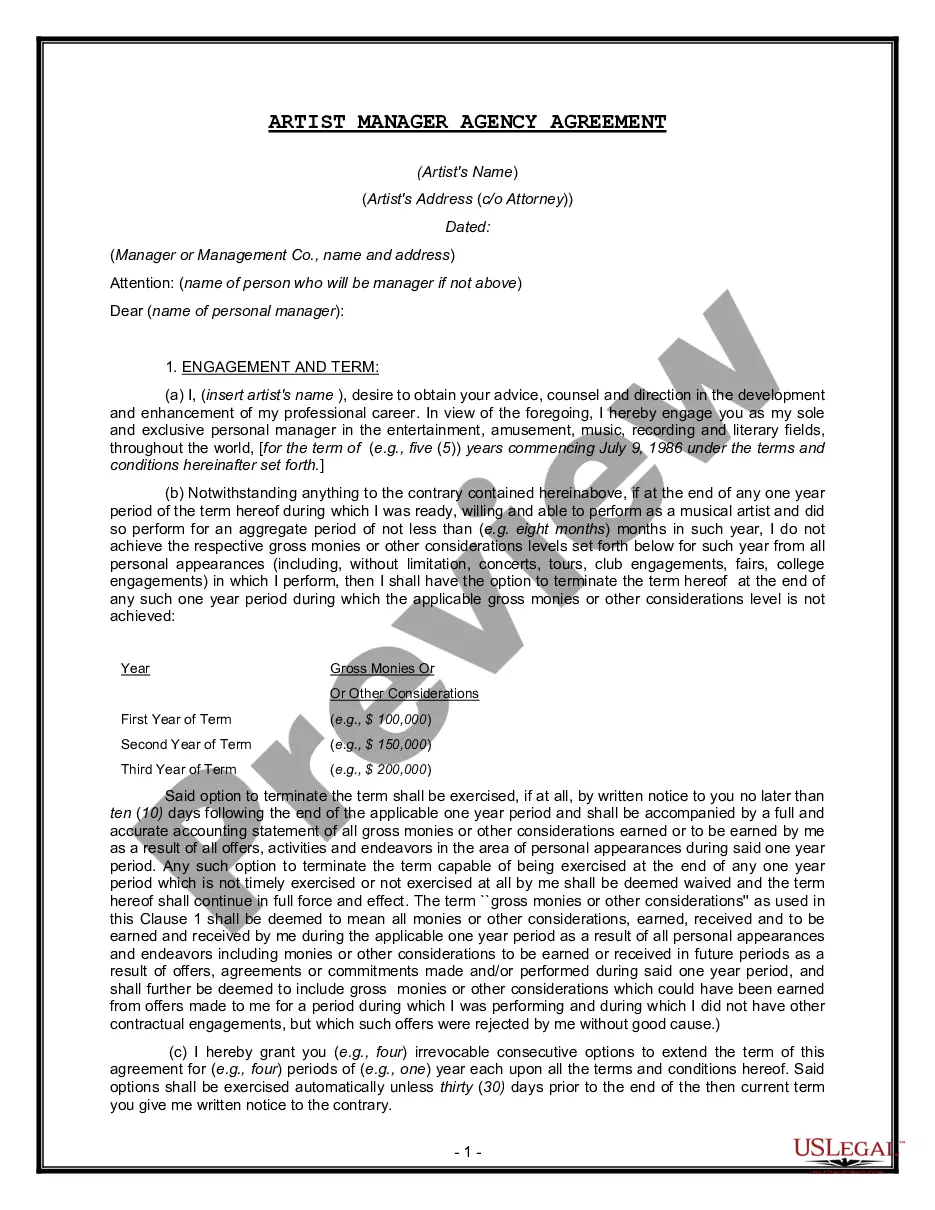
Artist Agreement Form For Payment In Travis
Description

Get your form ready online
Our built-in tools help you complete, sign, share, and store your documents in one place.
Make edits, fill in missing information, and update formatting in US Legal Forms—just like you would in MS Word.
Download a copy, print it, send it by email, or mail it via USPS—whatever works best for your next step.
Sign and collect signatures with our SignNow integration. Send to multiple recipients, set reminders, and more. Go Premium to unlock E-Sign.
If this form requires notarization, complete it online through a secure video call—no need to meet a notary in person or wait for an appointment.
We protect your documents and personal data by following strict security and privacy standards.

Make edits, fill in missing information, and update formatting in US Legal Forms—just like you would in MS Word.

Download a copy, print it, send it by email, or mail it via USPS—whatever works best for your next step.

Sign and collect signatures with our SignNow integration. Send to multiple recipients, set reminders, and more. Go Premium to unlock E-Sign.

If this form requires notarization, complete it online through a secure video call—no need to meet a notary in person or wait for an appointment.

We protect your documents and personal data by following strict security and privacy standards.
Looking for another form?






Form popularity
FAQ
How to draft a contract between two parties: A step-by-step checklist Know your parties. Agree on the terms. Set clear boundaries. Spell out the consequences. Specify how you will resolve disputes. Cover confidentiality. Check the legality of the contract. Open it up to negotiation.
An artist statement is a not-too-long series of sentences that describe what you make and why you make it. It's a stand-in for you, the artist, talking to someone about your work in a way that adds to their experience of viewing that work.
It is a legal agreement that binds the Artist and the Company to fulfill all the terms and conditions contained in it. All Individual Artist Agreements must be in compliance with the respective Collective Bargaining Agreement.
Contracts like an artist agreement help avoid miscommunications and confusion over the rights and responsibilities of both parties involved. Artist agreements typically include availability expectations, performance markers, and licensing or ownership rights of the works created during the partnership.
Your Music Recording Contract should cover details like: Compensation and royalties. Where and when the album will be recorded. The album's release date. Who has creative control over specific elements of the album. The termination clause. The exclusive agreement clause. Dispute resolution. Promotional appearances.
How to write an agreement letter Title your document. Provide your personal information and the date. Include the recipient's information. Address the recipient and write your introductory paragraph. Write a detailed body. Conclude your letter with a paragraph, closing remarks, and a signature. Sign your letter.
An exclusive agreement in music licensing means that the artist grants all the rights to a particular piece of music to one party (such as a publisher or a record label) exclusively. This means no other party can use the music without permission from the licensee.
- the Author reimburses the remunerations already received and the Producer is not entitled to continue to exploit his contribution in any form whatsoever, subject to any damages and interest to the benefit of the Producer. - the Producer may use the contribution of the Author for the purpose of completing the Work.
