Artist Agreement Form Contract With The Government In Queens
Description












Form popularity
FAQ
Following this step-by-step checklist will mean that you can write your contract with confidence: Know your parties. Agree on the terms. Set clear boundaries. Spell out the consequences. Specify how you will resolve disputes. Cover confidentiality. Check the legality of the contract. Open it up to negotiation.
Write the contract in six steps Start with a contract template. Open with the basic information. Describe in detail what you have agreed to. Include a description of how the contract will be ended. Write into the contract which laws apply and how disputes will be resolved. Include space for signatures.
A properly formatted contract will typically have copy that is left-aligned and single-spaced. If the contract is long or has multiple sections, a table of contents should be included to make it easier to review.
Acceptance of an offer: After one party makes an offer, it's up to the other party to accept it. If someone offers you $600 to walk their dogs, for example, you enter into a contractual agreement the moment you accept their offer in exchange for your services.
Write the contract in six steps Start with a contract template. Open with the basic information. Describe in detail what you have agreed to. Include a description of how the contract will be ended. Write into the contract which laws apply and how disputes will be resolved. Include space for signatures.
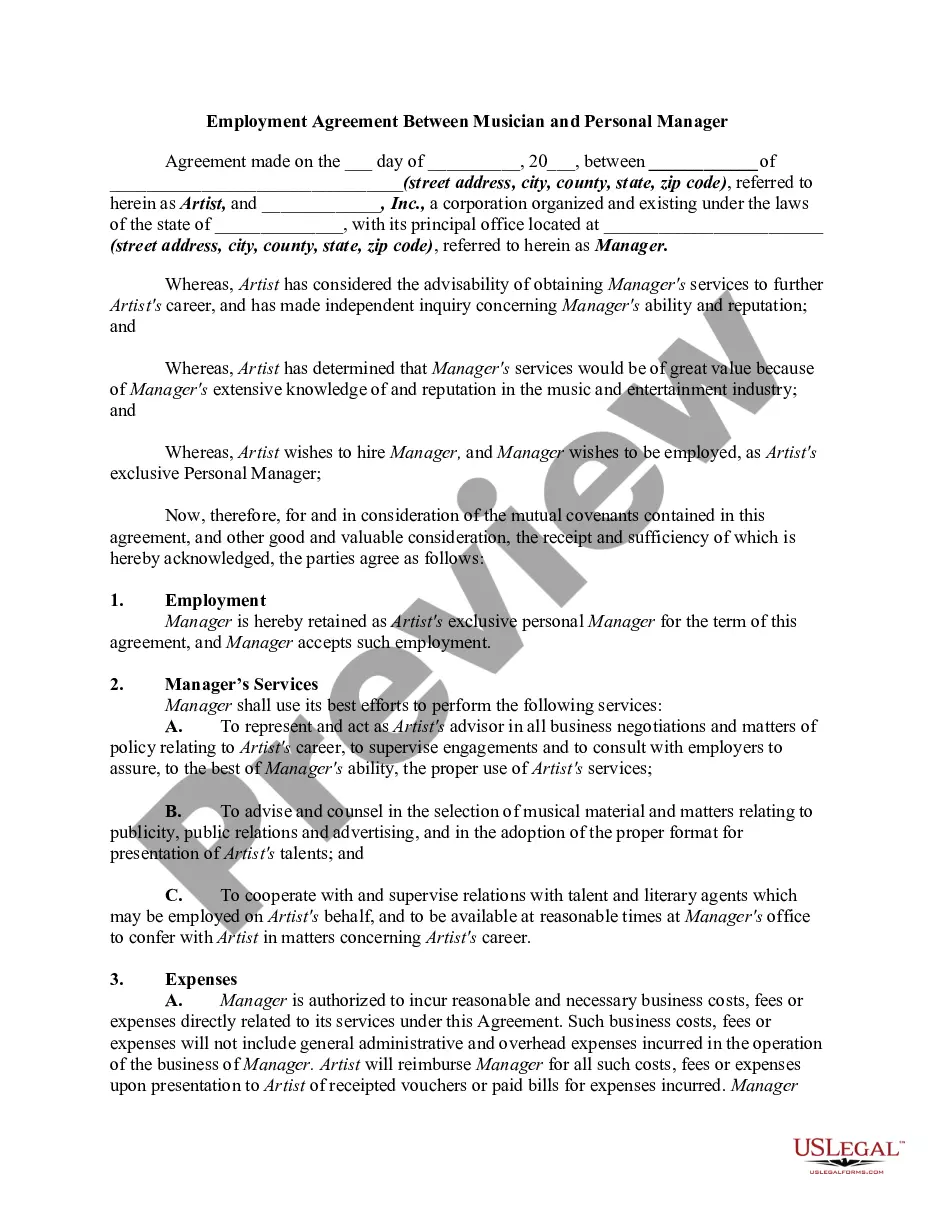
Contracts like an artist agreement help avoid miscommunications and confusion over the rights and responsibilities of both parties involved. Artist agreements typically include availability expectations, performance markers, and licensing or ownership rights of the works created during the partnership.
It is a legal agreement that binds the Artist and the Company to fulfill all the terms and conditions contained in it. All Individual Artist Agreements must be in compliance with the respective Collective Bargaining Agreement.
A recording contract (commonly called a record contract or record deal) is a legal agreement between a record label and a recording act (artist or group), where the act makes an audio recording (or series of recordings) for the label to sell and promote.
An artist statement is a not-too-long series of sentences that describe what you make and why you make it. It's a stand-in for you, the artist, talking to someone about your work in a way that adds to their experience of viewing that work.
