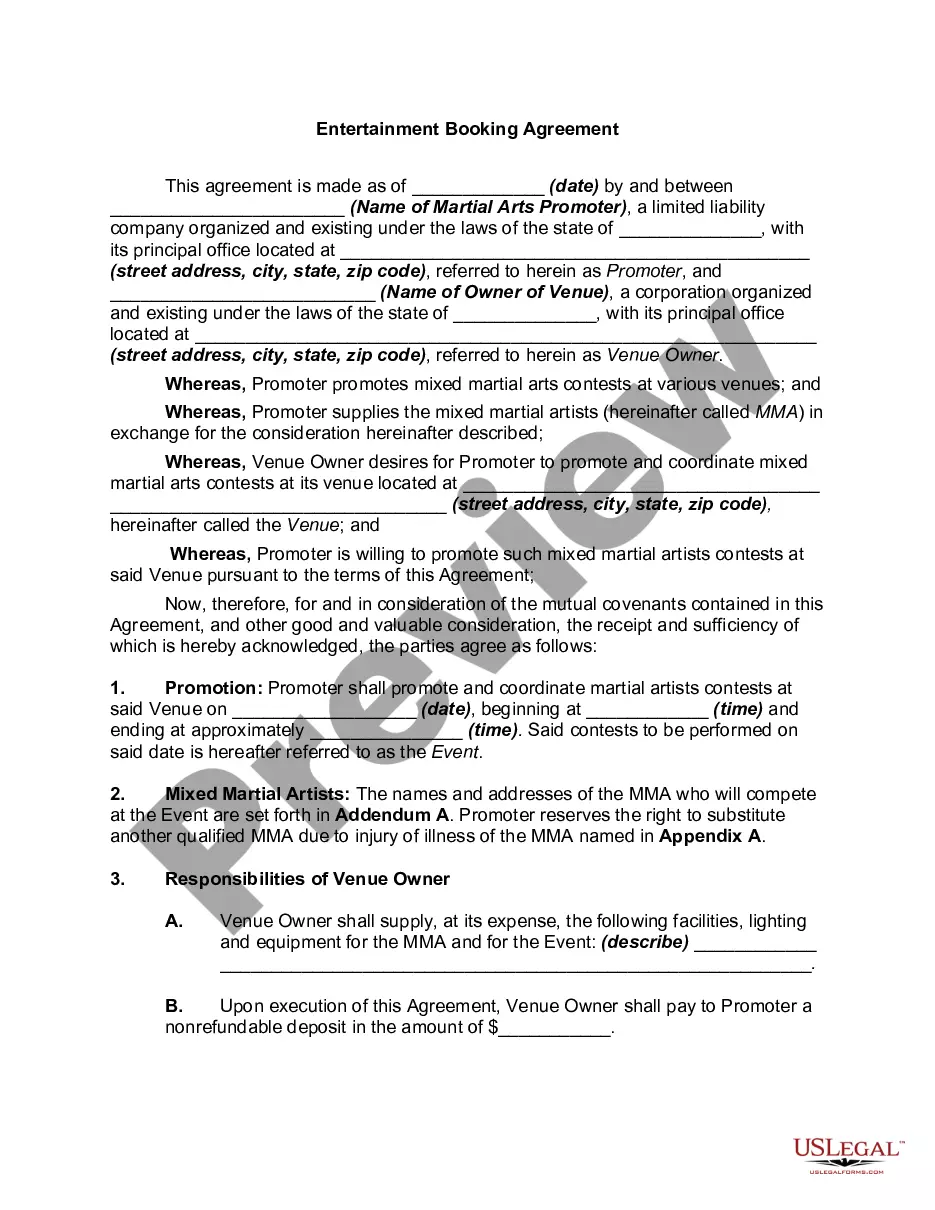
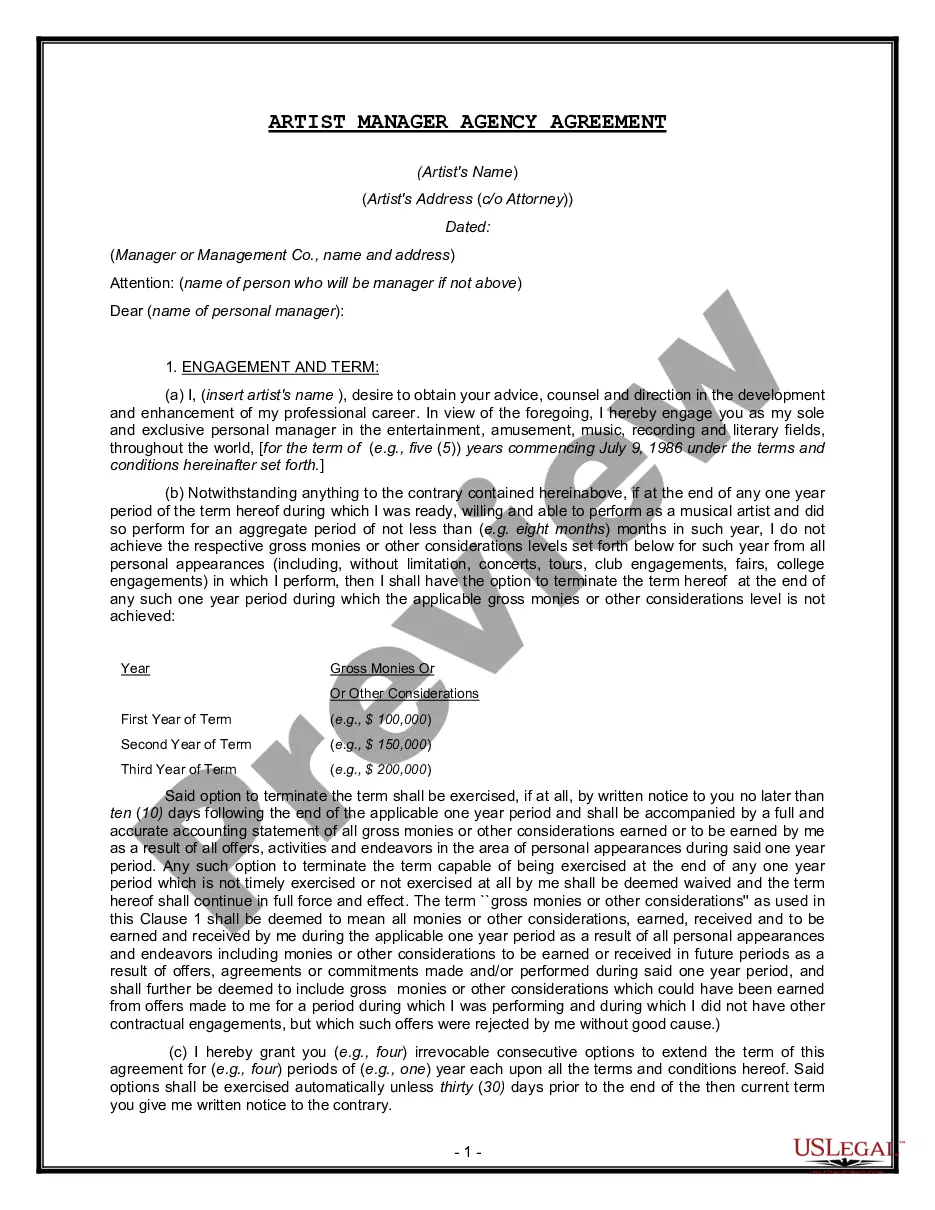
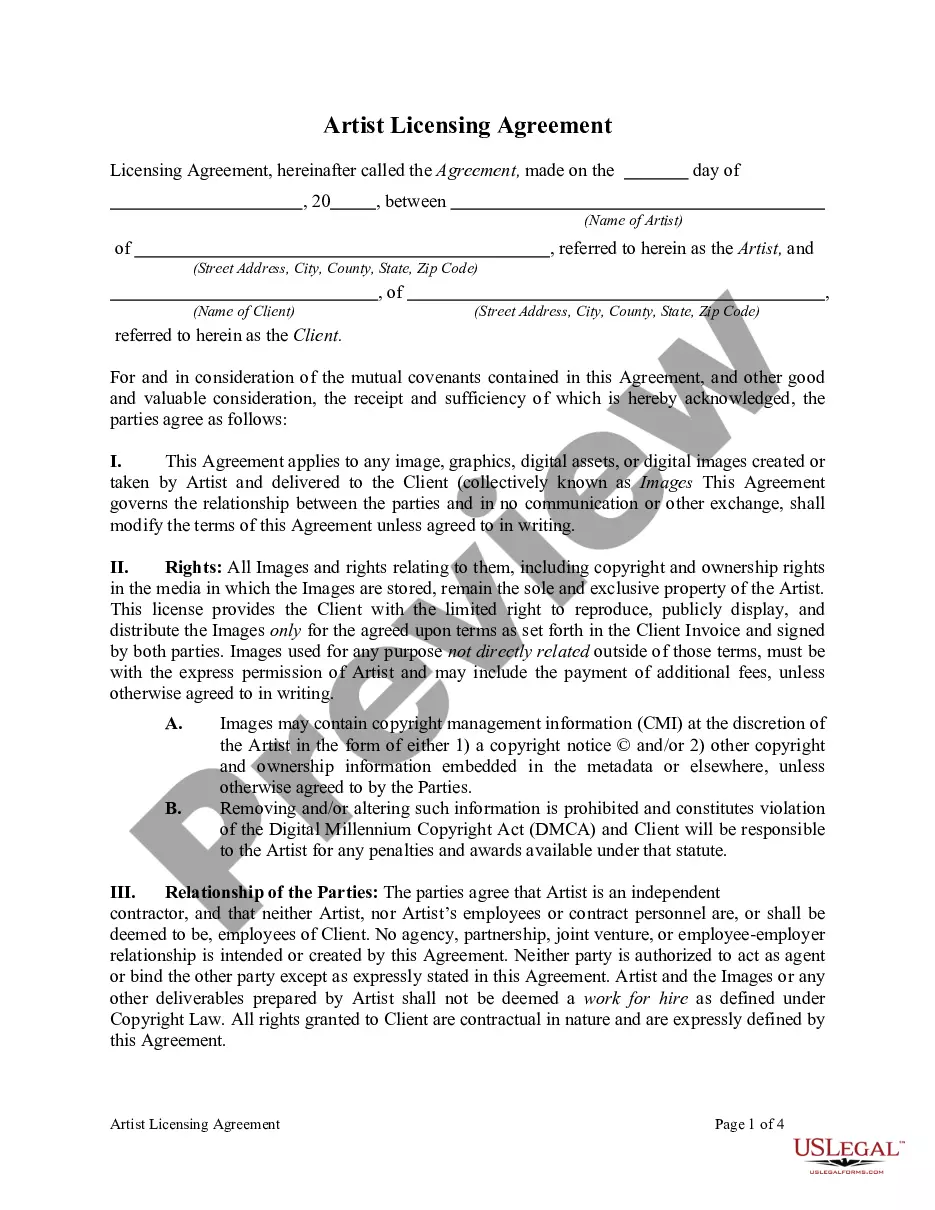
Talent Management Contract For The Twenty-first Century In Philadelphia
Description

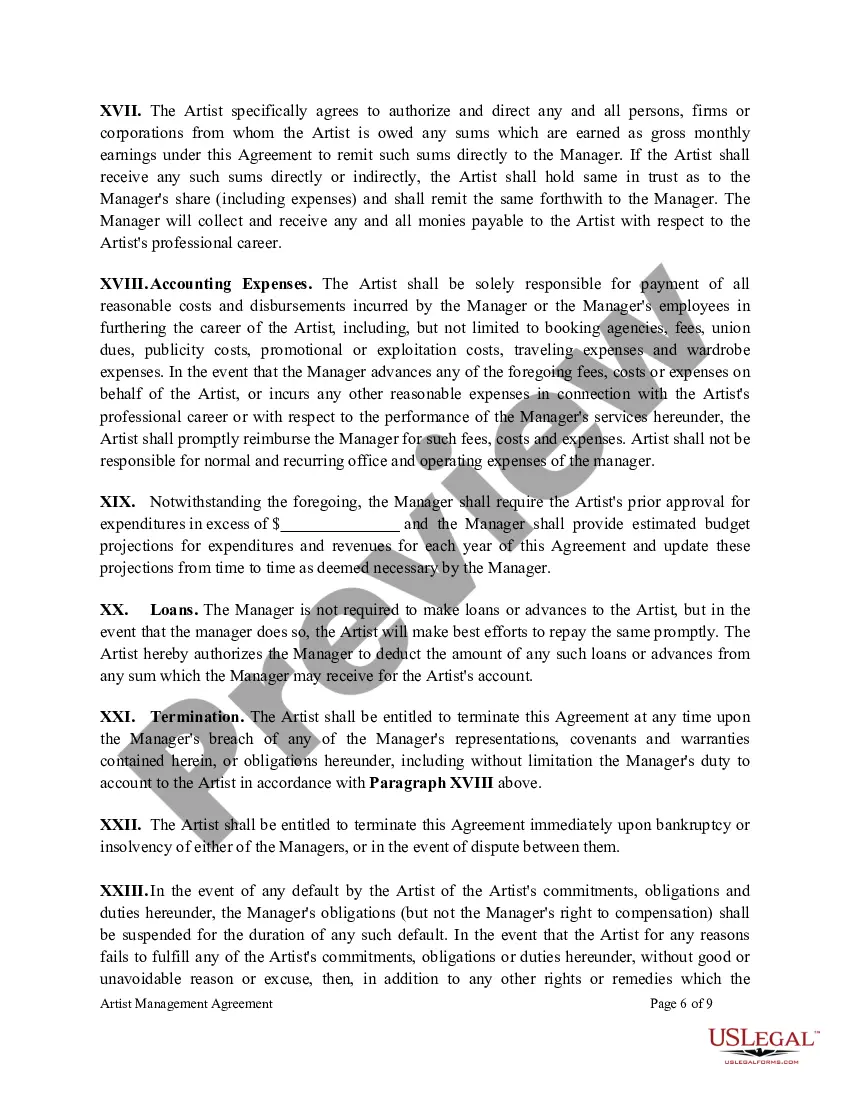
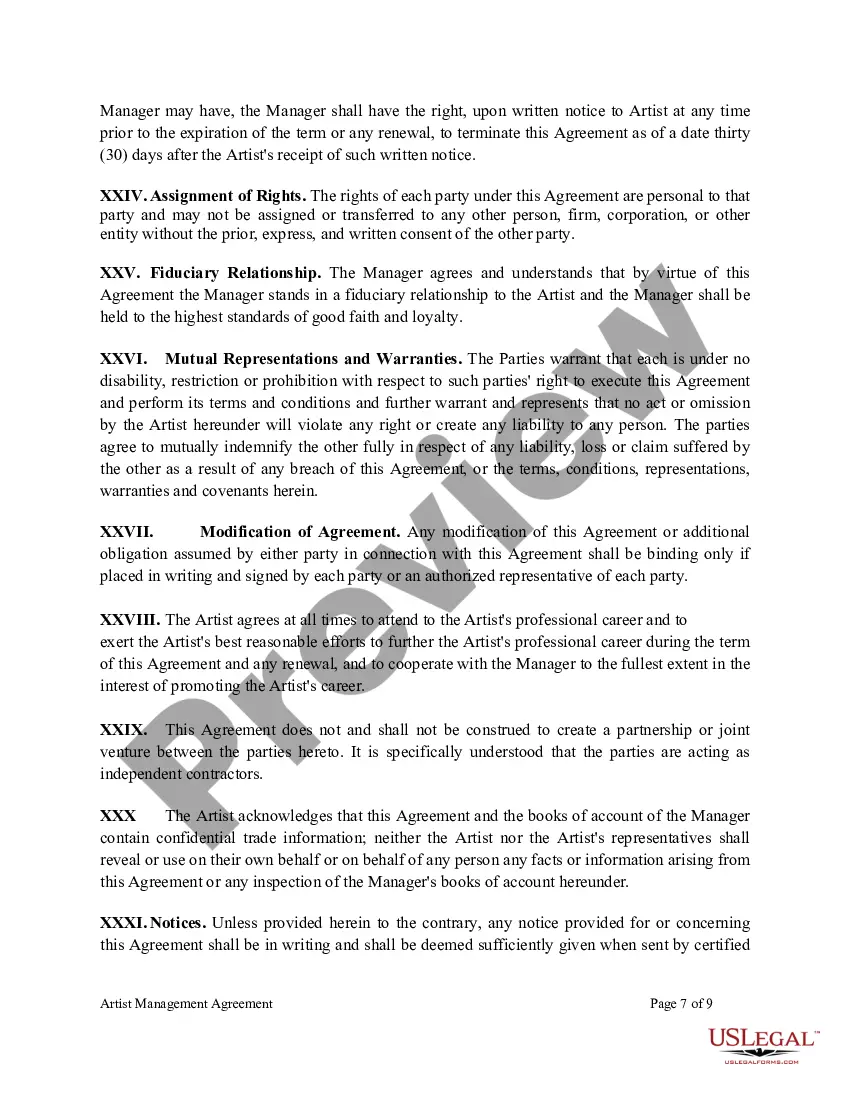
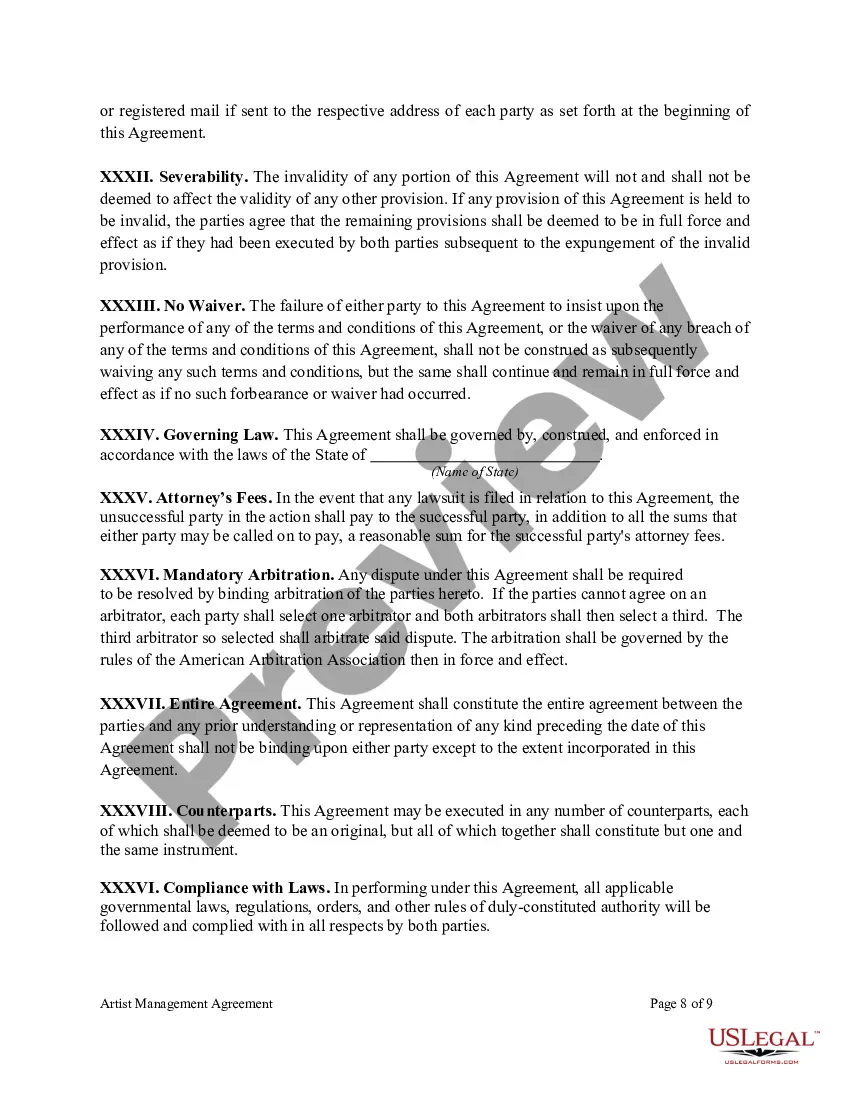

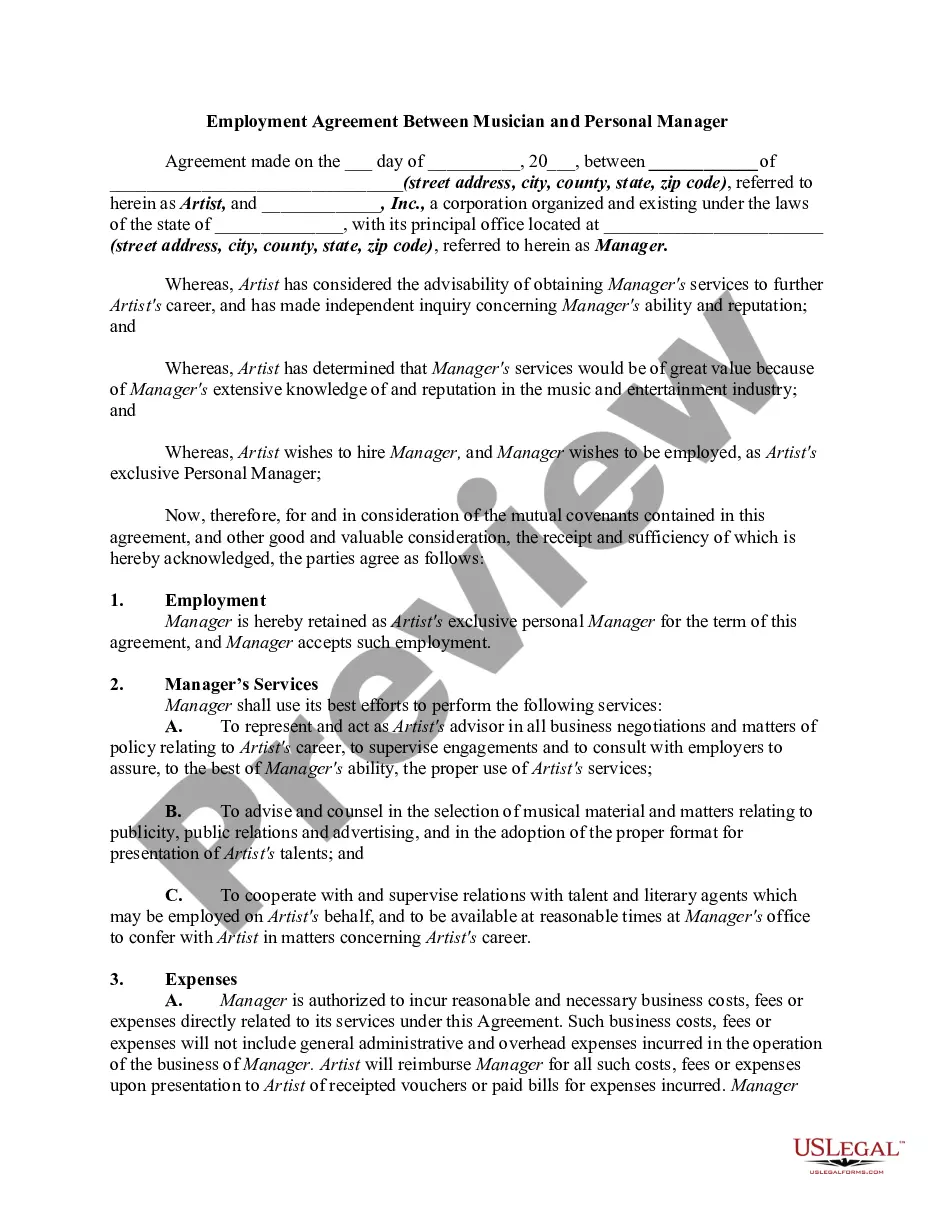
Get your form ready online
Our built-in tools help you complete, sign, share, and store your documents in one place.
Make edits, fill in missing information, and update formatting in US Legal Forms—just like you would in MS Word.
Download a copy, print it, send it by email, or mail it via USPS—whatever works best for your next step.
Sign and collect signatures with our SignNow integration. Send to multiple recipients, set reminders, and more. Go Premium to unlock E-Sign.
If this form requires notarization, complete it online through a secure video call—no need to meet a notary in person or wait for an appointment.
We protect your documents and personal data by following strict security and privacy standards.

Make edits, fill in missing information, and update formatting in US Legal Forms—just like you would in MS Word.

Download a copy, print it, send it by email, or mail it via USPS—whatever works best for your next step.

Sign and collect signatures with our SignNow integration. Send to multiple recipients, set reminders, and more. Go Premium to unlock E-Sign.

If this form requires notarization, complete it online through a secure video call—no need to meet a notary in person or wait for an appointment.

We protect your documents and personal data by following strict security and privacy standards.
Looking for another form?








Form popularity
FAQ
The talent management process usually includes the following steps: Planning. Attracting talent. Selecting. Developing. Retaining. Transitioning.
The 3 Cs - Competency, Commitment, and Contribution - are inseparable in the realm of talent management.
How to create a talent management plan Understand overall business objectives. Take inventory of team member skills and skill gaps. Tap into outside expertise. Write out the goals and priorities of the strategy. Implement technology to improve efficiency. Track and analyze key metrics. Identify ways to improve company culture.
There are five fundamentals of effective talent management strategy that can help companies overcome these and other common challenges. Drive goal alignment and determine metrics. Create a strong employer brand. Focus on employee experience. Encourage a high-performance culture. Gain a single-source view of employees.
In brief, integrated talent management is the coordination of traditional HR sub-functions—recruitment and selection, workforce planning, performance management, learning and development, recognition, and succession planning—to more strategically leverage talent.
A typical talent management framework may include the following areas: Talent strategy and planning. Talent acquisition. Employee performance management. Training and development. Succession planning and identifying. Total rewards.
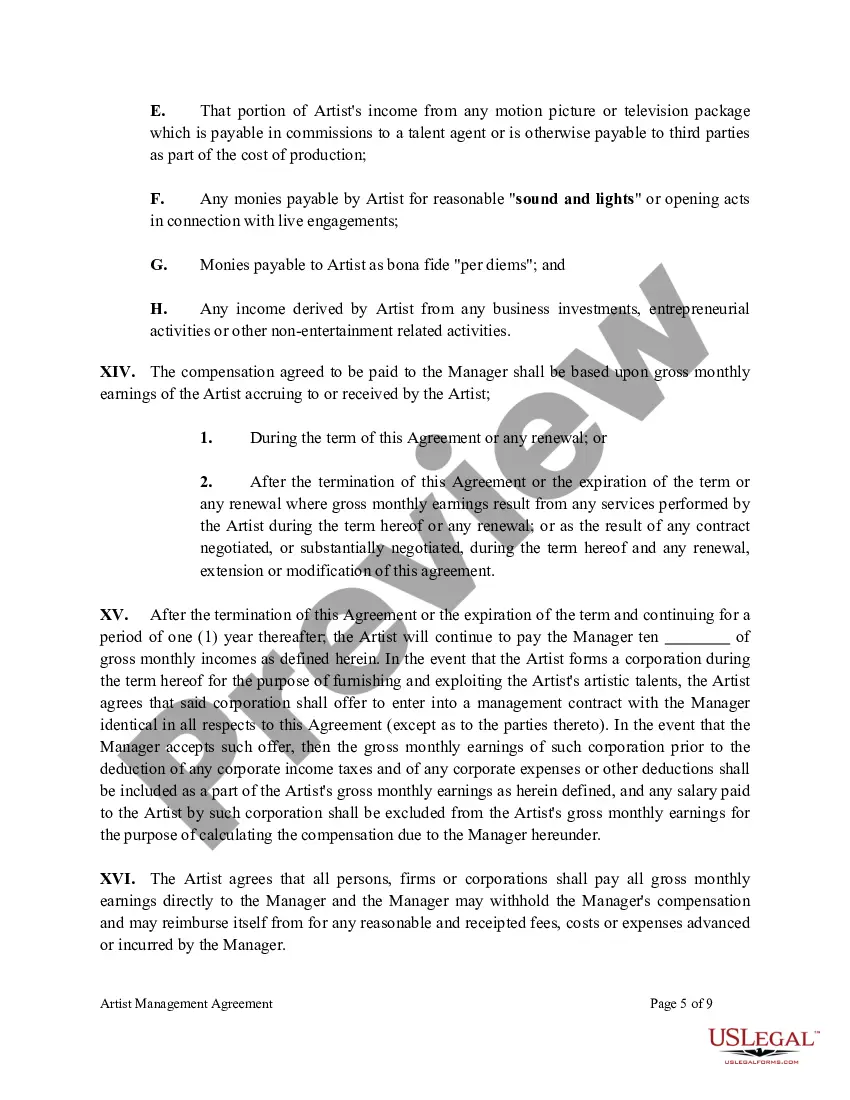
The most common distribution is 15-20% for the artists and 75-80% for labels but it can go up to 50-50 with indie labels. For example, if you sign a 360° contract, your record label manages all aspects of your music project, from manufacturing to distribution, from marketing to publishing to sub-licensing, and more.
This typically involves providing written notice within the specified timeframe and adhering to any other requirements stated in the agreement. Remember, getting out of a music management contract can be a complex process, and it's important to approach it carefully before terminating.
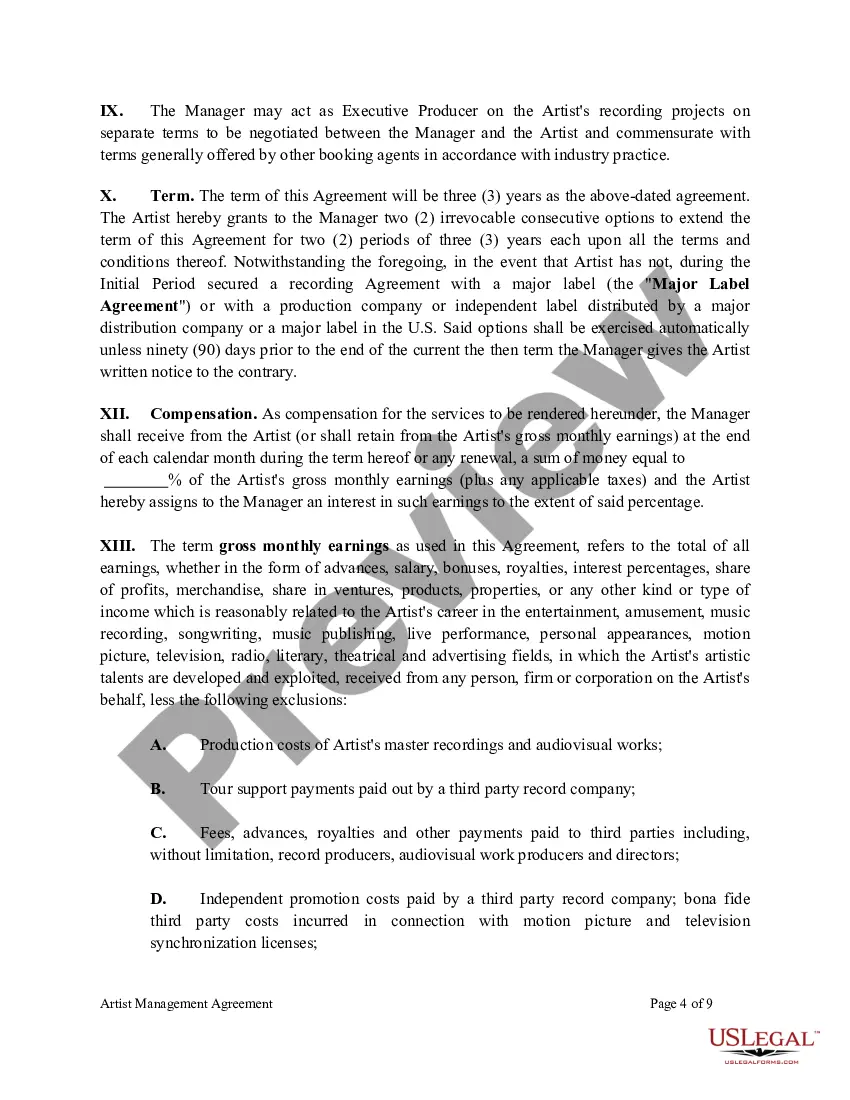
How long is a normal artist manager contract? The standard length of the management contract is three years but it can vary from 2 to 5 years on a case by case basis. Most contracts also include a "Sunset" clause.
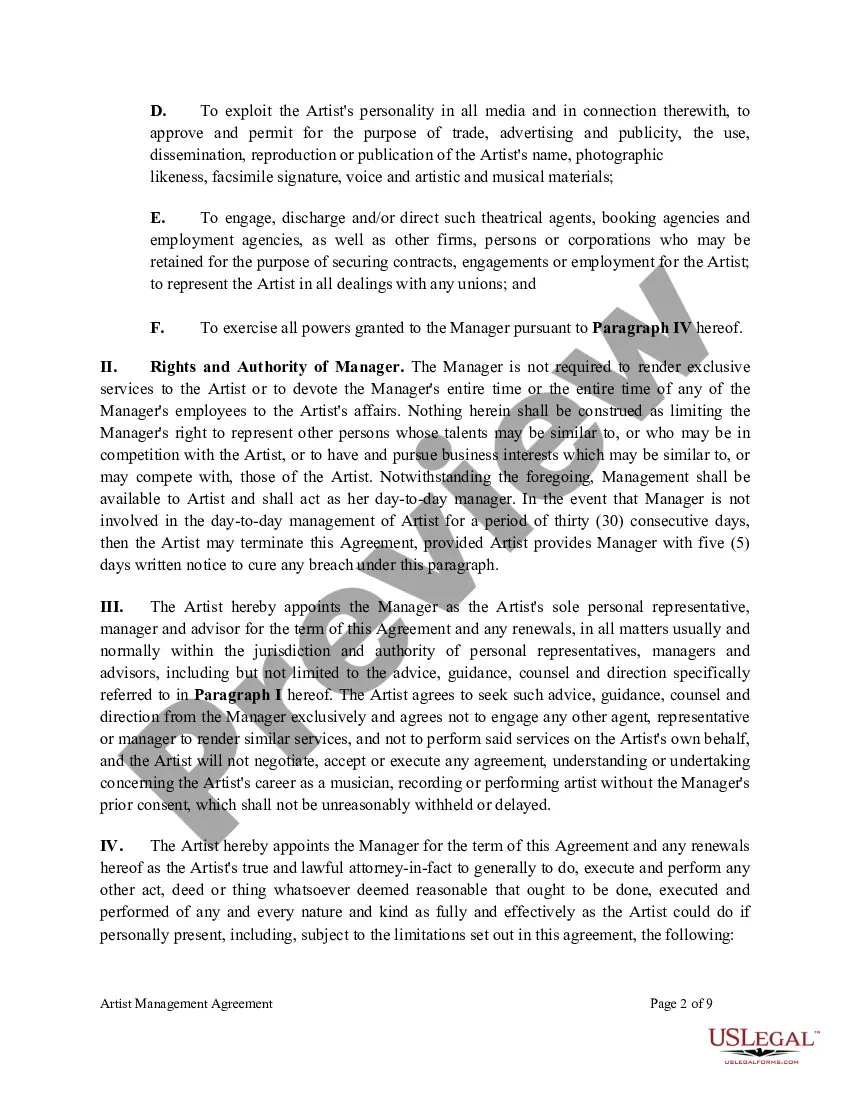
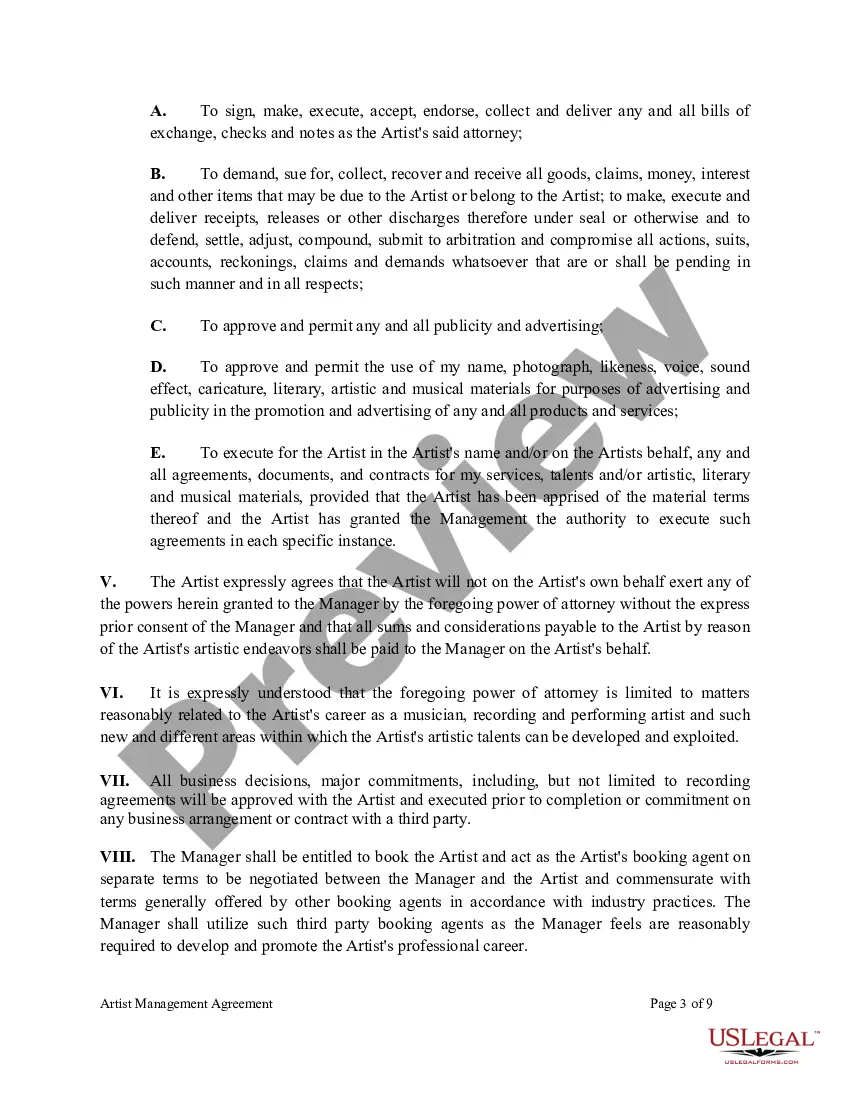
Most actors or other entertainment talents retain an agent or manager to represent them. This usually involves signing a talent representation agreement that defines the services provided by the agent and the compensation received in return.
