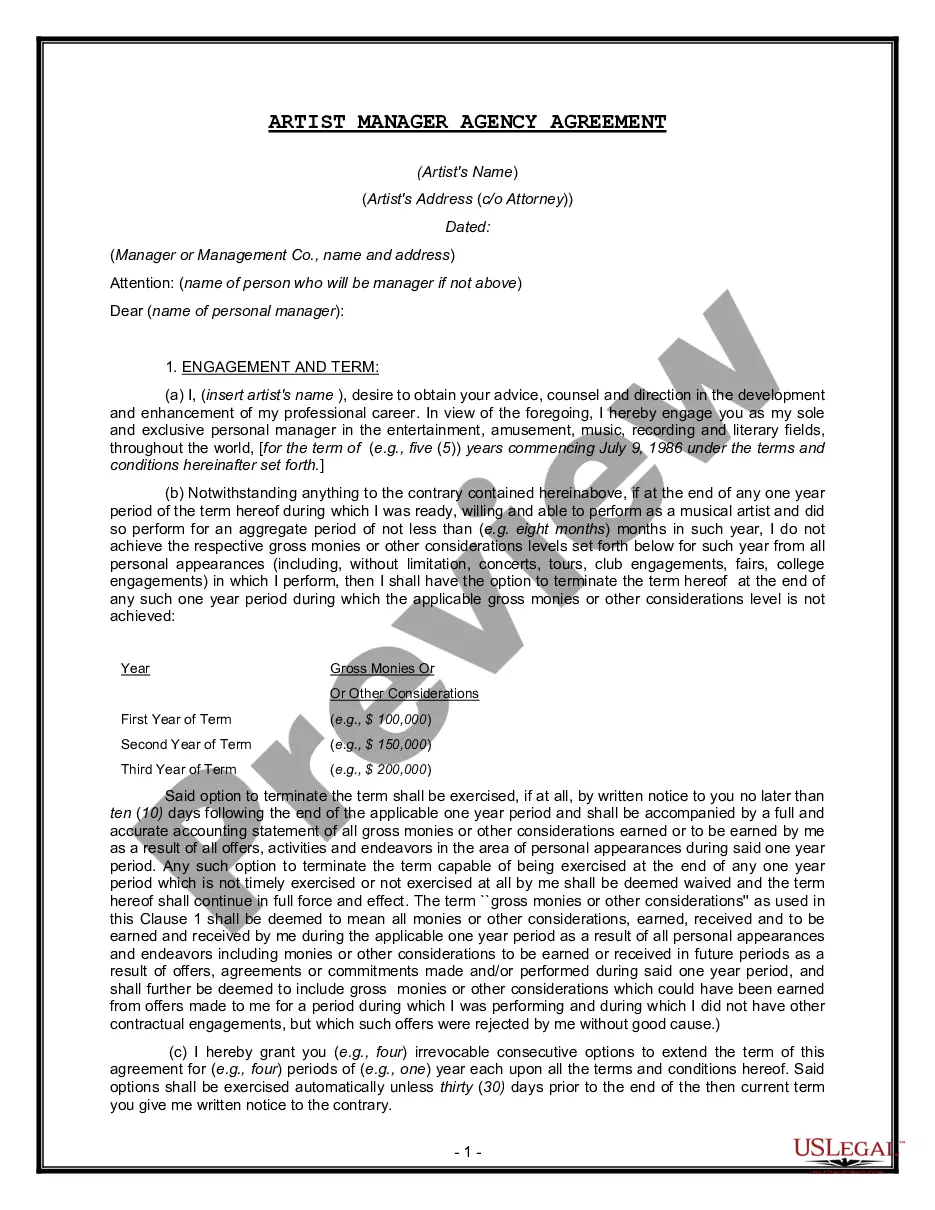
Basic Artist Management Contract With Music Industry In Oakland
Description

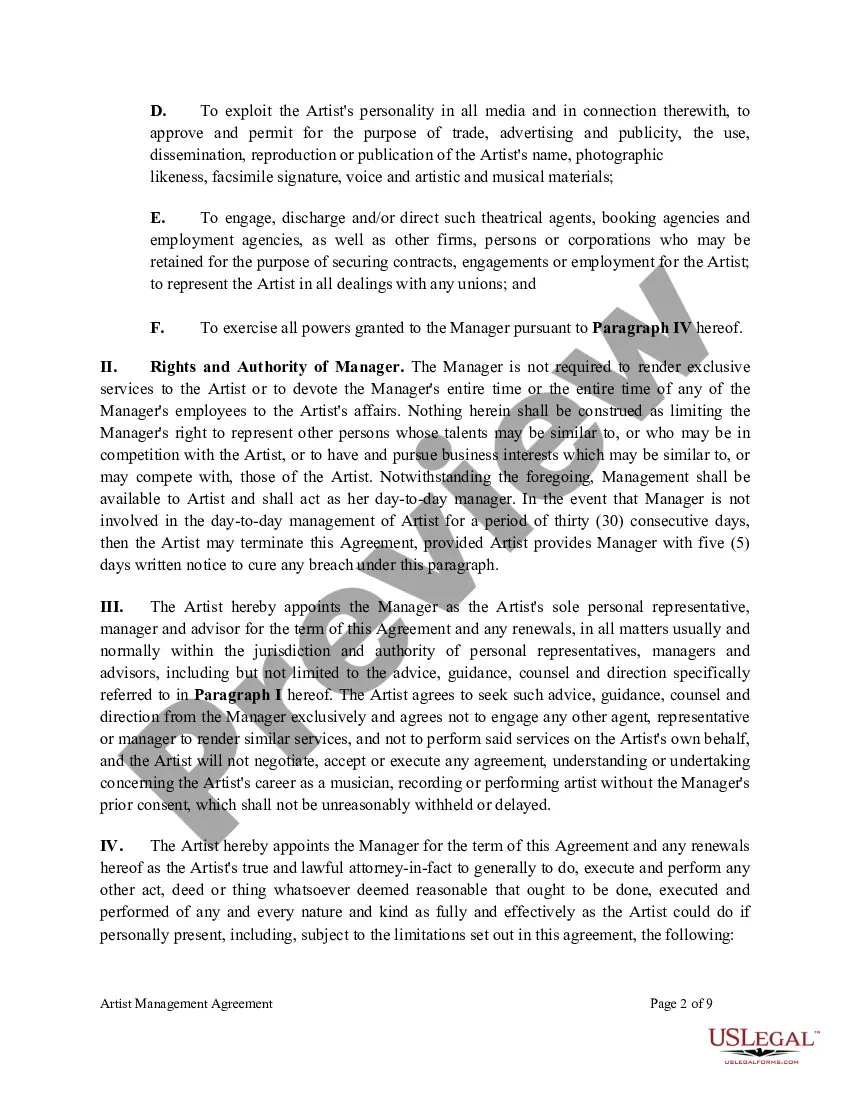
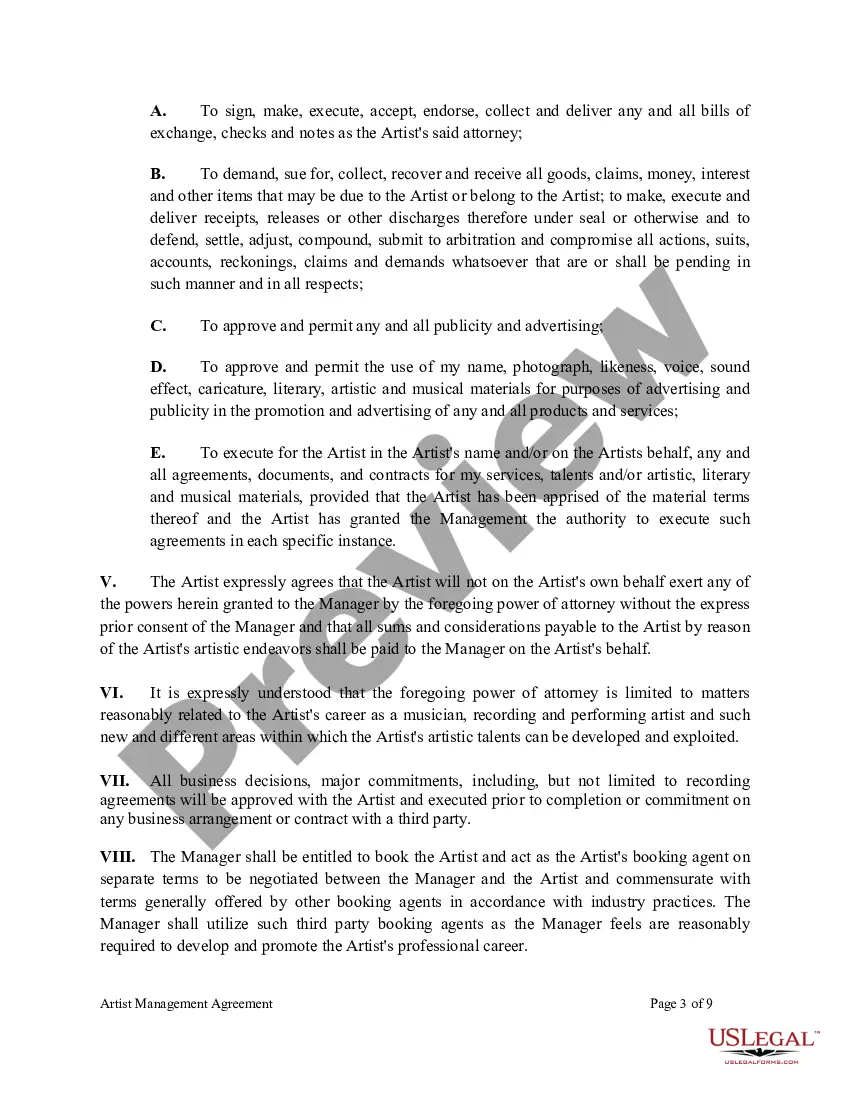
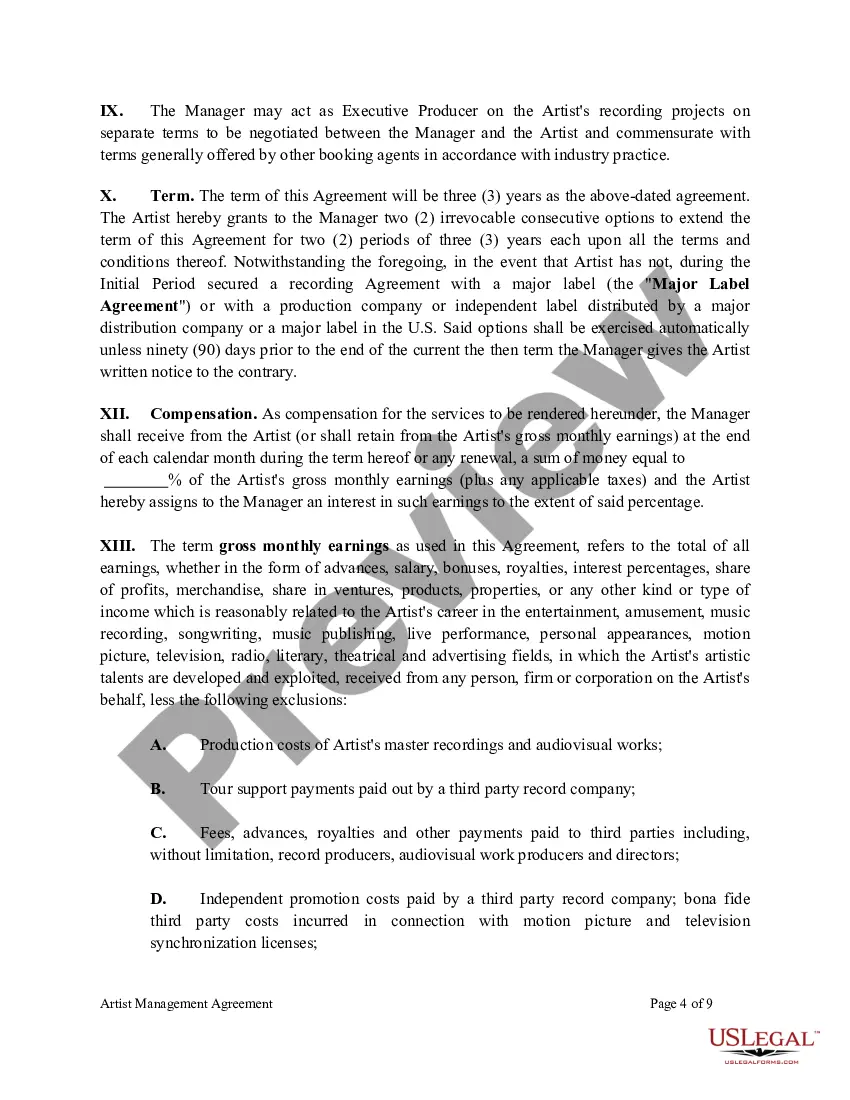
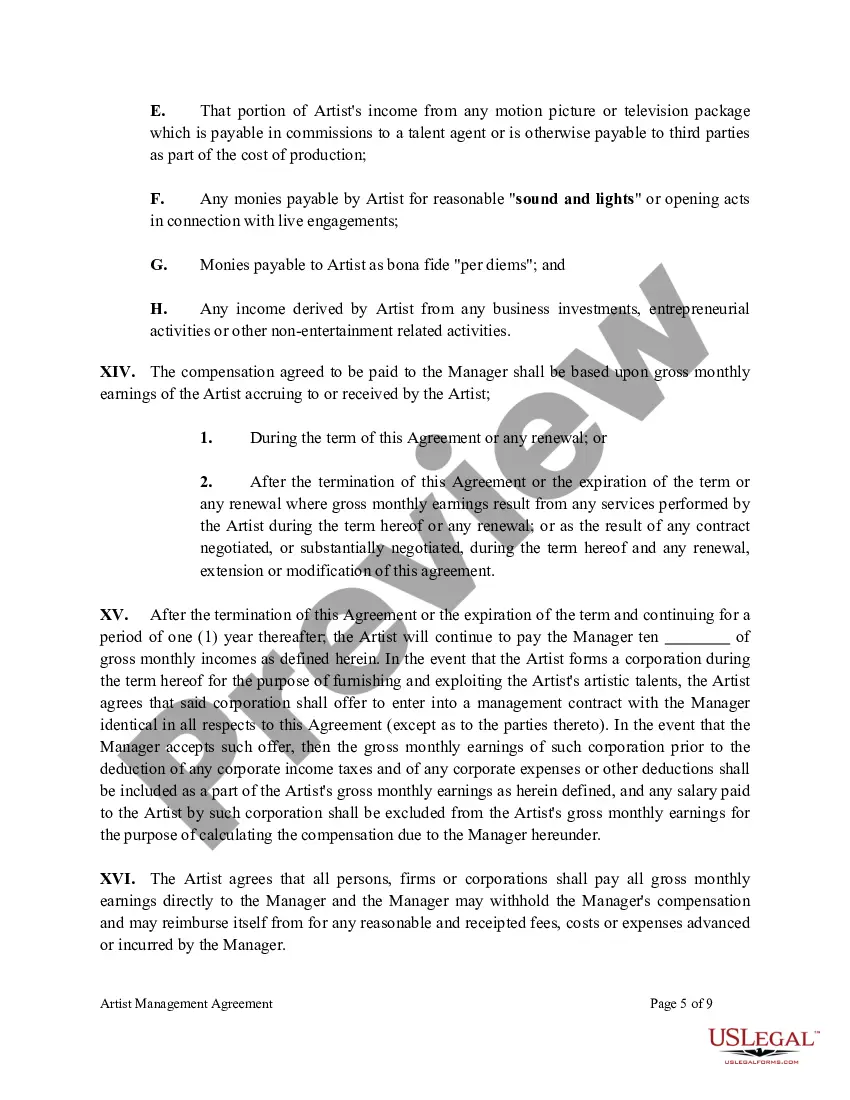
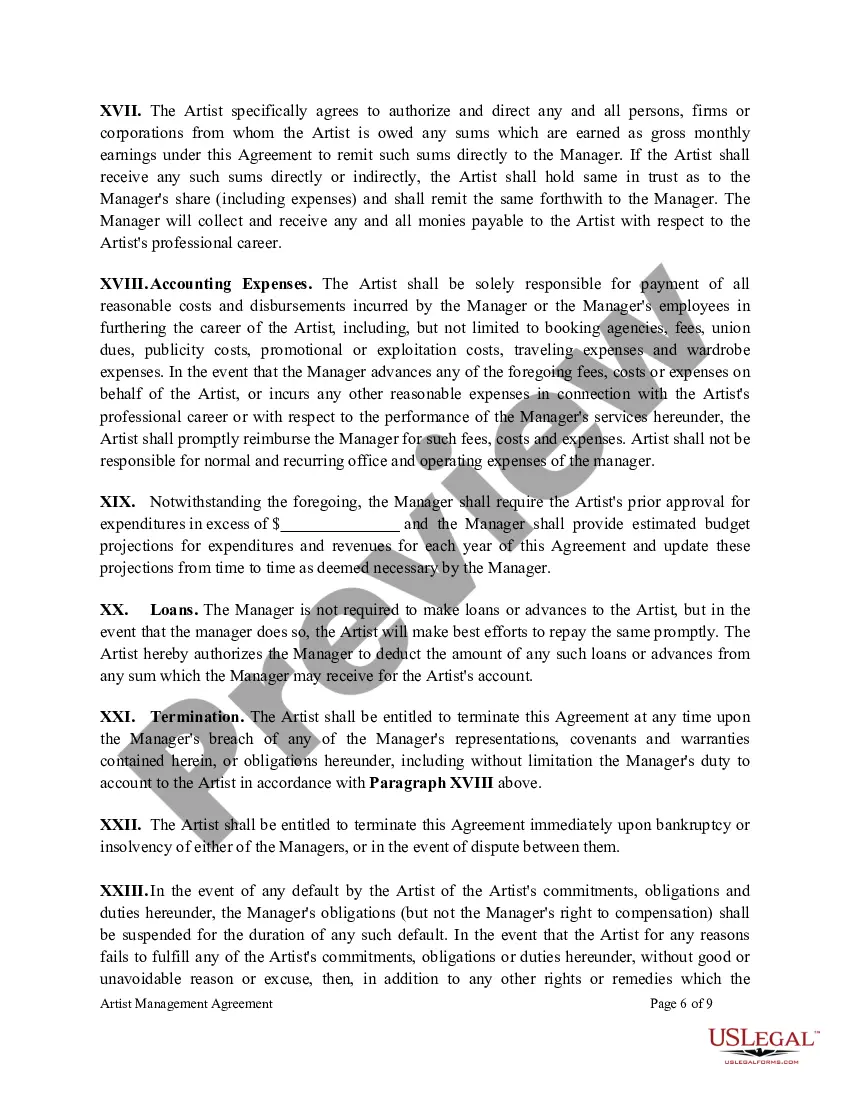
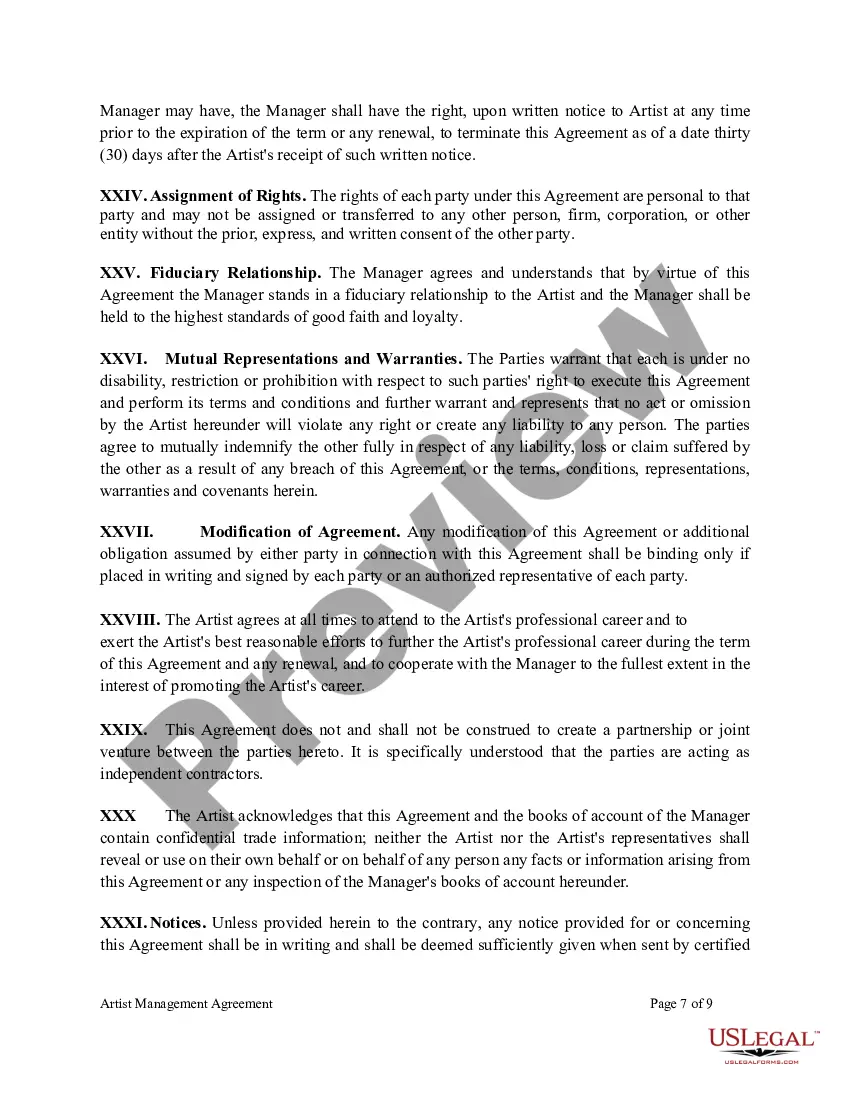
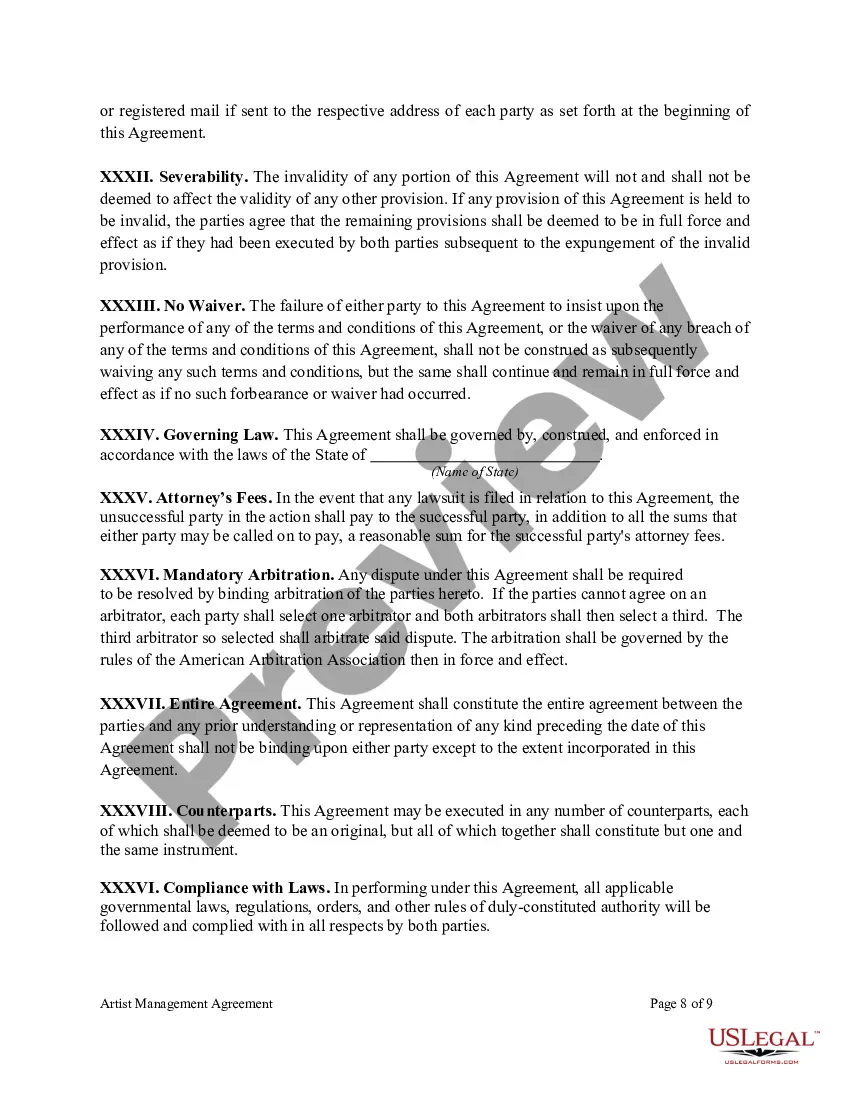

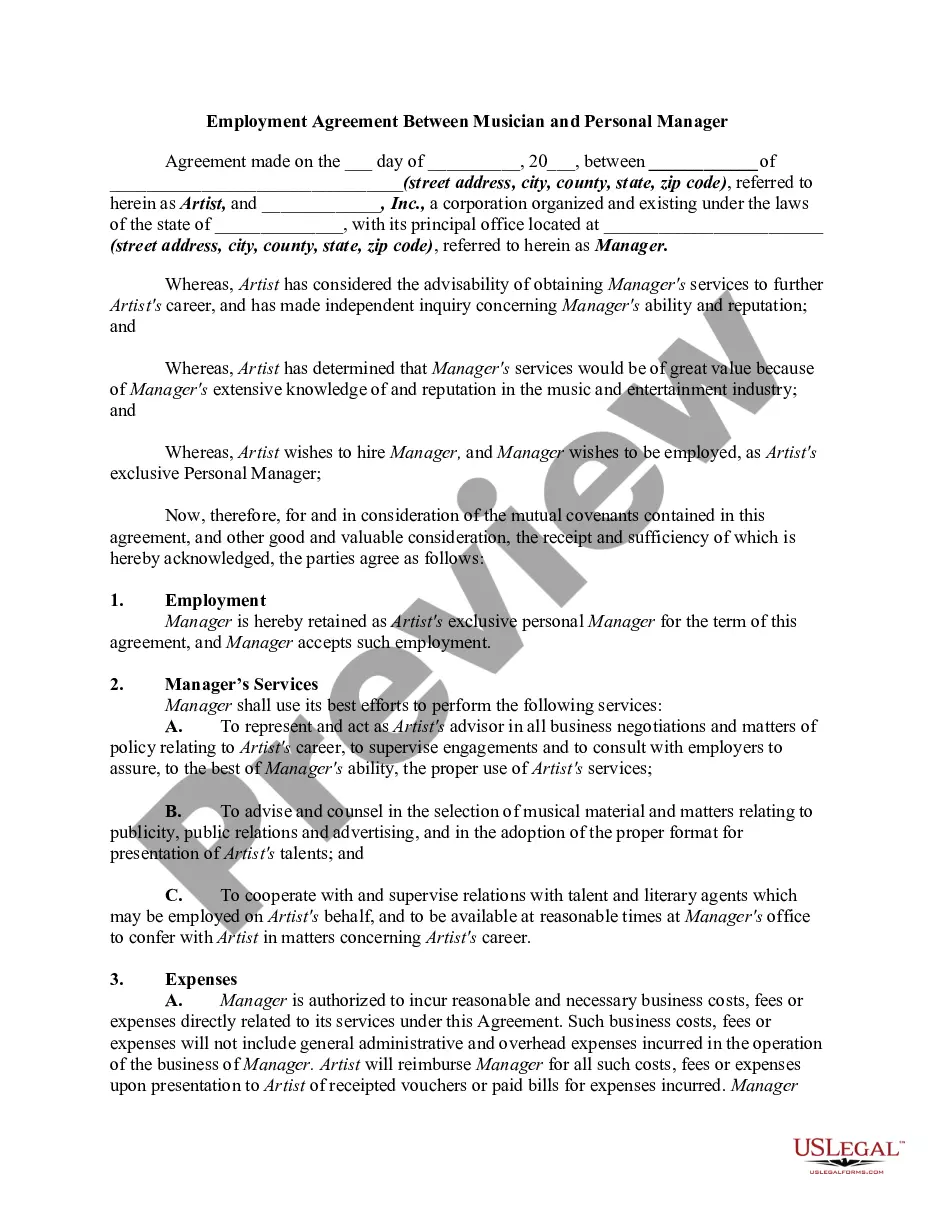

Get your form ready online
Our built-in tools help you complete, sign, share, and store your documents in one place.
Make edits, fill in missing information, and update formatting in US Legal Forms—just like you would in MS Word.
Download a copy, print it, send it by email, or mail it via USPS—whatever works best for your next step.
Sign and collect signatures with our SignNow integration. Send to multiple recipients, set reminders, and more. Go Premium to unlock E-Sign.
If this form requires notarization, complete it online through a secure video call—no need to meet a notary in person or wait for an appointment.
We protect your documents and personal data by following strict security and privacy standards.

Make edits, fill in missing information, and update formatting in US Legal Forms—just like you would in MS Word.

Download a copy, print it, send it by email, or mail it via USPS—whatever works best for your next step.

Sign and collect signatures with our SignNow integration. Send to multiple recipients, set reminders, and more. Go Premium to unlock E-Sign.

If this form requires notarization, complete it online through a secure video call—no need to meet a notary in person or wait for an appointment.

We protect your documents and personal data by following strict security and privacy standards.
Looking for another form?








Form popularity
FAQ
Managers' commissions are typically between 15 to 20% of an artist's gross income. Whether it's 15% or 20% really depends on the level of the band and the bargaining power of each party. I've seen some net deals, but they are extremely rare. That being said, I always push for a net commission on merchandise.
As a general rule, managers take a percentage of all income generated by the artist in exchange for their management services. Commission rates typically range from 15-25% of the artist's gross income from: Recording royalties: Sales, streaming and licensing of recorded music.
As a general rule, managers take a percentage of all income generated by the artist in exchange for their management services. Commission rates typically range from 15-25% of the artist's gross income from: Recording royalties: Sales, streaming and licensing of recorded music.
Your Music Recording Contract should cover details like: Compensation and royalties. Where and when the album will be recorded. The album's release date. Who has creative control over specific elements of the album. The termination clause. The exclusive agreement clause. Dispute resolution. Promotional appearances.
A Music Recording Contract is a legal agreement between a music recording company and an artist or group that creates music. Recording companies use the contract to outline the terms for creating recorded music with the artist. Your Music Recording Contract should cover details like: Compensation and royalties.
Here are some steps you can follow to start your career as a music manager: Earn a bachelor's degree. Complete an internship. Stay updated on trends in the industry. Apply for jobs with established artists or companies. Find your own clients.
The most common distribution is 15-20% for the artists and 75-80% for labels but it can go up to 50-50 with indie labels. For example, if you sign a 360° contract, your record label manages all aspects of your music project, from manufacturing to distribution, from marketing to publishing to sub-licensing, and more.
As a general rule, managers take a percentage of all income generated by the artist in exchange for their management services. Commission rates typically range from 15-25% of the artist's gross income from: Recording royalties: Sales, streaming and licensing of recorded music.
Networking: Attend music industry events, conferences, or concerts. Networking can often lead to personal connections with managers or their representatives. LinkedIn: Search for the artist's management team on LinkedIn. Professionals in the industry often maintain profiles that can provide contact details.
