Artist Agreement Form Contract For Debt In Middlesex
Description

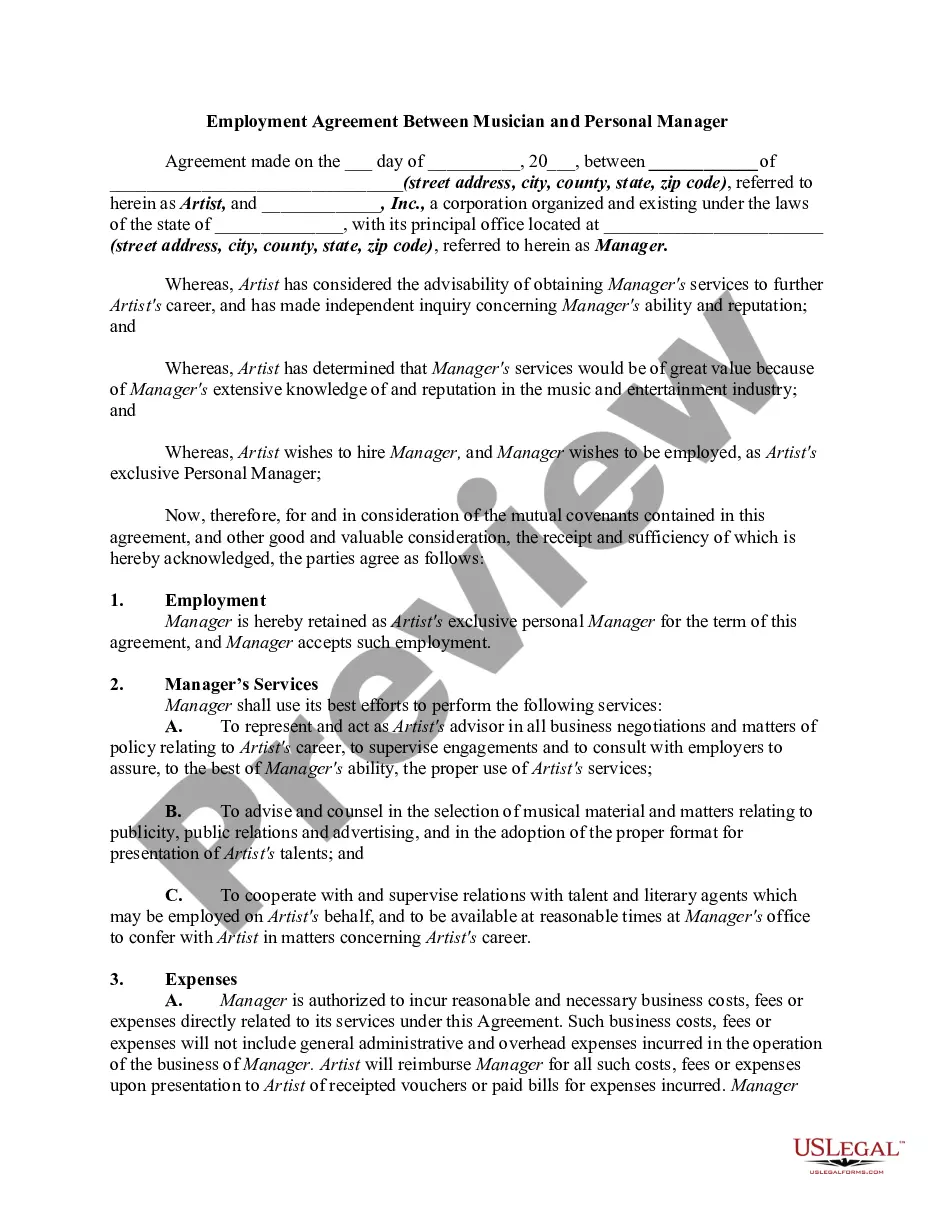
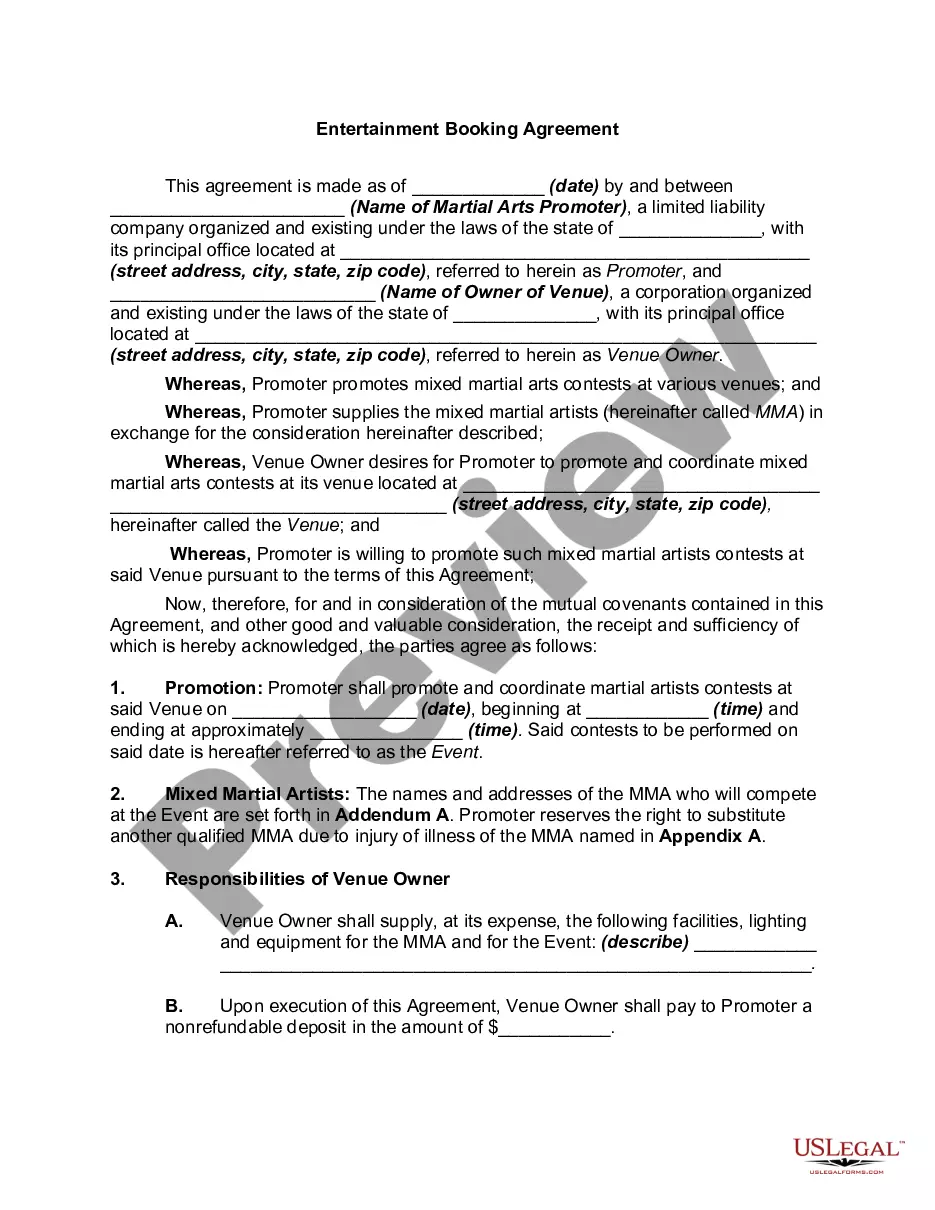
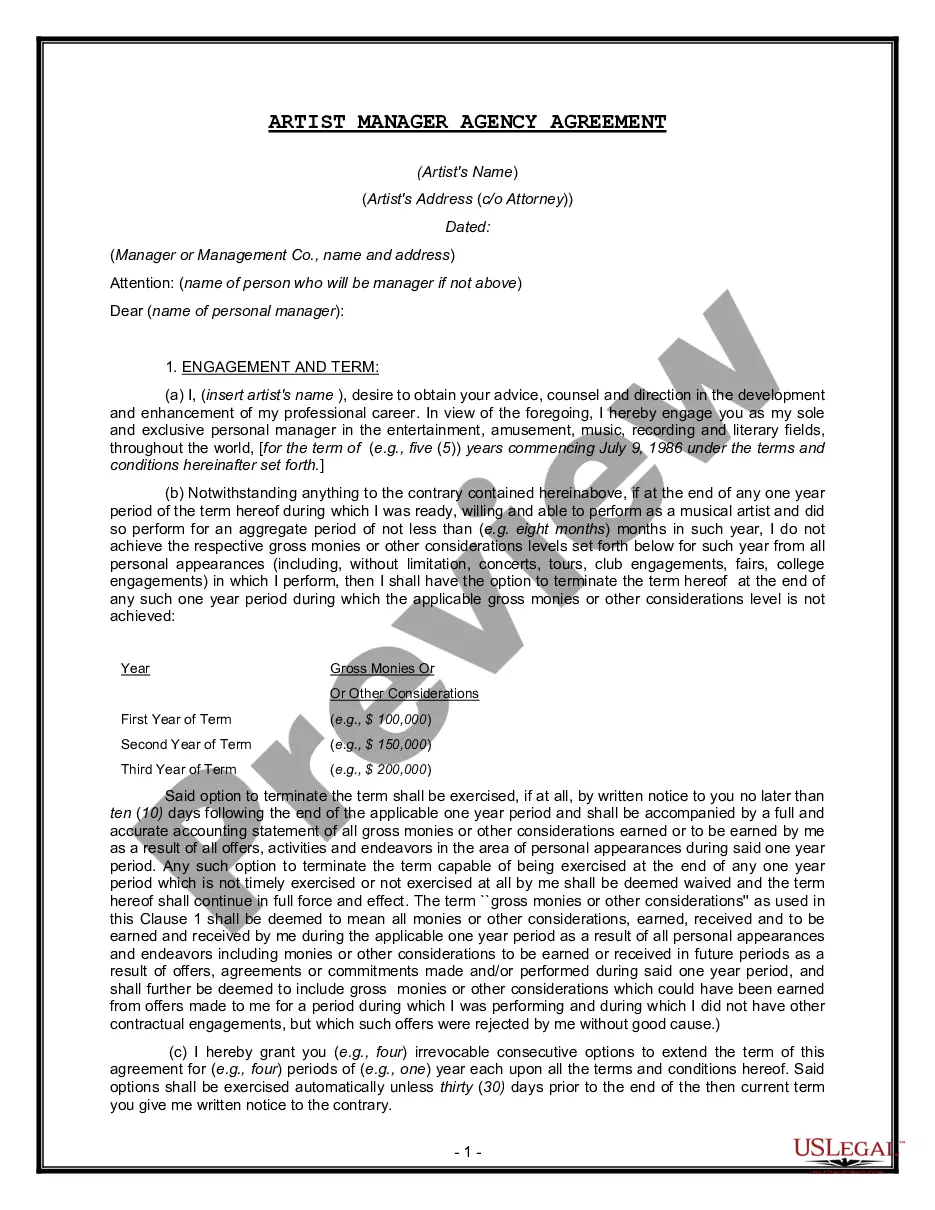
Get your form ready online
Our built-in tools help you complete, sign, share, and store your documents in one place.
Make edits, fill in missing information, and update formatting in US Legal Forms—just like you would in MS Word.
Download a copy, print it, send it by email, or mail it via USPS—whatever works best for your next step.
Sign and collect signatures with our SignNow integration. Send to multiple recipients, set reminders, and more. Go Premium to unlock E-Sign.
If this form requires notarization, complete it online through a secure video call—no need to meet a notary in person or wait for an appointment.
We protect your documents and personal data by following strict security and privacy standards.

Make edits, fill in missing information, and update formatting in US Legal Forms—just like you would in MS Word.

Download a copy, print it, send it by email, or mail it via USPS—whatever works best for your next step.

Sign and collect signatures with our SignNow integration. Send to multiple recipients, set reminders, and more. Go Premium to unlock E-Sign.

If this form requires notarization, complete it online through a secure video call—no need to meet a notary in person or wait for an appointment.

We protect your documents and personal data by following strict security and privacy standards.
Looking for another form?










Form popularity
FAQ
Write the contract in six steps Start with a contract template. Open with the basic information. Describe in detail what you have agreed to. Include a description of how the contract will be ended. Write into the contract which laws apply and how disputes will be resolved. Include space for signatures.
A contract is mandatory for any commission. Write down every detail in the contract, such as the size and media of the artwork, your compensation, due dates for payments, who is responsible for framing, installation, delivery of the artwork, etc. If your client balks at signing a contract, WALK AWAY.
These usually include the legal names of both parties in the agreement, their legal addresses, and any other pertinent information such as tax identification numbers, if needed by the jurisdiction in which you're operating. It's also best to include relevant contact information for both parties.
Individual Artist Agreement. The Individual Artist Agreement is a contract entered into between the Artist and the AGMA signatory company for which they are working. It is a legal agreement that binds the Artist and the Company to fulfill all the terms and conditions contained in it.
: an informal agreement between two or more persons containing one or more promises and usually legally unenforceable even when supported by a sufficient consideration except for certain pacta declared enforceable by praetorian edicts and imperial constitutions if arising out of a lawful cause or inducement.
An exclusive agreement in music licensing means that the artist grants all the rights to a particular piece of music to one party (such as a publisher or a record label) exclusively. This means no other party can use the music without permission from the licensee.
Example: If John promises to give Jane $100 for no reason, and Jane agrees to the promise, this is a nudum pactum because there is no consideration exchanged between them. If John fails to give Jane the $100, she cannot legally enforce the promise because there was no consideration.
The contract term period typically ranges from 1-3 years for young artists or those just starting out. Long-term agreements, which can be 5-10 years long or longer, are usually offered to more established and accomplished musicians or those with a successful track record.
A pactum is an agreement or convention, usually falling short of a contract. It is a type of agreement that is enforceable by law, but not as strong as a contract.
Generally, to be legally valid, most contracts must contain two elements: All parties must agree about an offer made by one party and accepted by the other. Something of value must be exchanged for something else of value.
