Tour Manager Contract For Music Performance In Maricopa
Description










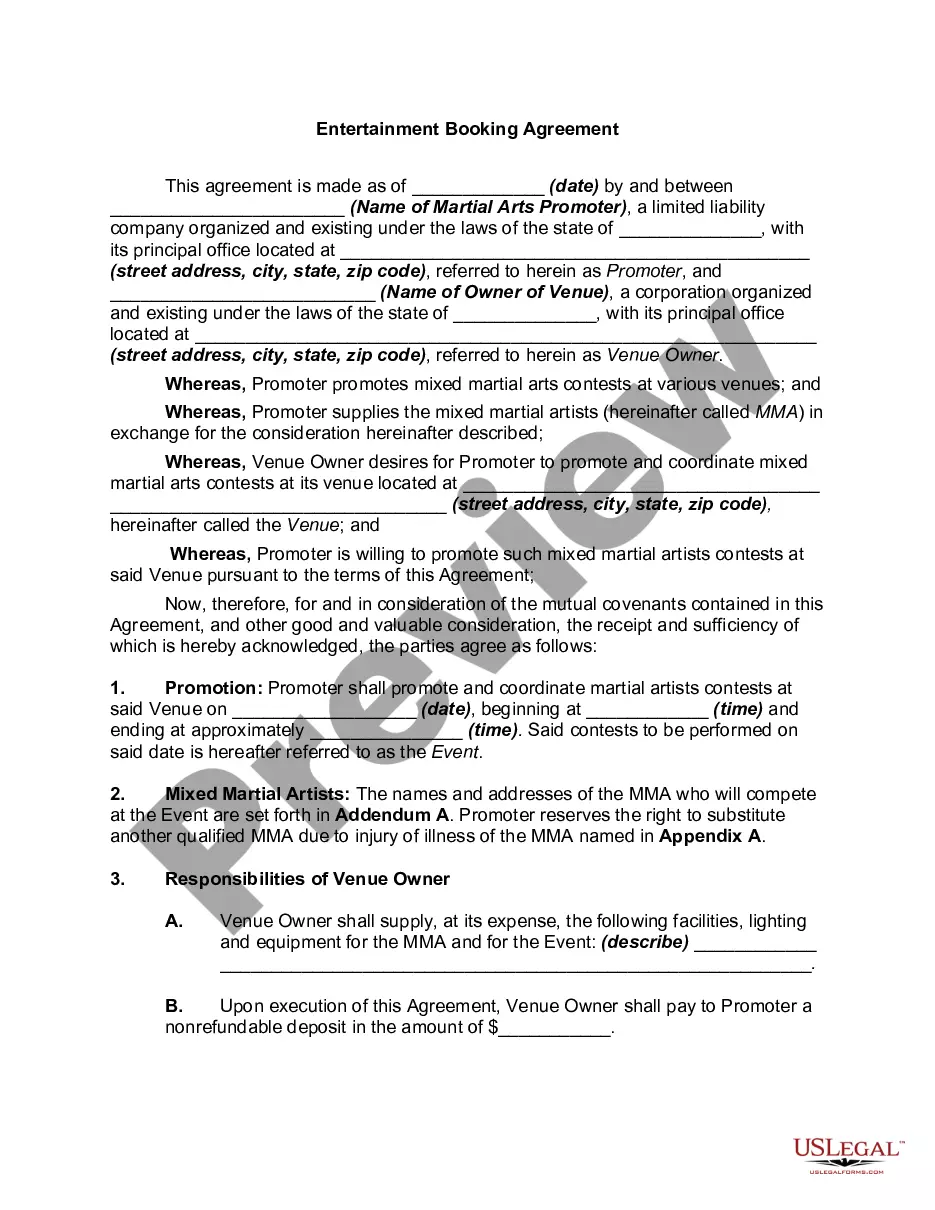
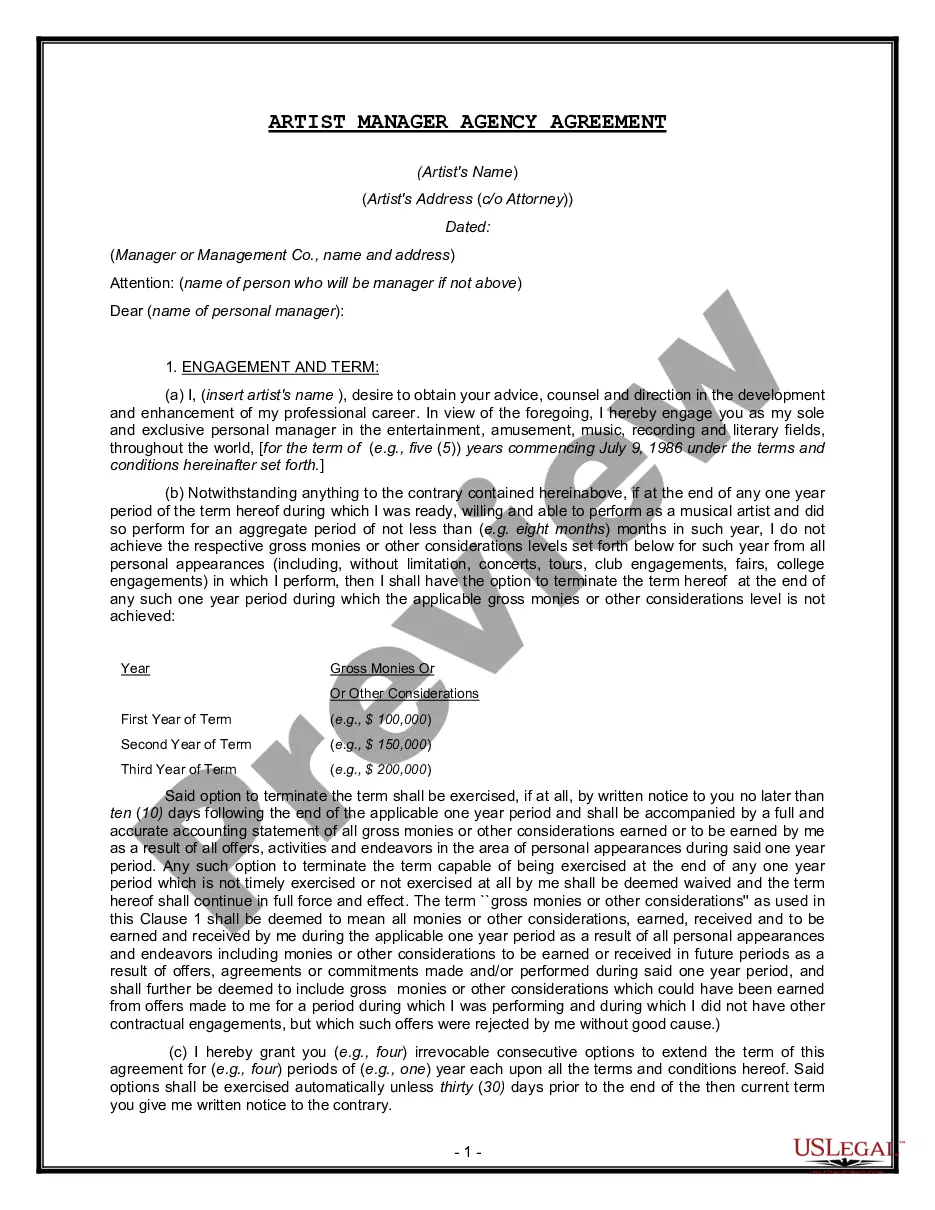
Get your form ready online
Our built-in tools help you complete, sign, share, and store your documents in one place.
Make edits, fill in missing information, and update formatting in US Legal Forms—just like you would in MS Word.
Download a copy, print it, send it by email, or mail it via USPS—whatever works best for your next step.
Sign and collect signatures with our SignNow integration. Send to multiple recipients, set reminders, and more. Go Premium to unlock E-Sign.
If this form requires notarization, complete it online through a secure video call—no need to meet a notary in person or wait for an appointment.
We protect your documents and personal data by following strict security and privacy standards.

Make edits, fill in missing information, and update formatting in US Legal Forms—just like you would in MS Word.

Download a copy, print it, send it by email, or mail it via USPS—whatever works best for your next step.

Sign and collect signatures with our SignNow integration. Send to multiple recipients, set reminders, and more. Go Premium to unlock E-Sign.

If this form requires notarization, complete it online through a secure video call—no need to meet a notary in person or wait for an appointment.

We protect your documents and personal data by following strict security and privacy standards.
Looking for another form?






Form popularity
FAQ
Length of Contract The initial term should be no more than 18 months, with renewals to be no longer than three years. Never commit for any longer period than that, especially with an entity that you do not know well, regardless of how great you think he or she is today.
How long is a normal artist manager contract? The standard length of the management contract is three years but it can vary from 2 to 5 years on a case by case basis. Most contracts also include a "Sunset" clause.
Short-term contracts, often lasting one to three years, are more prevalent for young performers or those just starting. Long-term agreements, which can be five to ten years long or longer, are only offered to more seasoned musicians or those with a successful track record.
Here are the basic steps you can take to become a tour manager: Pursue relevant education. Some employers may require a bachelor's degree, while others need only a high school diploma or certificate. Gain experience. Develop a professional network. Perfect your social skills. Identify a mentor.
Record contracts typically state their duration as a requirement for the artist to make an initial recording within a certain time frame (often one year), followed by successive one-year (or occasionally multi-year) options to extend the contract for up to seven total albums for a total of seven years.
Managers' commissions are typically between 15 to 20% of an artist's gross income. Whether it's 15% or 20% really depends on the level of the band and the bargaining power of each party.
Managers typically receive 15% to 20% of the artist's gross earnings (before any expenses are deducted), but this figure can vary from contract to contract. For example, a manager might start at 20% and decrease his or her cut to 15% after a period of time or once the artist achieves a certain level in their career.
A work for hire contract is used in almost all music recording projects to ensure that a label (or a DIY artist) owns everything created as a result of the services of others involved in the recording process such as session musicians, producers, engineers, mixers, and masterers.
What does a Tour Manager do? Tour managers take care of nearly every aspect of the lives of musicians and crew while on the road, providing organizational, administrative, and boots-on-the-ground support for the duration of a concert tour.
Kind of in general if it's a solo artist with hired musicians the artist has a bus of their own that maybe their tour manager and assistant are on, band and crew have a separate bus/buses, but a lot of times the artist will fly ahead anyway. If it's a long drive, like a few days, they may fly home in between.
