Artist Management Form For Project In Houston
Description

Get your form ready online
Our built-in tools help you complete, sign, share, and store your documents in one place.
Make edits, fill in missing information, and update formatting in US Legal Forms—just like you would in MS Word.
Download a copy, print it, send it by email, or mail it via USPS—whatever works best for your next step.
Sign and collect signatures with our SignNow integration. Send to multiple recipients, set reminders, and more. Go Premium to unlock E-Sign.
If this form requires notarization, complete it online through a secure video call—no need to meet a notary in person or wait for an appointment.
We protect your documents and personal data by following strict security and privacy standards.

Make edits, fill in missing information, and update formatting in US Legal Forms—just like you would in MS Word.

Download a copy, print it, send it by email, or mail it via USPS—whatever works best for your next step.

Sign and collect signatures with our SignNow integration. Send to multiple recipients, set reminders, and more. Go Premium to unlock E-Sign.

If this form requires notarization, complete it online through a secure video call—no need to meet a notary in person or wait for an appointment.

We protect your documents and personal data by following strict security and privacy standards.
Looking for another form?








Form popularity
FAQ
Managers usually takes a percentage of the artist's income. This typically ranges between 10 to 20% and is usually 15% for indie artists in my experience.
As a general rule, managers take a percentage of all income generated by the artist in exchange for their management services. Commission rates typically range from 15-25% of the artist's gross income from: Recording royalties: Sales, streaming and licensing of recorded music.
The core of the artist's team consists of publishers, record labels, concert promoters and booking agents. The Artist Managers are the grand overseer of that whole team, and they are the ones getting that band together in the first place.
Most managers receive a percentage of the artist's gross income, typically between 15-30 percent. Before signing a management contract, artists should thoroughly review the terms and consider seeking legal advice. It's crucial to understand what you're agreeing to, as this contract can significantly impact your career.
Look for companies that have a track record of success in your genre and have experience working with artists at your level. Check their client roster and read reviews from other artists. You can also attend music industry events and conferences to network with managers and learn more about their companies.
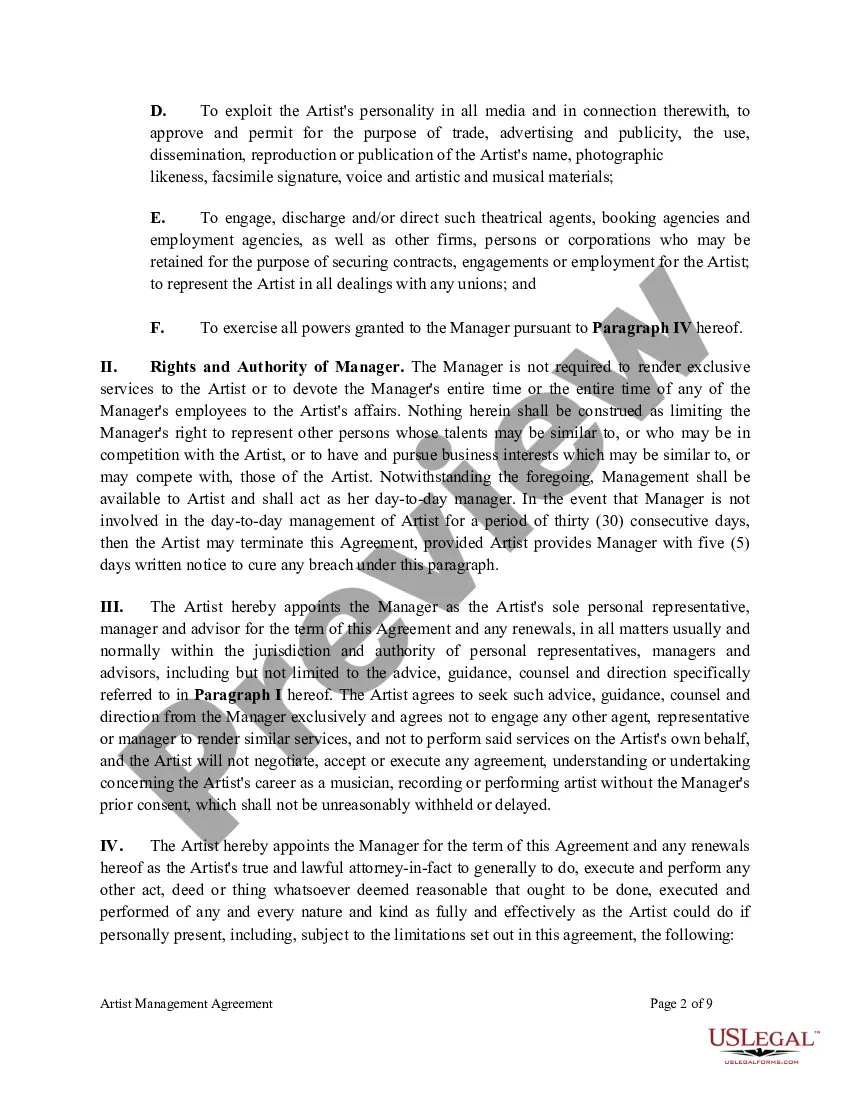
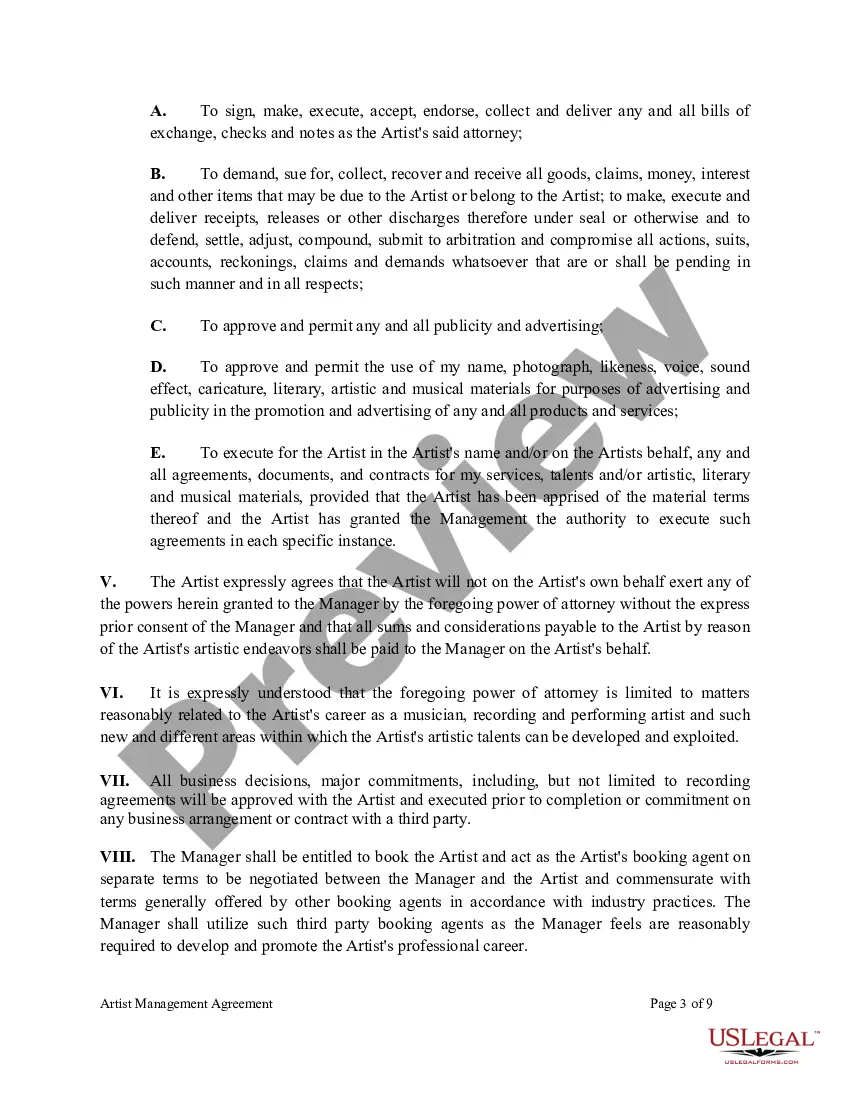
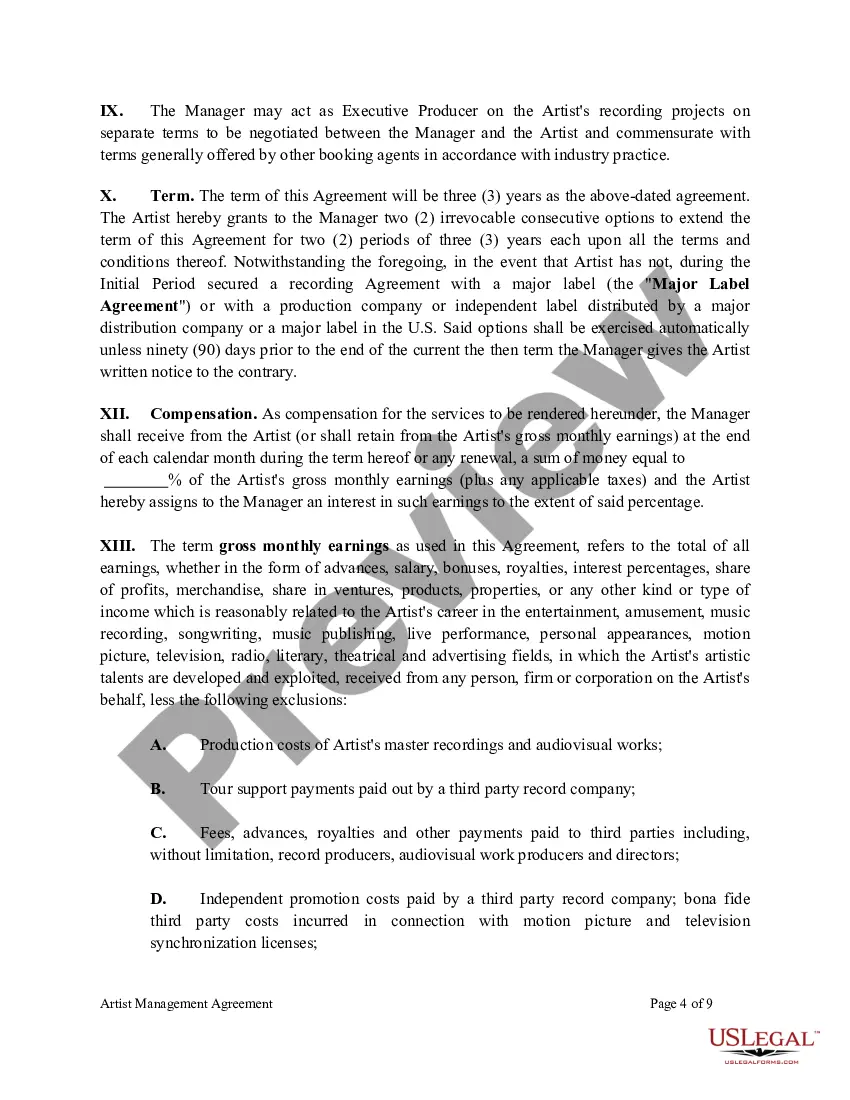
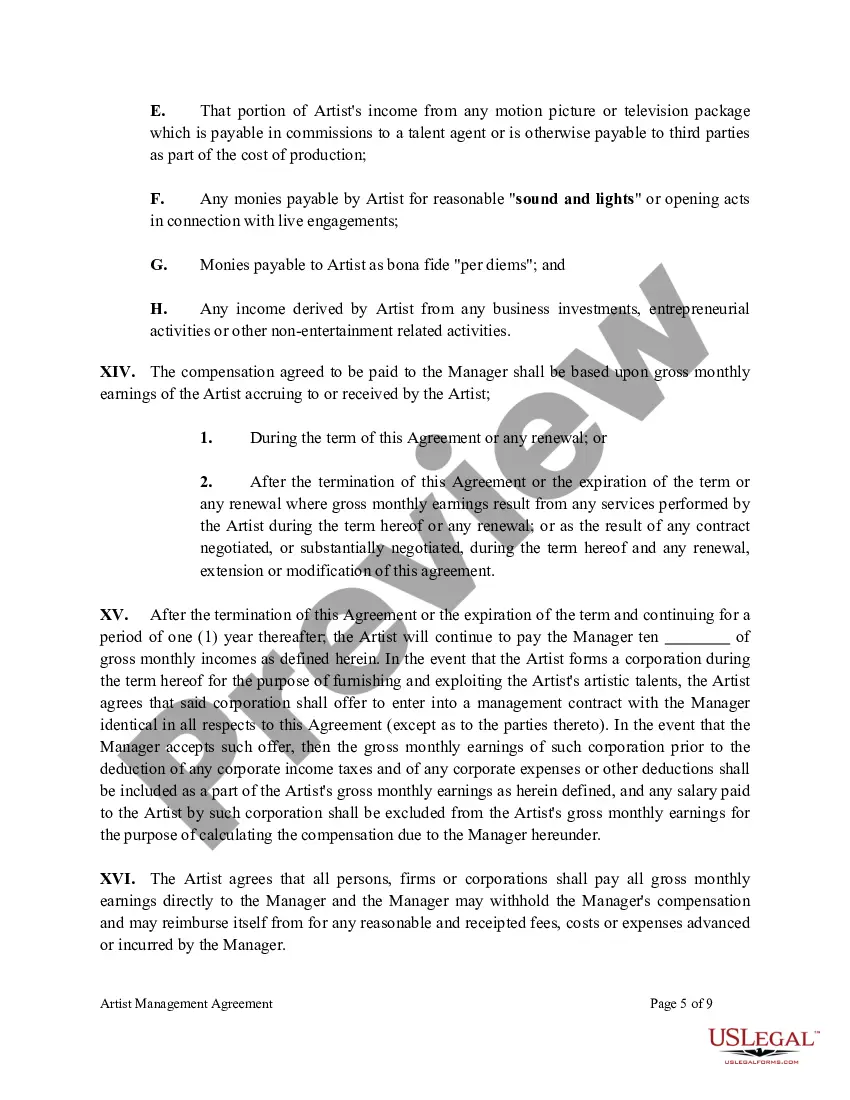
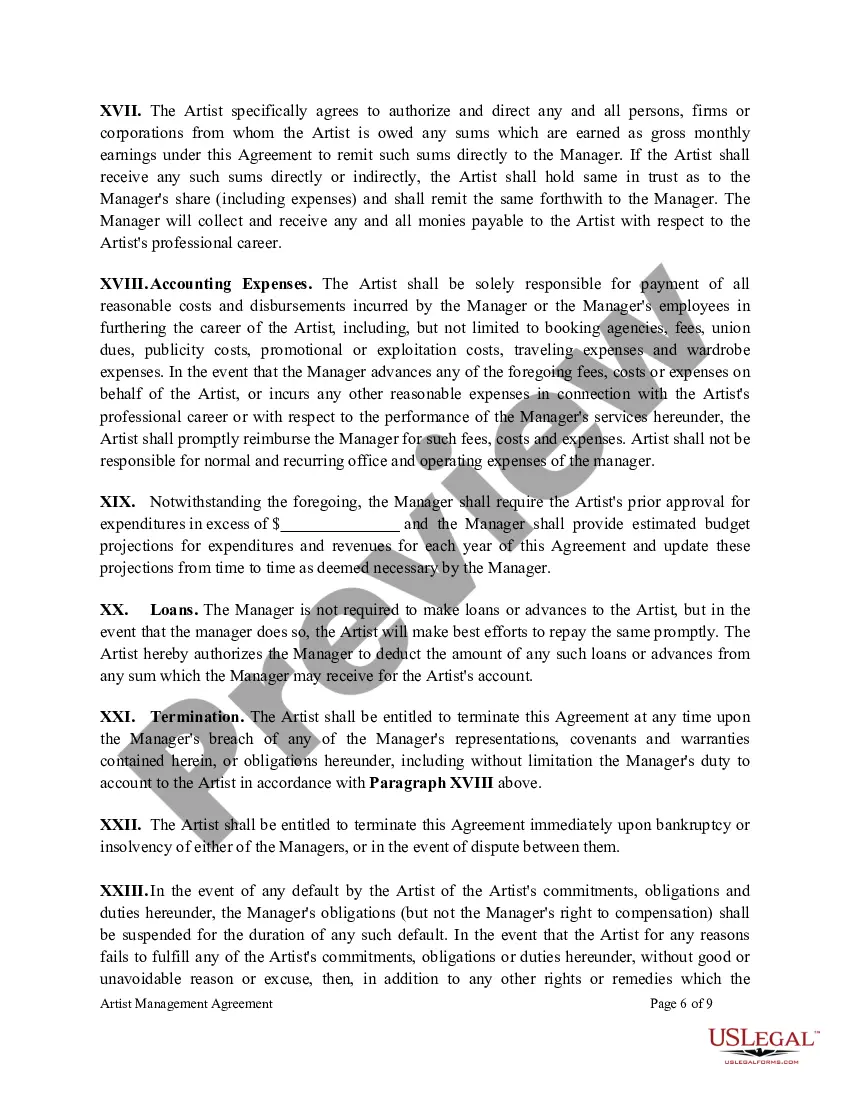
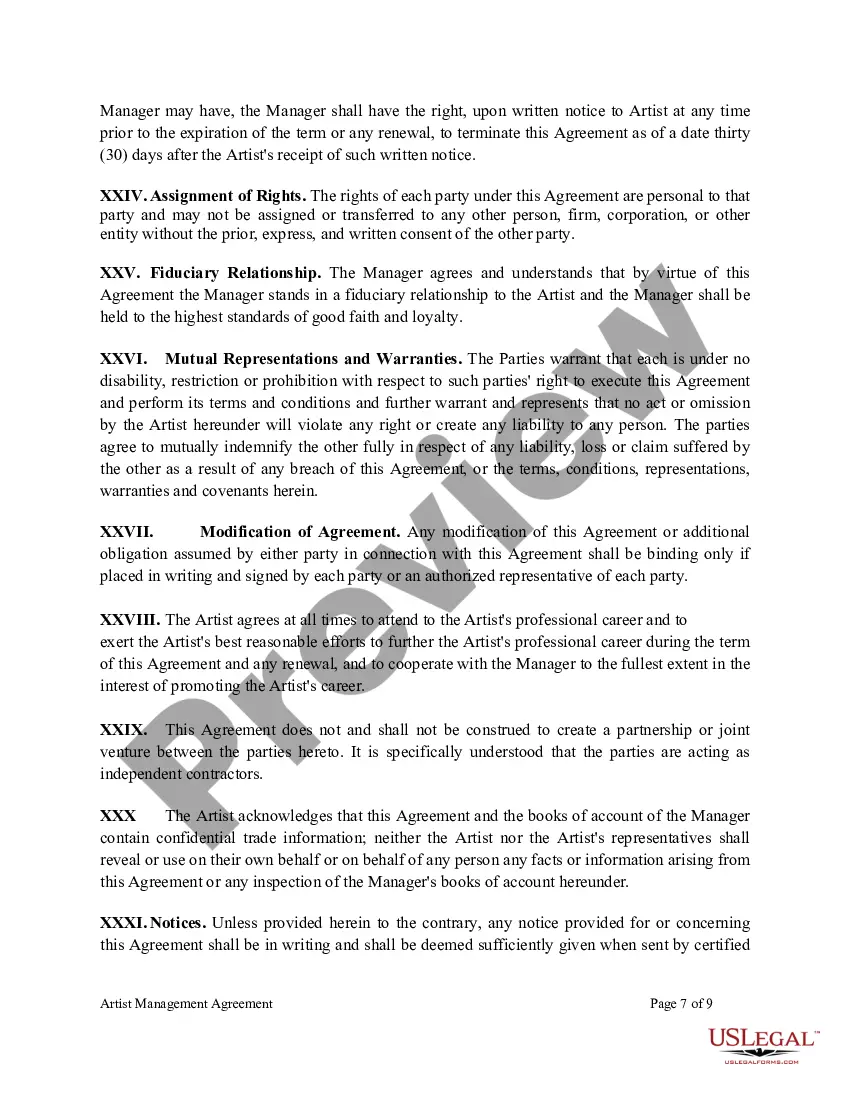
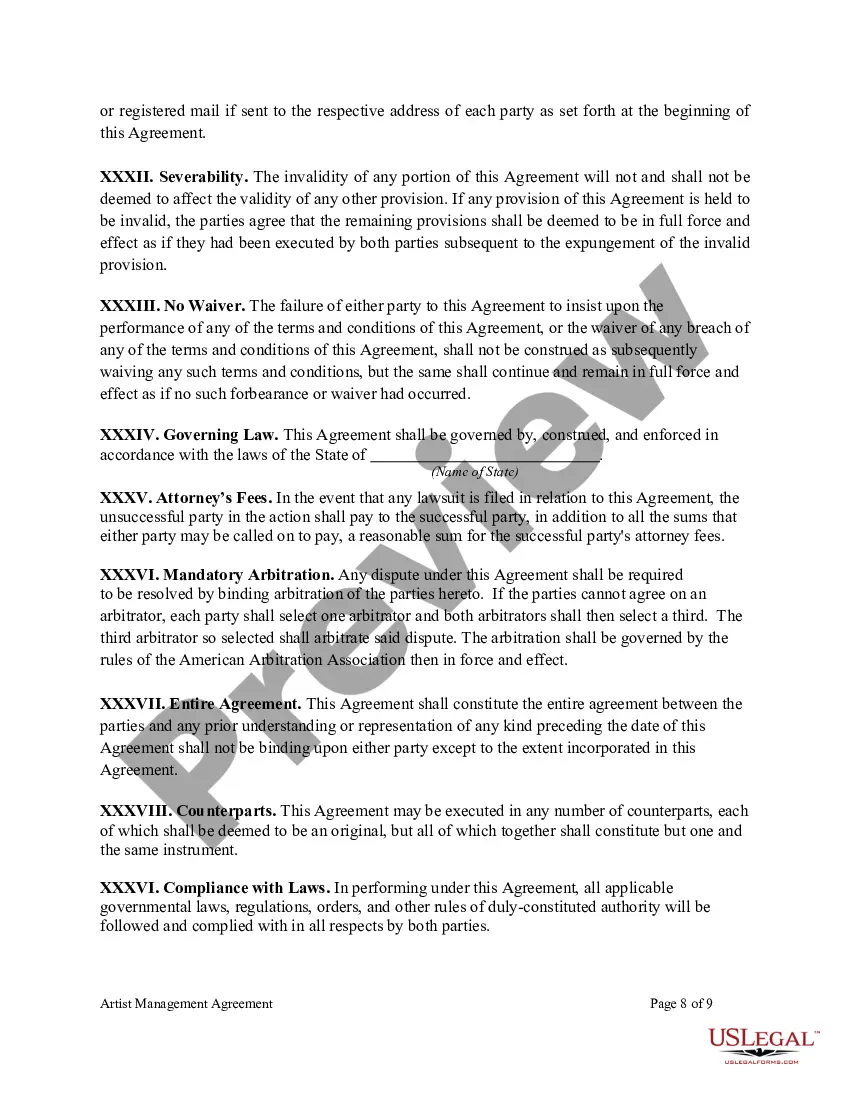
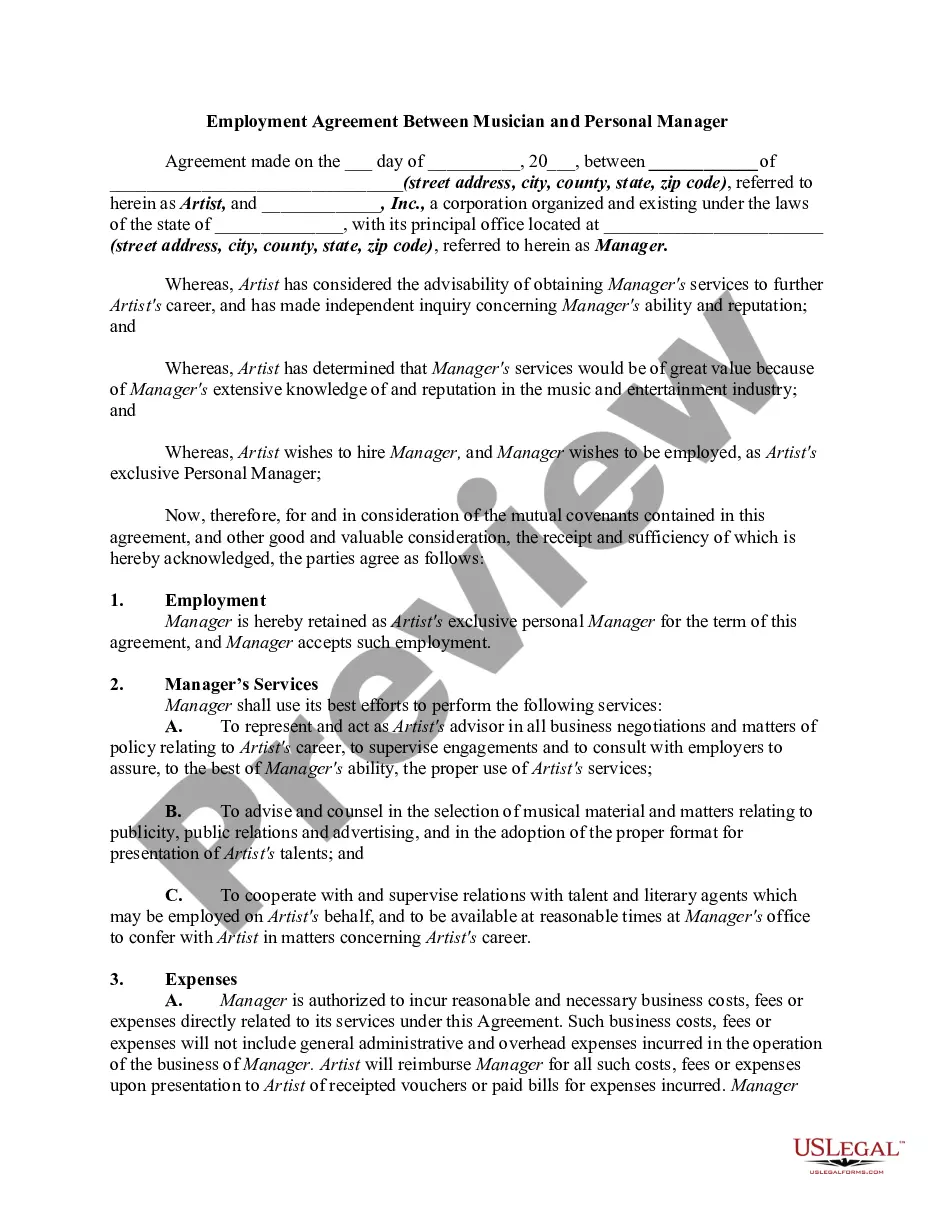
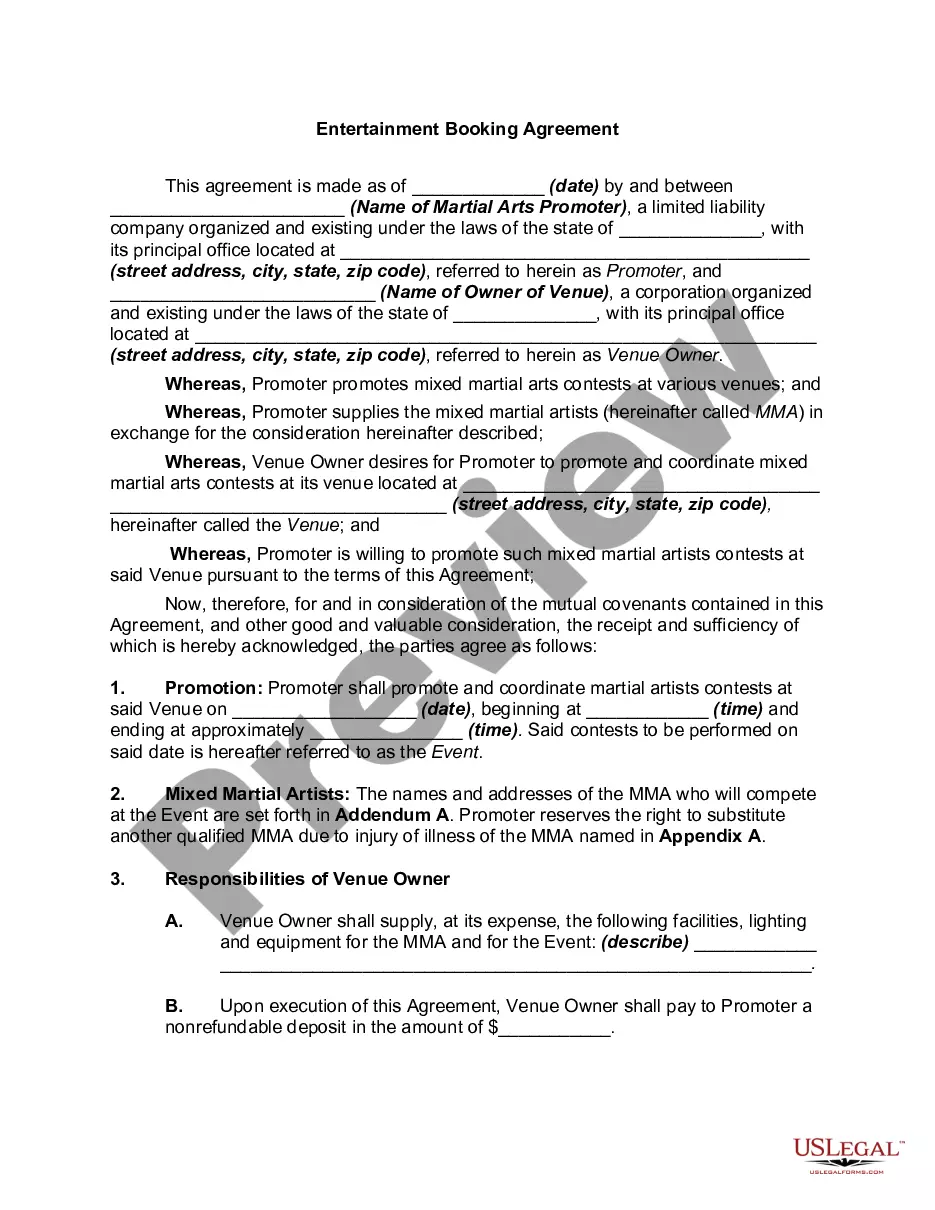
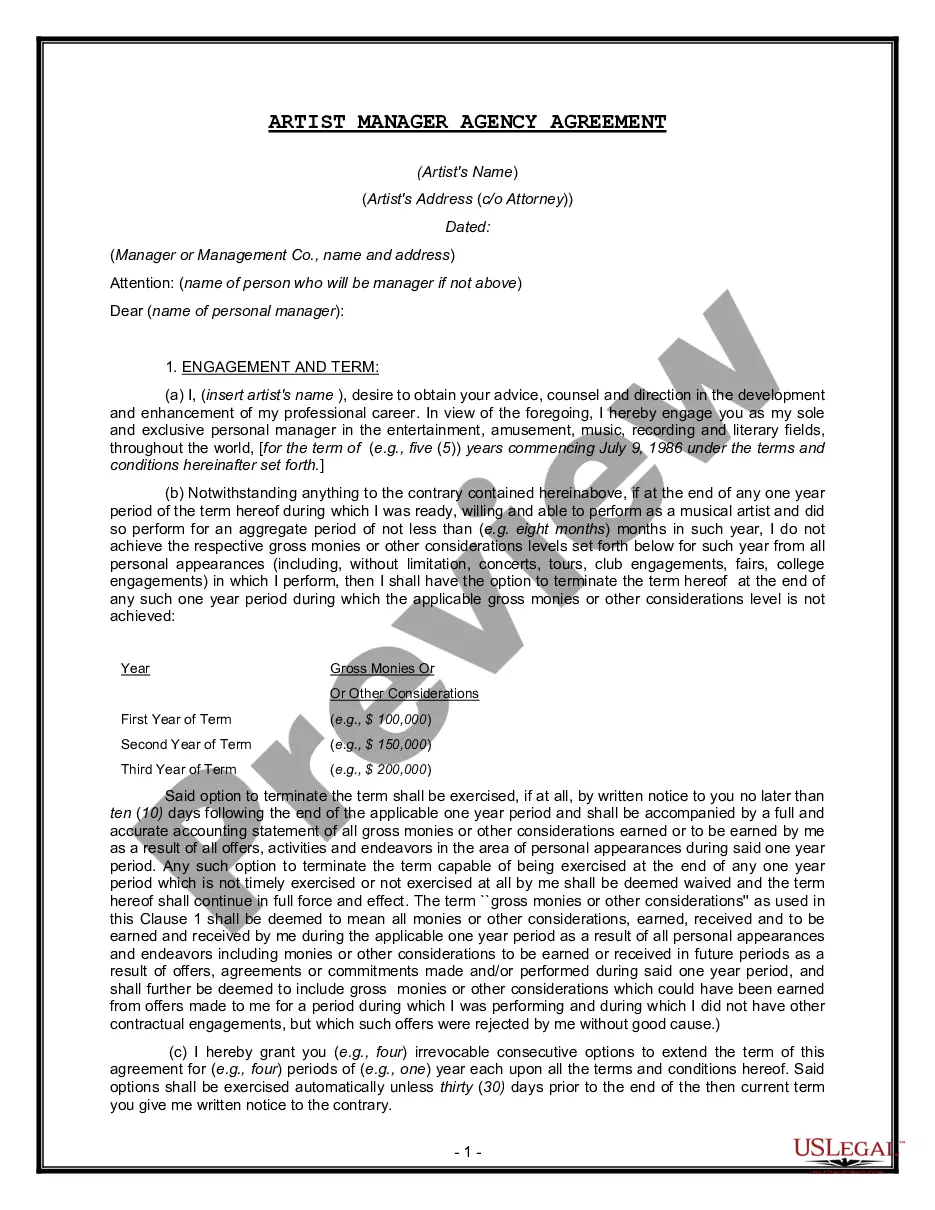
An Artist Management Agreement is used by a personal manager to contract with a recording and performing musical artist to set the terms for managing the artist's career. The manager receives a percentage of all the income generated by the artist for the management services provided.
If you're a musician looking for a music manager, consider following these steps: Develop your music. Create recordings. Explore your network. Contact agencies and managers. Continue to promote your music. Meet and discuss your career goals. Negotiate and sign a contract.
Utilizing Music Industry Platforms and Networks Several online platforms are designed to connect artists with industry professionals, including managers. Sites like ReverbNation, Sonicbids, and Music Gateway offer opportunities to showcase your music and connect with potential managers.
Steps To Starting An Artist Management Company Build Your Artist Roster. Sign A Contract. Don't Quit Your Day Job Just Yet. Draft an Artist Management Company Business Plan. Make a Name for Yourself. Get Organized. Work With an Entertainment Accountant. Hire an Entertainment Lawyer.
