Artist Manager Contract With America In Franklin
Description













Form popularity
FAQ
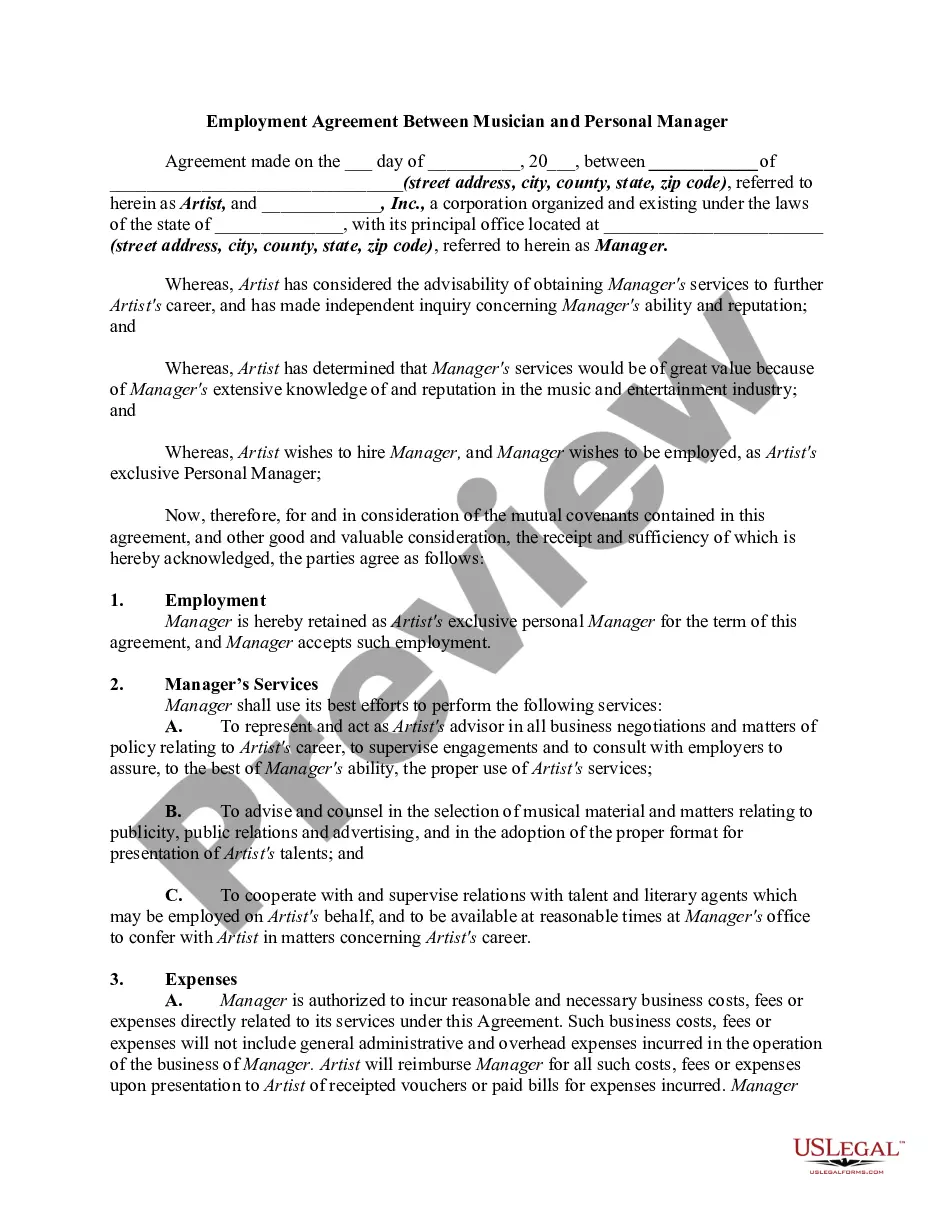
If you're a musician looking for a music manager, consider following these steps: Develop your music. Create recordings. Explore your network. Contact agencies and managers. Continue to promote your music. Meet and discuss your career goals. Negotiate and sign a contract.
Jenkins said that usually “artists look for a Manager when things get too overwhelming for them to handle themselves.” “But,” she continued, “other artists have someone from the beginning to help get their career off the ground.
What Percentage Do They Make? The most common, or easiest gauging point for management percentage, at least in North America, is 15 to 20% of gross artist revenue. I personally don't know of anyone who charges 15% of gross but I have heard through the industry that some people do. I personally hear of 20% more often.
As a general rule, managers take a percentage of all income generated by the artist in exchange for their management services. Commission rates typically range from 15-25% of the artist's gross income from: Recording royalties: Sales, streaming and licensing of recorded music.
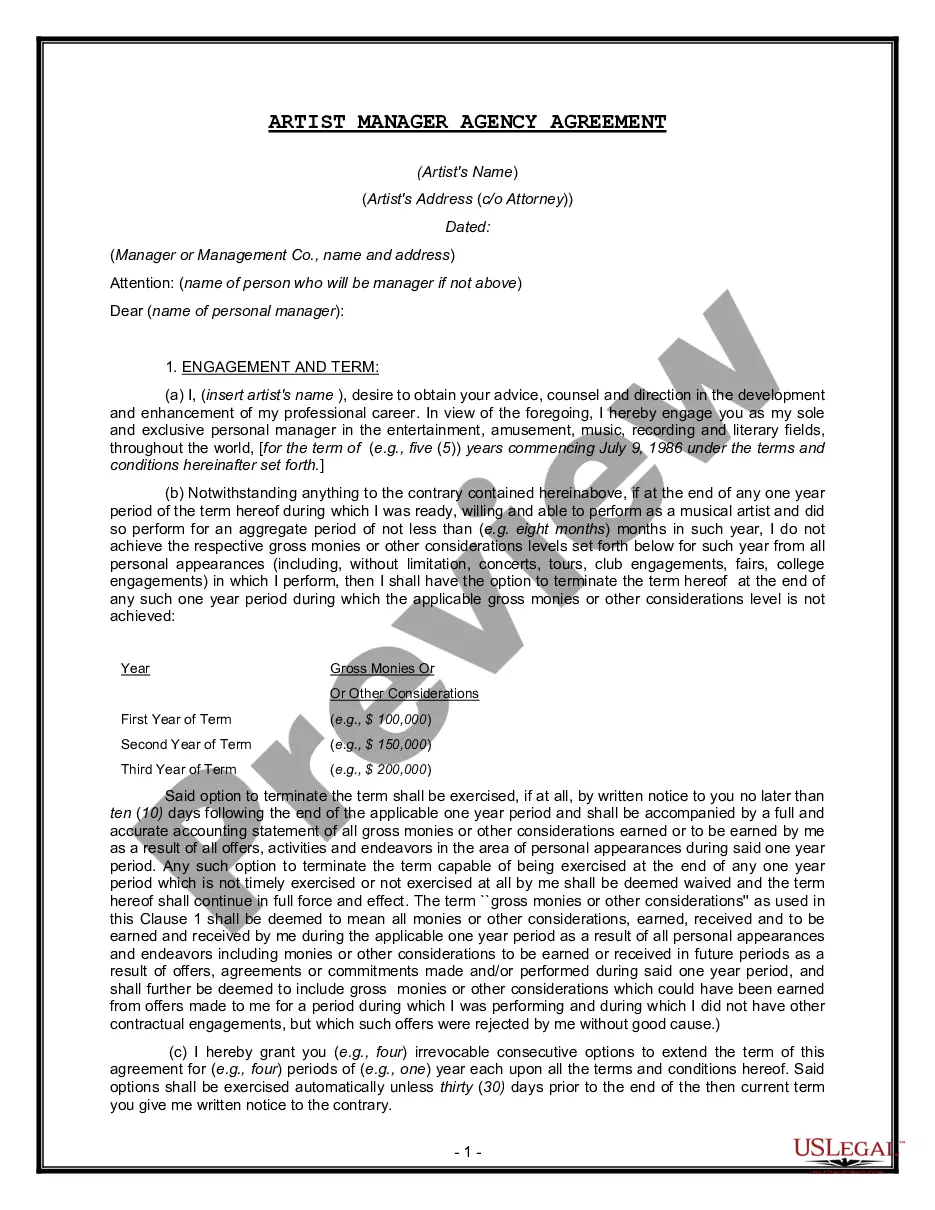
How long is a normal artist manager contract? The standard length of the management contract is three years but it can vary from 2 to 5 years on a case by case basis. Most contracts also include a "Sunset" clause.
Networking: Attend music industry events, conferences, or concerts. Networking can often lead to personal connections with managers or their representatives. LinkedIn: Search for the artist's management team on LinkedIn. Professionals in the industry often maintain profiles that can provide contact details.
Managers' commissions are typically between 15 to 20% of an artist's gross income. Whether it's 15% or 20% really depends on the level of the band and the bargaining power of each party. I've seen some net deals, but they are extremely rare. That being said, I always push for a net commission on merchandise.
Good managers are patient. They are willing to work with an artist over a long career, executing their client's vision with a step-by-step plan. This requires developing intimate relationships with each client, relationships that take time to build.
