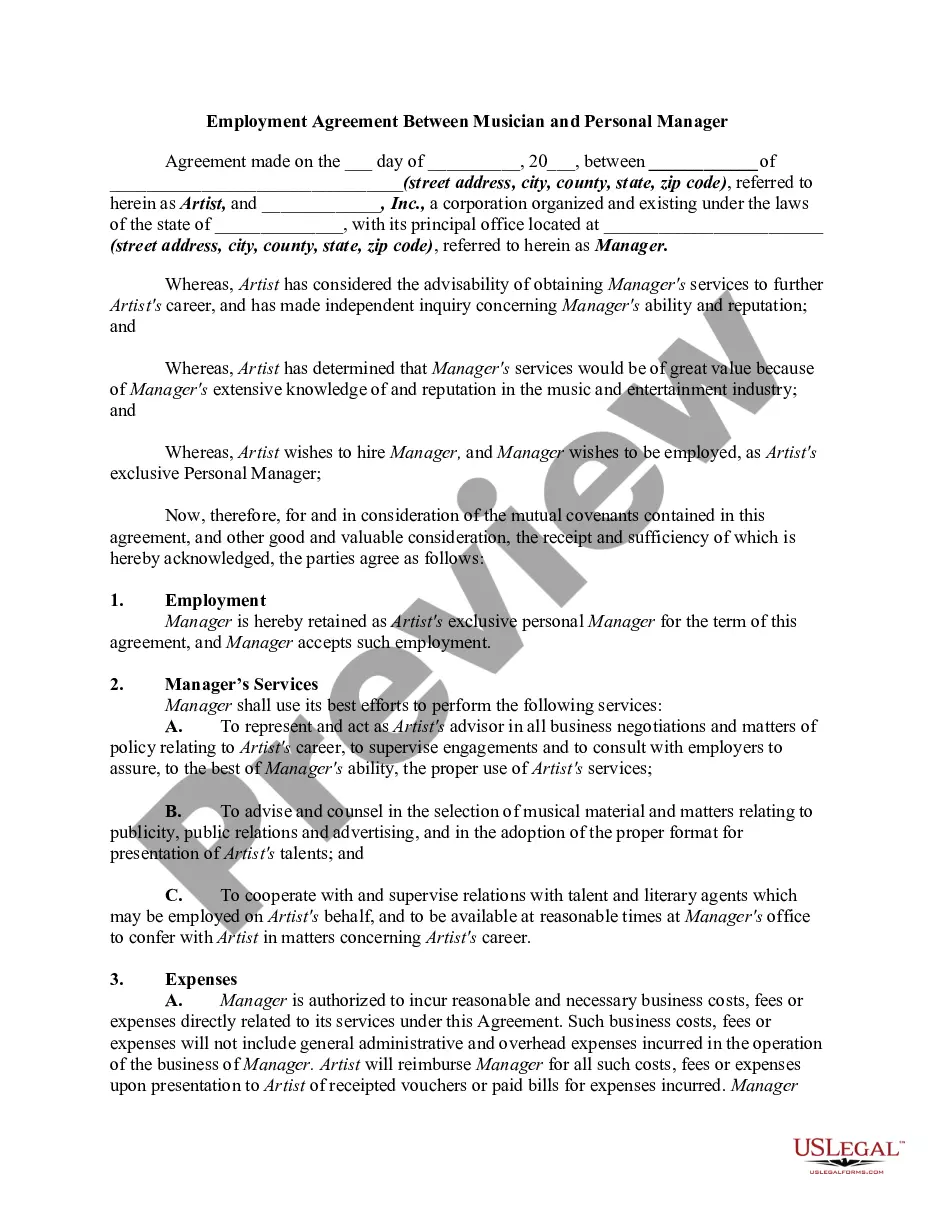
Contracts For Music Artists In Bronx
Description

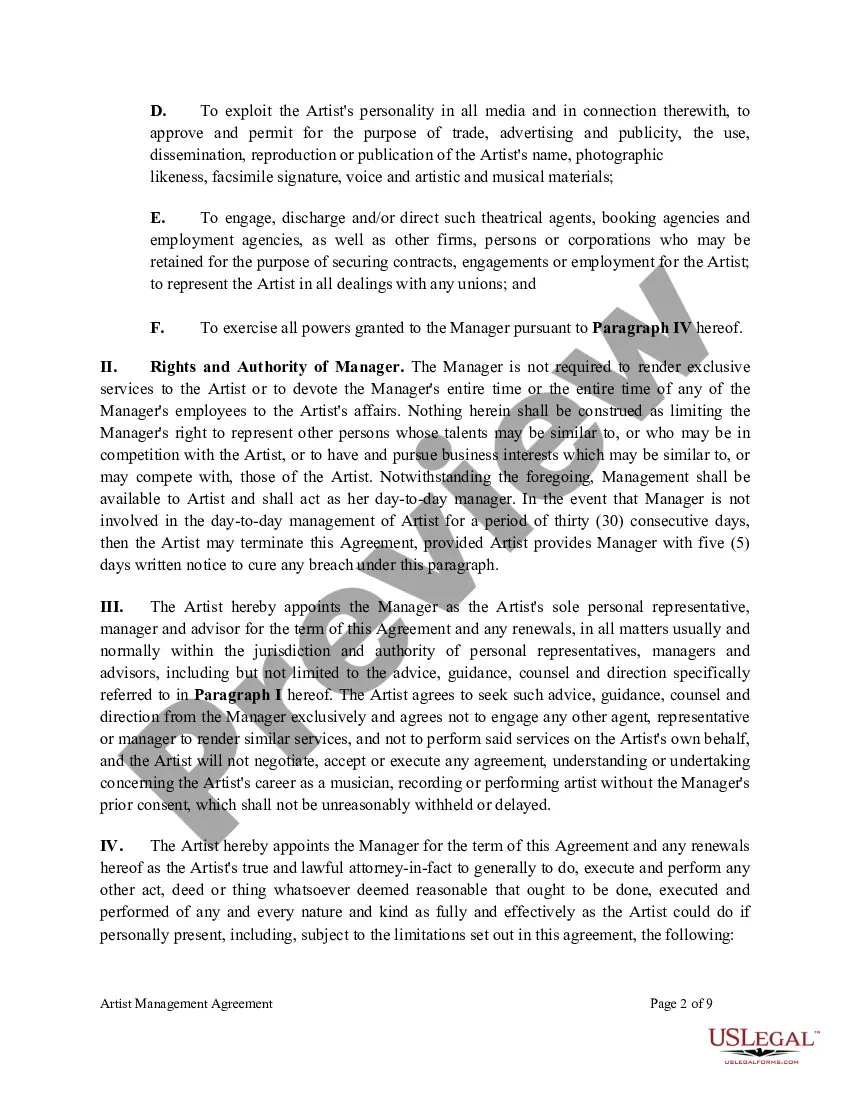
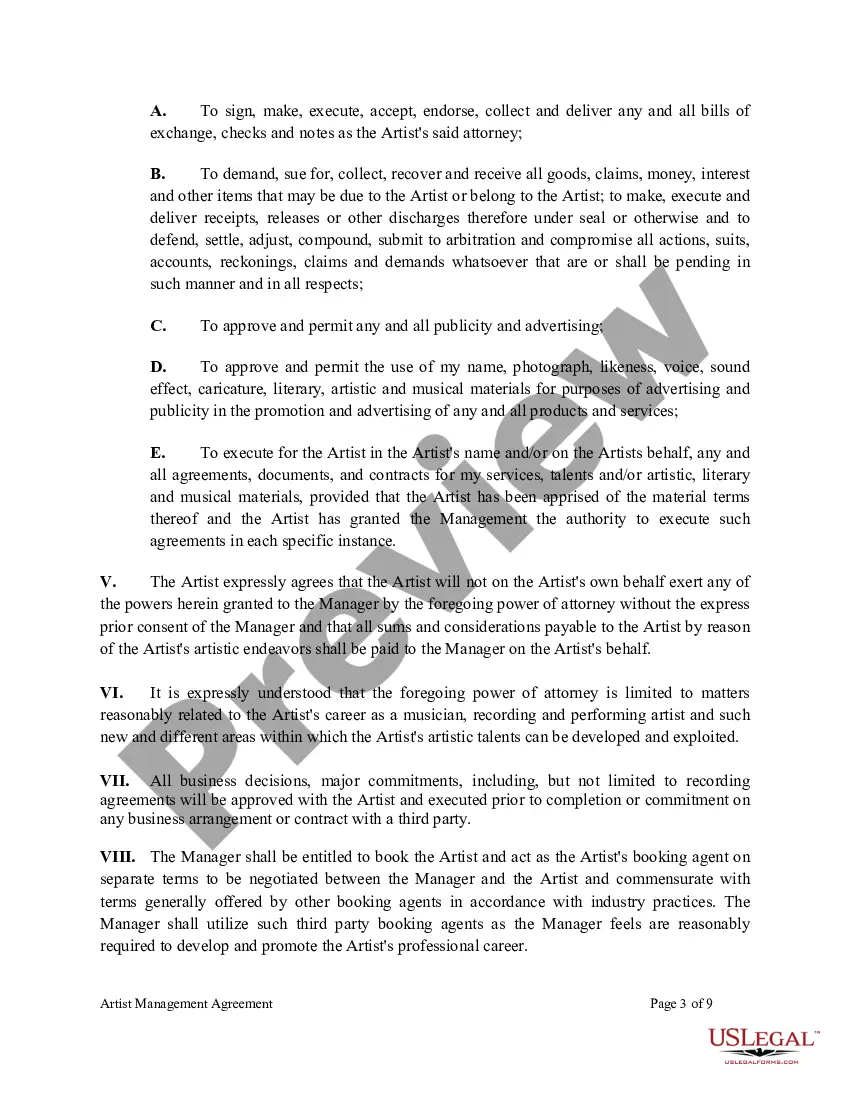
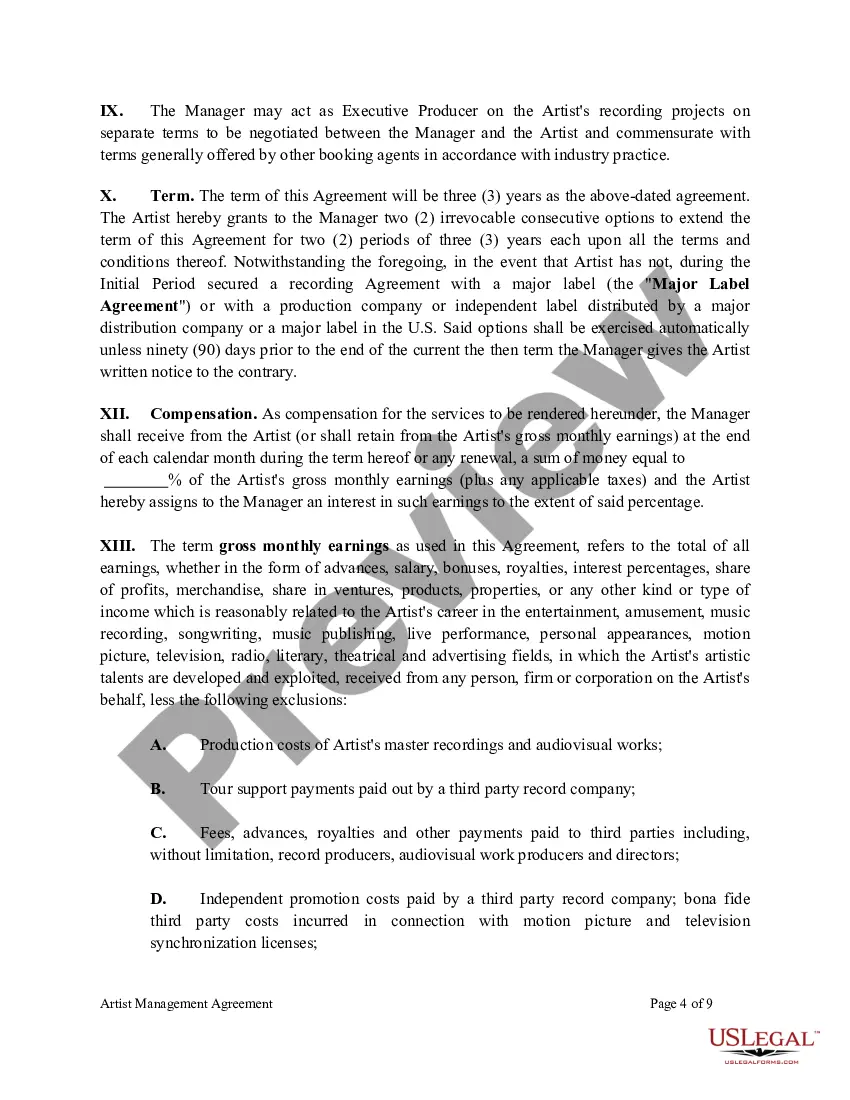
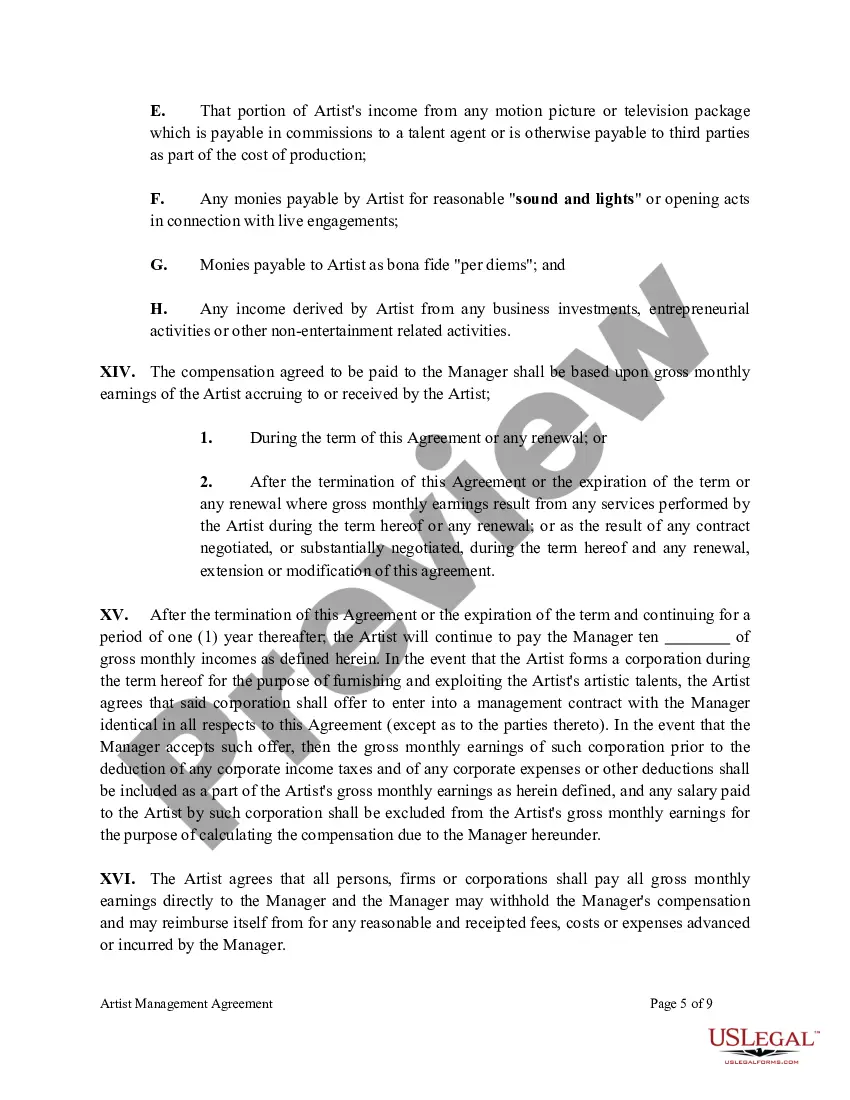
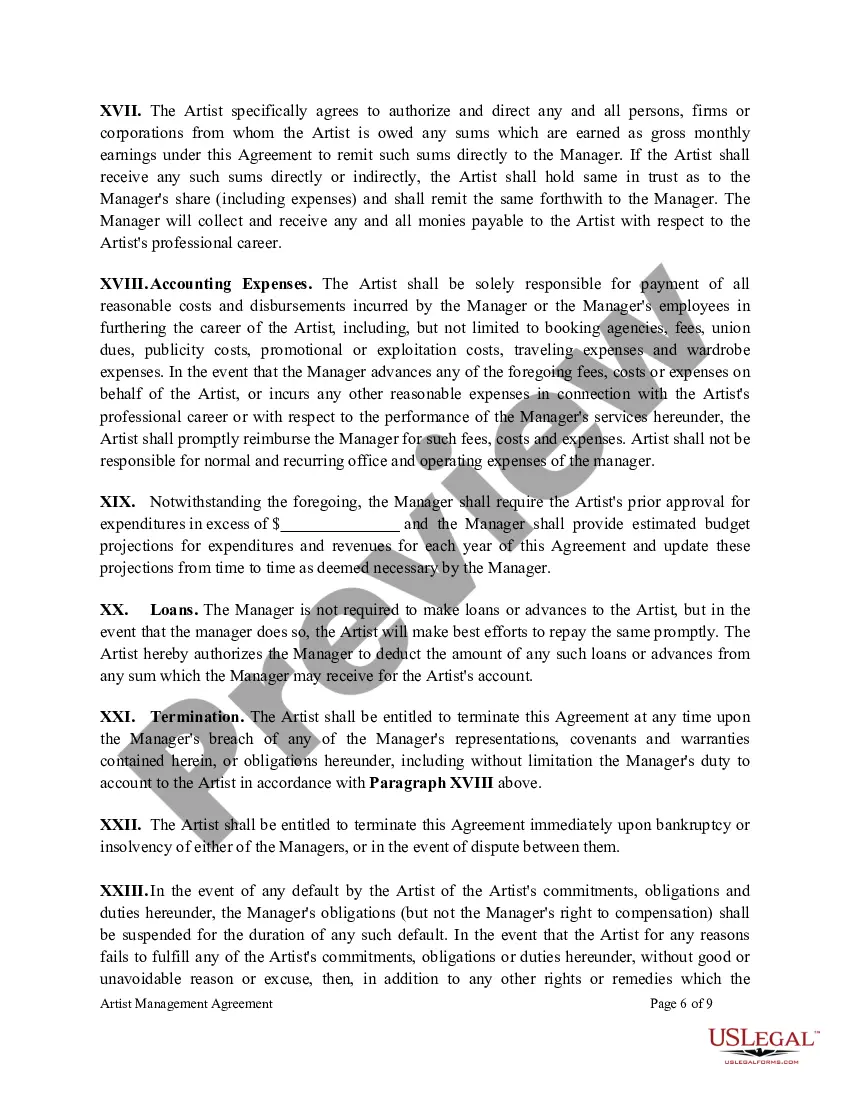
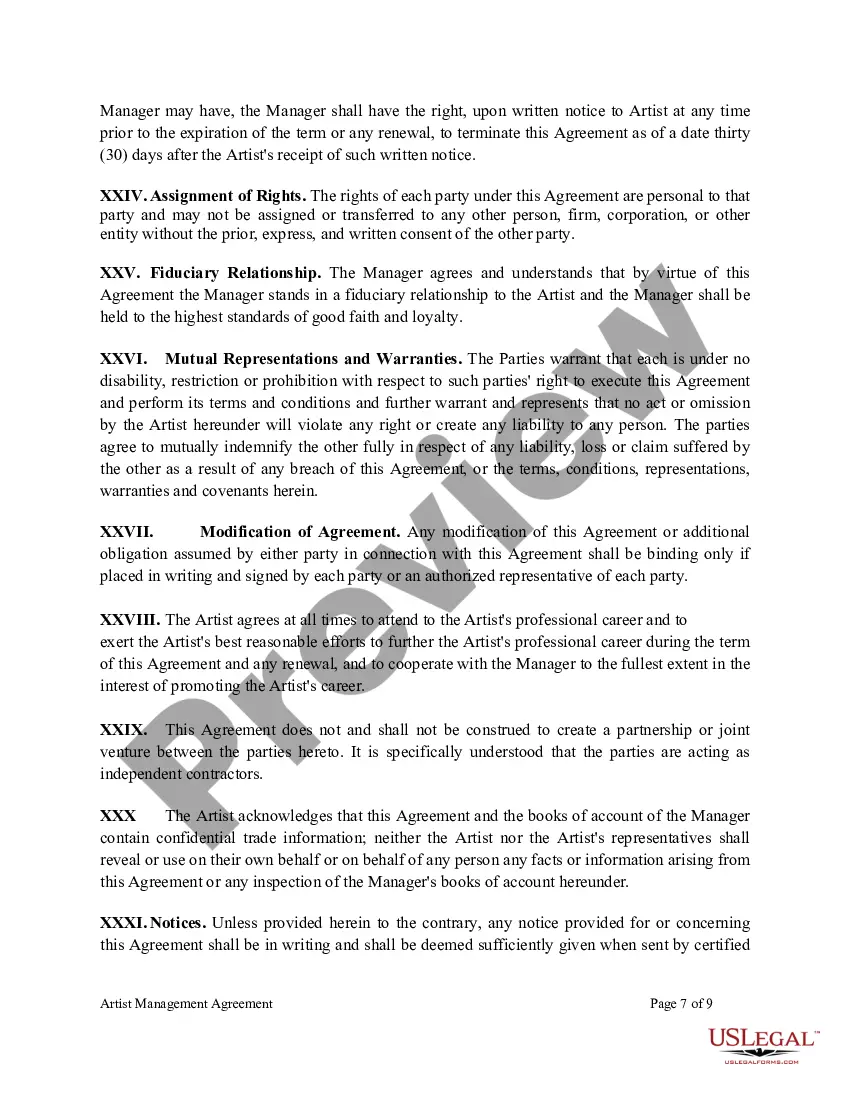
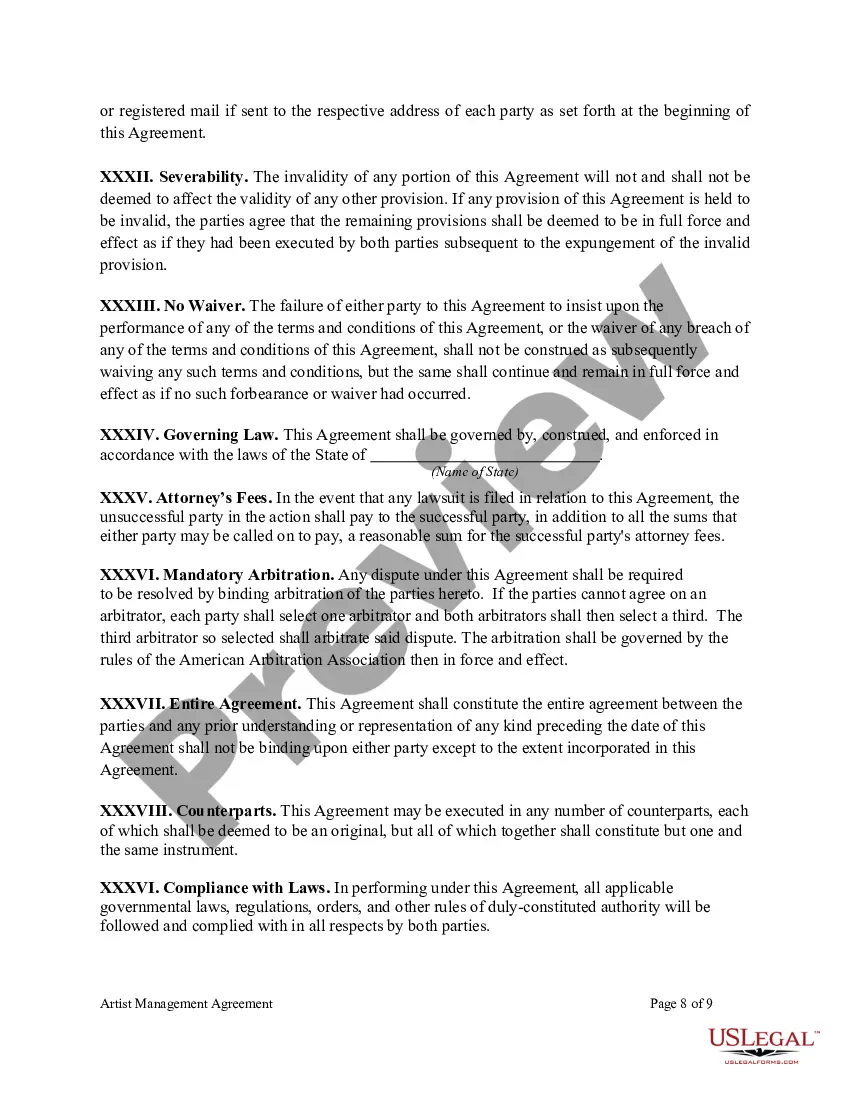

Get your form ready online
Our built-in tools help you complete, sign, share, and store your documents in one place.
Make edits, fill in missing information, and update formatting in US Legal Forms—just like you would in MS Word.
Download a copy, print it, send it by email, or mail it via USPS—whatever works best for your next step.
Sign and collect signatures with our SignNow integration. Send to multiple recipients, set reminders, and more. Go Premium to unlock E-Sign.
If this form requires notarization, complete it online through a secure video call—no need to meet a notary in person or wait for an appointment.
We protect your documents and personal data by following strict security and privacy standards.

Make edits, fill in missing information, and update formatting in US Legal Forms—just like you would in MS Word.

Download a copy, print it, send it by email, or mail it via USPS—whatever works best for your next step.

Sign and collect signatures with our SignNow integration. Send to multiple recipients, set reminders, and more. Go Premium to unlock E-Sign.

If this form requires notarization, complete it online through a secure video call—no need to meet a notary in person or wait for an appointment.

We protect your documents and personal data by following strict security and privacy standards.
Looking for another form?







Form popularity
FAQ
Negotiate An Exit It may involve a buyback and, of course, serious legal fees. You may find yourself paying back a portion of the advance and lose your recording ability for a while. The good news is that you'll be released from the recording contract.
Ok, good. This week, major labels banded together to unveil a revolutionary new type of record deal: the 720 deal. It follows the same basic principles as the 360 deal, but with one groundbreaking twist: record labels are now also allowed to take a cut out of the incomes of family members of signed musicians.
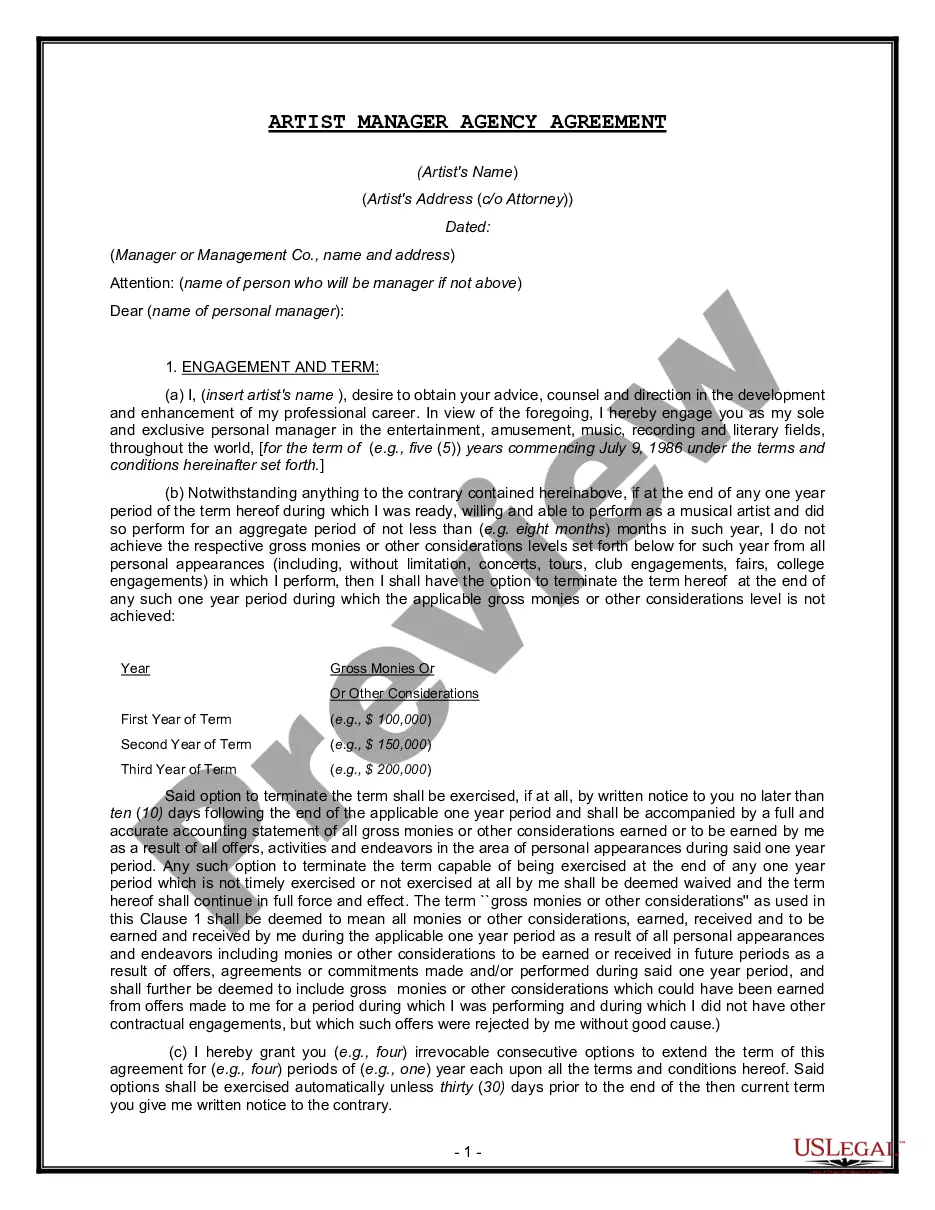
A musician contract is a formal document that outlines the terms and conditions under which a musician, band, or recording artist exclusively collaborates with a record label, music recording company, or any other entity involved in the music industry.
A smart contract can be built into the original NFT so that the original artist continues to benefit from royalties on every subsequent sale. NFTs allow music artists to sell pieces of original work, such as a set of beats or a riff, with the intention that other artists buy that NFT and build upon the original work.
Short-term contracts, often lasting one to three years, are more prevalent for young performers or those just starting. Long-term agreements, which can be five to ten years long or longer, are only offered to more seasoned musicians or those with a successful track record.
Your Music Recording Contract should cover details like: Compensation and royalties. Where and when the album will be recorded. The album's release date. Who has creative control over specific elements of the album. The termination clause. The exclusive agreement clause. Dispute resolution. Promotional appearances.
A contract should state each party's obligations/responsibilities, the scope of work, and the agreement as to compensation. It does not have to be written in legalise unless you are spelling out terms for a complicated project. The contract should include all the agreements you have with the other party.
Write the contract in six steps Start with a contract template. Open with the basic information. Describe in detail what you have agreed to. Include a description of how the contract will be ended. Write into the contract which laws apply and how disputes will be resolved. Include space for signatures.
Music contracts usually discuss how income streams will be collected and distributed between contracting parties. Relevant questions to ask are who collects income, how often is it distributed and what rights do you have in ensuring the distribution of income is accurate?
The first step is to research record labels that specialize in your genre and style of music. Look for labels that have released music similar to yours or have signed artists with a similar sound. This will increase your chances of getting noticed and signed by a label that is interested in your music.
