Artist Management Contracts For Music In Bronx
Description









Form popularity
FAQ
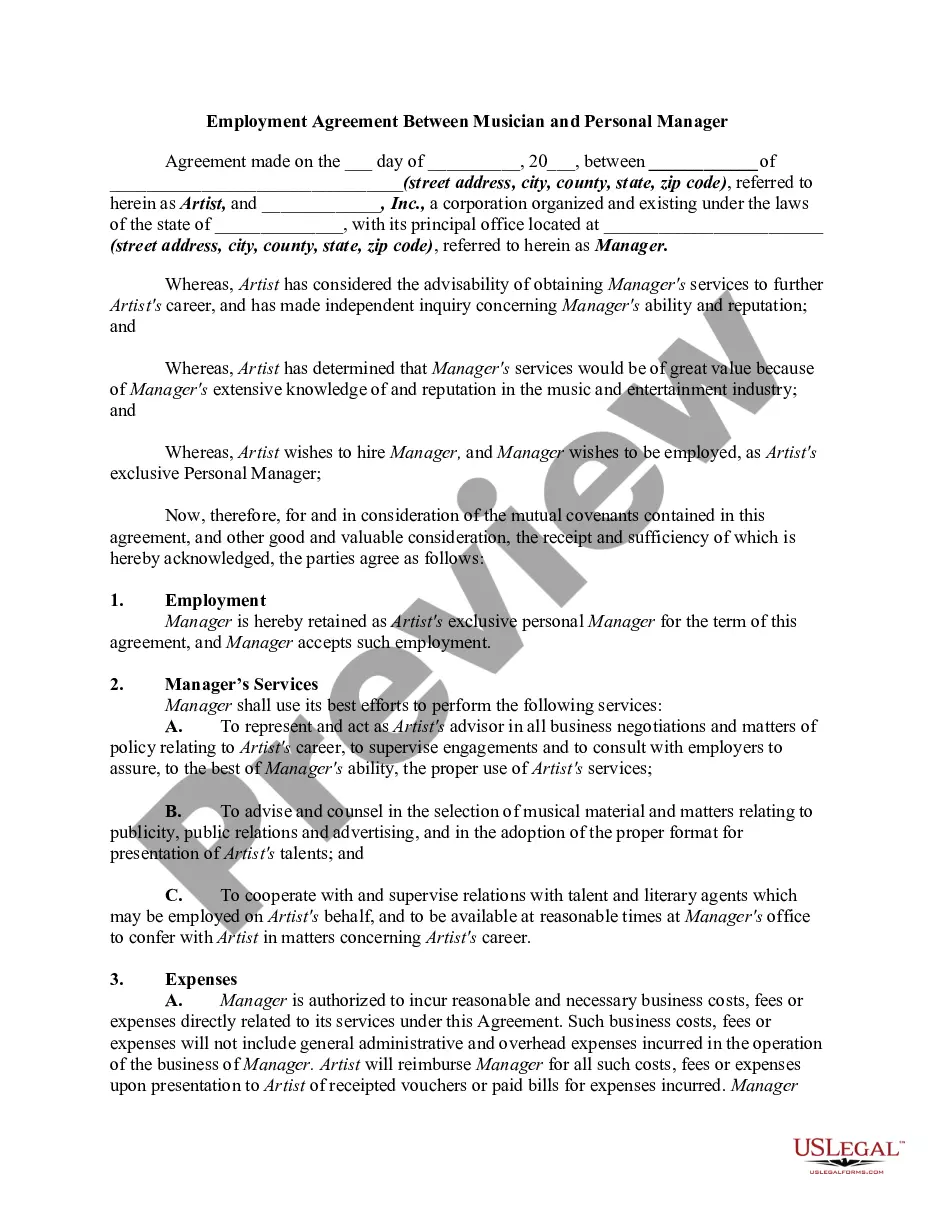
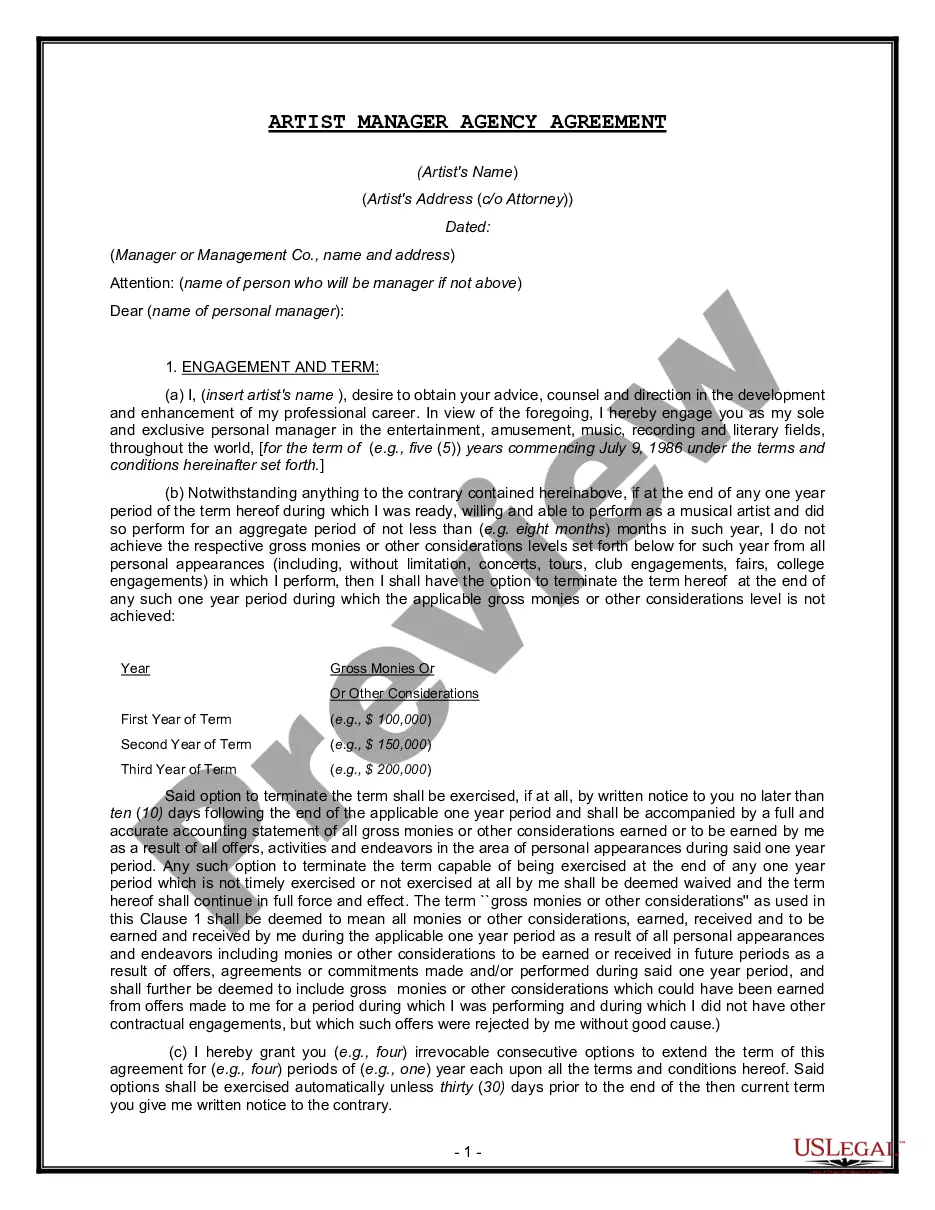
As a general rule, managers take a percentage of all income generated by the artist in exchange for their management services. Commission rates typically range from 15-25% of the artist's gross income from: Recording royalties: Sales, streaming and licensing of recorded music.
Managers' commissions are typically between 15 to 20% of an artist's gross income. Whether it's 15% or 20% really depends on the level of the band and the bargaining power of each party. I've seen some net deals, but they are extremely rare. That being said, I always push for a net commission on merchandise.
Your Music Recording Contract should cover details like: Compensation and royalties. Where and when the album will be recorded. The album's release date. Who has creative control over specific elements of the album. The termination clause. The exclusive agreement clause. Dispute resolution. Promotional appearances.
As a general rule, managers take a percentage of all income generated by the artist in exchange for their management services. Commission rates typically range from 15-25% of the artist's gross income from: Recording royalties: Sales, streaming and licensing of recorded music.
Steps To Starting An Artist Management Company Build Your Artist Roster. Sign A Contract. Don't Quit Your Day Job Just Yet. Draft an Artist Management Company Business Plan. Make a Name for Yourself. Get Organized. Work With an Entertainment Accountant. Hire an Entertainment Lawyer.
The most common distribution is 15-20% for the artists and 75-80% for labels but it can go up to 50-50 with indie labels. For example, if you sign a 360° contract, your record label manages all aspects of your music project, from manufacturing to distribution, from marketing to publishing to sub-licensing, and more.
To get a talent agent, you need to find their email address and email them an EPK (Electronic Press Kit). Also do some cold calling by finding their phone numbers, but before you do that, try to learn something about them if you can find any info on them. Or, simply show up in their office and set a meeting with them.
Building a Professional Network Networking is a powerful tool in the music industry. Connect with industry professionals, attend music events, and participate in conferences. Building relationships with other artists, producers, and industry insiders can lead to valuable introductions to potential managers.
