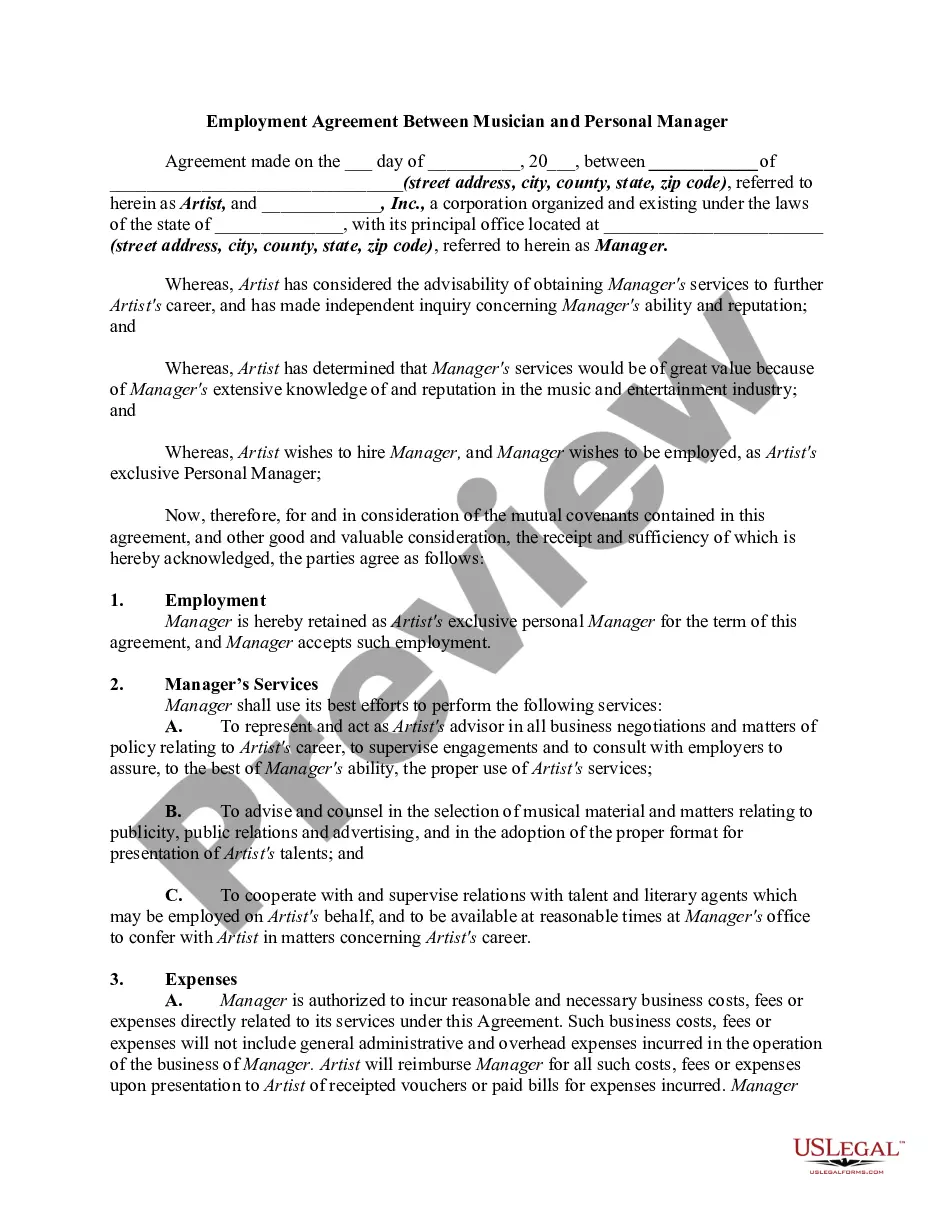
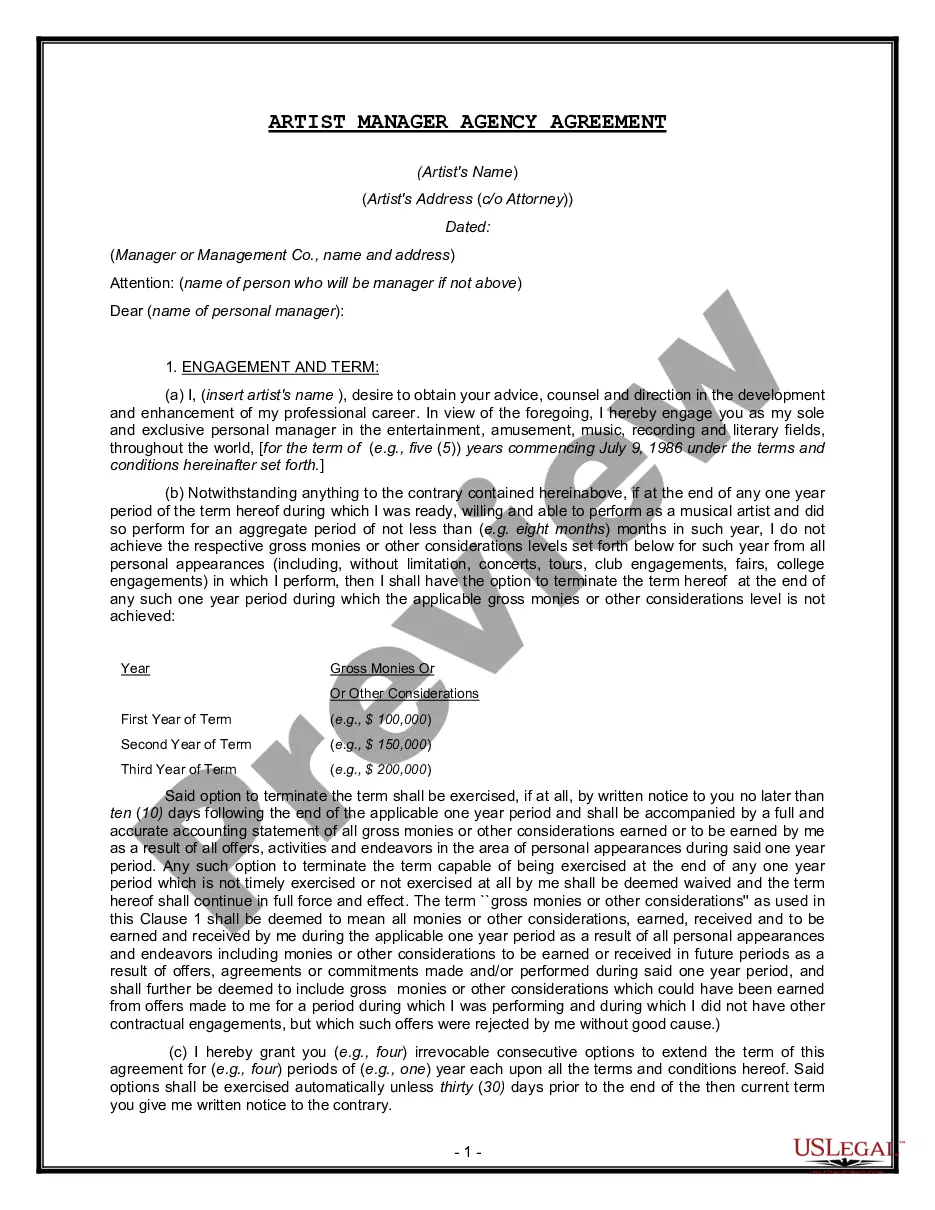
Artist Manager Contract With Record Label In Bexar
Description









Get your form ready online
Our built-in tools help you complete, sign, share, and store your documents in one place.
Make edits, fill in missing information, and update formatting in US Legal Forms—just like you would in MS Word.
Download a copy, print it, send it by email, or mail it via USPS—whatever works best for your next step.
Sign and collect signatures with our SignNow integration. Send to multiple recipients, set reminders, and more. Go Premium to unlock E-Sign.
If this form requires notarization, complete it online through a secure video call—no need to meet a notary in person or wait for an appointment.
We protect your documents and personal data by following strict security and privacy standards.

Make edits, fill in missing information, and update formatting in US Legal Forms—just like you would in MS Word.

Download a copy, print it, send it by email, or mail it via USPS—whatever works best for your next step.

Sign and collect signatures with our SignNow integration. Send to multiple recipients, set reminders, and more. Go Premium to unlock E-Sign.

If this form requires notarization, complete it online through a secure video call—no need to meet a notary in person or wait for an appointment.

We protect your documents and personal data by following strict security and privacy standards.
Looking for another form?







Form popularity
FAQ
While it is not a requirement, it is generally recommended for an artist to have their own manager separate from their record label. The roles of a record label and an artist manager are distinct and serve different functions.
As a general rule, managers take a percentage of all income generated by the artist in exchange for their management services. Commission rates typically range from 15-25% of the artist's gross income from: Recording royalties: Sales, streaming and licensing of recorded music.
A common split of the profit is an equal 50/50 split between the label and artist, but a higher split may be agreed in favour of either party. The label will traditionally cover all or most costs upfront.
Ok, good. This week, major labels banded together to unveil a revolutionary new type of record deal: the 720 deal. It follows the same basic principles as the 360 deal, but with one groundbreaking twist: record labels are now also allowed to take a cut out of the incomes of family members of signed musicians.
Record Labels are the providers for the artist. They help establish presence on social media, provide the studio sessions, the tours, the buses, the social media followers, etc. They help promote the artist's music so it can reach a larger audience.
This is a senior position at a record label, often answering directly to the label executives. There are no particular educational requirements to work as a label manager, although significant project management experience within the record industry is a necessity.
Education: Considering music managers are responsible for all the legal and business aspects of an artist's career, they usually must have a bachelor's degree in the music business (or business in general). Several schools offer music management or business management degrees.
Owners/CEO. The owner or CEO of a record label is the highest authority in the company. This person is responsible for the overall operation of the record label and makes all of the final decisions.
Look for companies that have a track record of success in your genre and have experience working with artists at your level. Check their client roster and read reviews from other artists. You can also attend music industry events and conferences to network with managers and learn more about their companies.
