Granting Plea For Purging In Florida
Description
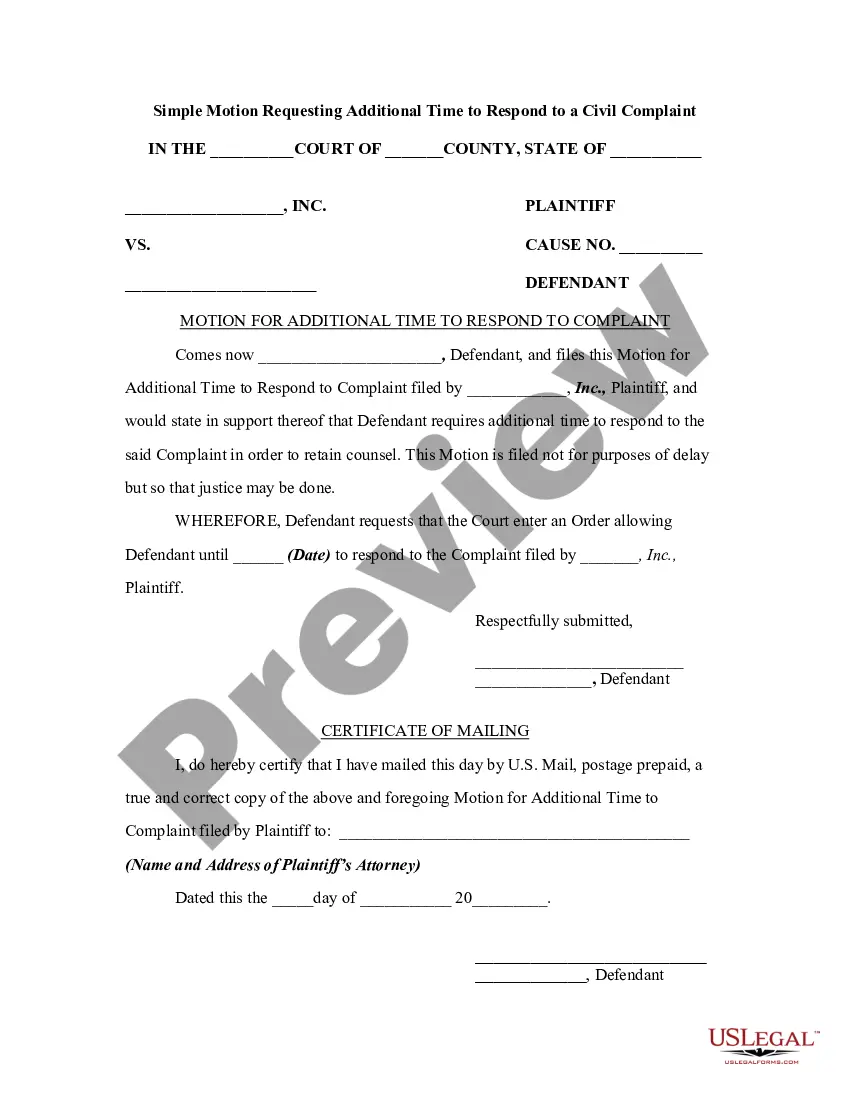
Get your form ready online
Our built-in tools help you complete, sign, share, and store your documents in one place.
Make edits, fill in missing information, and update formatting in US Legal Forms—just like you would in MS Word.
Download a copy, print it, send it by email, or mail it via USPS—whatever works best for your next step.
Sign and collect signatures with our SignNow integration. Send to multiple recipients, set reminders, and more. Go Premium to unlock E-Sign.
If this form requires notarization, complete it online through a secure video call—no need to meet a notary in person or wait for an appointment.
We protect your documents and personal data by following strict security and privacy standards.

Make edits, fill in missing information, and update formatting in US Legal Forms—just like you would in MS Word.

Download a copy, print it, send it by email, or mail it via USPS—whatever works best for your next step.

Sign and collect signatures with our SignNow integration. Send to multiple recipients, set reminders, and more. Go Premium to unlock E-Sign.

If this form requires notarization, complete it online through a secure video call—no need to meet a notary in person or wait for an appointment.

We protect your documents and personal data by following strict security and privacy standards.
Looking for another form?

Form popularity
FAQ
Section 943.0585(4), Florida Statutes, provides that a criminal history record ordered expunged that is retained by the Florida Department of Law Enforcement (FDLE) is not available to any person or entity except upon order of a court of competent jurisdiction.
Can I expunge my record if I received a withhold of adjudication for a felony? Most felony charges cannot be expunged, but you may be eligible to seal your record if the offense is not on Florida's list of disqualifying offenses.
There are specific crimes that cannot be expunged in Florida. These include: Violent Crimes: Crimes such as , manslaughter, kidnapping, and assault are not eligible for expungement. Sexual Offenses: Sexual offenses, including sexual battery, child molestation, and child , cannot be expunged.
A defendant can establish insanity in Florida if two prongs are met: (1) the defendant suffered from a mental disease or defect at the time the crime was committed, and (2) the defendant either (a) had no intellectual awareness of what they were doing at the time of the crime, or (b) did not know what they were doing ...
Persons who have been convicted (adjudicated guilty) of a felony are not eligible for an expungement or sealing of their criminal history record under Sections 943.0585 or 943.059, F.S., regardless of whether their civil rights have been restored.
(a) The department shall automatically seal a criminal history record that does not result from an indictment, information, or other charging document for a forcible felony as defined in s. 776.08 or for an offense enumerated in s. 943.0435(1)(h)1.
A felony conviction in Florida will typically remain on your record indefinitely. It does not automatically disappear or “fall off” after a certain period.
403.291 Purpose of weather modification law. —The purpose of this law is to promote the public safety and welfare by providing for the licensing, regulation and control of interference by artificial means with the natural precipitation of rain, snow, hail, moisture or water in any form contained in the atmosphere.
Best Evidence Rule Fla. Stat. § 90.952 - This rule requires that when the contents of a writing, recording or photograph are being proved, an original must be offered unless a statutory excuse for the lack of an original exists.
(1) A spouse has a privilege during and after the marital relationship to refuse to disclose, and to prevent another from disclosing, communications which were intended to be made in confidence between the spouses while they were husband and wife.