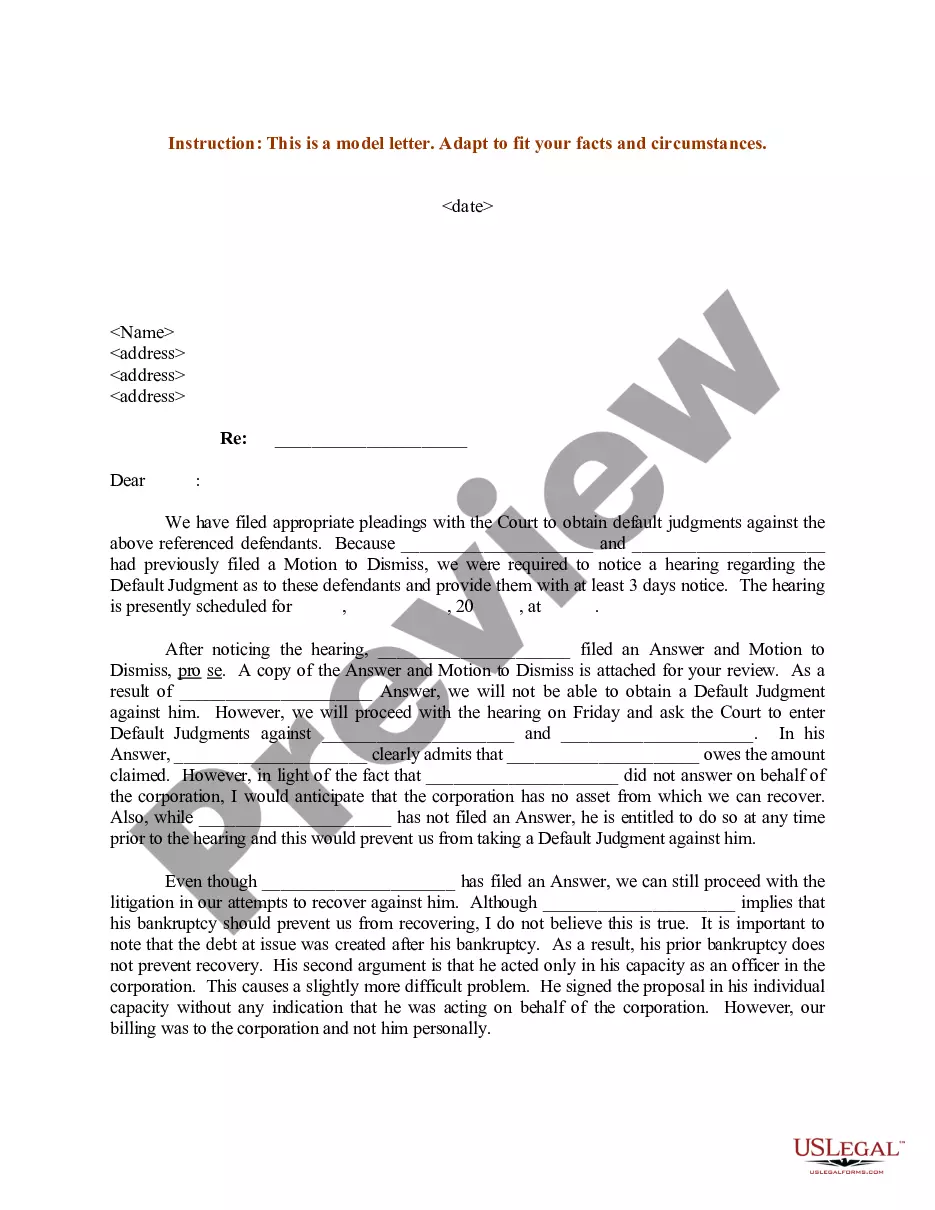
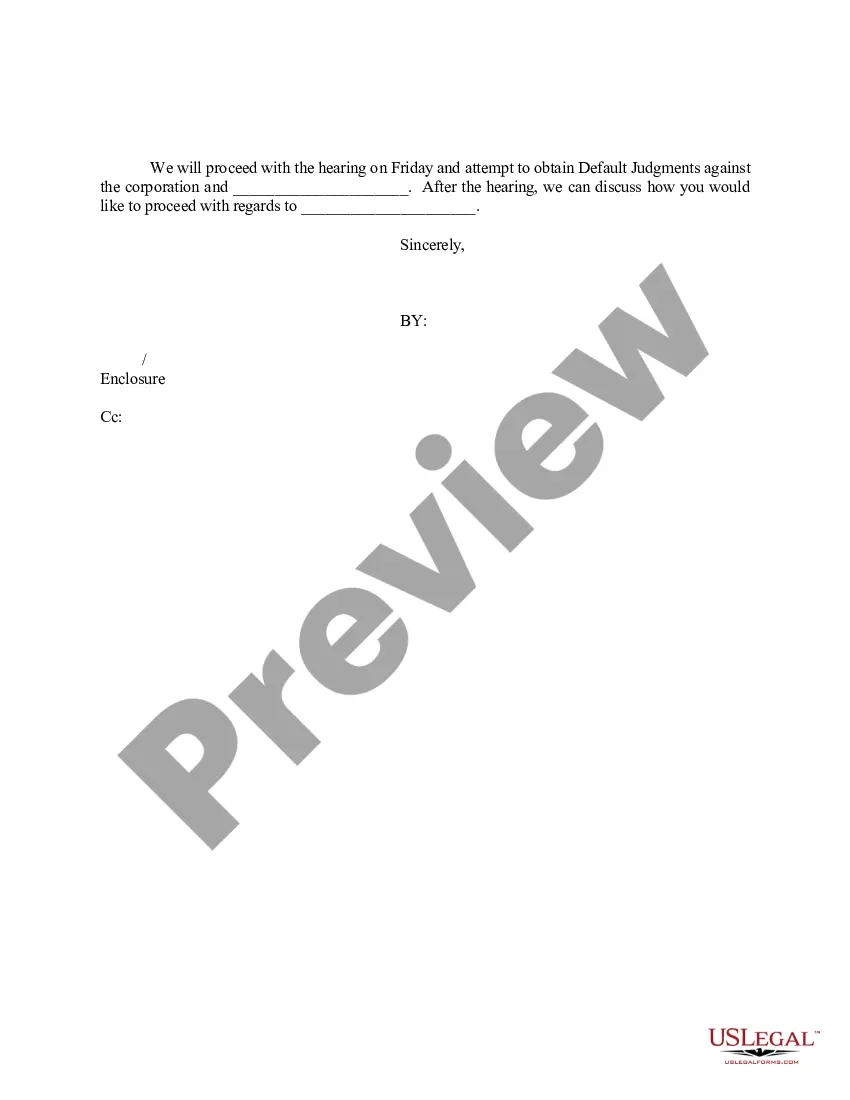
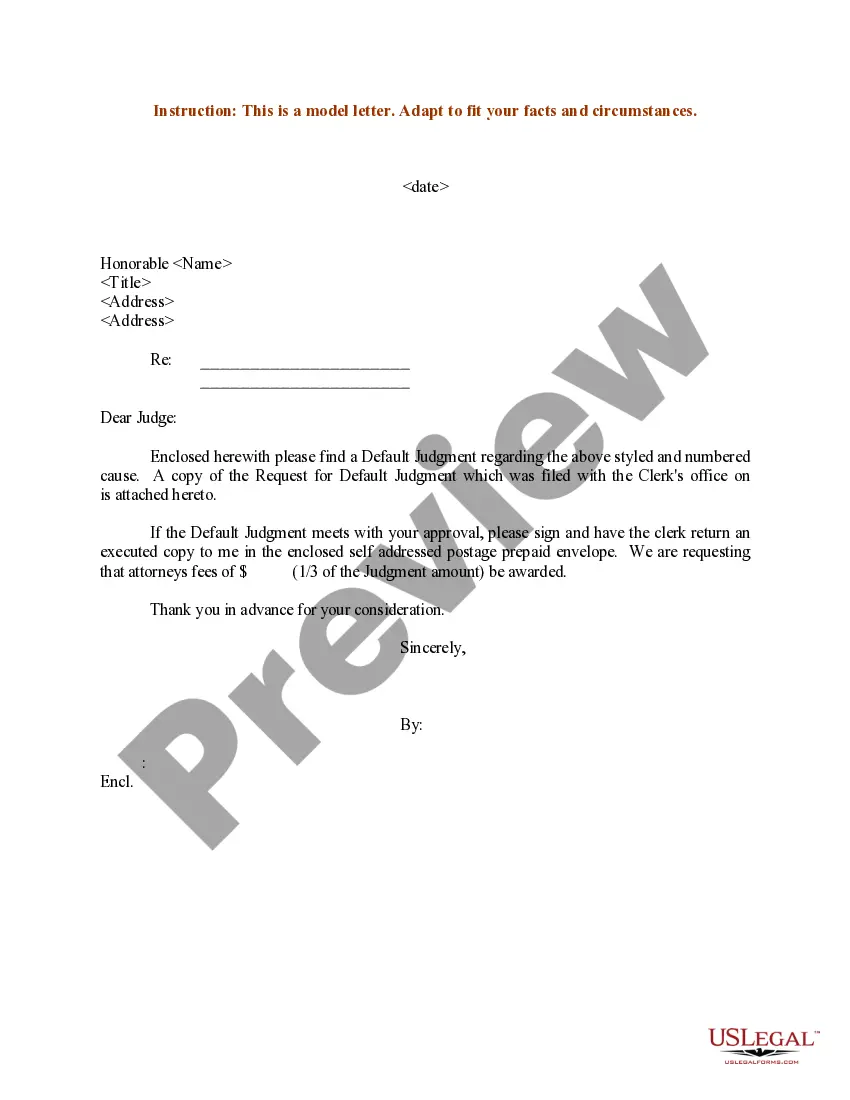
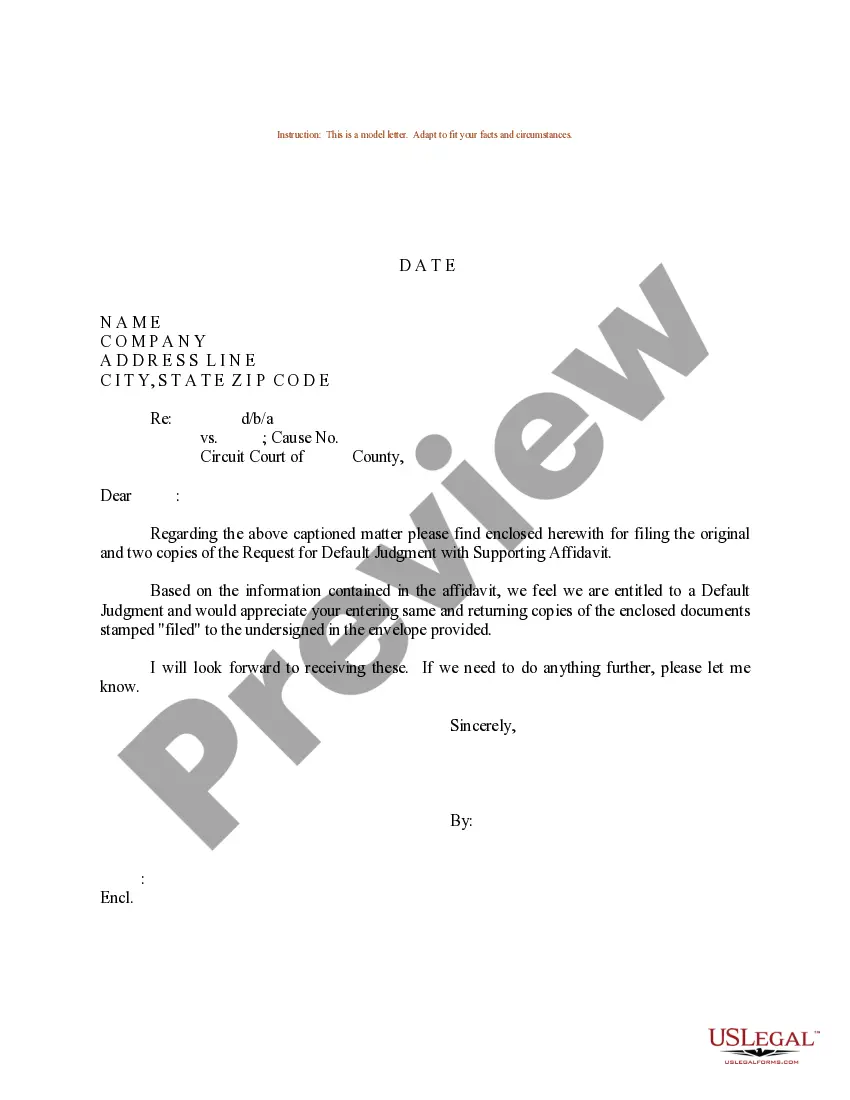
Request For Default Prove Up Hearing
Description
Get your form ready online
Our built-in tools help you complete, sign, share, and store your documents in one place.
Make edits, fill in missing information, and update formatting in US Legal Forms—just like you would in MS Word.
Download a copy, print it, send it by email, or mail it via USPS—whatever works best for your next step.
Sign and collect signatures with our SignNow integration. Send to multiple recipients, set reminders, and more. Go Premium to unlock E-Sign.
If this form requires notarization, complete it online through a secure video call—no need to meet a notary in person or wait for an appointment.
We protect your documents and personal data by following strict security and privacy standards.

Make edits, fill in missing information, and update formatting in US Legal Forms—just like you would in MS Word.

Download a copy, print it, send it by email, or mail it via USPS—whatever works best for your next step.

Sign and collect signatures with our SignNow integration. Send to multiple recipients, set reminders, and more. Go Premium to unlock E-Sign.

If this form requires notarization, complete it online through a secure video call—no need to meet a notary in person or wait for an appointment.

We protect your documents and personal data by following strict security and privacy standards.
Looking for another form?
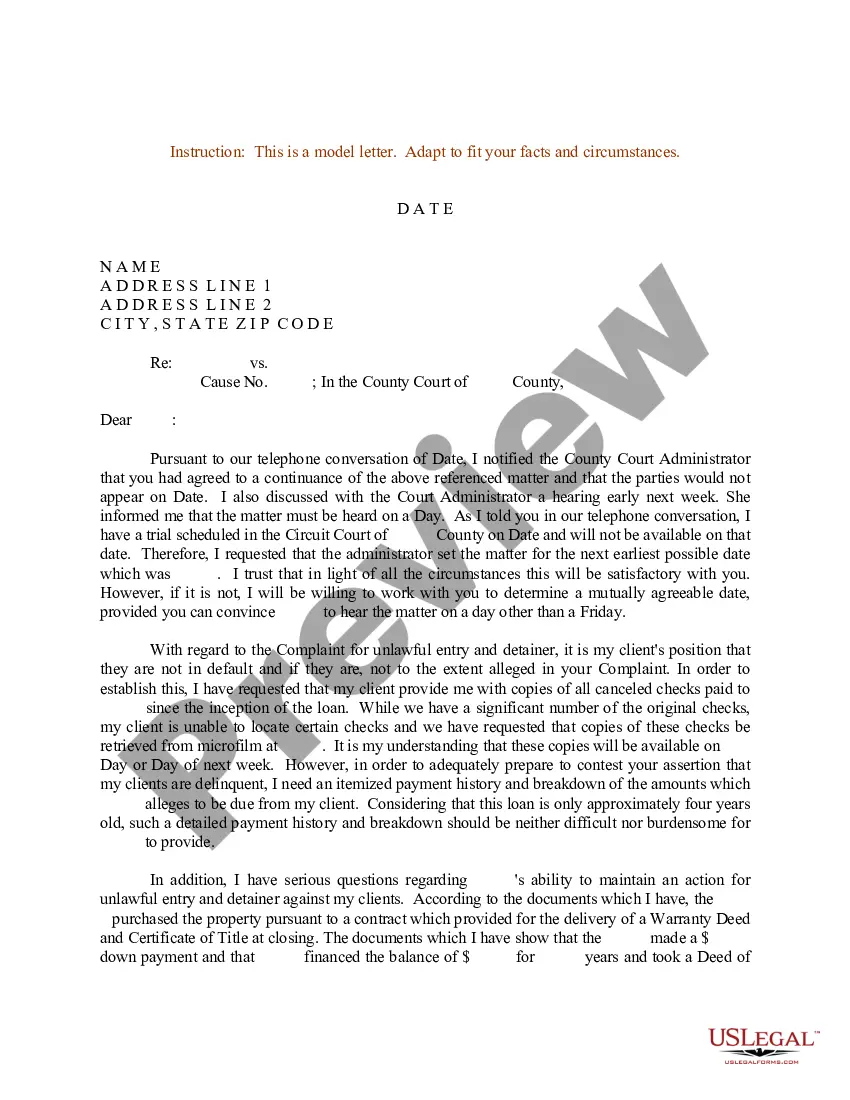
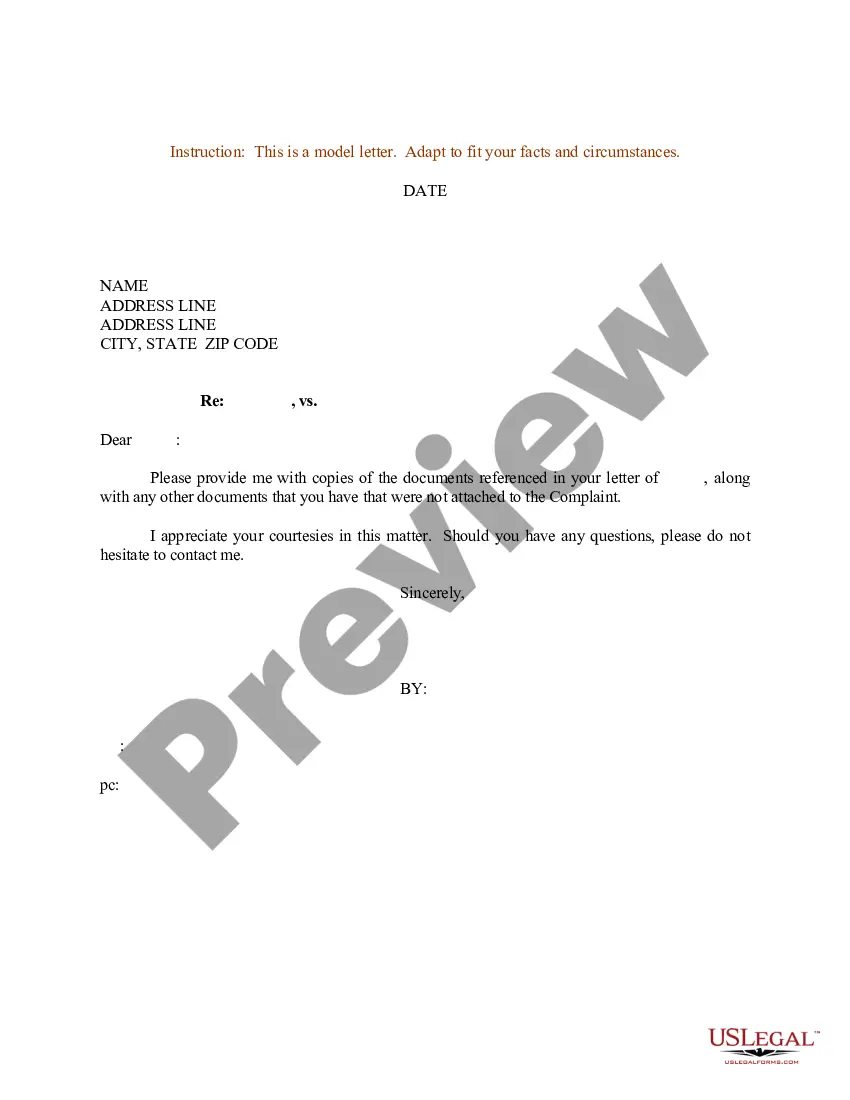
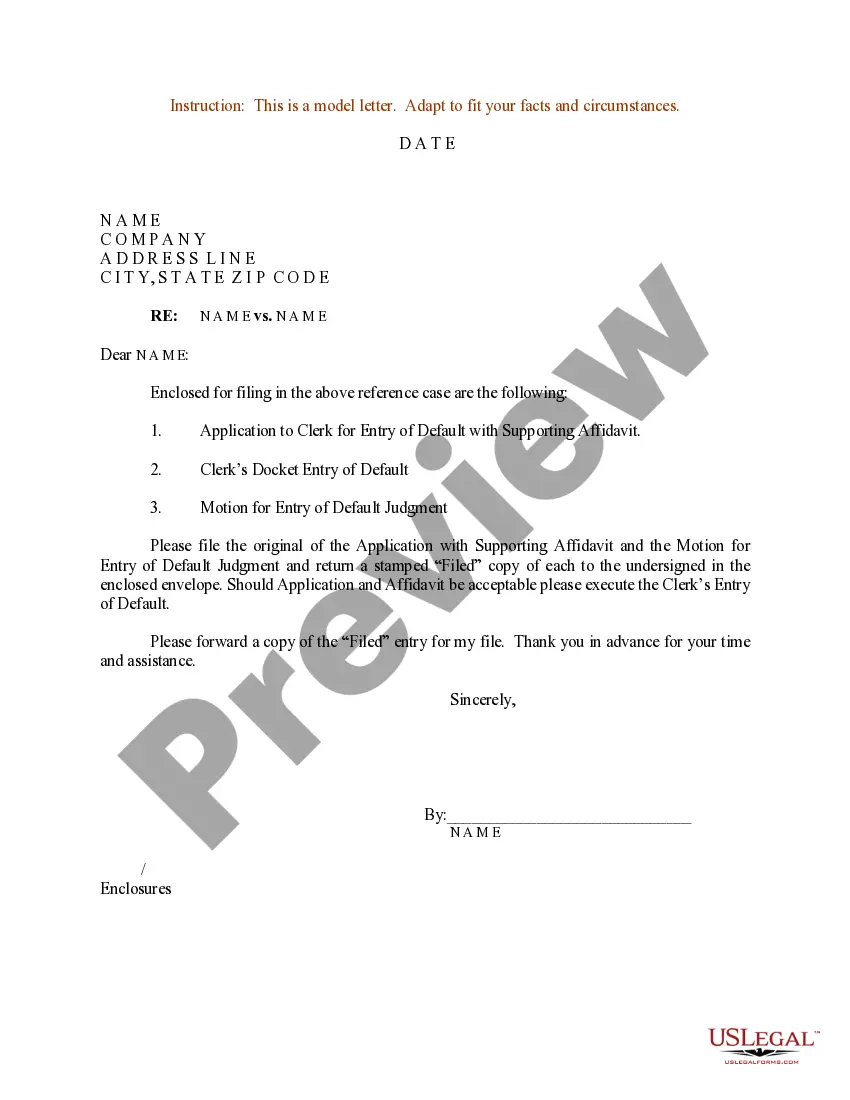
How to fill out Sample Letter For Entrance Of Default Judgments?
The Request For Default Prove Up Hearing displayed on this page is a reusable legal template created by experienced attorneys in accordance with federal and state laws.
For over 25 years, US Legal Forms has supplied individuals, businesses, and legal professionals with over 85,000 validated, state-specific documents for various personal and professional situations. It is the quickest, easiest, and most reliable method to obtain the forms you require, as the service ensures bank-level data protection and anti-malware safeguards.
Register with US Legal Forms to have authenticated legal templates for every situation in life at your fingertips.
- Search for the required document and examine it.
- Browse through the document you searched for and preview it or review the form description to ensure it meets your requirements. If it does not, use the search bar to find the right one. Hit Buy Now once you find the template that suits your needs.
- Register and sign in.
- Choose the pricing option that fits you best and create an account. Use PayPal or a credit card for a swift transaction. If you already have an account, Log In and check your subscription to proceed.
- Obtain the editable template.
- Pick the format you desire for your Request For Default Prove Up Hearing (PDF, DOCX, RTF) and save the file on your device.
- Complete and endorse the documents.
- Print the template to fill it out by hand. Alternatively, use an online versatile PDF editor to efficiently and accurately complete and endorse your form electronically with a valid signature.
- Redownload your documents as needed.
- Access the same document again whenever required. Open the My documents section in your profile to redownload any previously saved documents.
Form popularity
FAQ
To set aside a default judgment, you must file a motion with the court, detailing why the judgment should be overturned. Common reasons include lack of notice or a valid defense that was not previously considered. In this context, the request for default prove up hearing serves as an opportunity to present your case. US Legal Forms offers comprehensive support to help you prepare and submit your motion effectively.
Rule 12 refers to federal rules that govern how a party may respond to a lawsuit. This rule allows defendants to file motions to dismiss or contest default judgments under specific circumstances. A request for default prove up hearing could arise when a party believes they did not receive proper notice or had valid reasons for not responding in time. Understanding Rule 12 can be pivotal for anyone facing a default judgment.
An application to set aside a default judgment allows a party to challenge a court's ruling made in their absence. This process typically requires filing a motion that explains why the judgment should be overturned. The request for a default prove up hearing might be part of this process, helping demonstrate that a valid defense exists. Utilizing platforms like US Legal Forms can simplify this application with clear templates and guidance.
In California, a default judgment generally remains enforceable for ten years from the date it is entered. After this period, the plaintiff must renew the judgment to continue collecting on it. However, it’s important to act within this timeframe if you are seeking to enforce or contest a judgment. If you're facing a potential default judgment, learning about the request for default prove up hearing is essential to protect your interests.
'Default' in a hearing refers to a situation where a party does not appear or respond to the court's notifications. It typically indicates that the defendant has failed to participate in the legal process. In such cases, the court may rule in favor of the opposing party who has filed the necessary paperwork. Understanding this term is key when preparing for a request for default prove up hearing.
The purpose of a default judgment is to provide a resolution when one party fails to respond to legal proceedings. It allows the plaintiff to receive a court-ordered remedy without further litigation. This mechanism helps maintain the efficiency of the court system by allowing cases to progress even when one party does not participate. Knowing how to effectively handle a request for default prove up hearing can aid in achieving timely justice.
You can set aside a default judgment if you were not properly served with the notice of the lawsuit or if you had a valid reason for missing the court date. Additionally, if new evidence emerges or if you can demonstrate fraud or misconduct related to the judgment, this may also provide grounds. Understanding how to request a default prove up hearing can help clarify your options in these situations.