Default Prove Up Hearing With Motion In Palm Beach
Description

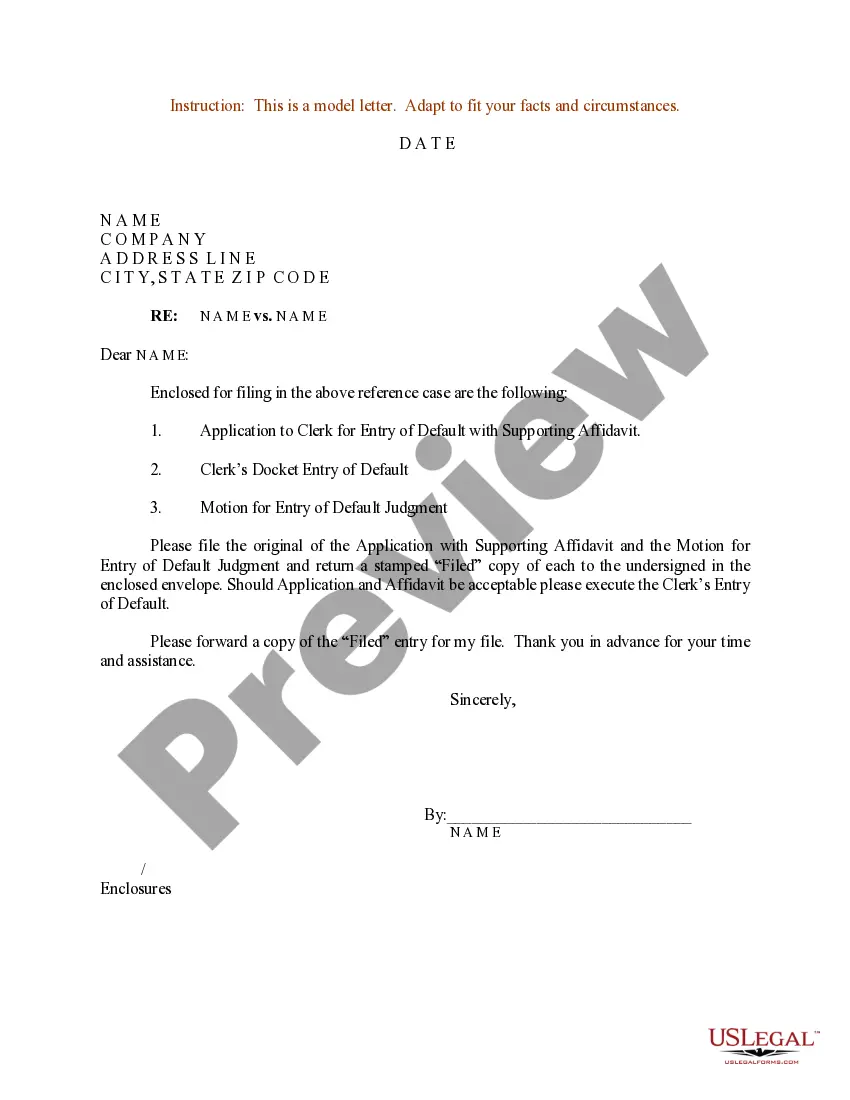
Get your form ready online
Our built-in tools help you complete, sign, share, and store your documents in one place.
Make edits, fill in missing information, and update formatting in US Legal Forms—just like you would in MS Word.
Download a copy, print it, send it by email, or mail it via USPS—whatever works best for your next step.
Sign and collect signatures with our SignNow integration. Send to multiple recipients, set reminders, and more. Go Premium to unlock E-Sign.
If this form requires notarization, complete it online through a secure video call—no need to meet a notary in person or wait for an appointment.
We protect your documents and personal data by following strict security and privacy standards.

Make edits, fill in missing information, and update formatting in US Legal Forms—just like you would in MS Word.

Download a copy, print it, send it by email, or mail it via USPS—whatever works best for your next step.

Sign and collect signatures with our SignNow integration. Send to multiple recipients, set reminders, and more. Go Premium to unlock E-Sign.

If this form requires notarization, complete it online through a secure video call—no need to meet a notary in person or wait for an appointment.

We protect your documents and personal data by following strict security and privacy standards.
Looking for another form?





Form popularity
FAQ
If the defendant fails to respond within the time set by Florida procedural rules, the plaintiff must file the required claim form to request a clerk's default. This action is crucial as it formally recognizes the defendant's failure to respond, enabling the case to move forward towards a default judgment.
Generally, a default allows you to obtain an earlier final hearing to finish your case. Once the default is signed by the clerk, you can request a trial or final hearing in your case.
The default final judgment is obtained by delivering to the Court a Motion for Default Final judgment-Residential Eviction (Form 78) and/or a Motion for Default Final judgment - Damages (Residential Eviction) (Form 79) with an Affidavit of Damages (Form 80).
A motion hearing is a special meeting that occurs before your criminal trial in California.
Post-judgment discovery is appropriate as long as the judgment is enforceable.” The Court found that Florida judgments have a twenty year life during which those judgments are enforceable.
In this process, a judge (rather than a clerk) determines how much the plaintiff can collect after reviewing the amount requested by the plaintiff, which may require a court hearing. Once the default prove-up process is finished and a ruling by the judge is provided, the case is complete.
Understand Judicial Attention Spans: Be Certain Your Brief and Arguments Tell the Story. Employ Innocence by Association. Avoid “Red Flag” Clues for the Judicial Reader. Avoid Ad Hominem Attacks and Language. Argue to Win. Never Squander Credibility.
NON-EVIDENTIARY MOTION(S) WITHOUT HEARING: Pretrial non-evidentiary motions may be subject to review and ruling by the judge based only upon the motion along with written argument and any authority timely filed in the action.
A term used in Florida state court litigation to refer to a block of time made available by a judge to conduct routine hearings that require approximately five minutes or less.
Explanation: When a judge sets down a case, it means that they have scheduled it for a trial or hearing. This is usually done by making a docket entry, which is a record of all the cases that are scheduled to be heard in a court.
