Letter Requesting Motion To Vacate Order Of Default Form In New York
Description

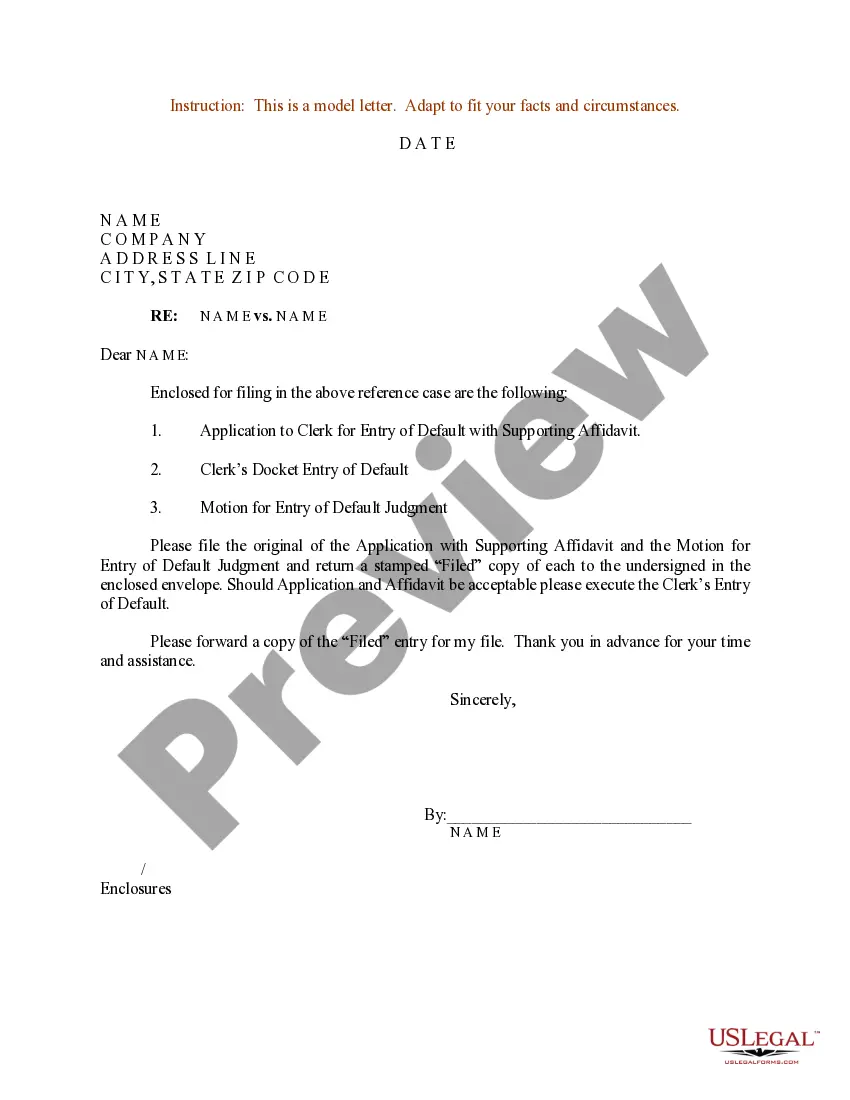
Get your form ready online
Our built-in tools help you complete, sign, share, and store your documents in one place.
Make edits, fill in missing information, and update formatting in US Legal Forms—just like you would in MS Word.
Download a copy, print it, send it by email, or mail it via USPS—whatever works best for your next step.
Sign and collect signatures with our SignNow integration. Send to multiple recipients, set reminders, and more. Go Premium to unlock E-Sign.
If this form requires notarization, complete it online through a secure video call—no need to meet a notary in person or wait for an appointment.
We protect your documents and personal data by following strict security and privacy standards.

Make edits, fill in missing information, and update formatting in US Legal Forms—just like you would in MS Word.

Download a copy, print it, send it by email, or mail it via USPS—whatever works best for your next step.

Sign and collect signatures with our SignNow integration. Send to multiple recipients, set reminders, and more. Go Premium to unlock E-Sign.

If this form requires notarization, complete it online through a secure video call—no need to meet a notary in person or wait for an appointment.

We protect your documents and personal data by following strict security and privacy standards.
Looking for another form?









Form popularity
FAQ
To vacate a default judgment in New York, the defendant must make an application to the court that rendered the judgment. In Nassau and Suffolk counties, this will most likely be either the District Court or the Supreme Court.
The person who asks for the appeal is called the appellant and the person who is on the other side of the appeal is called the respondent. Except for a default judgment, only an order or Judgment made by a Judge can be appealed.
A plaintiff can seek before the clerk a default judgment based on the initial non-appearance of the defendant in cases where both: The plaintiff makes the application within one year of the defendant's default. The claim is for either: – a sum certain; or – a sum that can be made certain by computation. (CPLR 3215(a).)
In order to respond to a motion or an order to show cause, you must prepare answering papers. If you disagree with what is being asked for in the motion or order to show cause, you must prepare an affidavit in opposition (see Exhibit A).
Imagine you've taken someone to court, but they've ignored all proceedings. A motion for default judgment allows you to ask the court to automatically decide in your favor due to the other party's lack of response or action.
