Default Prove Up Hearing With California In Maryland
Description

Get your form ready online
Our built-in tools help you complete, sign, share, and store your documents in one place.
Make edits, fill in missing information, and update formatting in US Legal Forms—just like you would in MS Word.
Download a copy, print it, send it by email, or mail it via USPS—whatever works best for your next step.
Sign and collect signatures with our SignNow integration. Send to multiple recipients, set reminders, and more. Go Premium to unlock E-Sign.
If this form requires notarization, complete it online through a secure video call—no need to meet a notary in person or wait for an appointment.
We protect your documents and personal data by following strict security and privacy standards.

Make edits, fill in missing information, and update formatting in US Legal Forms—just like you would in MS Word.

Download a copy, print it, send it by email, or mail it via USPS—whatever works best for your next step.

Sign and collect signatures with our SignNow integration. Send to multiple recipients, set reminders, and more. Go Premium to unlock E-Sign.

If this form requires notarization, complete it online through a secure video call—no need to meet a notary in person or wait for an appointment.

We protect your documents and personal data by following strict security and privacy standards.
Looking for another form?









Form popularity
FAQ
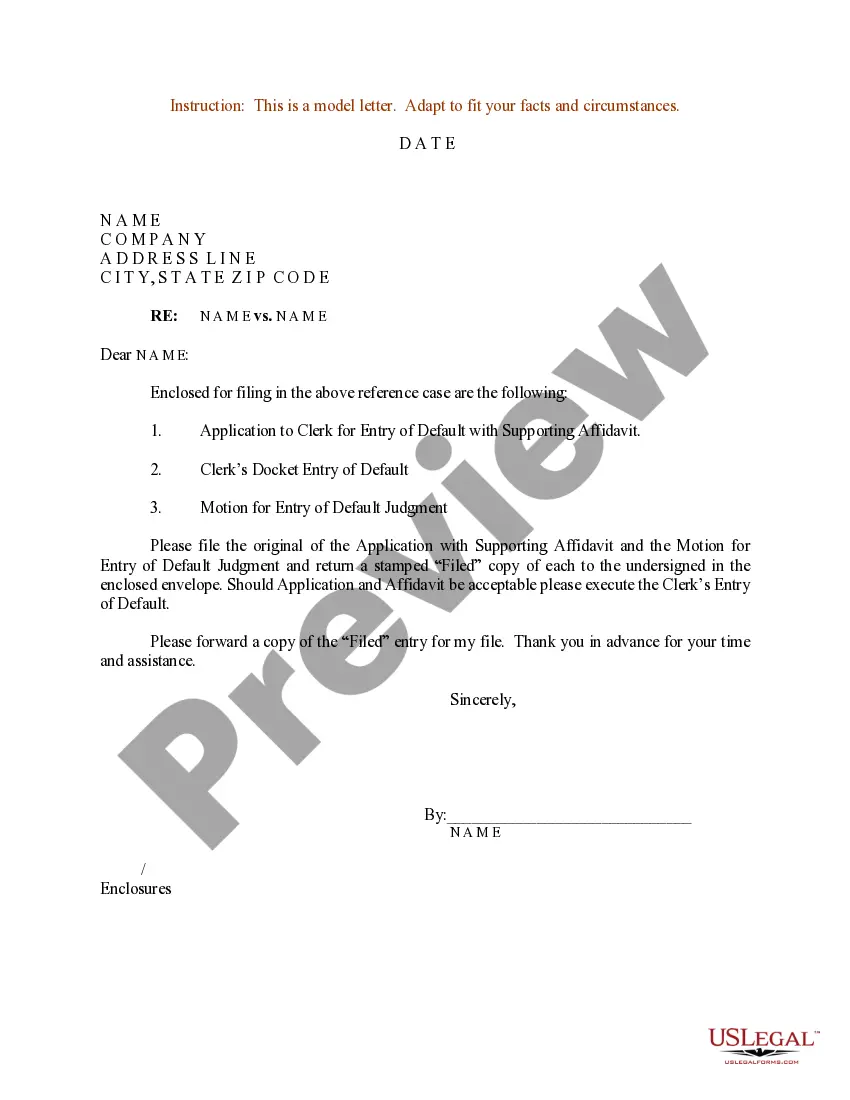
In California, entry of default completely cuts off a party's right to appear in the action (e.g., take discovery, file motions other than a motion for relief from default or contest the material allegations of the complaint for purposes of the action).
A default prove up is essentially a short court hearing where the individual seeking the divorce presents evidence to the judge. This is necessary because, in a default situation, the judgment is submitted without the agreement or participation of the other spouse.
The court will still accept a response from the defendant after 30 days, until you file a Request for Entry of Default. Once the clerk enters a default in the court record, the defendant is no longer able to file a response or otherwise participate in the case.
Once the Order of Default is issued, the defendant has 30 days to respond and explain why they did not answer the initial Complaint and/or why the Order of Default should not proceed. If the Defendant does not respond to the Order of Default, the case will be scheduled for an uncontested hearing.
To stop the entry of a default or default judgment before it is entered, one generally has to file something in court. This can be an Answer, a Motion to Extend Time, a Motion to Quash Service of Process, or perhaps others. A motion will likely interrupt entry of a default, but a motion is merely a request.
Under CCP § 473(b), the court may set aside a default and default judgment if the defendant asking for the set aside presents enough evidence to the court to demonstrate that the default was entered by inadvertence, mistake, surprise, or excusable neglect.
