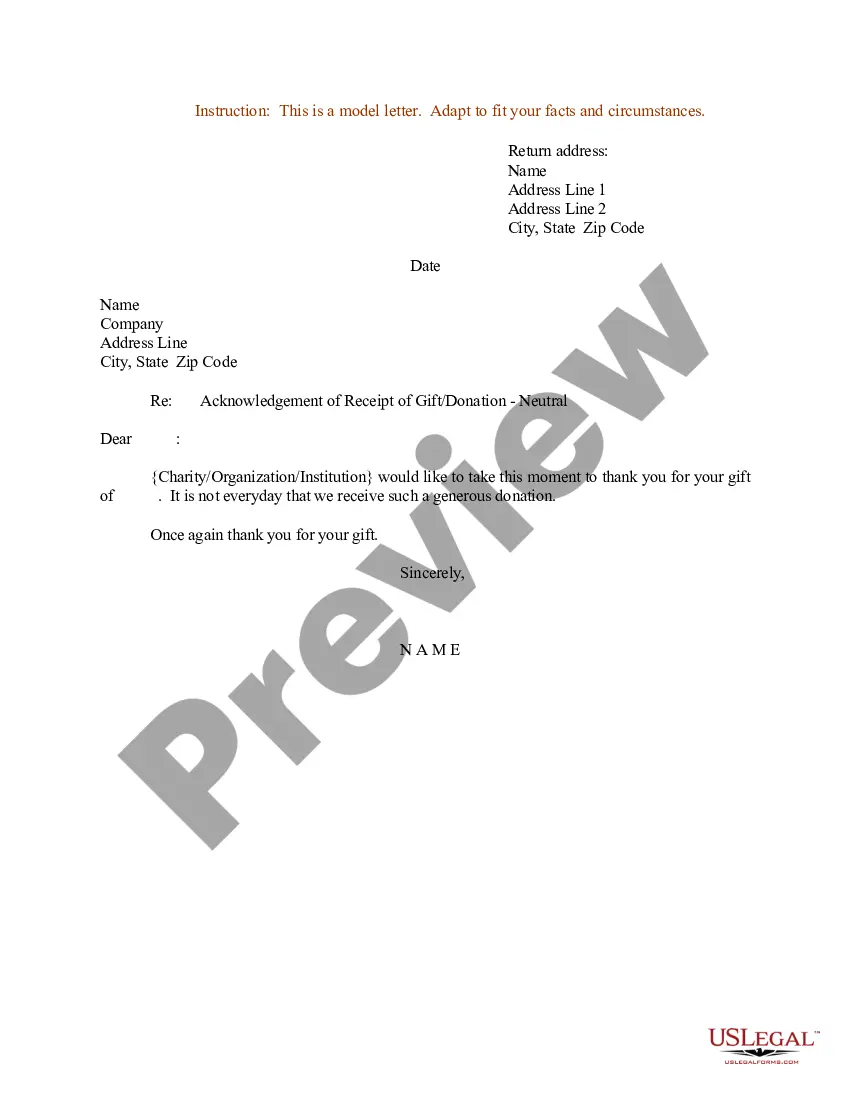
Donation Receipt For Sponsorship In Dallas
Description
Get your form ready online
Our built-in tools help you complete, sign, share, and store your documents in one place.
Make edits, fill in missing information, and update formatting in US Legal Forms—just like you would in MS Word.
Download a copy, print it, send it by email, or mail it via USPS—whatever works best for your next step.
Sign and collect signatures with our SignNow integration. Send to multiple recipients, set reminders, and more. Go Premium to unlock E-Sign.
If this form requires notarization, complete it online through a secure video call—no need to meet a notary in person or wait for an appointment.
We protect your documents and personal data by following strict security and privacy standards.

Make edits, fill in missing information, and update formatting in US Legal Forms—just like you would in MS Word.

Download a copy, print it, send it by email, or mail it via USPS—whatever works best for your next step.

Sign and collect signatures with our SignNow integration. Send to multiple recipients, set reminders, and more. Go Premium to unlock E-Sign.

If this form requires notarization, complete it online through a secure video call—no need to meet a notary in person or wait for an appointment.

We protect your documents and personal data by following strict security and privacy standards.
Looking for another form?
Form popularity
FAQ
Determine your needs. The first step to asking for sponsorship is determining what you actually need. Outline what you have to offer. Create a one-pager. Create a list of prospects. Try to get in touch with an individual, if at all possible. Keep it short and sweet! ... Follow Up. If at first you don't succeed, try again.
There are a couple of ways you can go about asking for donations: Write a letter. This method lends a bit of formality to the ask. Limit your letter to one page, and make sure that someone in your organization signs it (preferably a board member or other leader). Ask in person.
Here are a few simple rules to follow: Address each potential sponsor by name. Add details from their LinkedIn profile, social media, or company announcements. Highlight the event's mission or “big why” reason for being. Share a few words on the impact your event has had on your community.
From sponsoring meals, families, animals, or events, there are many opportunities to make a donation that is labeled as a sponsorship, but not all sponsorships are considered charitable donations in the eyes of the IRS.
I'm writing to ask you to support me and my cause/project/etc.. Just a small donation of amount can help me accomplish task/reach a goal/etc.. Your donation will go toward describe exactly what the contribution will be used for. When possible, add a personal connection to tie the donor to the cause.
From sponsoring meals, families, animals, or events, there are many opportunities to make a donation that is labeled as a sponsorship, but not all sponsorships are considered charitable donations in the eyes of the IRS.
Getting a receipt every time you donate strengthens your tax records if you are audited. If you make a large donation and don't have (or can't find) the receipt, the donation will almost certainly be disallowed on audit. For this reason, it's best to set up a record-keeping system at the start of each year.
In that case, all you need to provide in the donation receipt is the name and EIN of the organization, date of donation, and a description of the donated item. You should also add a note stating that the valuation of the item is the donor's income tax responsibility.
However, you should be able to provide a bank record (bank statement, credit card statement, canceled check or a payroll deduction record) to claim the tax deduction. Written records, like check registers or personal notations, from the donor aren't enough proof. The records should show the: Organization's name.
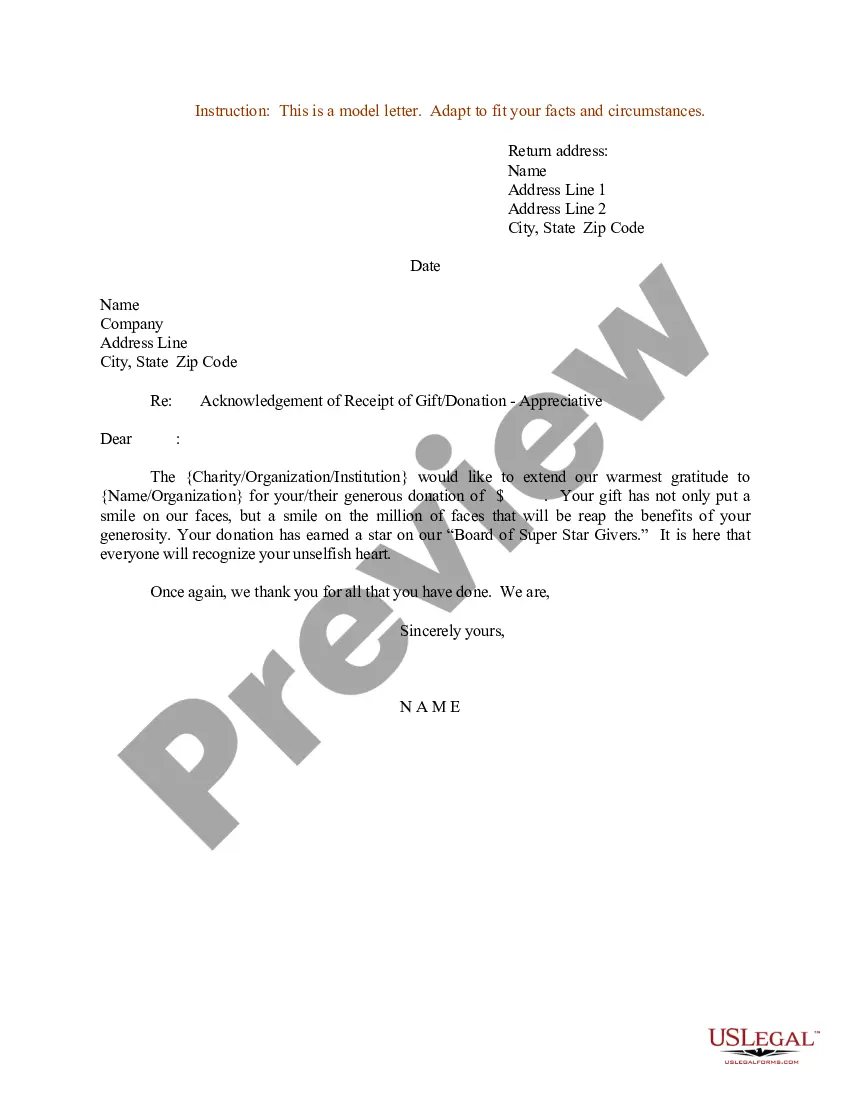
A donation acknowledgment letter is a type of donor letter that you send to donors to document their charitable gifts and donations. Sometimes your donation receipt functions as a donor acknowledgement. However, that's not always the case.