Donate Land For Tax Write Off In Michigan
Description


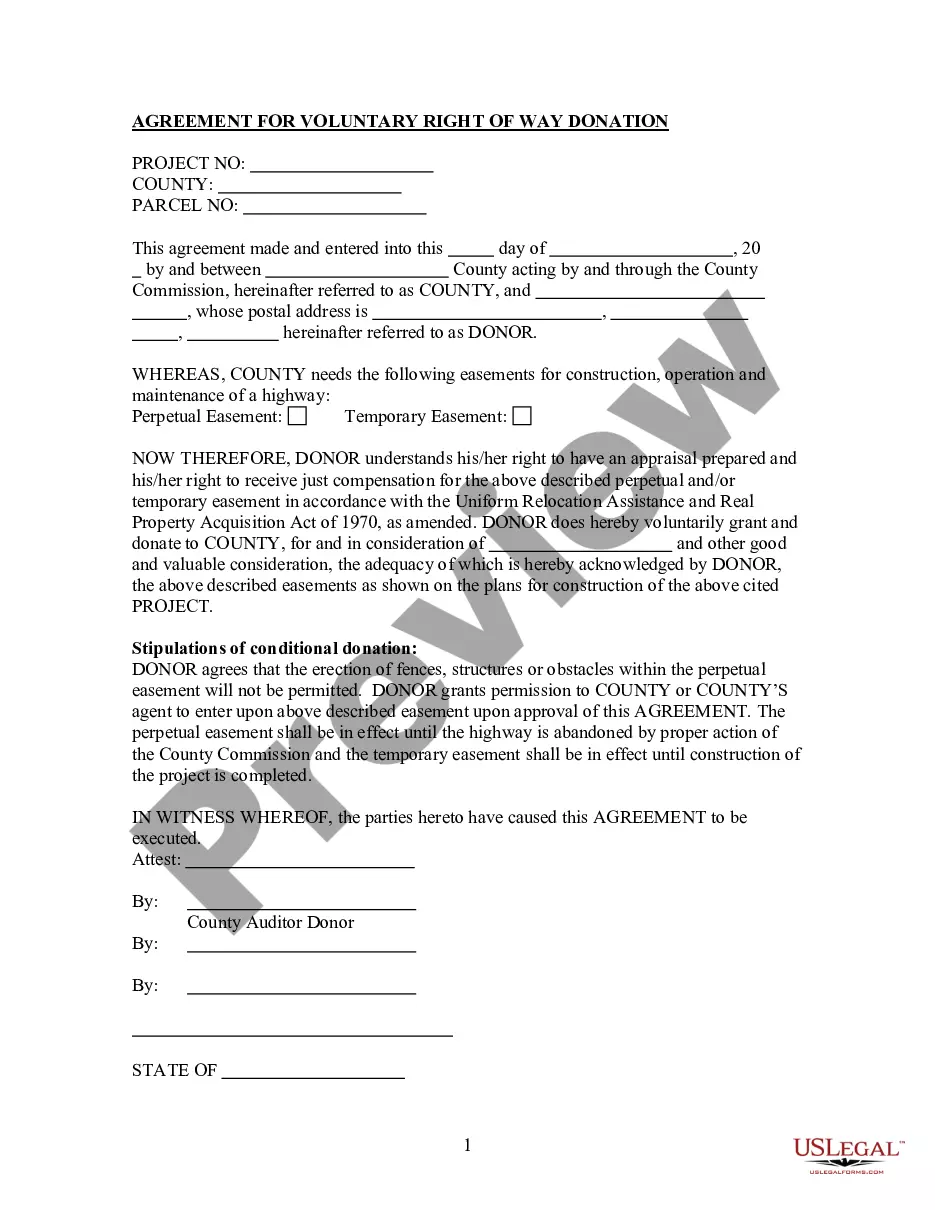
Get your form ready online
Our built-in tools help you complete, sign, share, and store your documents in one place.
Make edits, fill in missing information, and update formatting in US Legal Forms—just like you would in MS Word.
Download a copy, print it, send it by email, or mail it via USPS—whatever works best for your next step.
Sign and collect signatures with our SignNow integration. Send to multiple recipients, set reminders, and more. Go Premium to unlock E-Sign.
If this form requires notarization, complete it online through a secure video call—no need to meet a notary in person or wait for an appointment.
We protect your documents and personal data by following strict security and privacy standards.

Make edits, fill in missing information, and update formatting in US Legal Forms—just like you would in MS Word.

Download a copy, print it, send it by email, or mail it via USPS—whatever works best for your next step.

Sign and collect signatures with our SignNow integration. Send to multiple recipients, set reminders, and more. Go Premium to unlock E-Sign.

If this form requires notarization, complete it online through a secure video call—no need to meet a notary in person or wait for an appointment.

We protect your documents and personal data by following strict security and privacy standards.
Looking for another form?









Form popularity
FAQ
Determining the value of donated property de- pends upon many factors. You should consider all the facts and circumstances connected with the property, including any recent transactions, in determining value. Value may also be based on desirability, use, condition, scarcity, and mar- ket demand for that property.
You can claim a property tax credit if all the following apply: You are considered a "natural person" (owner or claimant), and not a living trust, irrevocable trust, or other legal entity, such as a S corporation or LLC, etc. Your homestead is in Michigan (whether you rent or own).
Generally, you can only deduct charitable contributions if you itemize deductions on Schedule A (Form 1040), Itemized Deductions. Gifts to individuals are not deductible. Only qualified organizations are eligible to receive tax deductible contributions.
California law generally conforms to federal law with respect to deductions for charitable contributions of a donor's entire interest in real property or a charitable contribution of a conservation easement with some important exceptions, including, but not limited to, limitation of the deduction to a taxpayer's basis ...
Yes, any portion of your Roth IRA distribution that is included in your federal Adjusted Gross Income (AGI), is subject to Michigan individual income tax. Distributions from Roth IRAs will only be subject to Michigan individual income tax if the amount is included in AGI.
This deduction is not added back to reach Michigan taxable income. For tax year 2021 a $300 (single) or $600 (joint) charitable contribution deduction is not deducted to arrive at adjusted gross income (AGI), but is instead deducted to arrive at federal taxable income.
A qualified charitable distribution (QCD) allows individuals who are 70½ years old or older to donate up to $108,000 total to one or more charities directly from a taxable IRA instead of taking their required minimum distributions.
The only downside to QCDs is that they're not available to everyone. Only IRA owners and beneficiaries who are age 70½ or older qualify. QCDs can't be done from 401(k)s. The annual QCD limit is $100,000 per IRA owner, not per IRA account.
Yes! If you are 70½ or older, you may now make a one-time election for a qualified charitable distribution of up to $54,000 (without being taxed) from your IRA to fund a life-income gift. Some limitations apply, so contact us for more details and a personalized illustration at no obligation.
This deduction is not added back to reach Michigan taxable income. For tax year 2021 a $300 (single) or $600 (joint) charitable contribution deduction is not deducted to arrive at adjusted gross income (AGI), but is instead deducted to arrive at federal taxable income.