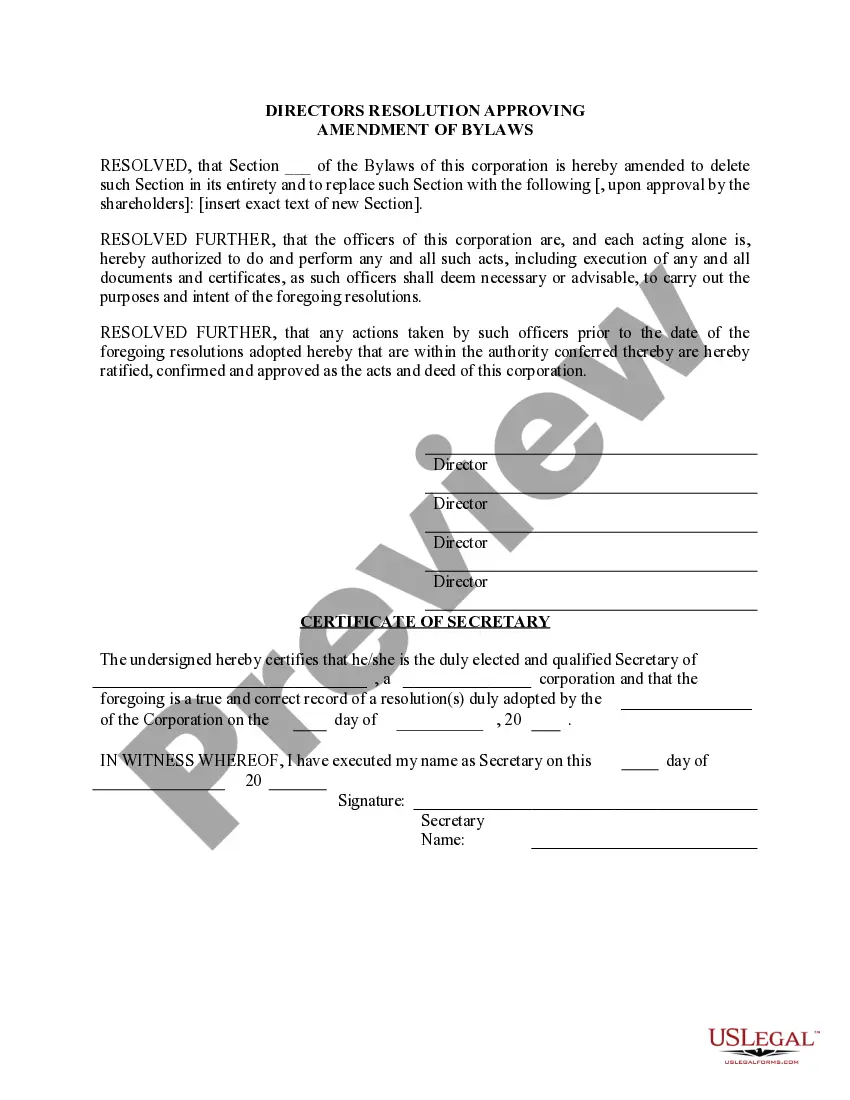
Board Directors Resolution With Roc In Philadelphia
Description




Get your form ready online
Our built-in tools help you complete, sign, share, and store your documents in one place.
Make edits, fill in missing information, and update formatting in US Legal Forms—just like you would in MS Word.
Download a copy, print it, send it by email, or mail it via USPS—whatever works best for your next step.
Sign and collect signatures with our SignNow integration. Send to multiple recipients, set reminders, and more. Go Premium to unlock E-Sign.
If this form requires notarization, complete it online through a secure video call—no need to meet a notary in person or wait for an appointment.
We protect your documents and personal data by following strict security and privacy standards.

Make edits, fill in missing information, and update formatting in US Legal Forms—just like you would in MS Word.

Download a copy, print it, send it by email, or mail it via USPS—whatever works best for your next step.

Sign and collect signatures with our SignNow integration. Send to multiple recipients, set reminders, and more. Go Premium to unlock E-Sign.

If this form requires notarization, complete it online through a secure video call—no need to meet a notary in person or wait for an appointment.

We protect your documents and personal data by following strict security and privacy standards.
Looking for another form?









Form popularity
FAQ
The board resolution is a formal document used to track details of an organization's specific decision including who voted, and their role. The board resolution is a legally binding record and is sometimes included in the board meeting minutes.
The resolution is not complete without the board president's signature and the date they signed it. Some boards provide room for all the board's officers to sign resolutions. Either way is acceptable.
A resolution in writing signed by each director member will be effective as long as the constitutional documents do not preclude this approach, however we advise that the articles are drafted to expressly permit this type of decision-making.
Chairperson of the board: The board chair will sign the resolution to affirm that the board approved it. Corporate secretary: The secretary will sign the resolution to attest that it's been adopted and recorded in the board meeting minutes.
A board resolution is passed after gaining approval by a majority of board members with voting rights. Your organization's governing documents will determine the votes necessary to approve a resolution formally.
A board resolution is subject to voting 'yes' or 'no'. This can be done by a show of hands, chits, or by electronic means.
The resolution is approved when the majority of the board members vote “yes.” Provide a section for the board president's signature. The resolution is not complete without the board president's signature and the date they signed it. Some boards provide room for all the board's officers to sign resolutions.
A board resolution is a document that formalises important decisions made by the board of directors and the actions relating to them. It is legally binding and functions as a compliance record to provide evidence of decisions made by the board regarding pivotal company matters.
A written resolution is a document that describes a company decision (as a resolution) that can be circulated to the required audience (shareholders/directors), with them able to sign and return it – confirming their agreement.
The title of the resolution must appropriately reflect the intent. Resolutions begin with "Whereas" statements, which provides the basic facts and reasons for the resolution, and conclude with "Resolved" statements which, identifies the specific proposal for the requestor's course of action.

