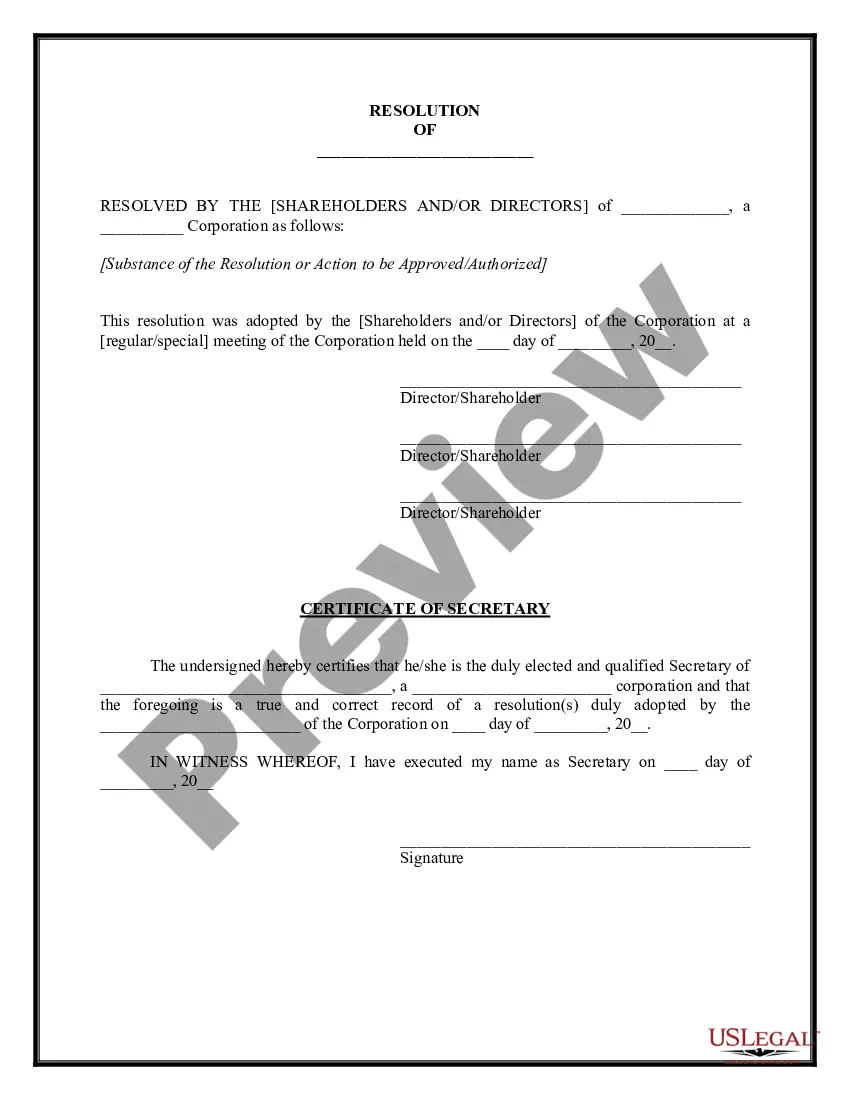
Board Meeting Resolution Notice With Delivery Proof* In Massachusetts
Description




Get your form ready online
Our built-in tools help you complete, sign, share, and store your documents in one place.
Make edits, fill in missing information, and update formatting in US Legal Forms—just like you would in MS Word.
Download a copy, print it, send it by email, or mail it via USPS—whatever works best for your next step.
Sign and collect signatures with our SignNow integration. Send to multiple recipients, set reminders, and more. Go Premium to unlock E-Sign.
If this form requires notarization, complete it online through a secure video call—no need to meet a notary in person or wait for an appointment.
We protect your documents and personal data by following strict security and privacy standards.

Make edits, fill in missing information, and update formatting in US Legal Forms—just like you would in MS Word.

Download a copy, print it, send it by email, or mail it via USPS—whatever works best for your next step.

Sign and collect signatures with our SignNow integration. Send to multiple recipients, set reminders, and more. Go Premium to unlock E-Sign.

If this form requires notarization, complete it online through a secure video call—no need to meet a notary in person or wait for an appointment.

We protect your documents and personal data by following strict security and privacy standards.
Looking for another form?




Form popularity
FAQ
Common types of nonprofits that are subject to open meeting laws are: State, local and federal boards, commissions and authorities. State educational institutions. Private entities receiving public funds.
The Open Meetings Act (Government Code, Chapter 551) provides that meetings of governmental bodies must be open to the public (except for expressly authorized executive sessions).
A public meeting refers to a meeting that is open to the public. A public hearing is open to the public but is regarding a specific proposal/project.
The notice of Board Meeting refers to a document that is sent to all directors of the company. This document informs the members about the venue, date, time, and agenda of the meeting. All types of companies are required to give notice at least 7 days before the actual day of the meeting.
Once a board resolution has been written, the board will need to approve it orally at a board meeting and preserve it in writing after the meeting. The following steps will take you through the process: The board chair reads the resolution (or asks another board director to do so)
Under the Open Meeting Law, the public is permitted to attend meetings of public bodies but is excluded from an executive session that is called for a valid purpose listed in the law. While the public is permitted to attend an open meeting, an individual may not address the public body without permission of the chair.
Written resolutions give the directors greater flexibility in making decisions, as the directors don't have to be present at a board meeting. Directors' decisions made by written resolution must be unanimous. This means that all eligible directors, i.e. those entitled to vote, must vote for the same view on a matter.
The title of the resolution must appropriately reflect the intent. Resolutions begin with "Whereas" statements, which provides the basic facts and reasons for the resolution, and conclude with "Resolved" statements which, identifies the specific proposal for the requestor's course of action.
At a meeting, resolutions will usually be passed by a simple majority of those present and voting, and written resolutions typically require unanimous approval, but this is subject to any special terms contained in the constitutional documents which may set a different threshold.
How to fill out a resolution of the board of directors? Date, time, and location of the meeting. Title that describes the board's decision to be made. Statement of majority or unanimous decision. Resolution of the decision, including any necessary actions. Officers responsible for carrying out the resolution.