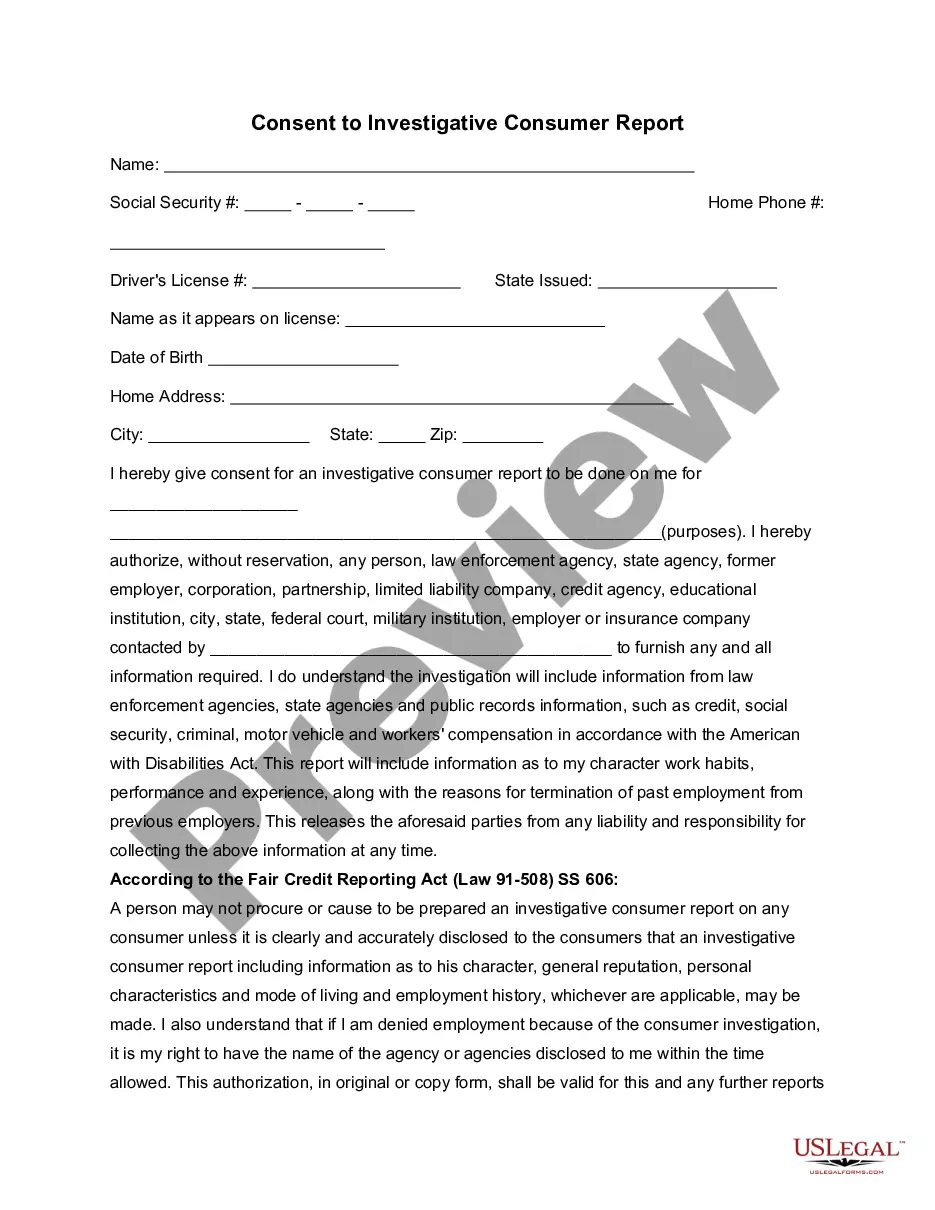
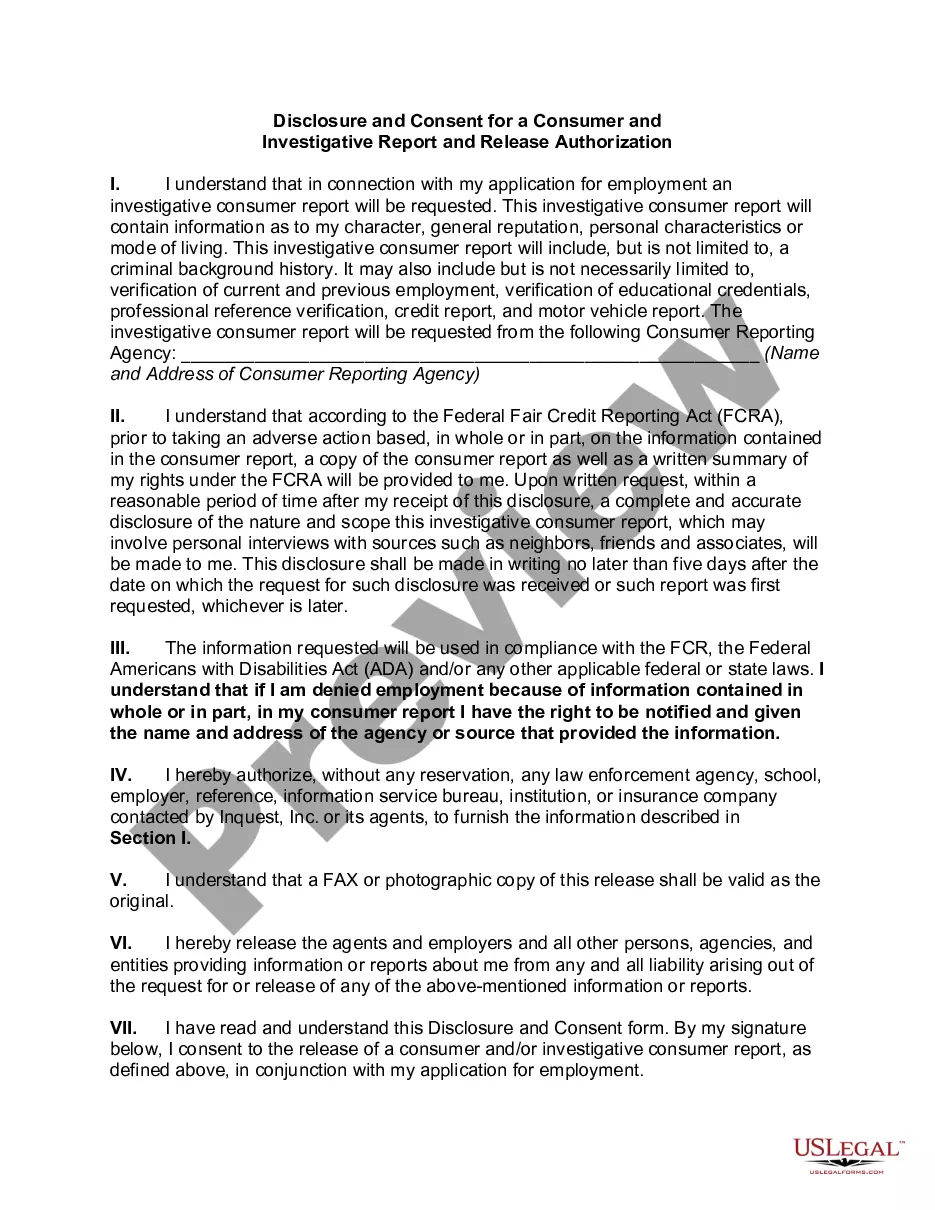
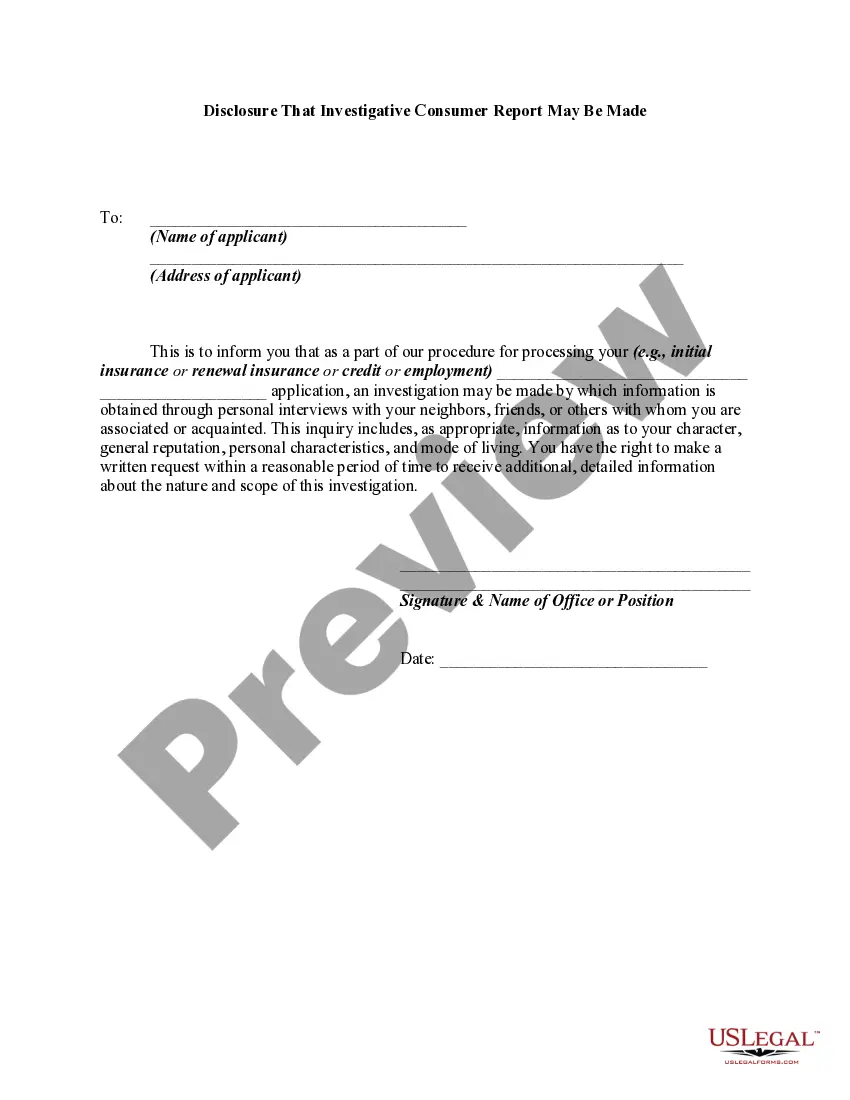
Consumer Reporting Agency Under Fcra In Nevada
Description
Get your form ready online
Our built-in tools help you complete, sign, share, and store your documents in one place.
Make edits, fill in missing information, and update formatting in US Legal Forms—just like you would in MS Word.
Download a copy, print it, send it by email, or mail it via USPS—whatever works best for your next step.
Sign and collect signatures with our SignNow integration. Send to multiple recipients, set reminders, and more. Go Premium to unlock E-Sign.
If this form requires notarization, complete it online through a secure video call—no need to meet a notary in person or wait for an appointment.
We protect your documents and personal data by following strict security and privacy standards.

Make edits, fill in missing information, and update formatting in US Legal Forms—just like you would in MS Word.

Download a copy, print it, send it by email, or mail it via USPS—whatever works best for your next step.

Sign and collect signatures with our SignNow integration. Send to multiple recipients, set reminders, and more. Go Premium to unlock E-Sign.

If this form requires notarization, complete it online through a secure video call—no need to meet a notary in person or wait for an appointment.

We protect your documents and personal data by following strict security and privacy standards.
Looking for another form?
Form popularity
FAQ
The CFPB has taken over regulatory and interpretive roles under the FCRA, which were formerly performed by the FTC, 92. while with respect to enforcement of the FCRA, the CFPB now shares responsibility with the FTC.
Enforcement of the FCRA falls to the Federal Trade Commission (FTC) and the Consumer Financial Protection Bureau (CFPB).
While there are three national CRAs in the United States (Experian, Trans Union, and Equifax), private investigators, detective agencies, collection agencies, inspection bureaus, companies that sell information to insurance companies and assist in performing background checks, and college placement offices have been ...
To report FCRA violations, you can file a complaint with the Consumer Financial Protection Bureau.
In 2010, Congress enacted the Dodd-Frank Wall Street Reform and Consumer Protection Act (Dodd-Frank Act), which granted rulemaking authority under FCRA (except for § 1681m(e) (red flag guidelines and regulation) and § 1681w (disposal of records)) to the Consumer Financial Protection Bureau (CFPB).
Under Section 609(a) of FCRA, all consumer reporting agencies must clearly and accurately disclose to a consumer, upon request, “all information in the consumer's file at the time of request” and “the sources of the information.” Moreover, FCRA defines a consumer's file as “all of the information on that consumer ...
As the FCR reacts to short-term frequency imbalances in the grid, the complete activation of the frequency reserve must be available within 30 seconds and cover a period of 15 minutes per incident ing to ENTSO-E standards.
It must maintain procedures to ensure that the obsolete information specified in the act is not released, except when permitted (see question 22) in 16 CFR 604. Reasonable procedures also are necessary to ensure maximum possible accuracy of the information in any consumer report.
A creditor must provide notice if it has: Taken adverse action on a completed credit application; Taken adverse action on an incomplete credit application; Taken adverse action on an existing credit account; or.