Consumer Reporting Agency Under Fcra In King
Description
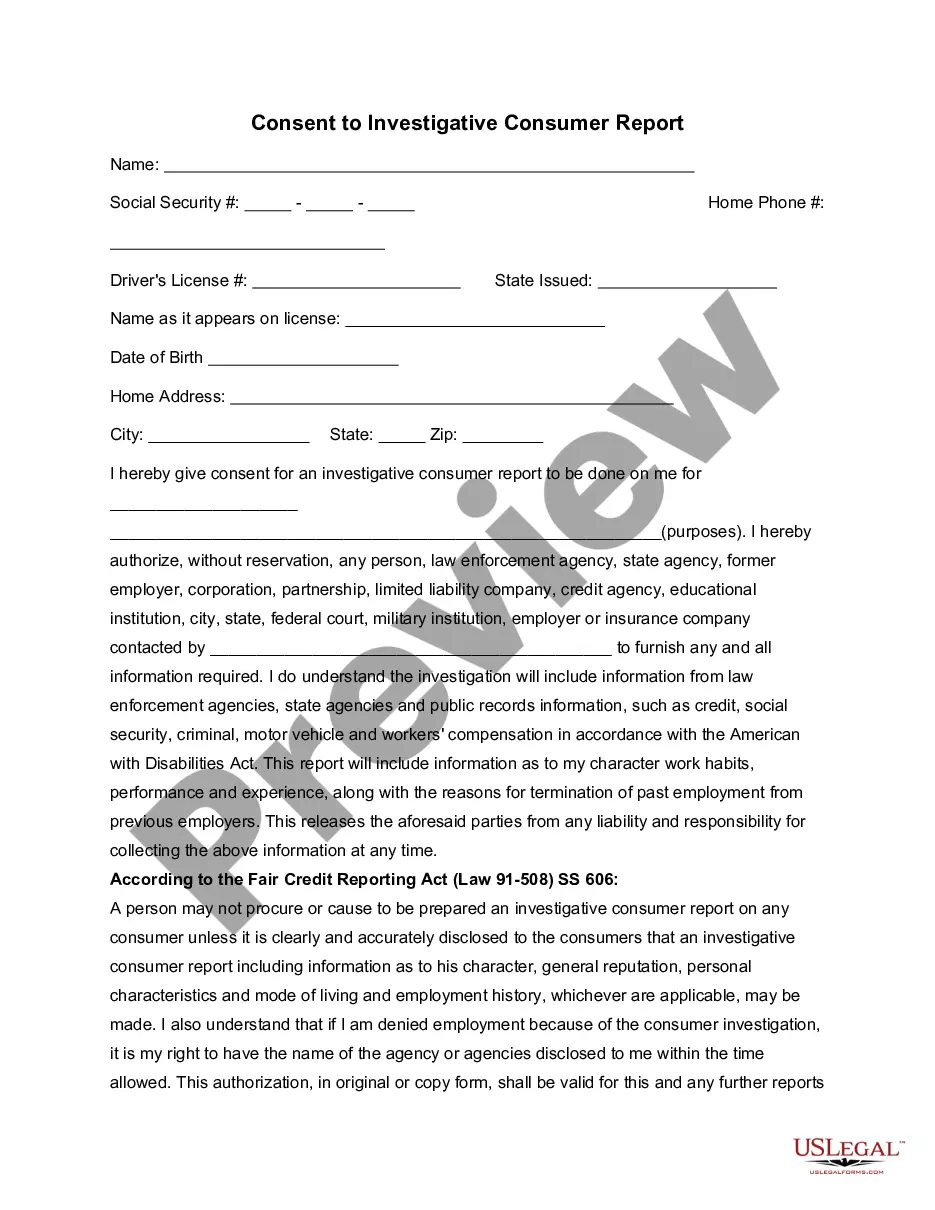

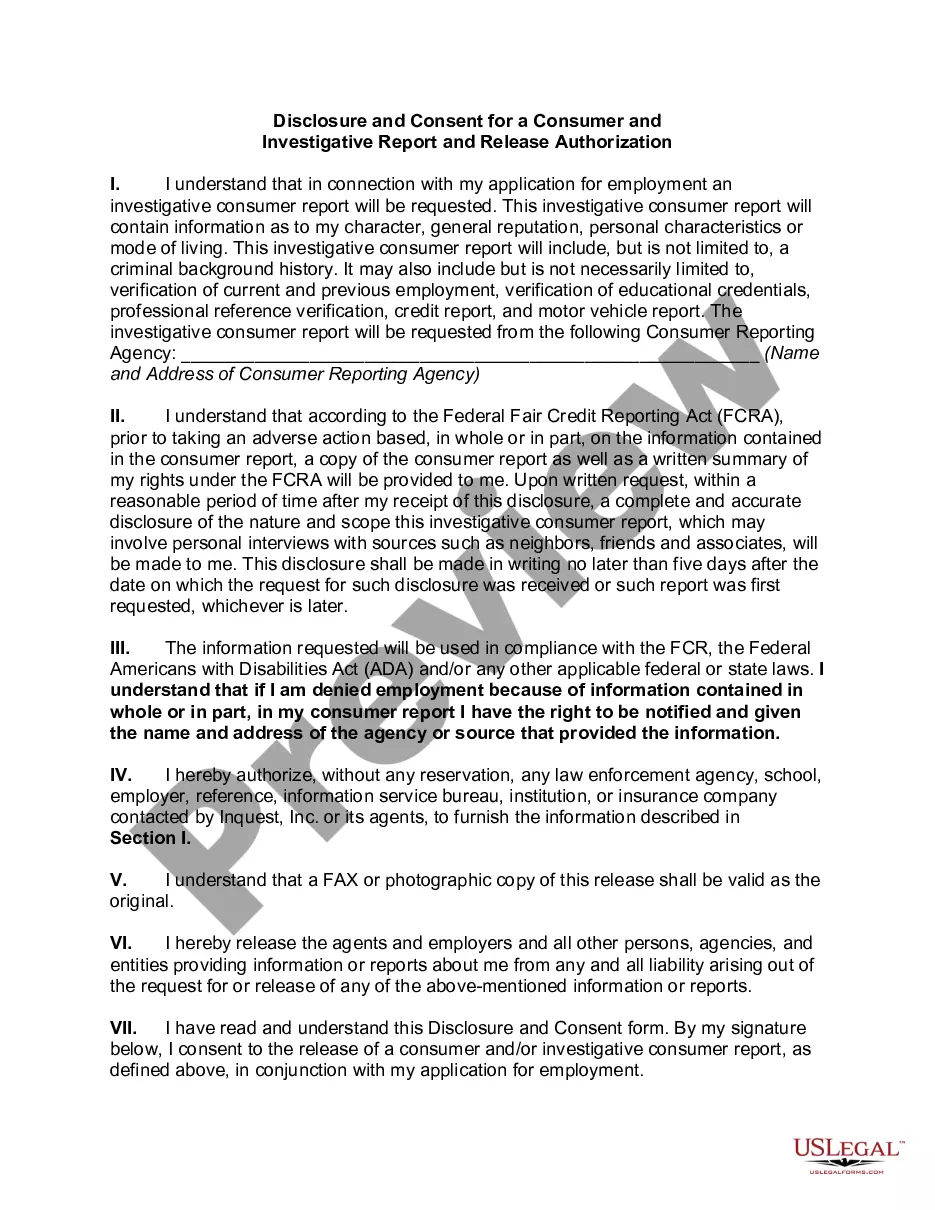
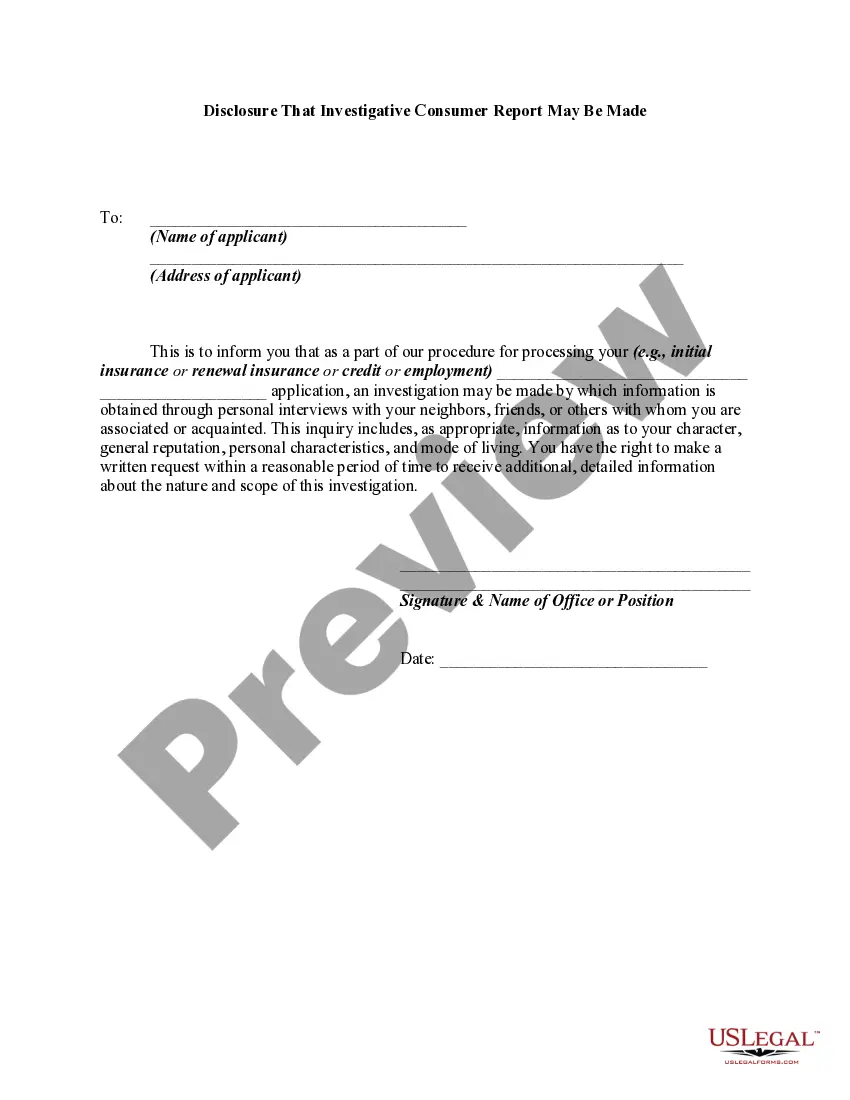
Get your form ready online
Our built-in tools help you complete, sign, share, and store your documents in one place.
Make edits, fill in missing information, and update formatting in US Legal Forms—just like you would in MS Word.
Download a copy, print it, send it by email, or mail it via USPS—whatever works best for your next step.
Sign and collect signatures with our SignNow integration. Send to multiple recipients, set reminders, and more. Go Premium to unlock E-Sign.
If this form requires notarization, complete it online through a secure video call—no need to meet a notary in person or wait for an appointment.
We protect your documents and personal data by following strict security and privacy standards.

Make edits, fill in missing information, and update formatting in US Legal Forms—just like you would in MS Word.

Download a copy, print it, send it by email, or mail it via USPS—whatever works best for your next step.

Sign and collect signatures with our SignNow integration. Send to multiple recipients, set reminders, and more. Go Premium to unlock E-Sign.

If this form requires notarization, complete it online through a secure video call—no need to meet a notary in person or wait for an appointment.

We protect your documents and personal data by following strict security and privacy standards.
Looking for another form?




Form popularity
FAQ
The compliance requirements for the credit reporting agencies include the following: Establish FCRA Policies. Review FCRA Provisions & Applicability. Establish Smooth Consumer Consent Acquisition Processes. Ensure Reports Are Used Only for Permissible Purposes. Provide Adverse Action Notices.
As the FCR reacts to short-term frequency imbalances in the grid, the complete activation of the frequency reserve must be available within 30 seconds and cover a period of 15 minutes per incident ing to ENTSO-E standards.
(f) The term “consumer reporting agency” means any person which, for monetary fees, dues, or on a cooperative nonprofit basis, regularly engages in whole or in part in the practice of assembling or evaluating consumer credit information or other information on consumers for the purpose of furnishing consumer reports to ...
To do so, the FCRA establishes a framework of Fair Information Practices for personal information that include rights of data quality (right to access and correct), data security, use limitations, requirements for data destruction, notice, user participation (consent), and accountability.
Under Section 609(a) of FCRA, all consumer reporting agencies must clearly and accurately disclose to a consumer, upon request, “all information in the consumer's file at the time of request” and “the sources of the information.” Moreover, FCRA defines a consumer's file as “all of the information on that consumer ...
The compliance requirements for the credit reporting agencies include the following: Establish FCRA Policies. Review FCRA Provisions & Applicability. Establish Smooth Consumer Consent Acquisition Processes. Ensure Reports Are Used Only for Permissible Purposes. Provide Adverse Action Notices.
What are the three credit bureaus? Equifax, Experian and TransUnion are the three nationwide credit bureaus. ing to the Consumer Financial Protection Bureau (CFPB), credit bureaus are companies that compile and sell credit reports.
Consumer reporting companies collect information and provide reports to other companies about you. These companies use these reports to inform decisions about providing you with credit, employment, residential rental housing, insurance, and in other decision-making situations.
Nationwide consumer reporting companies There are three big nationwide providers of consumer reports: Equifax, TransUnion, and Experian.
