Consumer Reporting Agency In A Sentence In Florida
Description
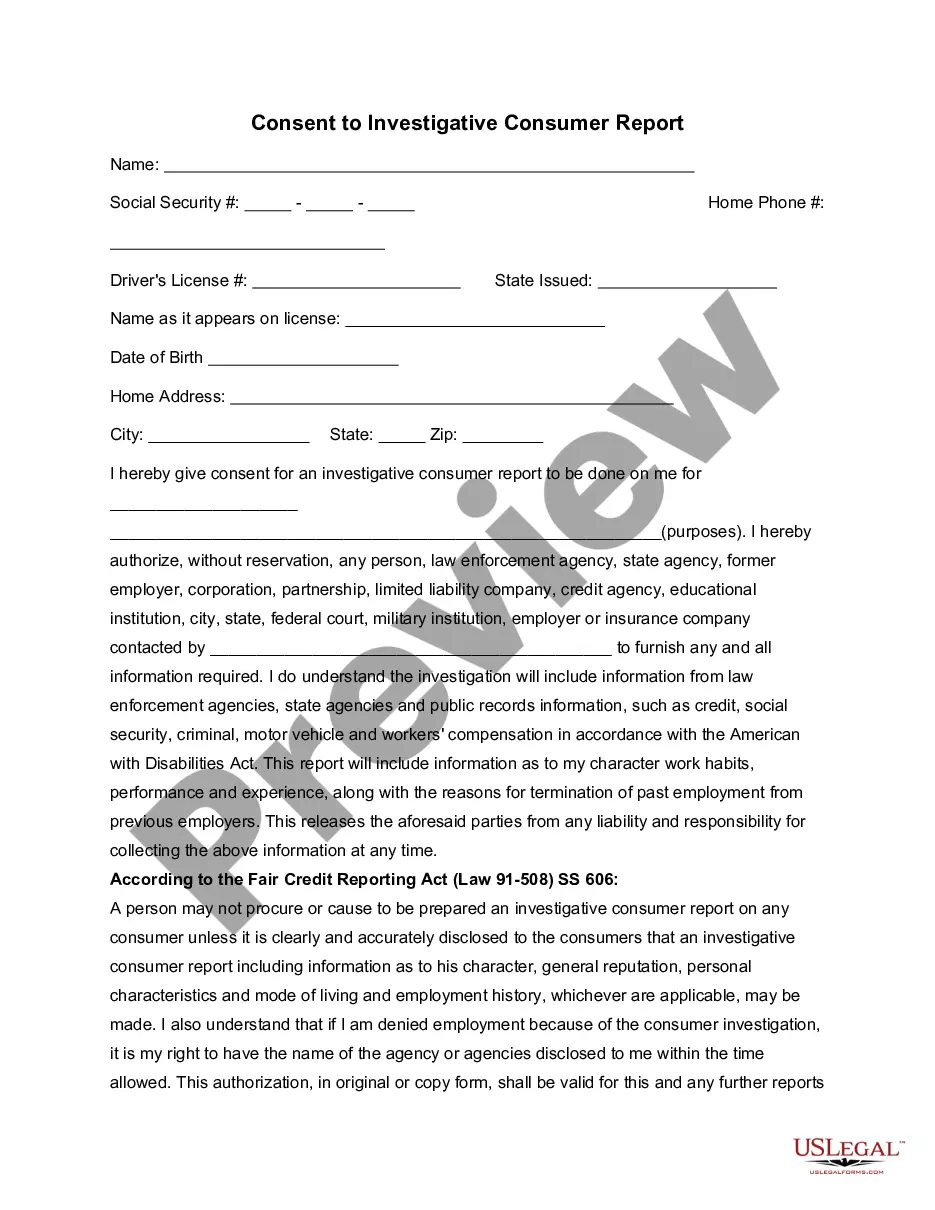

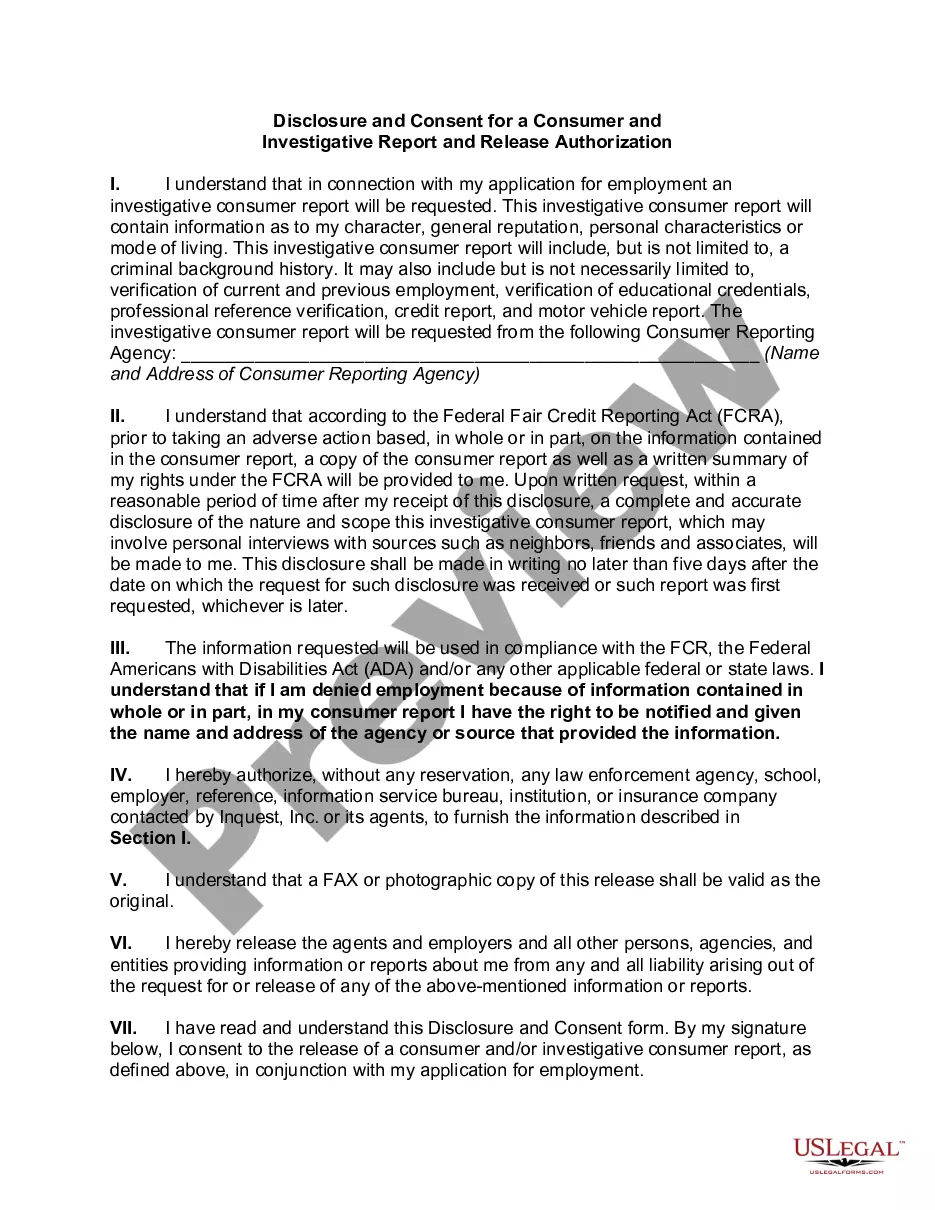
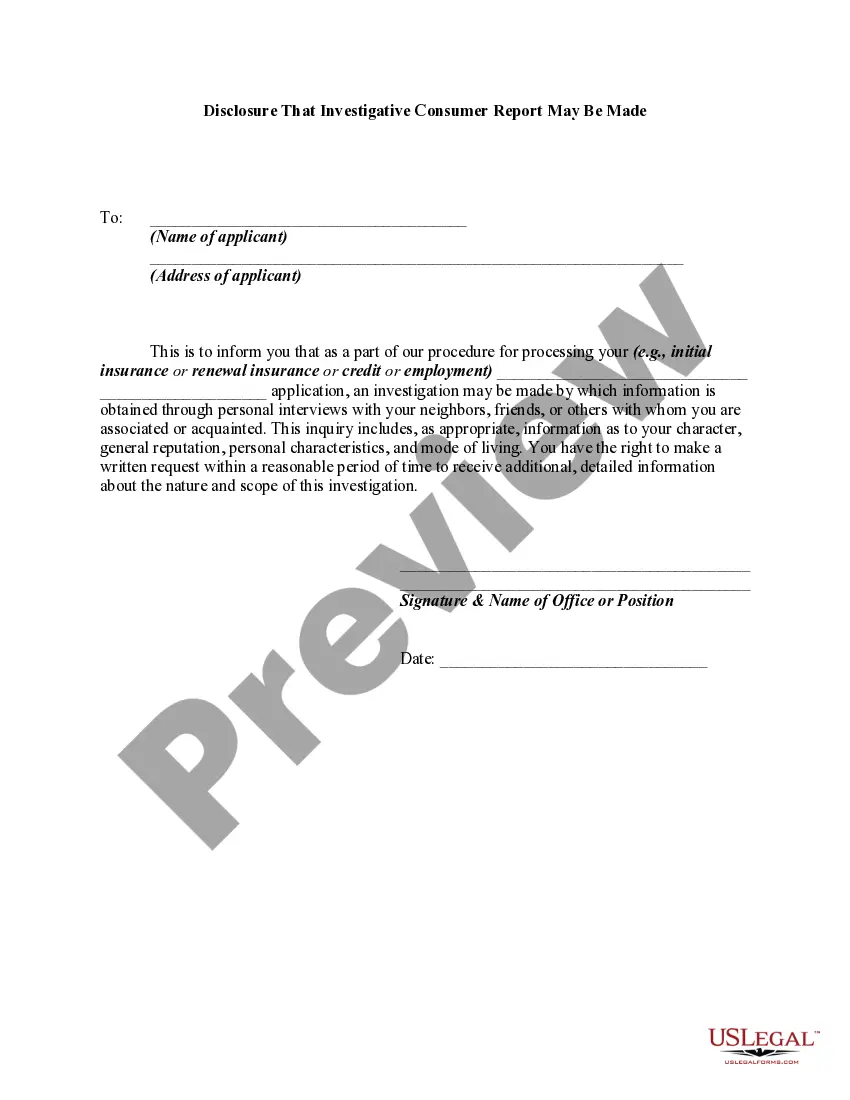
Get your form ready online
Our built-in tools help you complete, sign, share, and store your documents in one place.
Make edits, fill in missing information, and update formatting in US Legal Forms—just like you would in MS Word.
Download a copy, print it, send it by email, or mail it via USPS—whatever works best for your next step.
Sign and collect signatures with our SignNow integration. Send to multiple recipients, set reminders, and more. Go Premium to unlock E-Sign.
If this form requires notarization, complete it online through a secure video call—no need to meet a notary in person or wait for an appointment.
We protect your documents and personal data by following strict security and privacy standards.

Make edits, fill in missing information, and update formatting in US Legal Forms—just like you would in MS Word.

Download a copy, print it, send it by email, or mail it via USPS—whatever works best for your next step.

Sign and collect signatures with our SignNow integration. Send to multiple recipients, set reminders, and more. Go Premium to unlock E-Sign.

If this form requires notarization, complete it online through a secure video call—no need to meet a notary in person or wait for an appointment.

We protect your documents and personal data by following strict security and privacy standards.
Looking for another form?








Form popularity
FAQ
Florida Deceptive Trade Practice Laws are a critical component of consumer protection, aiming to prevent unfair trade practices, fraudulent activities, and scams. These laws serve as a legal shield for consumers, providing avenues for recourse and protection against deceptive practices.
Nationwide consumer reporting companies There are three big nationwide providers of consumer reports: Equifax, TransUnion, and Experian.
The term “consumer reporting agency” means any person which, for monetary fees, dues, or on a cooperative nonprofit basis, regularly engages in whole or in part in the practice of assembling or evaluating consumer credit information or other information on consumers for the purpose of furnishing consumer reports to ...
The Investigative Consumer Reporting Agency Act (ICRAA) Under the ICRAA, CRAs may not generally provide background reports that include, for example, convictions older than seven years, charges or arrests not leading to convictions, or any sealed, dismissed, or expunged convictions.
There are three major credit reporting companies in the United States: Equifax, Experian, and TransUnion. Because your credit score is based on your credit reports, it is important to check your credit reports regularly, tell the credit reporting companies if any information is wrong, and fix your credit if necessary.
The FCRA specifies how long credit bureaus can keep certain types of information on your credit reports. Negative information generally must be removed after 7 years.
Cases, a consumer reporting agency may not report negative information that is more than seven years old, or bankruptcies that are more than 10 years old. you only to people with a valid need – usually to consider an application with a creditor, insurer, employer, landlord, or other business.
Consistent with applicable law, we securely share complaints with other state and federal agencies to, among other things, facilitate: supervision activities, enforcement activities, and. monitor the market for consumer financial products and services.
Before you make a complaint, gather any documentation about the sale of the product or service first. These documents can include: Sales receipts. Warranties.
The Consumer Financial Protection Bureau (CFPB) helps consumers by providing educational materials and accepting complaints. It supervises banks, lenders, and large non-bank entities, such as credit reporting agencies and debt collection companies.
