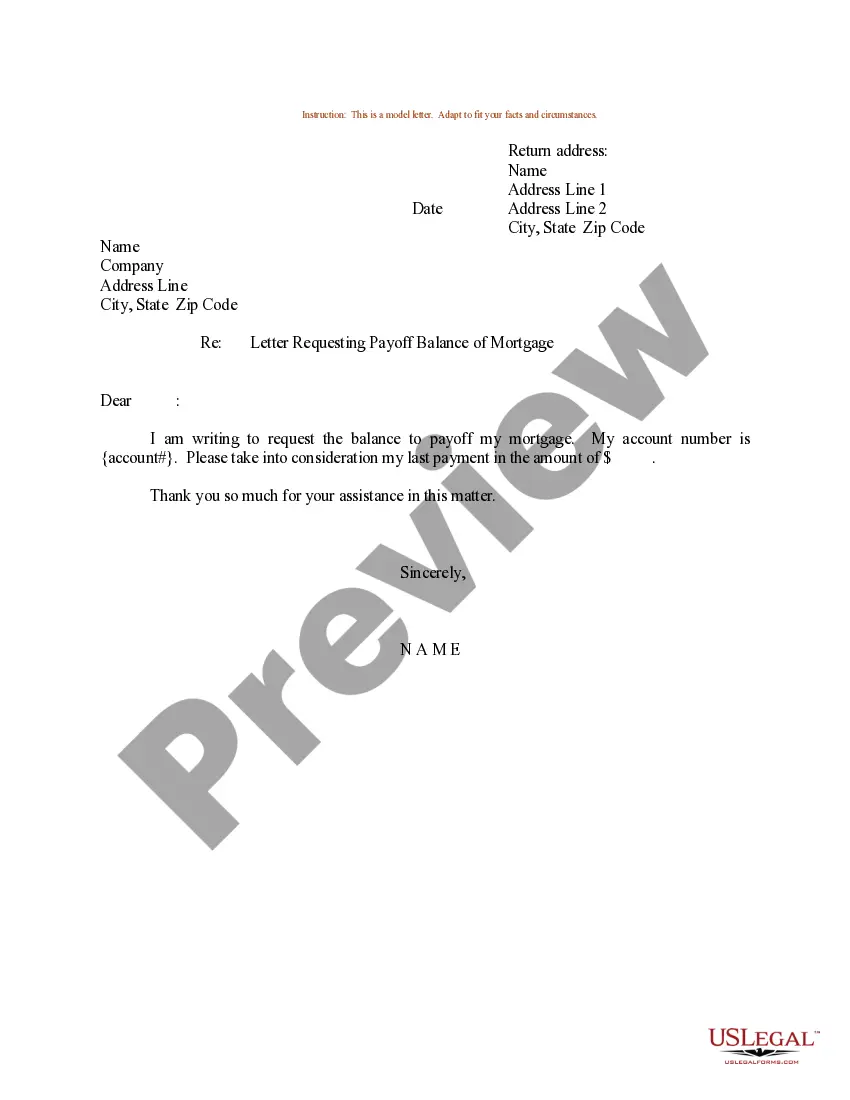
Loan Payoff Letter Format Foreclosure In Washington
Description
Get your form ready online
Our built-in tools help you complete, sign, share, and store your documents in one place.
Make edits, fill in missing information, and update formatting in US Legal Forms—just like you would in MS Word.
Download a copy, print it, send it by email, or mail it via USPS—whatever works best for your next step.
Sign and collect signatures with our SignNow integration. Send to multiple recipients, set reminders, and more. Go Premium to unlock E-Sign.
If this form requires notarization, complete it online through a secure video call—no need to meet a notary in person or wait for an appointment.
We protect your documents and personal data by following strict security and privacy standards.

Make edits, fill in missing information, and update formatting in US Legal Forms—just like you would in MS Word.

Download a copy, print it, send it by email, or mail it via USPS—whatever works best for your next step.

Sign and collect signatures with our SignNow integration. Send to multiple recipients, set reminders, and more. Go Premium to unlock E-Sign.

If this form requires notarization, complete it online through a secure video call—no need to meet a notary in person or wait for an appointment.

We protect your documents and personal data by following strict security and privacy standards.
Looking for another form?







Form popularity
FAQ
What is the foreclosure process in Washington? Washington is a “non-judicial foreclosure” state, meaning a lender can foreclose on a property through a third party, the trustee, and not the court system. However, the trustee has a duty of good faith towards both the lender and the homeowner.
While the content of the letter will change depending on your situation, there are a few important aspects to include: Provide all details the best you can, including correct dates and dollar amounts. Explain how and when all situations were resolved. Detail why problems won't happen again.
Homeowners can obtain it from the Clerk of Court or their attorney. Former homeowners must prove they were the owner of record at the time of foreclosure, while lienholders must present valid claims. Claims must be filed with the Clerk of Court, typically within a year or two after the foreclosure sale.
In California, the previous owner has a time window of 60 days post-foreclosure sale to clear their belongings from the property. If this timeline elapses without the removal of their belongings, the new owner has the right to dispose of them as they see fit.
Any equity left over after paying off the fees and penalties will go to the homeowner. It is important to take steps during foreclosure to preserve as much of your equity as possible. Lenders may use techniques to reduce the amount of equity they get to keep after foreclosure.
Does Washington Have a Redemption Period After a Foreclosure? In some states, the borrower can redeem the home within a specific amount of time after the foreclosure. In Washington, however, the borrower doesn't get a redemption period following a nonjudicial foreclosure.
Preforeclosure Meeting in Washington Before the foreclosure can start, Washington law requires the lender to send most borrowers what's commonly called a "meet and confer" notice. This notice explains your right to meet with the lender or its agent to discuss foreclosure alternatives.
For example, the pre-foreclosure process can be as short as 111 days in California. This includes a 90-day default notice period and a 21-day foreclosure sale notice.

