Loan Payoff Letter Format For Audit In Wake
Description
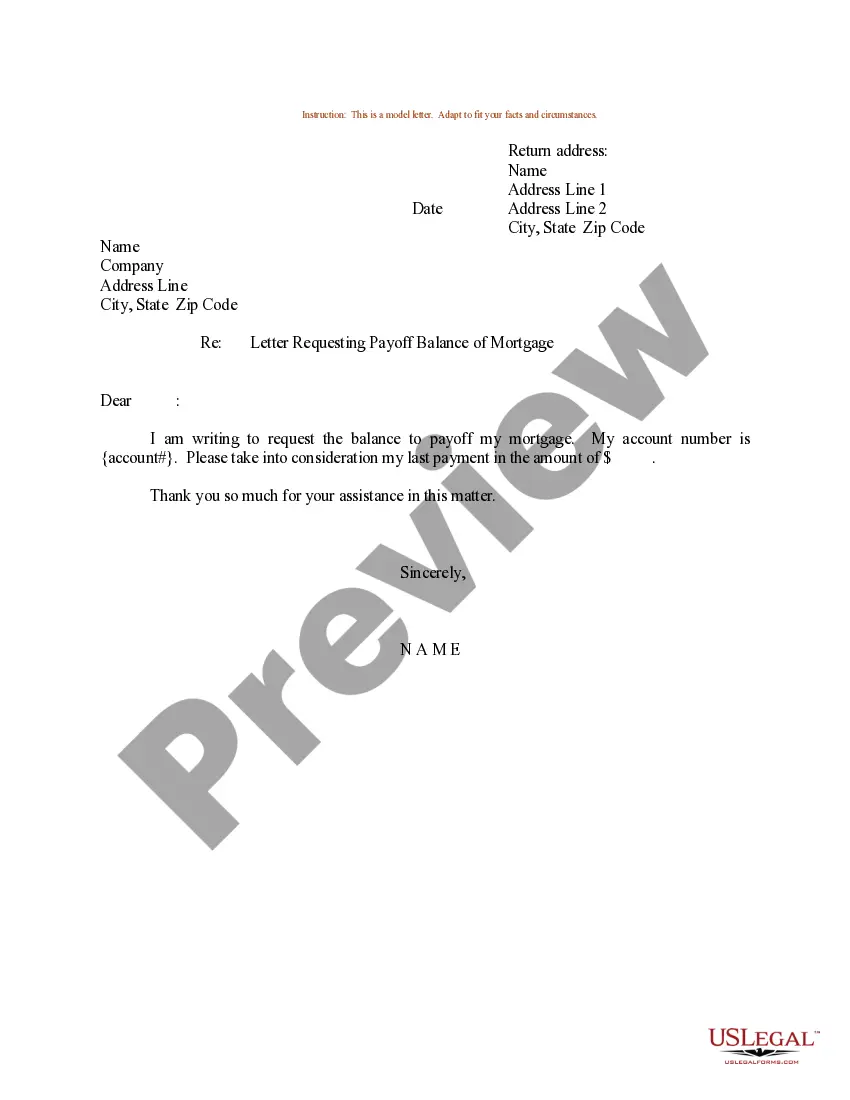
Get your form ready online
Our built-in tools help you complete, sign, share, and store your documents in one place.
Make edits, fill in missing information, and update formatting in US Legal Forms—just like you would in MS Word.
Download a copy, print it, send it by email, or mail it via USPS—whatever works best for your next step.
Sign and collect signatures with our SignNow integration. Send to multiple recipients, set reminders, and more. Go Premium to unlock E-Sign.
If this form requires notarization, complete it online through a secure video call—no need to meet a notary in person or wait for an appointment.
We protect your documents and personal data by following strict security and privacy standards.

Make edits, fill in missing information, and update formatting in US Legal Forms—just like you would in MS Word.

Download a copy, print it, send it by email, or mail it via USPS—whatever works best for your next step.

Sign and collect signatures with our SignNow integration. Send to multiple recipients, set reminders, and more. Go Premium to unlock E-Sign.

If this form requires notarization, complete it online through a secure video call—no need to meet a notary in person or wait for an appointment.

We protect your documents and personal data by following strict security and privacy standards.
Looking for another form?




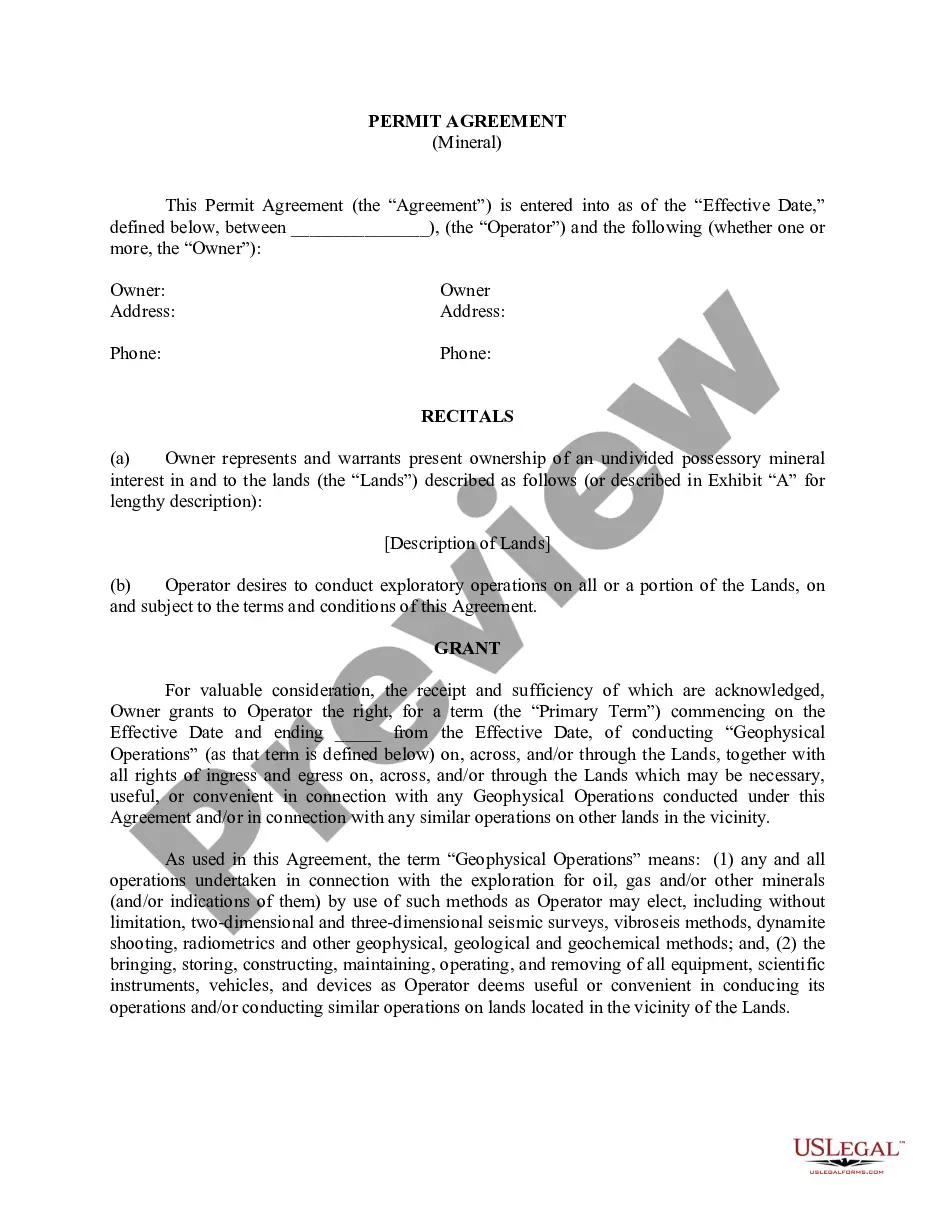


Form popularity
FAQ
All parties to the original debt instrument normally execute a Payoff Letter before it becomes binding. The final version of the document often reflects specifics of the parties' negotiations. Payoff Letters provide detailed terms and procedures regarding the payoff process.
A payoff statement can be a binding agreement if the terms of the payoff are followed. If the lender later claims the payoff was not correct, our claims counsel can rely on the payoff statement to defend the company in a claim. If the payoff is not directly to your firm or title company then claims loses that defense.
Financial audits They examine the adequacy of financial records, accounting, and internal controls and determine the legality and propriety of expenditures.
Audit Process What happens during an audit? Internal audit conducts assurance audits through a five-phase process which includes selection, planning, conducting fieldwork, reporting results, and following up on corrective action plans. Selection. Planning. Fieldwork. Reporting. Follow-up.
Audit Process Step 1: Planning. The auditor will review prior audits in your area and professional literature. Step 2: Notification. Step 3: Opening Meeting. Step 4: Fieldwork. Step 5: Report Drafting. Step 6: Management Response. Step 7: Closing Meeting. Step 8: Final Audit Report Distribution.
Although every audit process is unique, the audit process is similar for most engagements and normally consists of four stages: Planning (sometimes called Survey or Preliminary Review), Fieldwork, Audit Report and Follow-up Review. Client involvement is critical at each stage of the audit process.
Credit union or bank audits can either be external audits or internal audits. Its goal is to provide a self-standing evaluation of the bank's activities, information systems and controls. Tests are carried out on the systems, findings are generated, and auditors recommend the bank's corrective actions.
Audit team reports frequently adhere to the rule of the “Five C's” of data sharing and communication, and a thorough summary in a report will include each of these elements. The “Five C's” are criteria, condition, cause, consequence, and corrective action.

