Loan Payoff Letter Example For Resume In Wake
Description
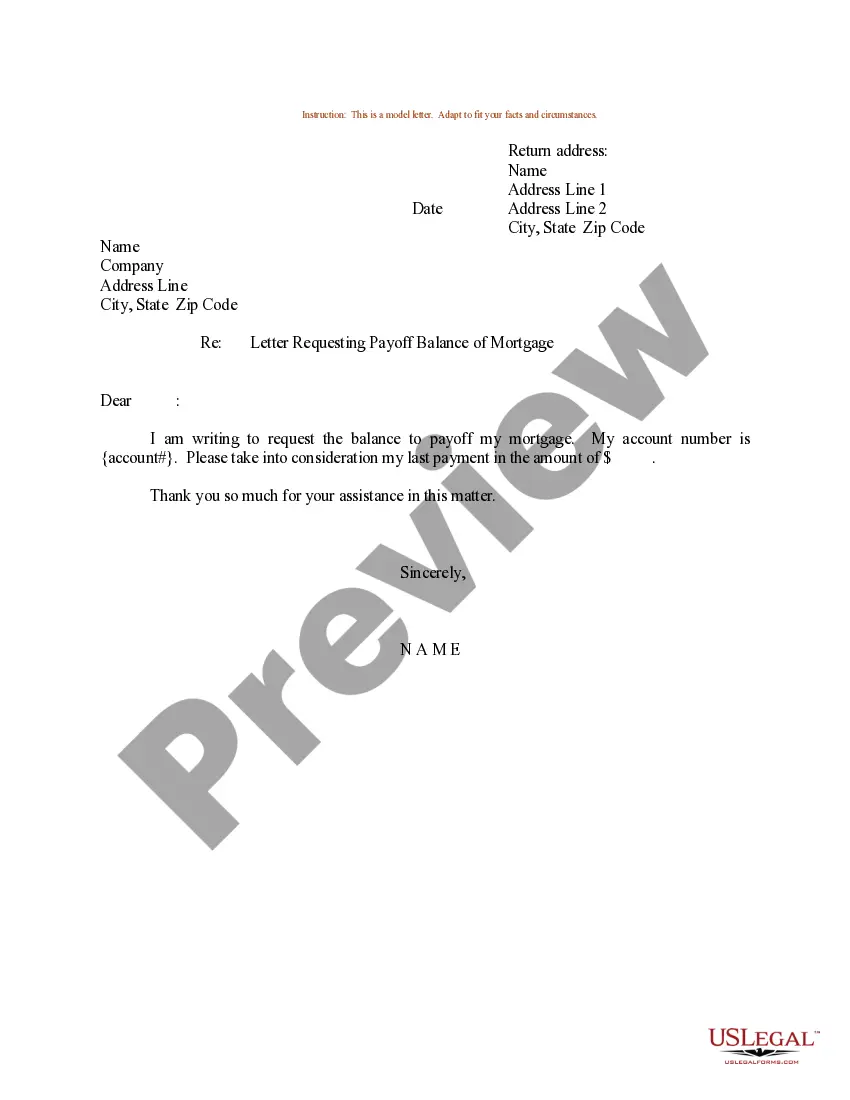
Get your form ready online
Our built-in tools help you complete, sign, share, and store your documents in one place.
Make edits, fill in missing information, and update formatting in US Legal Forms—just like you would in MS Word.
Download a copy, print it, send it by email, or mail it via USPS—whatever works best for your next step.
Sign and collect signatures with our SignNow integration. Send to multiple recipients, set reminders, and more. Go Premium to unlock E-Sign.
If this form requires notarization, complete it online through a secure video call—no need to meet a notary in person or wait for an appointment.
We protect your documents and personal data by following strict security and privacy standards.

Make edits, fill in missing information, and update formatting in US Legal Forms—just like you would in MS Word.

Download a copy, print it, send it by email, or mail it via USPS—whatever works best for your next step.

Sign and collect signatures with our SignNow integration. Send to multiple recipients, set reminders, and more. Go Premium to unlock E-Sign.

If this form requires notarization, complete it online through a secure video call—no need to meet a notary in person or wait for an appointment.

We protect your documents and personal data by following strict security and privacy standards.
Looking for another form?









Form popularity
FAQ
It is possible to obtain an official payoff letter from the IRS. To request this, you can use the IRS's Form 12277 (Application for the Withdrawal of Filed Form 668(Y), Notice of Federal Tax Lien) or contact the IRS directly for the payoff amount, as it can vary depending on your case.
Under federal law, the servicer must generally send you a payoff statement within seven business days of your request, subject to a few exceptions. (12 C.F.R. § 1026.36.)
Your cover letter should answer who, what, when, where and why you are applying for the opportunity. Introduction. State the position for which you are applying. Body Paragraphs. These paragraphs will highlight your qualifications and strengths that are most relevant to the organization and position. Conclusion.
Talk about your skills and passions. This is the meat of the letter—but I want you to think lean. The HR team reading your application doesn't have time for a novel. Write a couple of paragraphs, but make sure each one is only a few sentences. Be humble—but confident—as you talk about your talents and skills.
In your cover letter, show that you believe in yourself and your abilities, but don't come across as overly proud. Be positive and enthusiastic about the job and the company, but don't brag too much about your accomplishments. Instead, focus on explaining how your skills match the job requirements.
How can you convey confidence without sounding arrogant in your cover letter's end? Express Gratitude. Be the first to add your personal experience. Highlight Fit. Be the first to add your personal experience. Offer Value. Be Enthusiastic. Propose Next Steps. Personal Touch. Here's what else to consider.
Your cover letter should articulate your qualifications and motivation for the position. Read the job description closely and research the organization. As you craft your cover letter, use examples that demonstrate your relevant skills, knowledge, and interests.
Maintain a Positive Tone: Keep your cover letter positive. Avoid negativity about your previous job or employer, even if the layoff resulted from downsizing or budget cuts. Focus on the positive aspects, emphasizing what you learned and how it contributed to your professional growth.
Writing a Killer Cover Letter Make a good impression beginning with the opening. Make it unique to the job. Make sure to write clearly. Include relevant experience. Be careful not to just repeat what's on your resume. Offer specific examples of what you've done. Finish strong.
If you need to mention your previous position, simply list your job title, the company name, and the dates of employment. Avoid mentioning the termination directly.

