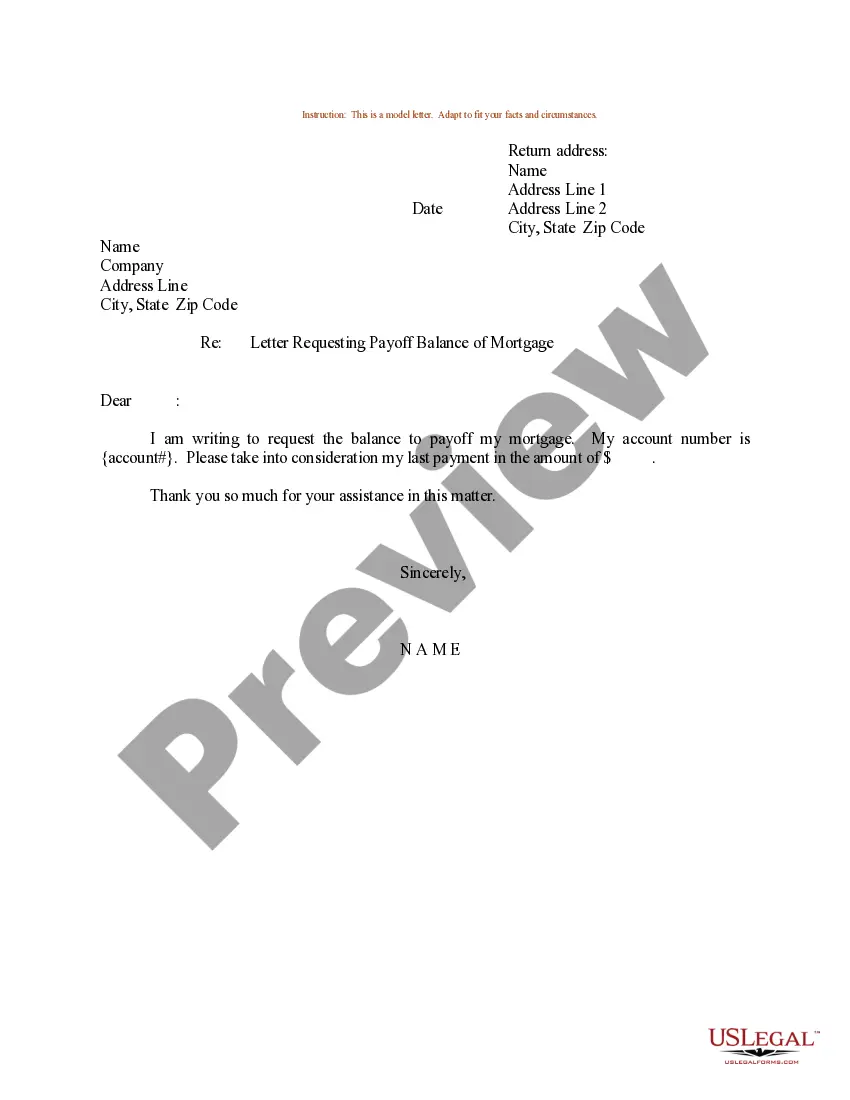
Letter Payoff Loan With Credit In Virginia
Description
Get your form ready online
Our built-in tools help you complete, sign, share, and store your documents in one place.
Make edits, fill in missing information, and update formatting in US Legal Forms—just like you would in MS Word.
Download a copy, print it, send it by email, or mail it via USPS—whatever works best for your next step.
Sign and collect signatures with our SignNow integration. Send to multiple recipients, set reminders, and more. Go Premium to unlock E-Sign.
If this form requires notarization, complete it online through a secure video call—no need to meet a notary in person or wait for an appointment.
We protect your documents and personal data by following strict security and privacy standards.

Make edits, fill in missing information, and update formatting in US Legal Forms—just like you would in MS Word.

Download a copy, print it, send it by email, or mail it via USPS—whatever works best for your next step.

Sign and collect signatures with our SignNow integration. Send to multiple recipients, set reminders, and more. Go Premium to unlock E-Sign.

If this form requires notarization, complete it online through a secure video call—no need to meet a notary in person or wait for an appointment.

We protect your documents and personal data by following strict security and privacy standards.
Looking for another form?


Form popularity
FAQ
To get a payoff letter, ask your lender for an official payoff statement. Call or write to customer service or make the request online. While logged into your account, look for options to request or calculate a payoff amount, and provide details such as your desired payoff date.
To request a payoff statement, you will need to contact your lender or credit card company. You can typically request a payoff statement online, over the phone, or by mail. Make sure to provide your account information and specify that you are requesting a payoff statement.
A settlement agent or title insurance company may release a deed of trust or judgment lien in ance with the provisions of this subsection (i) if the obligation secured by the deed of trust or judgment lien has been satisfied by payment made by the settlement agent and (ii) whether or not the settlement agent or ...
A Payoff Letter memorializes a debtor and lender's agreement regarding a debt obligation's early payment and termination. Typically, upon satisfaction of its terms, the Payoff Letter terminates the underlying debt instrument and releases the debtor from most continuing obligations.
The holder of the obligation secured by the deed of trust or mortgage shall mail or deliver such written statement of the payoff amount to the property owner or his designee within 10 business days of the receipt of a written request for such payoff information from the property owner or his designee if the request ...
How do I request a payoff letter? To get a payoff letter, ask your lender for an official payoff statement. Call or write to customer service or make the request online. While logged into your account, look for options to request or calculate a payoff amount, and provide details such as your desired payoff date.
Yes, it is possible to have credit card debt forgiven, although it is not a common occurrence. Credit card debt can be forgiven through a variety of methods, including debt settlement negotiations with the lender, debt management programs, and in some cases, bankruptcy.
After or accompanying payment in full of the obligation secured by a deed of trust or judgment lien, a settlement agent or title insurance company intending to release a deed of trust or judgment lien pursuant to this subsection shall deliver to the lien creditor by certified mail or commercial overnight delivery ...
Court Approval Required A court may order the modification or termination of an irrevocable trust if the settlor and all beneficiaries consent to the modification or termination, even if such modification or termination is inconsistent with a material purpose of the trust.
Processing a Release of Deed of Trust Execution: The lender or authorized agent signs the release, and it is notarized as required. Recording: The release is submitted to the county recorder's office for official recording, making it part of the public record.
