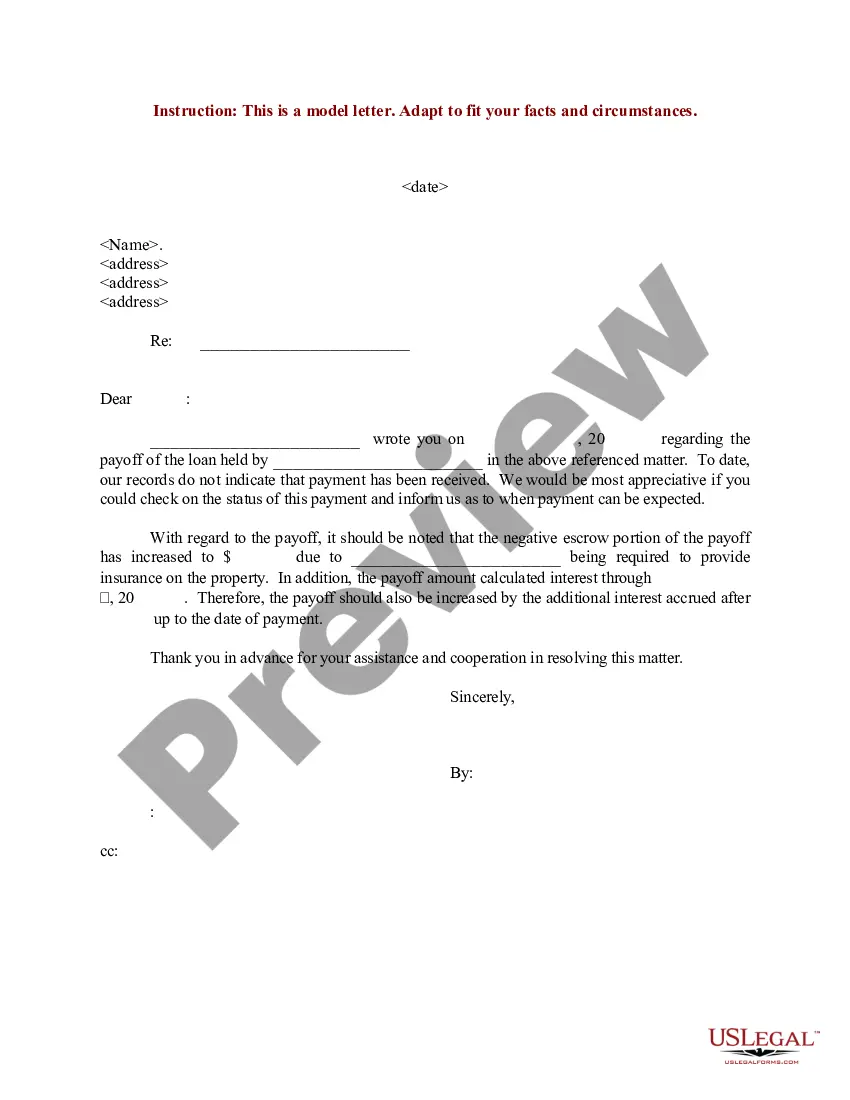
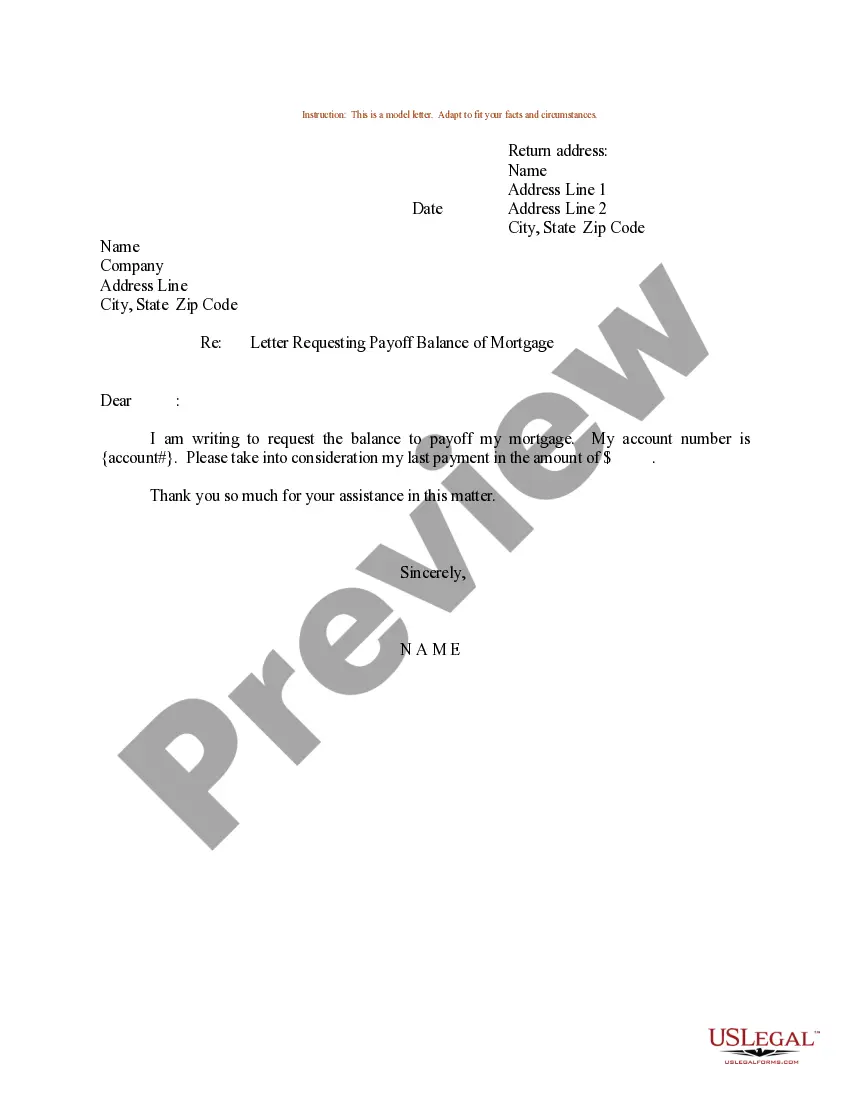
Loan Payoff Letter Form For Car Loan In Tarrant
Description
Get your form ready online
Our built-in tools help you complete, sign, share, and store your documents in one place.
Make edits, fill in missing information, and update formatting in US Legal Forms—just like you would in MS Word.
Download a copy, print it, send it by email, or mail it via USPS—whatever works best for your next step.
Sign and collect signatures with our SignNow integration. Send to multiple recipients, set reminders, and more. Go Premium to unlock E-Sign.
If this form requires notarization, complete it online through a secure video call—no need to meet a notary in person or wait for an appointment.
We protect your documents and personal data by following strict security and privacy standards.

Make edits, fill in missing information, and update formatting in US Legal Forms—just like you would in MS Word.

Download a copy, print it, send it by email, or mail it via USPS—whatever works best for your next step.

Sign and collect signatures with our SignNow integration. Send to multiple recipients, set reminders, and more. Go Premium to unlock E-Sign.

If this form requires notarization, complete it online through a secure video call—no need to meet a notary in person or wait for an appointment.

We protect your documents and personal data by following strict security and privacy standards.
Looking for another form?
Form popularity
FAQ
Sellers must provide a signed title, a bill of sale, and any relevant liens on the vehicle. Buyers must present identification, proof of residence, and proof of insurance. These documents validate the transaction and effectively transfer ownership. Fees may accompany the title transfer.
How to Register a Car in Texas Without Title Step 1: Contact the Previous Owner or Seller. Step 2: Conduct a VIN Check. Step 3: Obtain a Bill of Sale. Step 4: Apply for a Bonded Title. Step 5: Get a Vehicle Inspection. Step 6: Gather All Required Documentation. Step 7: Submit Your Application to the Texas DMV.
Visit the nearest TxDMV regional service center. Complete the Application for a Certified Copy of Title (Form VTR-34).
In addition to completing Form 130-U, Application for Texas Title and/or Registration (PDF), both the donor and person receiving the motor vehicle must complete a required joint notarized Form 14-317, Affidavit of Motor Vehicle Gift Transfer, describing the transaction and the relationship between the donor and ...
Title Application Processing Time Please allow a minimum of 20 business days for processing of your title application. If there is a lien on the vehicle, the lienholder will receive the title. If you have not received your title within 30 business days, please contact us.
The buyer will need to present the following documents: The original title assigned from the seller to the buyer. An Application for Texas Title (130-U) completed by buyer(s), buyer(s) signature must be original. Government issued photo ID for buyer. Proof of Texas liability insurance. Supporting documents for example:
You can submit a Vehicle Transfer Notification online through the DMV's website or at a local office. Remember not to procrastinate and be sure to transfer the title within 30 days of the sale to avoid racking up late fees.
Title Transfer The original title assigned from the seller to the buyer. An Application for Texas Title (130-U) completed by buyer(s), buyer(s) signature must be original. Government issued photo ID for buyer. Proof of Texas liability insurance. Supporting documents for example:
To remove a lien recorded on a paper title, you will need: the vehicle title. a release of lien letter and/or other notifications from the lienholder(s) currently named on the vehicle title. a completed Application for Texas Title and/or Registration (Form 130-U)
Sellers must provide a signed title, a bill of sale, and any relevant liens on the vehicle. Buyers must present identification, proof of residence, and proof of insurance. These documents validate the transaction and effectively transfer ownership. Fees may accompany the title transfer.