Letter Payoff Mortgage Form For Taxes In Pima
Description
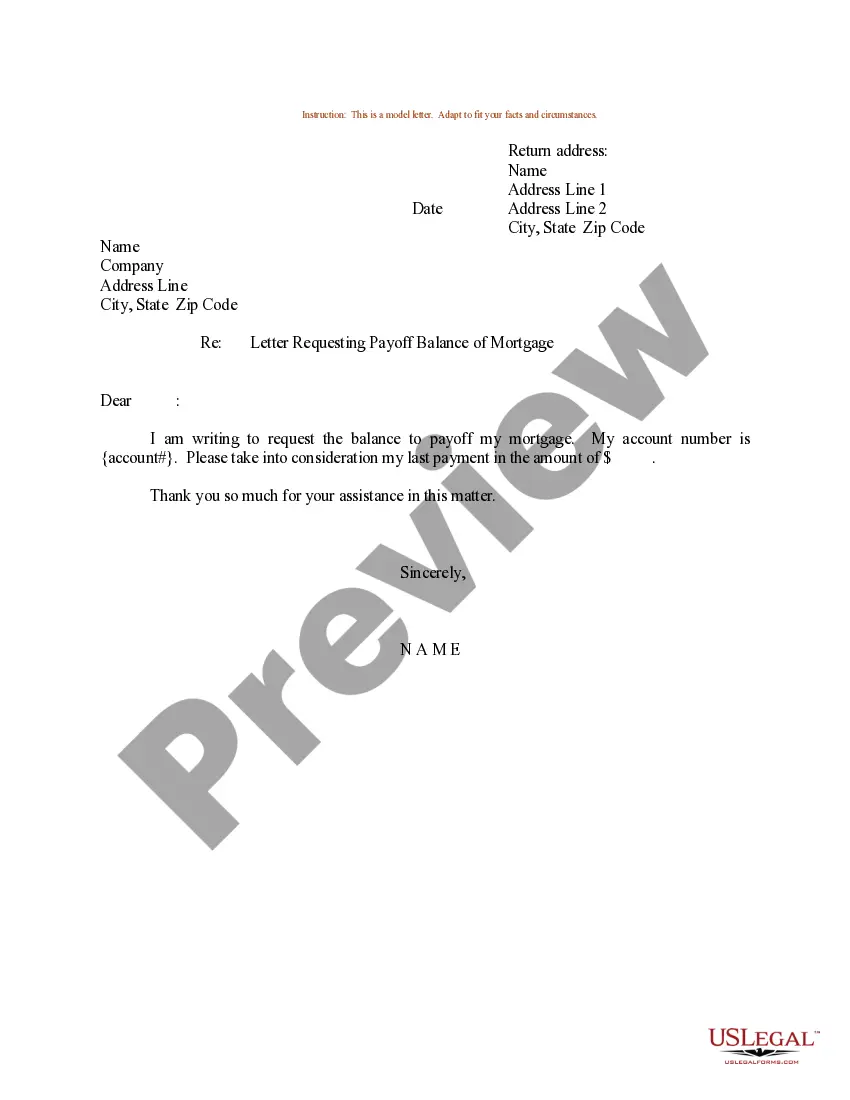
Get your form ready online
Our built-in tools help you complete, sign, share, and store your documents in one place.
Make edits, fill in missing information, and update formatting in US Legal Forms—just like you would in MS Word.
Download a copy, print it, send it by email, or mail it via USPS—whatever works best for your next step.
Sign and collect signatures with our SignNow integration. Send to multiple recipients, set reminders, and more. Go Premium to unlock E-Sign.
If this form requires notarization, complete it online through a secure video call—no need to meet a notary in person or wait for an appointment.
We protect your documents and personal data by following strict security and privacy standards.

Make edits, fill in missing information, and update formatting in US Legal Forms—just like you would in MS Word.

Download a copy, print it, send it by email, or mail it via USPS—whatever works best for your next step.

Sign and collect signatures with our SignNow integration. Send to multiple recipients, set reminders, and more. Go Premium to unlock E-Sign.

If this form requires notarization, complete it online through a secure video call—no need to meet a notary in person or wait for an appointment.

We protect your documents and personal data by following strict security and privacy standards.
Looking for another form?









Form popularity
FAQ
1. Property owner (applicant) must be 65 years of age or older. 2. The property must be the primary residence of the property owner and must have lived there for at least 2 years.
Does Form 1098 Have to Be Filed? Lenders must file Form 1098 for each qualifying mortgage. However, individuals do not have to file the 1098 form they receive, unless they want to claim a deduction for the interest payments.
Individual and Non-Profit/Organization Exemptions These exemptions are covered under A.R.S. Title 42, Chapter 11 Article 3. Some examples are: qualifying widows and widowers, 100% disabled persons, disabled veterans, qualifying religious organizations and qualifying educational facilities.
You can get your mortgage info by going to your lender's website. Other documents, like your monthly mortgage bills and your Closing Disclosure (or HUD-1), will also have some of this information. Your lender should send you a 1098 by January 31.
Using the 1098, calculate how much of your mortgage interest qualifies for the deduction. Then, report the deduction on your tax return on Form 1040 (Schedule A) Line 8a the deductible amount reported in Box 1, deductible mortgage interest, and Box 6, points.
Property tax rates in Pima County are the second highest of any county in Arizona. The average effective property tax rate in Pima County is 0.84%. That is higher than the state average, and the typical Pima County homeowner pays $2,161 annually in property taxes, which is also above average statewide.
Arizona Program Overview. Property Tax-Aide features two widely available property tax relief programs for older residents, the Senior Citizen Property Tax Refund Credit, which is available to both homeowners and renters, and the Senior Property Valuation Protection, also known as Senior Freeze.
Arizona allows a $4,748 Assessed Value property exemption to Arizona resident property owners qualifying as a widow/widower, or a person with total and permanent disability, or a veteran with a service or non-service connected disability.
The Senior Valuation Protection Program, as established by the Arizona Constitution and administered by the Pima County Assessor's Office, is designed to freeze the limited property value (the taxable value) of a primary residence owned by qualifying seniors.
The Senior Valuation Protection program enables qualified seniors to have their Limited Value frozen, which is the basis for all property taxes, frozen in 3 year increments to protect against the potential of an increasing real estate market.

