Loan Payoff Letter Form With Collateral In Pennsylvania
Description
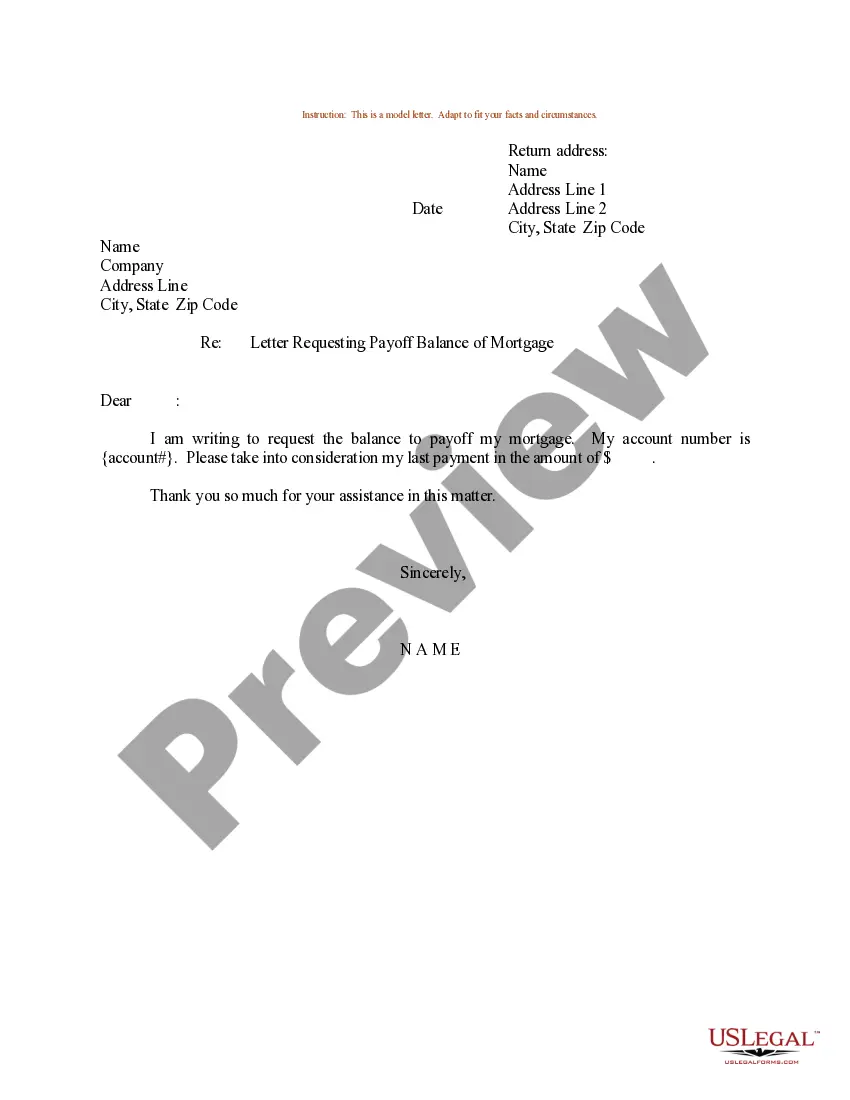
Get your form ready online
Our built-in tools help you complete, sign, share, and store your documents in one place.
Make edits, fill in missing information, and update formatting in US Legal Forms—just like you would in MS Word.
Download a copy, print it, send it by email, or mail it via USPS—whatever works best for your next step.
Sign and collect signatures with our SignNow integration. Send to multiple recipients, set reminders, and more. Go Premium to unlock E-Sign.
If this form requires notarization, complete it online through a secure video call—no need to meet a notary in person or wait for an appointment.
We protect your documents and personal data by following strict security and privacy standards.

Make edits, fill in missing information, and update formatting in US Legal Forms—just like you would in MS Word.

Download a copy, print it, send it by email, or mail it via USPS—whatever works best for your next step.

Sign and collect signatures with our SignNow integration. Send to multiple recipients, set reminders, and more. Go Premium to unlock E-Sign.

If this form requires notarization, complete it online through a secure video call—no need to meet a notary in person or wait for an appointment.

We protect your documents and personal data by following strict security and privacy standards.
Looking for another form?




Form popularity
FAQ
1 financing statement is typically filed by a creditor to secure an interest in a debtor's assetsit is not something a person files on themselves. If your goal is asset protection, there are other legal mechanisms that might be more effective, such as trusts, LLCs, or other financial structures.
Legal requirements for the UCC-1 In order for a UCC-1 to hold weight in a legal proceeding, it must include the exact legal name of the debtor, the collateral included in the lien and the name of the secured party. When listing collateral, the law doesn't require a detailed description.
Examples of collateral documents are a security agreement, guarantee and collateral agreement, pledge agreement, deposit account control agreement, securities account control agreement, mortgage, and UCC-1s.
Example clauses for Payment Default. Payment Default. If the Borrower defaults # on any payment of principal or interest due and owing hereunder, or # on the payment of any other Obligation due and owing hereunder, and such payment default with respect to any such other Obligation continues for seven (7) business days.
To assist the Bureau, filers may wish to delete this information prior to filing. You may contact the Uniform Commercial Code section by calling 717-787-1057 option 3, or by mail at: Uniform Commercial Code, PO Box 8721, Harrisburg, PA 17105-8721.
In all cases, you should file a UCC-1 with the secretary of state's office in the state where the debtor is incorporated or organized (if a business), or lives (if an individual).
Methods to Remove a UCC Filing Ask the lender to terminate the lien upon payoff. Visit your secretary of state's office. Dispute any inaccurate information on your business credit report.
It can impact your borrowing power The most significant impact a UCC filing can have on your business is connected with its very purpose: because a lender already has a lien on all or some of your possible collateral, it will likely be hard– if not impossible– to obtain any kind of secured financing from a lender.
To remove a UCC filing, you must ask your lender to remove the UCC lien using a UCC-3 termination form. This form is used to terminate, assign, or amend an existing UCC lien at the filing office.
Examples of collateral documents are a security agreement, guarantee and collateral agreement, pledge agreement, deposit account control agreement, securities account control agreement, mortgage, and UCC-1s.

