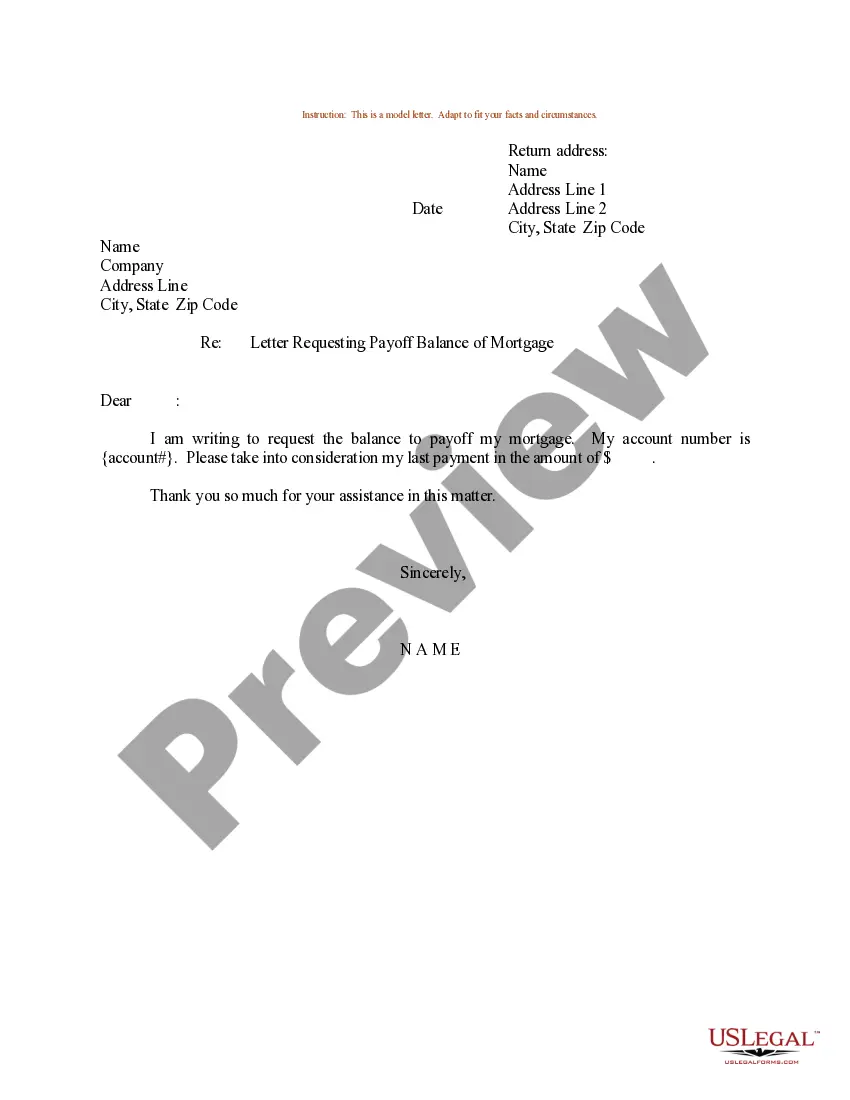
Payoff Letter For Judgement In Massachusetts
Description
Get your form ready online
Our built-in tools help you complete, sign, share, and store your documents in one place.
Make edits, fill in missing information, and update formatting in US Legal Forms—just like you would in MS Word.
Download a copy, print it, send it by email, or mail it via USPS—whatever works best for your next step.
Sign and collect signatures with our SignNow integration. Send to multiple recipients, set reminders, and more. Go Premium to unlock E-Sign.
If this form requires notarization, complete it online through a secure video call—no need to meet a notary in person or wait for an appointment.
We protect your documents and personal data by following strict security and privacy standards.

Make edits, fill in missing information, and update formatting in US Legal Forms—just like you would in MS Word.

Download a copy, print it, send it by email, or mail it via USPS—whatever works best for your next step.

Sign and collect signatures with our SignNow integration. Send to multiple recipients, set reminders, and more. Go Premium to unlock E-Sign.

If this form requires notarization, complete it online through a secure video call—no need to meet a notary in person or wait for an appointment.

We protect your documents and personal data by following strict security and privacy standards.
Looking for another form?








Form popularity
FAQ
Debt collectors cannot harass or abuse you. They cannot swear, threaten to illegally harm you or your property, threaten you with illegal actions, or falsely threaten you with actions they do not intend to take. They also cannot make repeated calls over a short period to annoy or harass you.
In layman's terms, a person is judgment proof when they have no collectable income or assets. In this case, it makes no sense for a creditor to take that person to court, because even if the creditor wins the suit and obtains a judgment, the creditor will not be able to collect.
If all of your income or assets are protected from most creditors, you are “collection-proof.” Another term you might hear is “ judgment proof” or "execution proof." All of these terms mean that most creditors can't take, “seize,” or “garnish” your protected income or property—no matter how much you owe.
Dismissal shall be entered when a plaintiff fails to appear for trial, provided that the defendant has filed a timely answer and appears for trial.
Any judgment in a summary process action, except a default judgment, may be appealed by an aggrieved party in ance with the provisions of law.
Small claims courts provide a simple, informal and inexpensive option for resolving cases where the claim is $7,000 or less.
Known popularly as the people's court, small claims court is an informal and inexpensive forum to help you settle disputes of $7,000 or less.
On motion and upon such terms as are just, the court may relieve a party or his legal representative from a final judgment, order, or proceeding for the following reasons: (1) mistake, inadvertence, surprise, or excusable neglect; (2) newly discovered evidence which by due diligence could not have been discovered in ...
Generally, a claim based on a contract or a consumer protection law must be brought within 6 years, and a claim resulting from negligence or intentional harm must be brought within 3 years, but there are exceptions.

