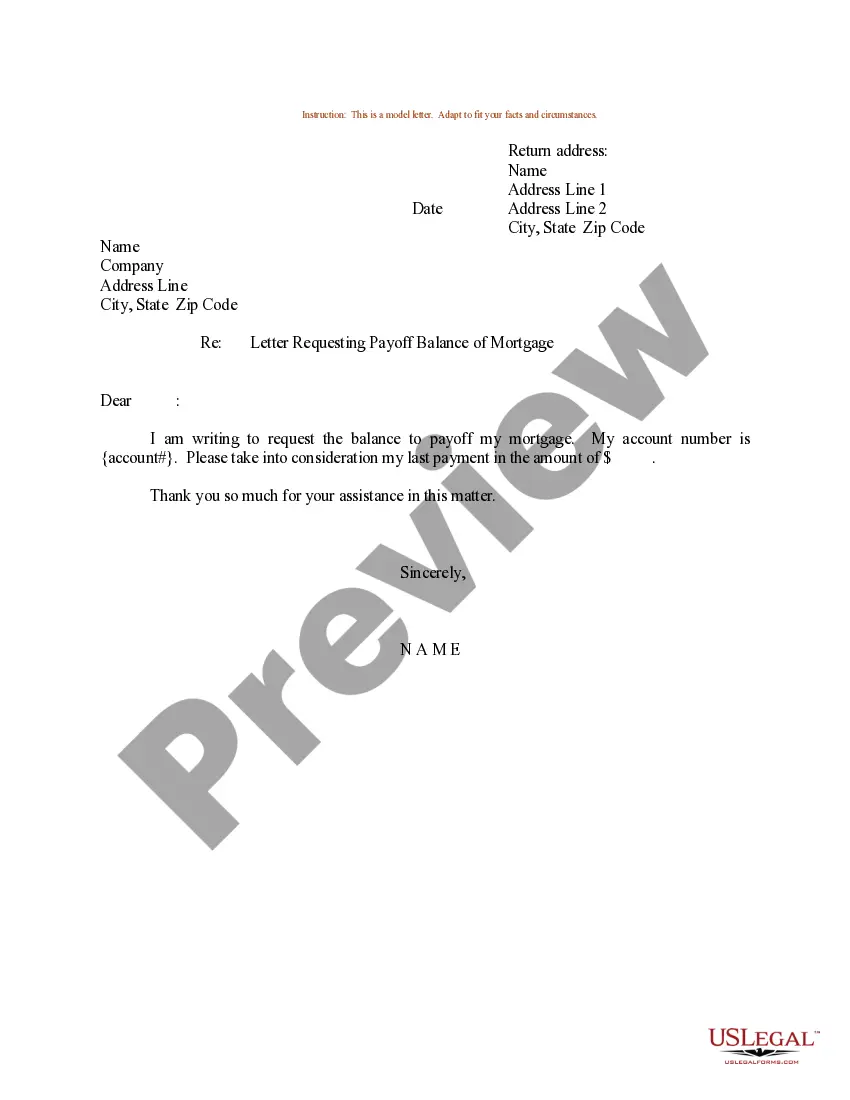
Loan Payoff Letter Format Foreclosure In Los Angeles
Description
Get your form ready online
Our built-in tools help you complete, sign, share, and store your documents in one place.
Make edits, fill in missing information, and update formatting in US Legal Forms—just like you would in MS Word.
Download a copy, print it, send it by email, or mail it via USPS—whatever works best for your next step.
Sign and collect signatures with our SignNow integration. Send to multiple recipients, set reminders, and more. Go Premium to unlock E-Sign.
If this form requires notarization, complete it online through a secure video call—no need to meet a notary in person or wait for an appointment.
We protect your documents and personal data by following strict security and privacy standards.

Make edits, fill in missing information, and update formatting in US Legal Forms—just like you would in MS Word.

Download a copy, print it, send it by email, or mail it via USPS—whatever works best for your next step.

Sign and collect signatures with our SignNow integration. Send to multiple recipients, set reminders, and more. Go Premium to unlock E-Sign.

If this form requires notarization, complete it online through a secure video call—no need to meet a notary in person or wait for an appointment.

We protect your documents and personal data by following strict security and privacy standards.
Looking for another form?








Form popularity
FAQ
It takes several months for a lender to foreclose on a California property. If everything goes ing to schedule, the process typically takes approximately 120 days — about four months — but the process can take as long as 200 or more days to conclude.
States with the highest foreclosure rates were Nevada (one in every 2,741 housing units with a foreclosure filing); New Jersey (one in every 3,059 housing units); Florida (one in every 3,086 housing units); California (one in every 3,152 housing units); and South Carolina (one in every 3,272 housing units).
In California, you typically need to miss three consecutive mortgage payments (120 days past due) before foreclosure proceedings start. It's essential to address any missed payments quickly to avoid escalating into a foreclosure situation that could threaten your home.
The Foreclosure Registry was enacted in 2010 to establish a residential property registration program as a mechanism to protect residential neighborhoods, including abandoned properties, from blight through the lack of adequate maintenance and security as a result of the foreclosure crisis (Ordinance No. 181185).
In California, the foreclosure process typically begins when a borrower misses a mortgage payment, triggering a Notice of Default (NOD) after about 90 days. Following the NOD, the borrower has approximately 90 days to remedy the default before a Notice of Trustee's Sale is issued.
While the content of the letter will change depending on your situation, there are a few important aspects to include: Provide all details the best you can, including correct dates and dollar amounts. Explain how and when all situations were resolved. Detail why problems won't happen again.
California's new foreclosure laws emphasize homeowners' rights and aim to reduce the stress associated with foreclosure. Some of the most impactful changes include: Enhanced Notification: Lenders must give more straightforward notices with specific timelines, allowing titleholders to understand their options.
A Notice of Intention to Foreclose is your lender telling you that they are planning to foreclose on your property because you are behind on your mortgage payments.
In California, lenders can foreclose on deeds of trust or mortgages using a nonjudicial foreclosure process (outside of court) or a judicial foreclosure process (through the courts).
