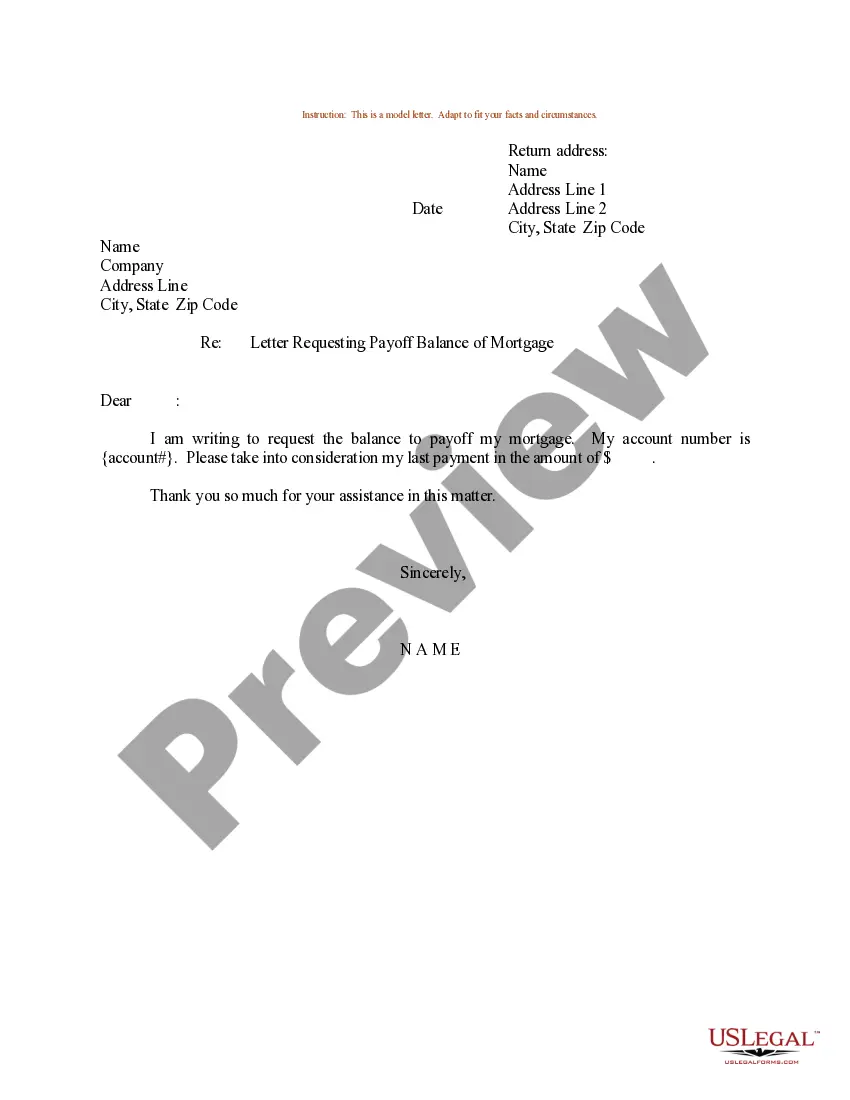
Payoff Letter For Judgement In Fulton
Description
Get your form ready online
Our built-in tools help you complete, sign, share, and store your documents in one place.
Make edits, fill in missing information, and update formatting in US Legal Forms—just like you would in MS Word.
Download a copy, print it, send it by email, or mail it via USPS—whatever works best for your next step.
Sign and collect signatures with our SignNow integration. Send to multiple recipients, set reminders, and more. Go Premium to unlock E-Sign.
If this form requires notarization, complete it online through a secure video call—no need to meet a notary in person or wait for an appointment.
We protect your documents and personal data by following strict security and privacy standards.

Make edits, fill in missing information, and update formatting in US Legal Forms—just like you would in MS Word.

Download a copy, print it, send it by email, or mail it via USPS—whatever works best for your next step.

Sign and collect signatures with our SignNow integration. Send to multiple recipients, set reminders, and more. Go Premium to unlock E-Sign.

If this form requires notarization, complete it online through a secure video call—no need to meet a notary in person or wait for an appointment.

We protect your documents and personal data by following strict security and privacy standards.
Looking for another form?







Form popularity
FAQ
§ 9-13-50 and O.C.G.A. § 9-13-16. Writ of Fieri Facias will expire after seven years from the date of filing with the Clerk's Office. The process by which you can renew you Fi-Fa is by requesting a Nulla Bona from the Sheriff's Office.
(4) Within ten (10) calendar days of the entry of a default judgment, the party against whom the default judgment was issued may file a written motion requesting that the judgment be vacated or modified, and stating the grounds for the motion.
The Plaintiff (the one filing the action) must electronically file a sworn statement with the Clerk of Magistrate Court, describing the charges against the Defendant (the person or business against whom the claim is brought). This Statement of Claim provides each party with the reason for the lawsuit.
F. I. F. A. (Fieri Facias) is a directive from the Court to the Sheriff, Marshal, or other authorized officer, requiring him to seize sufficient property of the defendant to satisfy the amount due on the judgment. A FiFa is an order issued on behalf of the plaintiff (you) against the defendant.
Regardless of how the judgment is obtained, there are three main options to consider in attempting to collect on the judgment. Filing a Garnishment. First, a party may pursue a garnishment. Recording a Writ of Fieri Facias. Conducting Post-Judgment Discovery.
For that purpose the judgment debtor should approach the plaintiff/judgment creditor or his/her/its attorney to obtain the written consent to rescission of judgment. There is however no requirement in law that obliges a plaintiff/judgment creditor to give a consent to rescission of judgment.
Example: If your judgment is $5,000: $5,000 (total judgment) x 0.10 (10% interest) = $500 (yearly interest) Divide by 365: $500 (yearly interest) ÷ 365 (days in a year) = $1.37 (daily interest) Multiply the daily interest by the number of days since the court entered the judgment.
The garnishment process often starts after a creditor gets a judgment in court against a debtor. If a creditor gets a judgment against you, the court will send a notice of a wage garnishment to you and to your employer. The notice tells your employer they must withhold a specific amount of your wages.

