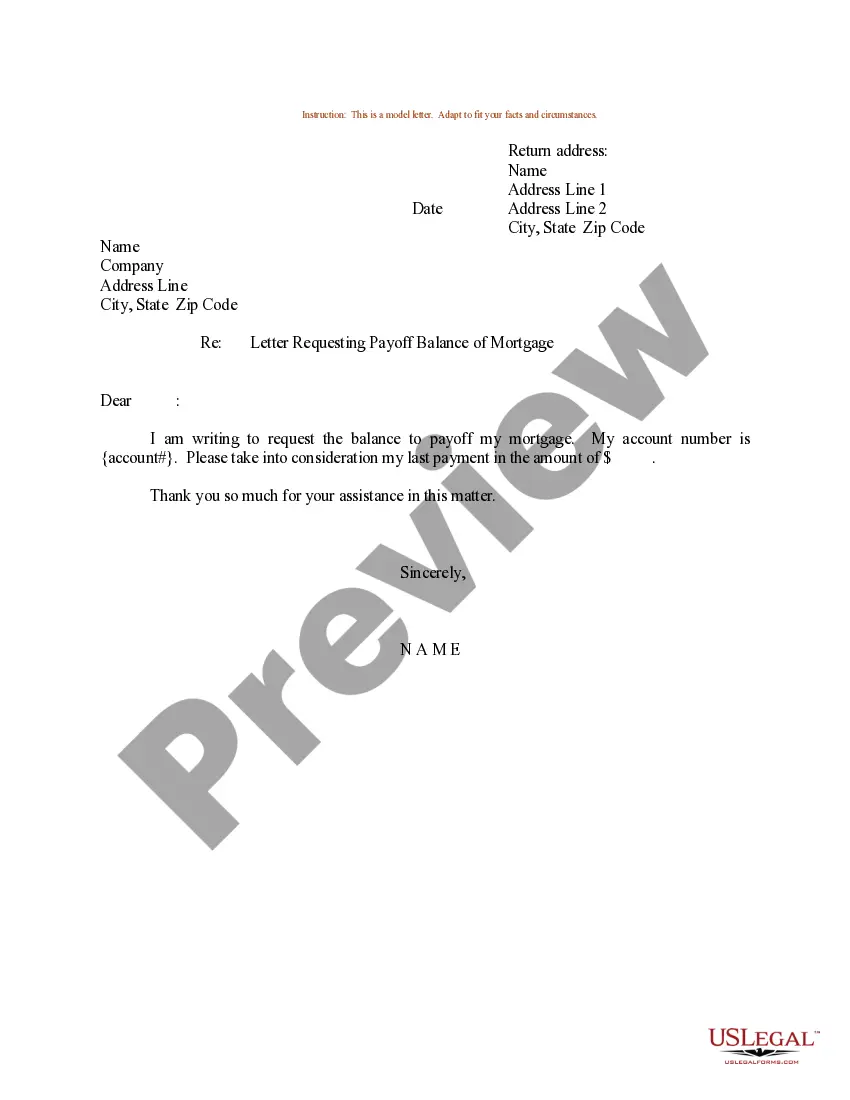
Mortgage Payoff Statement Form With Credit Card In Contra Costa
Description
Get your form ready online
Our built-in tools help you complete, sign, share, and store your documents in one place.
Make edits, fill in missing information, and update formatting in US Legal Forms—just like you would in MS Word.
Download a copy, print it, send it by email, or mail it via USPS—whatever works best for your next step.
Sign and collect signatures with our SignNow integration. Send to multiple recipients, set reminders, and more. Go Premium to unlock E-Sign.
If this form requires notarization, complete it online through a secure video call—no need to meet a notary in person or wait for an appointment.
We protect your documents and personal data by following strict security and privacy standards.

Make edits, fill in missing information, and update formatting in US Legal Forms—just like you would in MS Word.

Download a copy, print it, send it by email, or mail it via USPS—whatever works best for your next step.

Sign and collect signatures with our SignNow integration. Send to multiple recipients, set reminders, and more. Go Premium to unlock E-Sign.

If this form requires notarization, complete it online through a secure video call—no need to meet a notary in person or wait for an appointment.

We protect your documents and personal data by following strict security and privacy standards.
Looking for another form?



Form popularity
FAQ
To get a payoff letter, ask your lender for an official payoff statement. Call or write to customer service or make the request online. While logged into your account, look for options to request or calculate a payoff amount, and provide details such as your desired payoff date.
There's a process to getting the mortgage payoff statement. First, you'll need to contact your lender and let them know you want the information. Depending on your lender, you may have to sign in to an online account, call a helpline, or send a formal letter to start the request process.
There's a process to getting the mortgage payoff statement. First, you'll need to contact your lender and let them know you want the information. Depending on your lender, you may have to sign in to an online account, call a helpline, or send a formal letter to start the request process.
The statement is provided by the mortgage servicer and can be requested at any time. Accurate payoff information is crucial for managing financial decisions related to property ownership.
To obtain the exemption for a property, you must be its owner or co-owner (or a purchaser named in a contract of sale), and you must live in the property as your principal place of residence. You must also file the appropriate exemption claim form with the Assessor.
A homestead declaration protects your home's equity from both to forced and voluntary sales of the property. Exempt proceeds from a voluntary sale are protected if another home is purchased within 6 months.
Homeowner's Exemption If you own and occupy the property as your principal place of residence, you are eligible for a Homeowners' Exemption of $7,000 in assessed value for that property. The exemption will reduce the annual property tax bill by at least $70 each year.
Declaration of Homestead – A document recorded by either a homeowner or head of household on his primary residence to protect his home from forced sale in satisfaction of certain types of creditors' claims. Decree of Distribution – Evidences the distribution of real property from the estate of a deceased person.
It provides a legal shield against creditors, preserves your home equity, and offers peace of mind in an unpredictable world.
If you own and occupy your home as your principal place of residence on January 1, you may apply for an exemption of $7,000 off your assessed value for an annual savings of approximately $70 on your property taxes. New property owners will automatically receive an exemption application.

