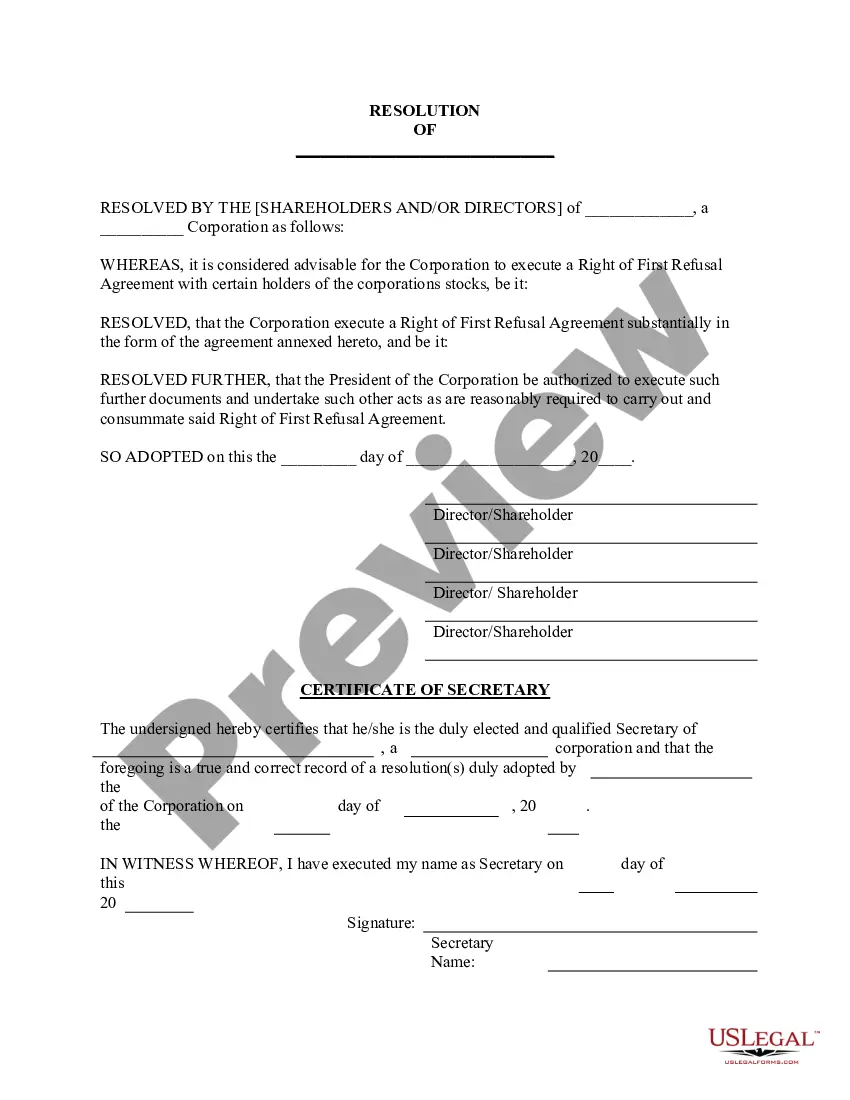
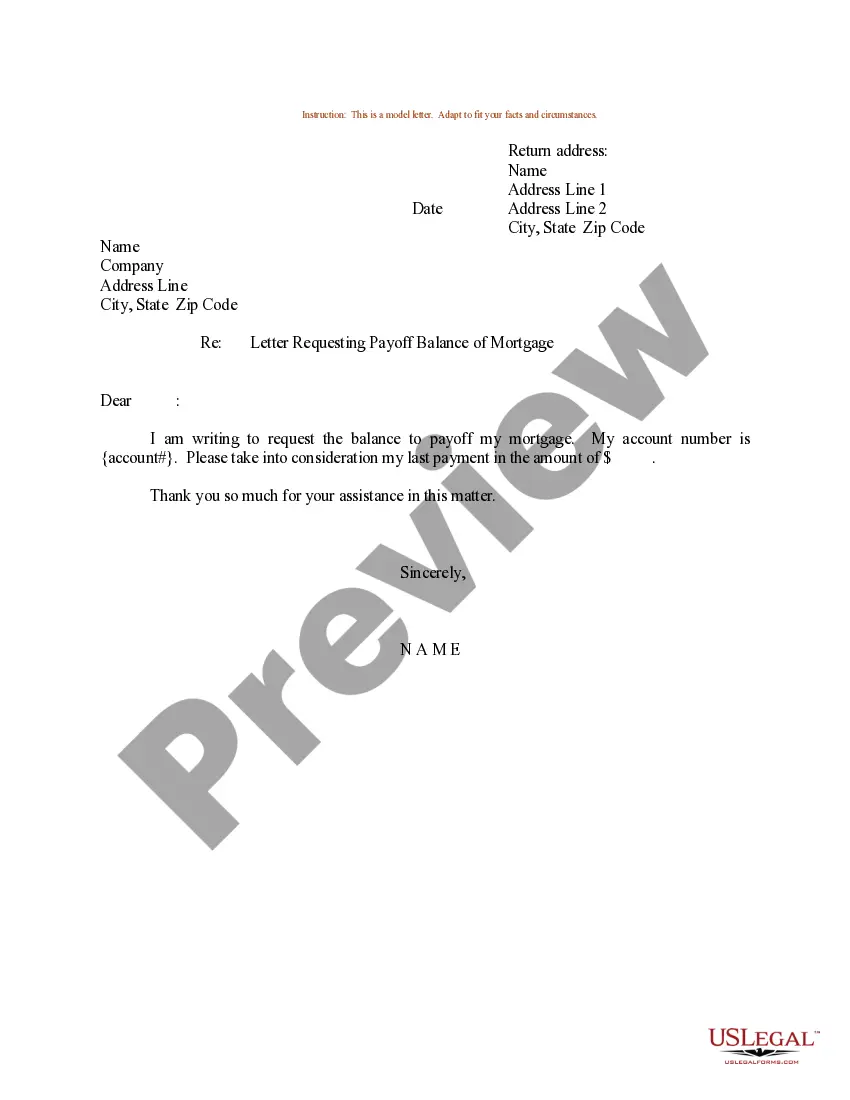
Payoff Statement Template With Bank In Allegheny
Description
Get your form ready online
Our built-in tools help you complete, sign, share, and store your documents in one place.
Make edits, fill in missing information, and update formatting in US Legal Forms—just like you would in MS Word.
Download a copy, print it, send it by email, or mail it via USPS—whatever works best for your next step.
Sign and collect signatures with our SignNow integration. Send to multiple recipients, set reminders, and more. Go Premium to unlock E-Sign.
If this form requires notarization, complete it online through a secure video call—no need to meet a notary in person or wait for an appointment.
We protect your documents and personal data by following strict security and privacy standards.

Make edits, fill in missing information, and update formatting in US Legal Forms—just like you would in MS Word.

Download a copy, print it, send it by email, or mail it via USPS—whatever works best for your next step.

Sign and collect signatures with our SignNow integration. Send to multiple recipients, set reminders, and more. Go Premium to unlock E-Sign.

If this form requires notarization, complete it online through a secure video call—no need to meet a notary in person or wait for an appointment.

We protect your documents and personal data by following strict security and privacy standards.
Looking for another form?








Form popularity
FAQ
As such, accounts statements contain the following: A summary of all transactions. The statement period (the specific period in which it applies, such as the month or quarter) A reference number for identifying the statement. The customer's name and account number. Your business name. A list of transactions with dates.
A bank statement is a list of all transactions for a bank account over a set period, usually monthly. The statement includes deposits, charges, withdrawals, as well as the beginning and ending balance for the period, along with any interest earned.
When you enter a bank statement manually, you enter the bank statement header and the transaction lines. You can reconcile transaction lines as you enter them, or you can reconcile the bank statement (manually or automatically) after you enter all the transaction lines and save your work.
Common bank statement details include: Bank information. Business information. Account information. Statement dates. Account summary. Transaction summary. Bank messages.
Common bank statement details include: Bank information. Business information. Account information. Statement dates. Account summary. Transaction summary. Bank messages.
To get a payoff letter, ask your lender for an official payoff statement. Call or write to customer service or make the request online. While logged into your account, look for options to request or calculate a payoff amount, and provide details such as your desired payoff date.
How can I request a payoff statement? Contact your servicing bank (where you make your monthly mortgage payments) and request a payoff statement.