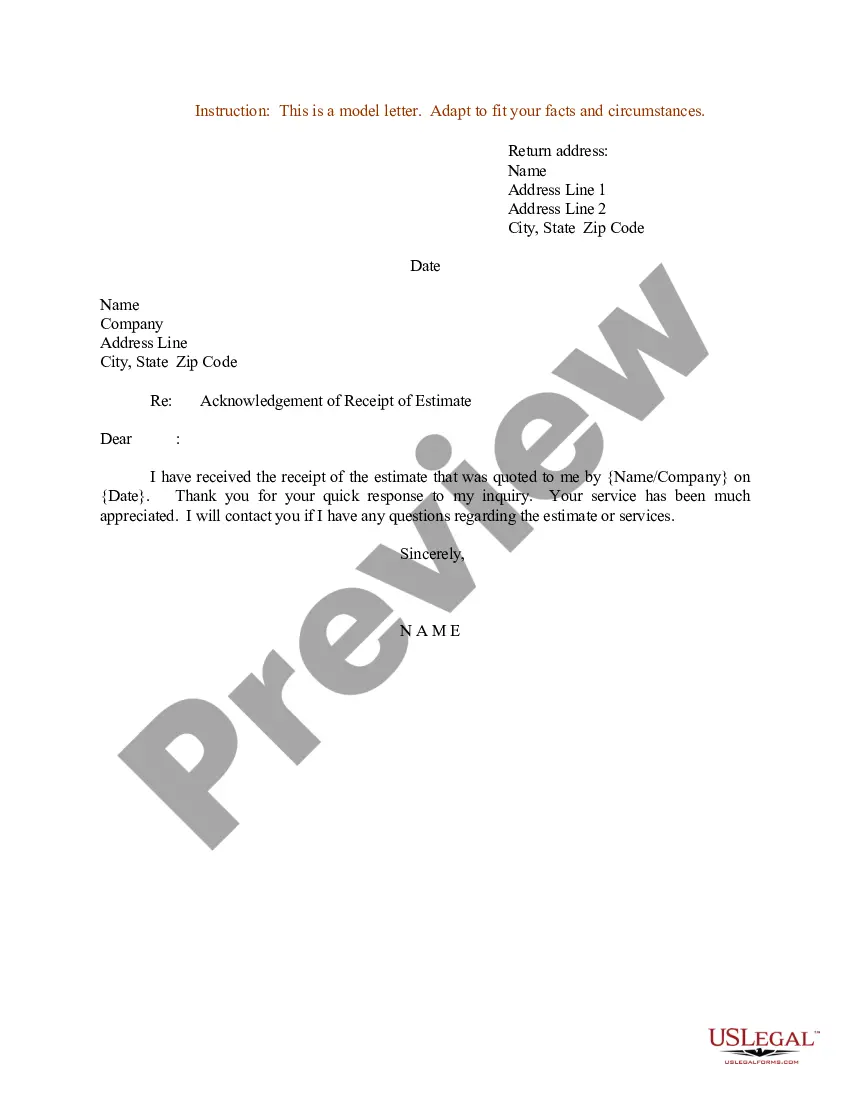
E Commerce Agreement Template Forecasting In Michigan
Description

Get your form ready online
Our built-in tools help you complete, sign, share, and store your documents in one place.
Make edits, fill in missing information, and update formatting in US Legal Forms—just like you would in MS Word.
Download a copy, print it, send it by email, or mail it via USPS—whatever works best for your next step.
Sign and collect signatures with our SignNow integration. Send to multiple recipients, set reminders, and more. Go Premium to unlock E-Sign.
If this form requires notarization, complete it online through a secure video call—no need to meet a notary in person or wait for an appointment.
We protect your documents and personal data by following strict security and privacy standards.

Make edits, fill in missing information, and update formatting in US Legal Forms—just like you would in MS Word.

Download a copy, print it, send it by email, or mail it via USPS—whatever works best for your next step.

Sign and collect signatures with our SignNow integration. Send to multiple recipients, set reminders, and more. Go Premium to unlock E-Sign.

If this form requires notarization, complete it online through a secure video call—no need to meet a notary in person or wait for an appointment.

We protect your documents and personal data by following strict security and privacy standards.
Looking for another form?









Form popularity
FAQ
5 basic steps in an ecommerce demand forecasting process Define goals. The first step in ecommerce demand forecasting is to clearly define your goals. Collect data. With your goals firmly in place, you can start collecting internal and external data. Analyze data. Forecast demand. Make adjustments.
It is a technique for estimation of probable demand for a product or services in the future. It is based on the analysis of past demand for that product or service in the present market condition. Demand forecasting should be done on a scientific basis and facts and events related to forecasting should be considered.
What is Demand Forecasting? In eCommerce demand forecasting means predicting future sales using data on your business' past performance. You're finding out when and why individual products sold well (or poorly) and using that knowledge to optimize your strategy for the future.
Here are five essential steps to effectively forecast customer demand. Analyze Historical Data. Incorporate Market Trends. Utilize Advanced Analytics. Monitor External Factors. Engage with Customers.
tailers need to know, with accuracy, what their customers want to buy, at what time, and for how much. A rigorous ecommerce demand forecast could help maximize their profits and reduce losses in overstocking, understocking, inventory, storage, and other challenges they deal with every day.
How is ecommerce forecasting done? Ecommerce forecasting is done by estimating future demand for your products. These forecasts are typically based on historical metrics like previous sales data and current inventory trends like stock levels.
How is ecommerce forecasting done? Ecommerce forecasting is done by estimating future demand for your products. These forecasts are typically based on historical metrics like previous sales data and current inventory trends like stock levels.