E Commerce Agreement Format In Georgia
Description
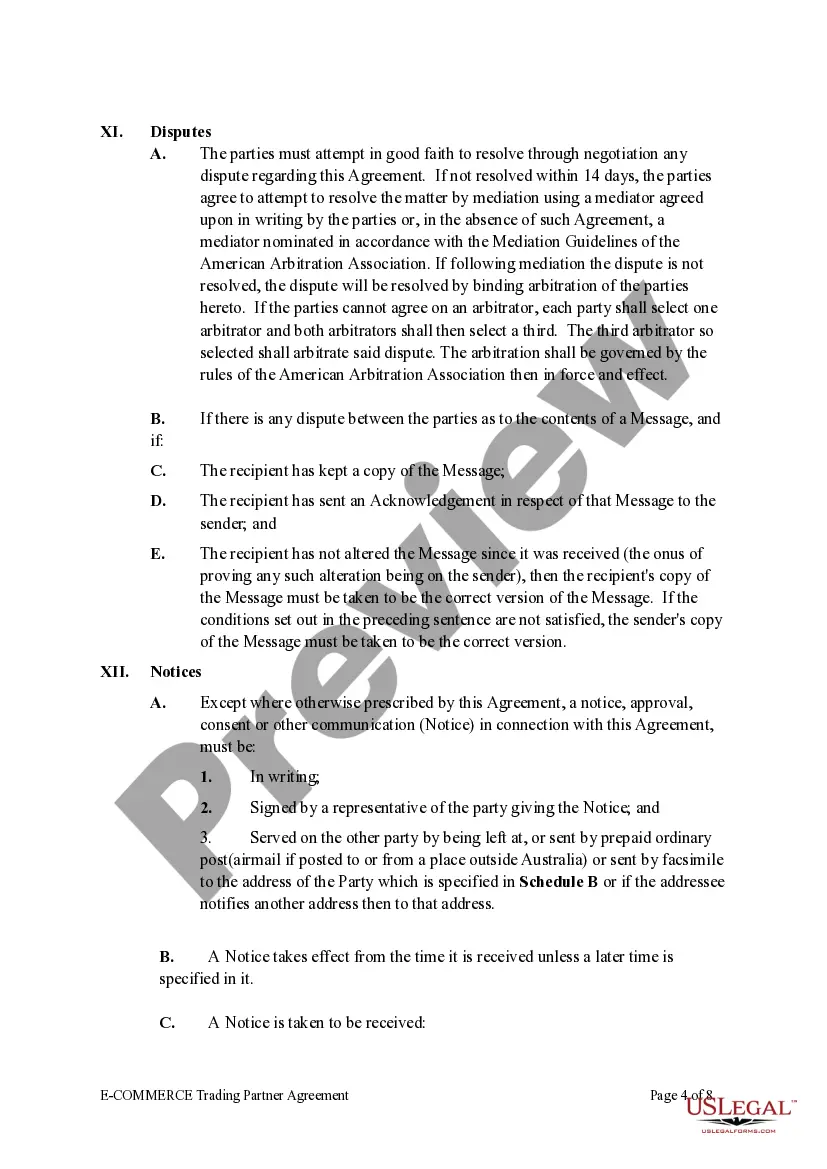
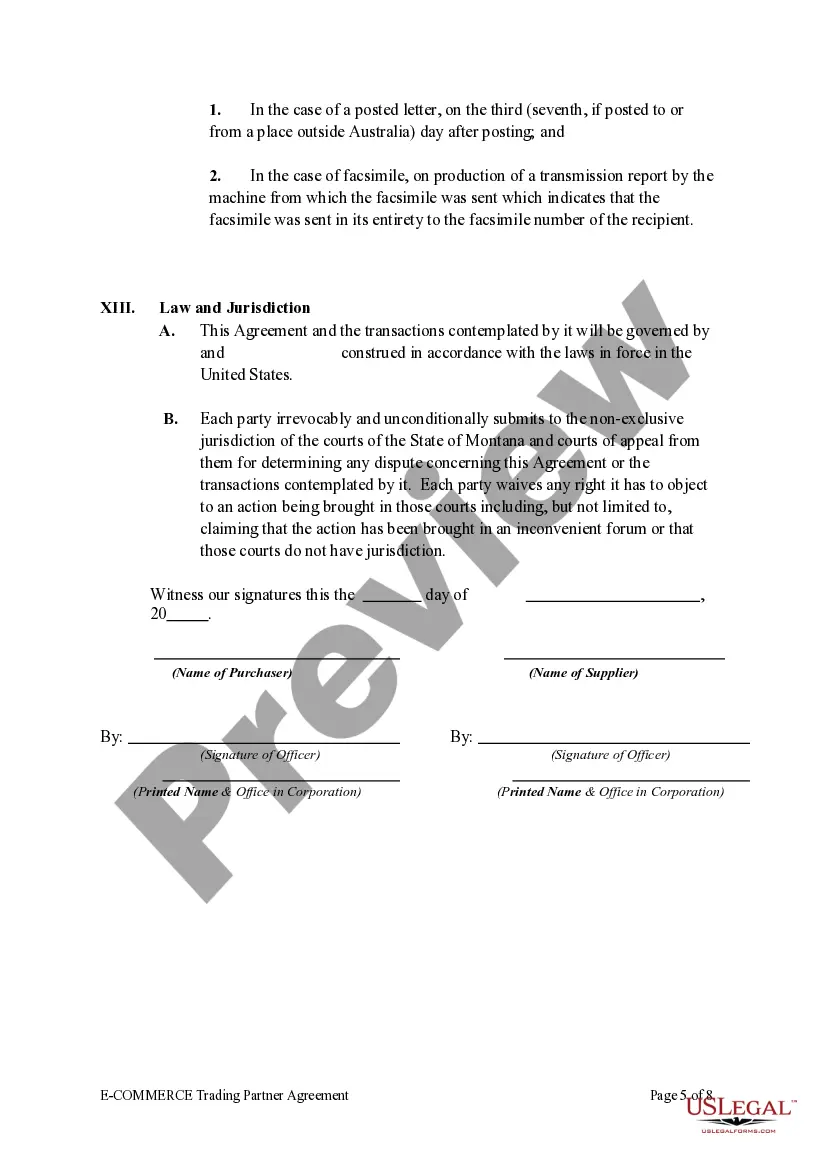
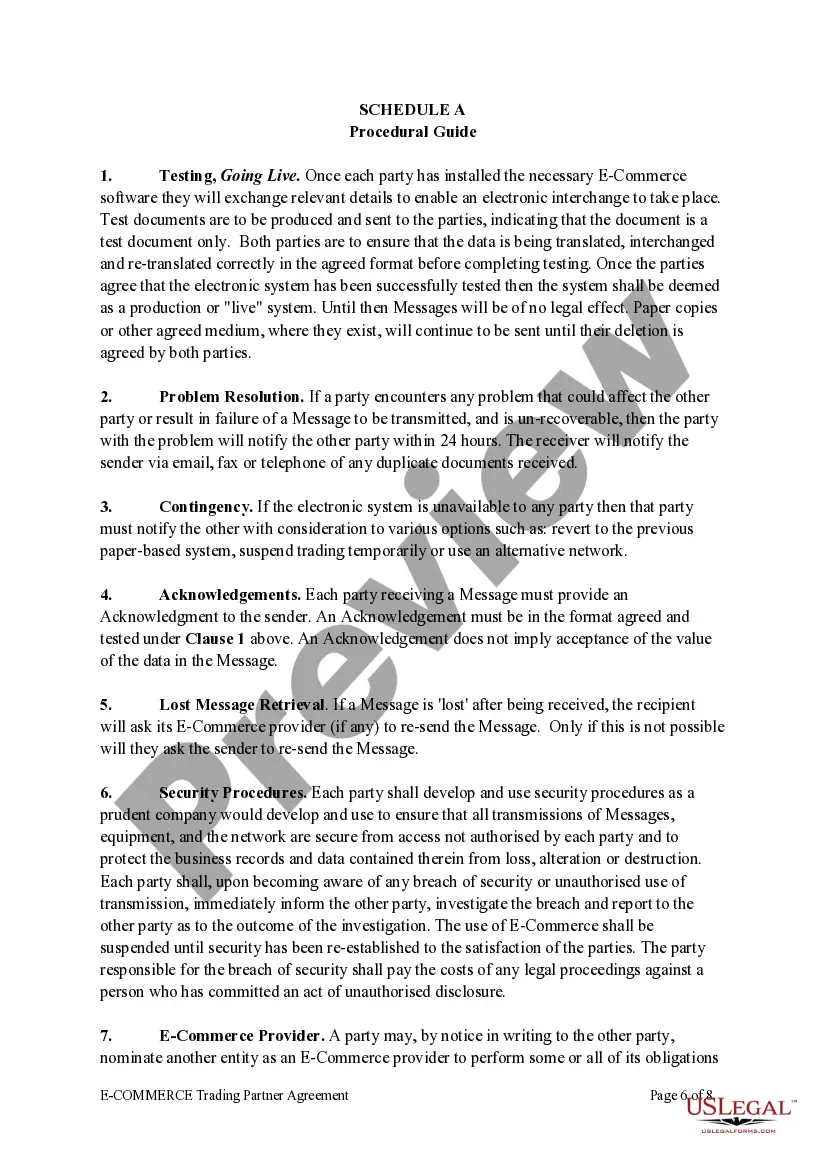
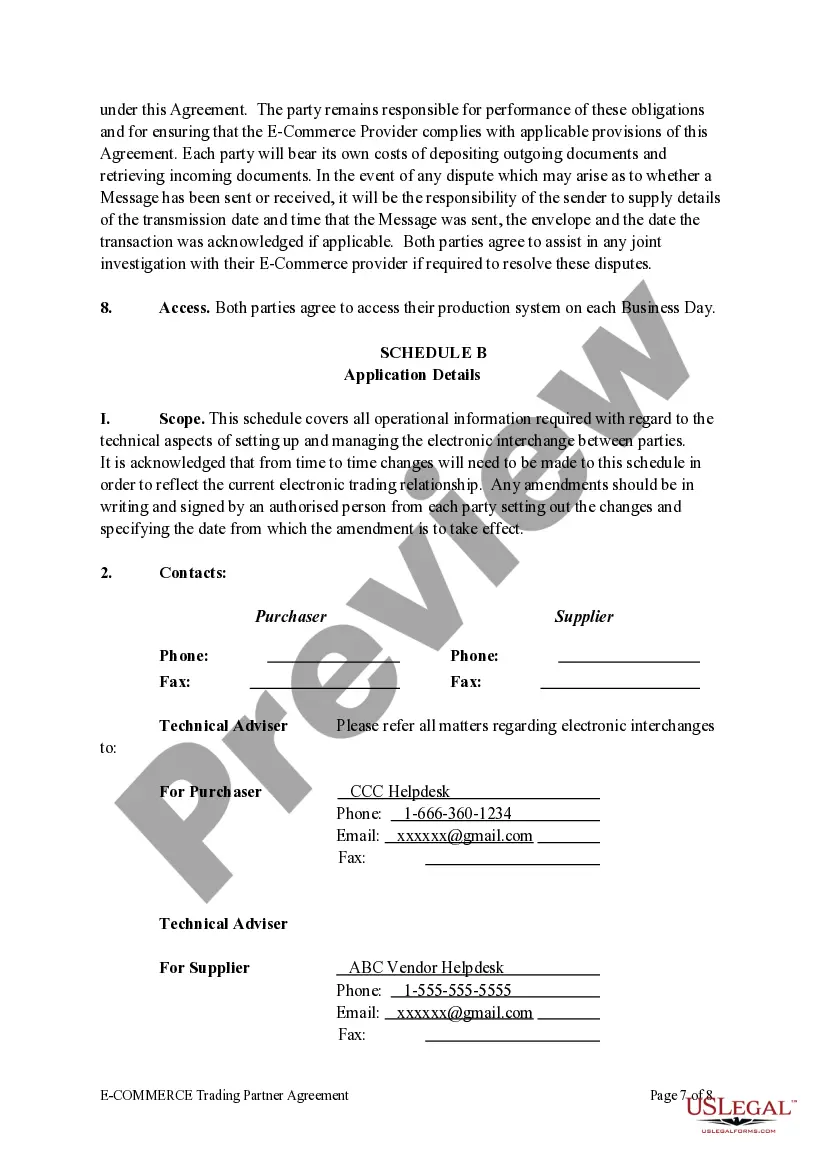

Get your form ready online
Our built-in tools help you complete, sign, share, and store your documents in one place.
Make edits, fill in missing information, and update formatting in US Legal Forms—just like you would in MS Word.
Download a copy, print it, send it by email, or mail it via USPS—whatever works best for your next step.
Sign and collect signatures with our SignNow integration. Send to multiple recipients, set reminders, and more. Go Premium to unlock E-Sign.
If this form requires notarization, complete it online through a secure video call—no need to meet a notary in person or wait for an appointment.
We protect your documents and personal data by following strict security and privacy standards.

Make edits, fill in missing information, and update formatting in US Legal Forms—just like you would in MS Word.

Download a copy, print it, send it by email, or mail it via USPS—whatever works best for your next step.

Sign and collect signatures with our SignNow integration. Send to multiple recipients, set reminders, and more. Go Premium to unlock E-Sign.

If this form requires notarization, complete it online through a secure video call—no need to meet a notary in person or wait for an appointment.

We protect your documents and personal data by following strict security and privacy standards.
Looking for another form?





Form popularity
FAQ
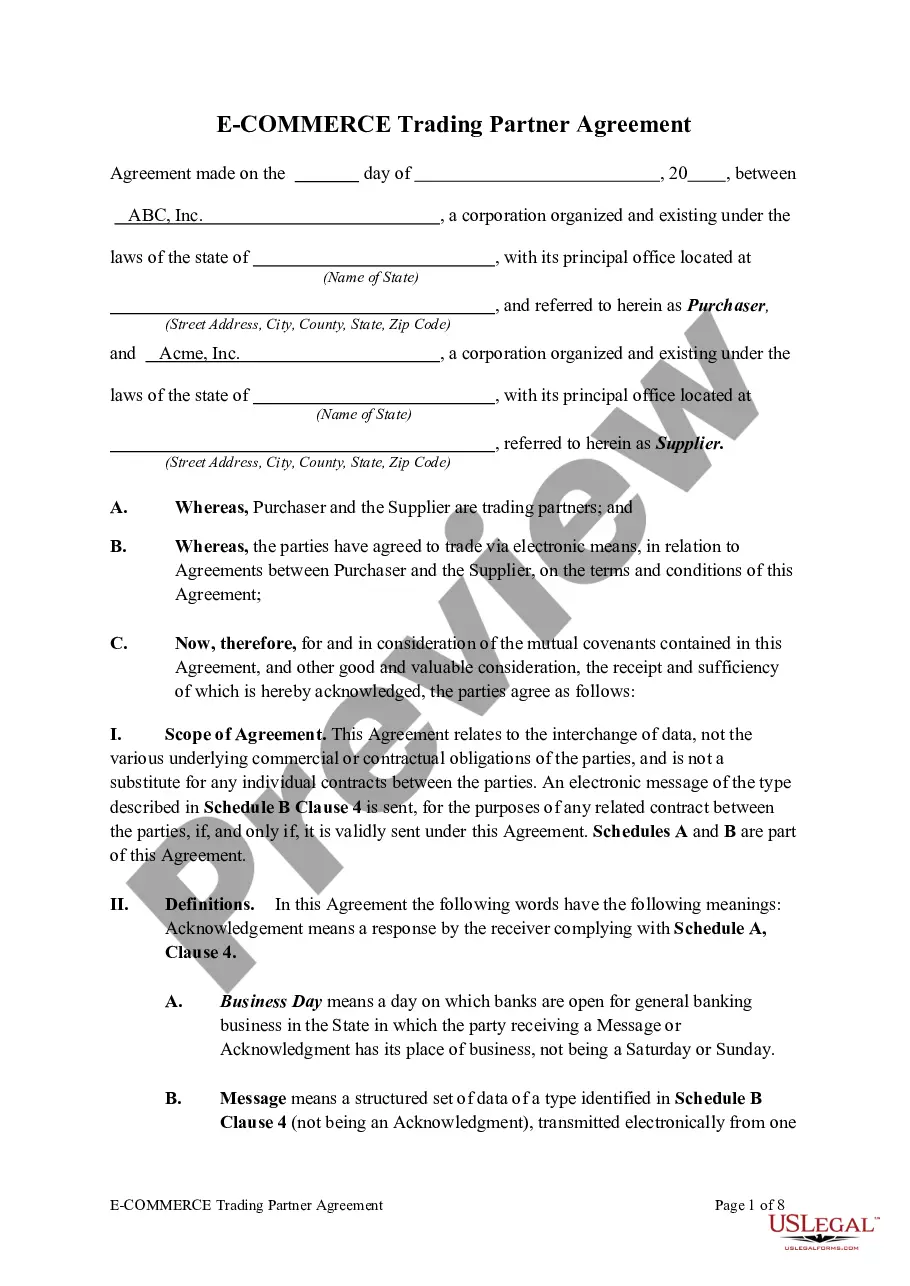
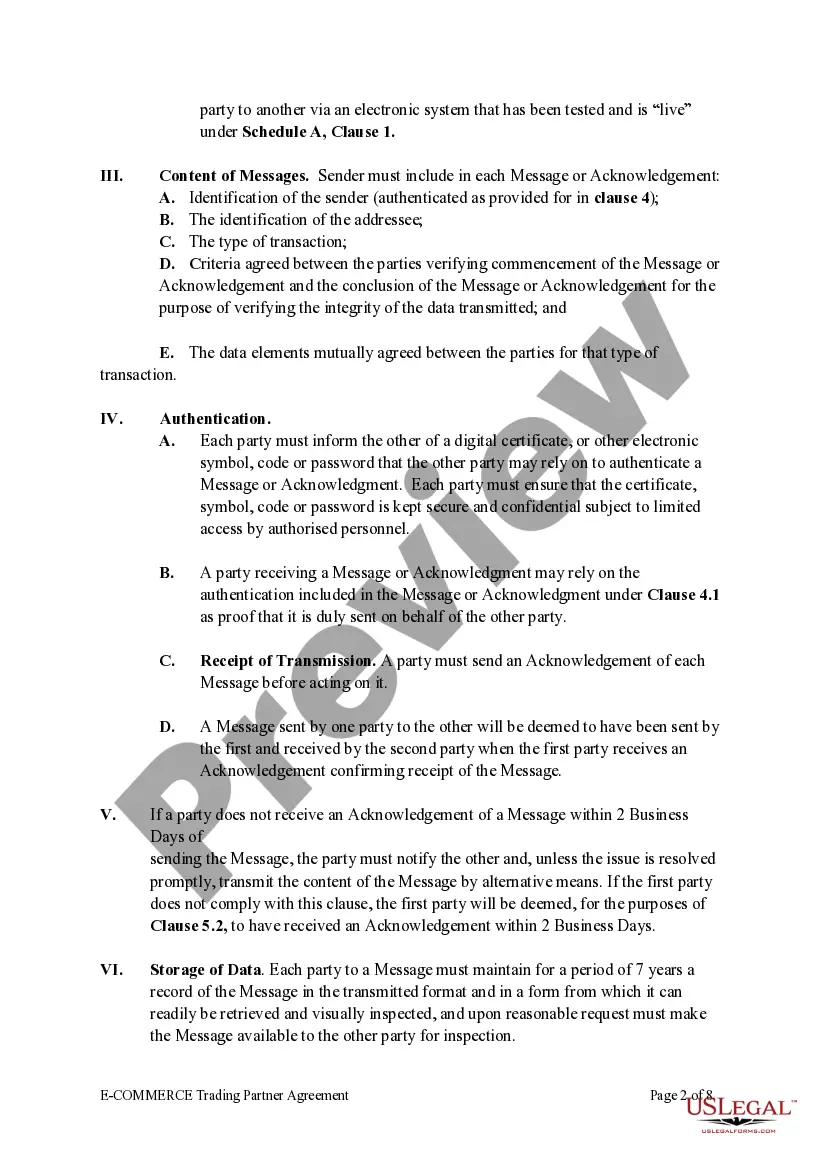
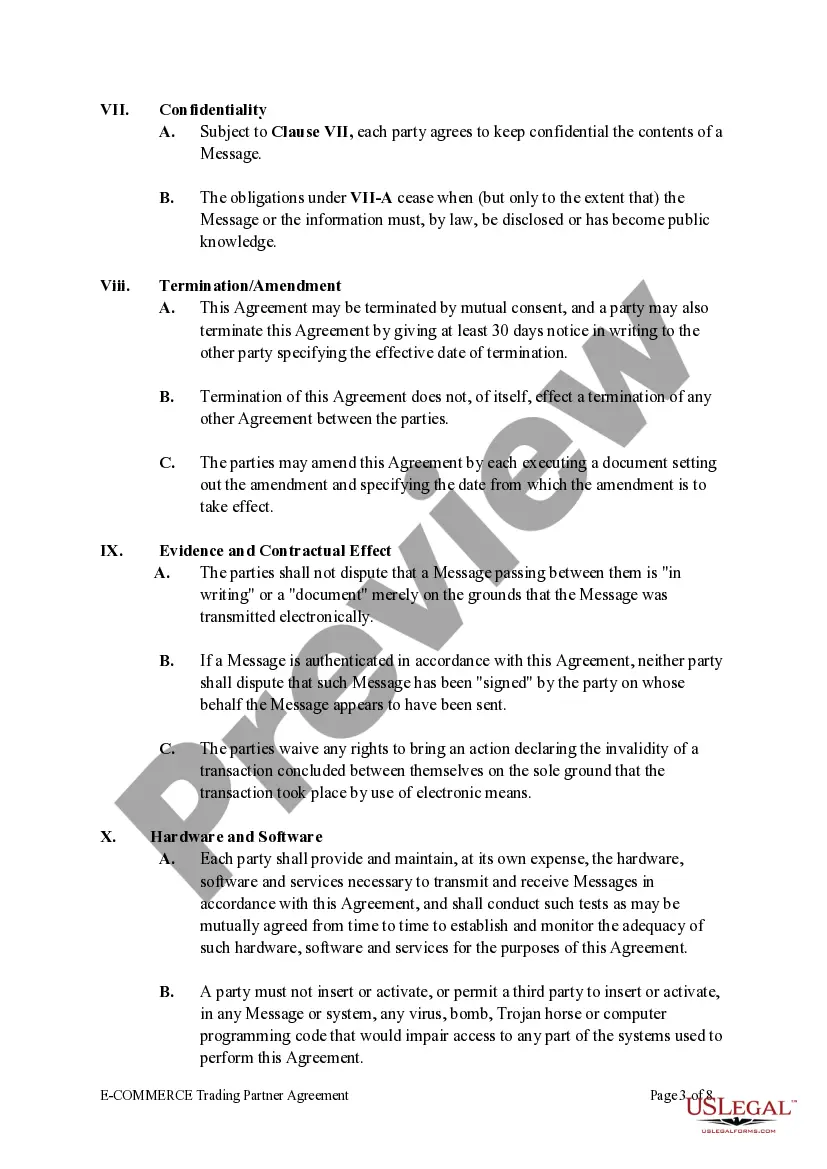
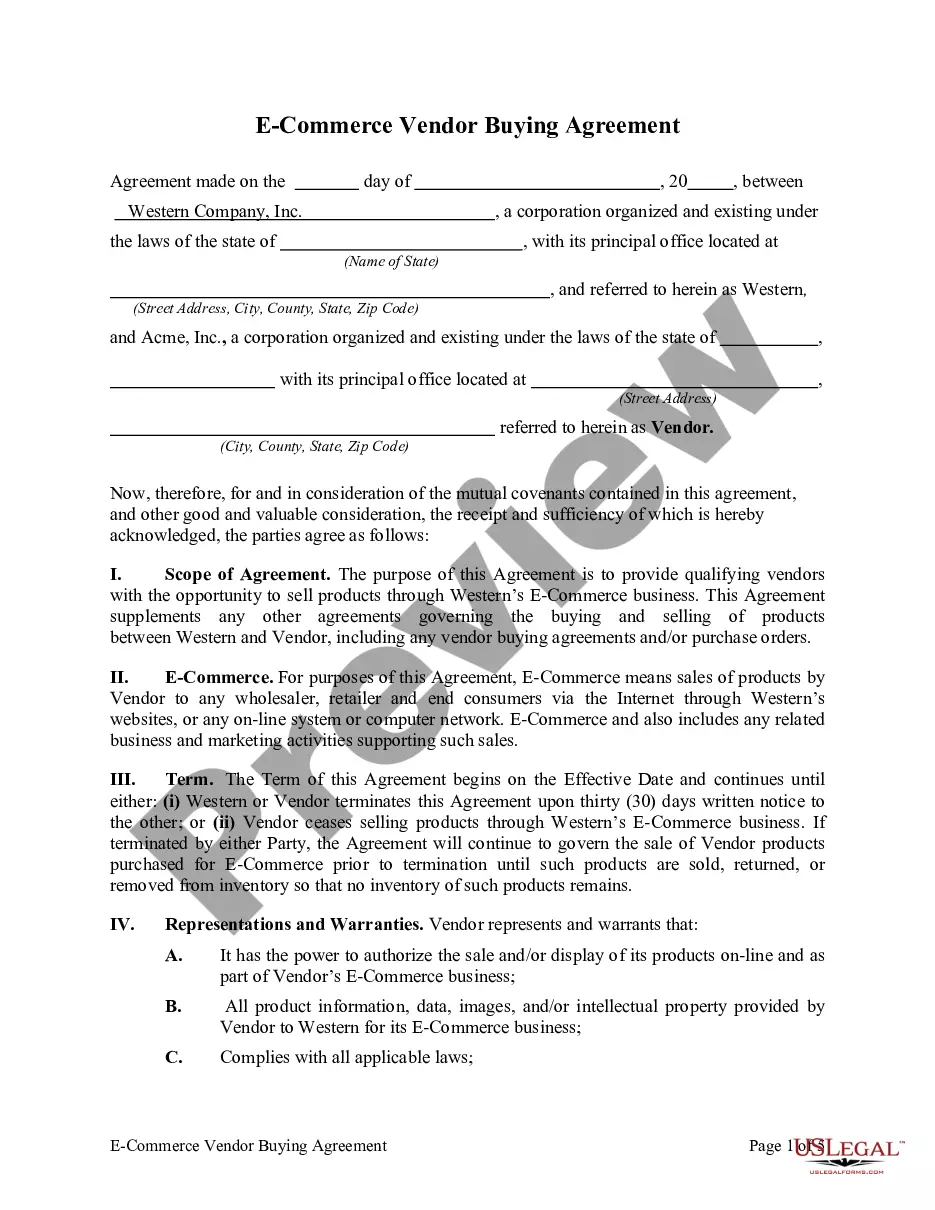
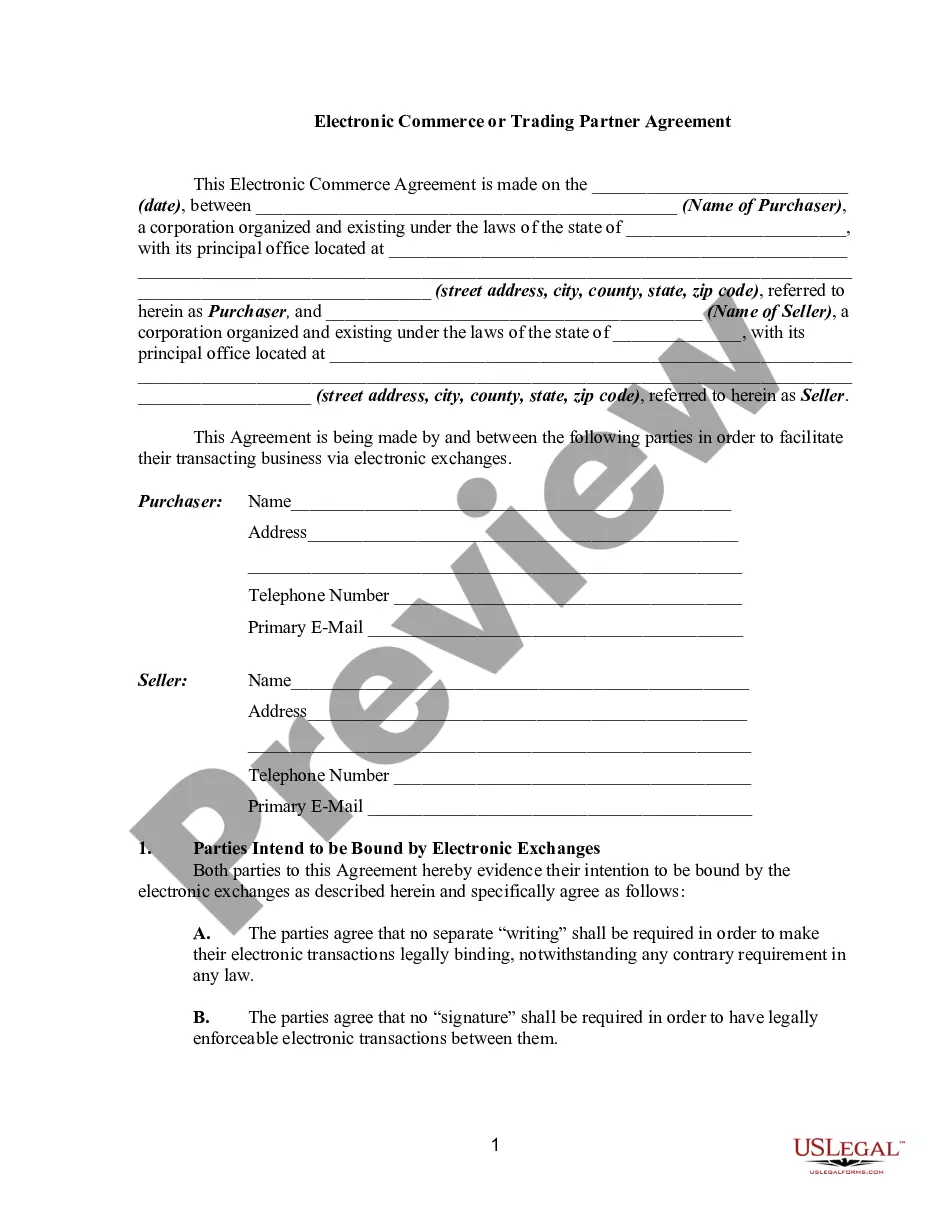
ECommerce agreements disclose the contractual relationship and obligations between a website owner and its commercial users.
How to write a business contract Determine why you need a contract. Define all applicable parties. Include all essential elements of a contract. Select the appropriate governing law and jurisdiction. Write everything in plain language. Use repeatable language and formats when possible. Use tables, lists, and other tools.
The UETA and E-SIGN Act have now legitimized the ability of parties to form contracts electronically both at the federal and state levels.
The ecommerce industry is regulated by digital customer data privacy laws such as CCPA, Data Broker Registrations and GDPR among others. You must comply with the privacy laws applicable to your business in order to avoid potential legal penalties and reputational damages.
In the United States, federal eCommerce law includes the 1996 Telecommunications Act, the 1998 Digital Mil- lennium Copyright Act, the 2000 Electronic Signatures In Global and National Commerce, and the 2003 Con- trolling the Assault of Non-Solicited ography and Marketing Act.
While the fundamentals of a paper-based contract apply to e-contracts, the techniques for concluding the e-contract are derived from Indian Contract Law and are nearly identical to paper-based contracts. E-commerce refers to the purchasing and selling of information, products, and services through computer networks.
The Federal Trade Commission Act (FTCA) prohibits certain unfair or deceptive acts or practices in or affecting commerce. Other state and federal regulations govern the shipment of goods and the issuance of, or notices concerning, refunds.
The Electronic Signatures in Global and National Commerce Act (E-Sign Act), 1 signed into law on June 30, 2000, provides a general rule of validity for electronic records and signatures for transactions in or affecting interstate or foreign commerce.
Here are the steps to write a letter of agreement: Title the document. Add the title at the top of the document. List your personal information. Include the date. Add the recipient's personal information. Address the recipient. Write an introduction paragraph. Write your body. Conclude the letter.