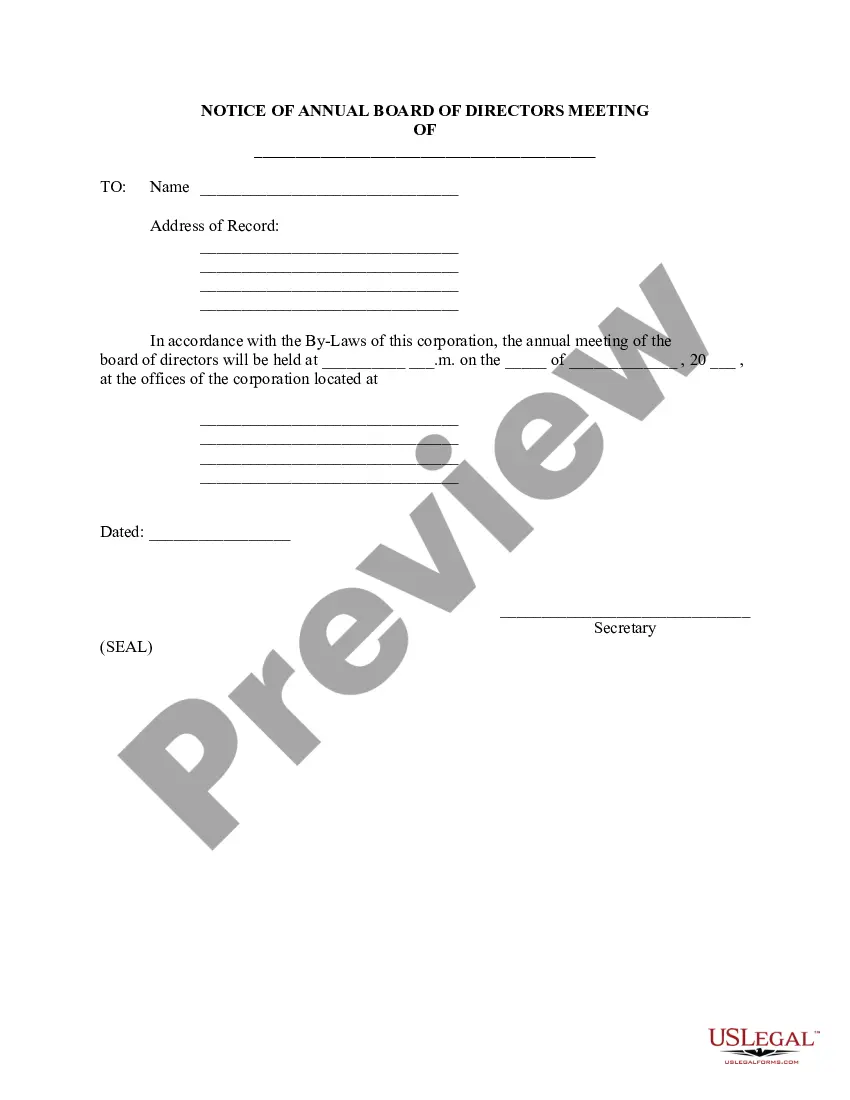
Meeting Board Template With Agenda In Texas
Description







Form popularity
FAQ
1 Call to order. A board meeting agenda should begin with a call to order, welcoming remarks, and the gathering's objectives. 2 Agenda adjustments. 3 Approval of previous meeting's minutes. 4 Reports. 5 Old business. 6 New business. 7 Comments and announcements. 8 Adjournment.
Organize your board agendas Outline the intent: Indicate whether the session requires attendees to make a choice, provide feedback, or simply listen to your concerns. Knowing the final aim of each agenda item makes it simpler to accomplish as participants know what to achieve.
Inspired by the work of researchers Kim Cameron and David Whetten, here are some proven methods for how to have an effective meeting every time by following the four Ps: purpose, product, people, and process.
The agenda should include the meeting's goal, a list of topics to be discussed with their purposes, time allocations, and assigned facilitators. This structure provides a clear roadmap for the meeting, ensuring that all important points are covered. Share the agenda with all participants well in advance of the meeting.
Make Sure You Have These 7 Items on Your Next Meeting Agenda Meeting name. Date and time of the meeting. Specific agenda items. Amount of time for each agenda item. Name next to each agenda item. Meeting introduction. Meeting wrap-up. Learn how to run effective meetings.
How to make a meeting agenda Identify the meeting's goals. Seek input from participants. List the questions you want to address. Identify the purpose of each task. Estimate the amount of time to spend on each topic. Identify who leads each topic. End each meeting with a review.
Who prepares the first draft? Usually the company secretary, the CEO or the board secretary. This then needs to be approved or amended by the chair. The agenda and the board papers need to be sent to all directors at least 5 days plus a weekend, prior to the board meeting.
1 Call to order. A board meeting agenda should begin with a call to order, welcoming remarks, and the gathering's objectives. 2 Agenda adjustments. 3 Approval of previous meeting's minutes. 4 Reports. 5 Old business. 6 New business. 7 Comments and announcements. 8 Adjournment.
The agenda should include the meeting's goal, a list of topics to be discussed with their purposes, time allocations, and assigned facilitators. This structure provides a clear roadmap for the meeting, ensuring that all important points are covered. Share the agenda with all participants well in advance of the meeting.

