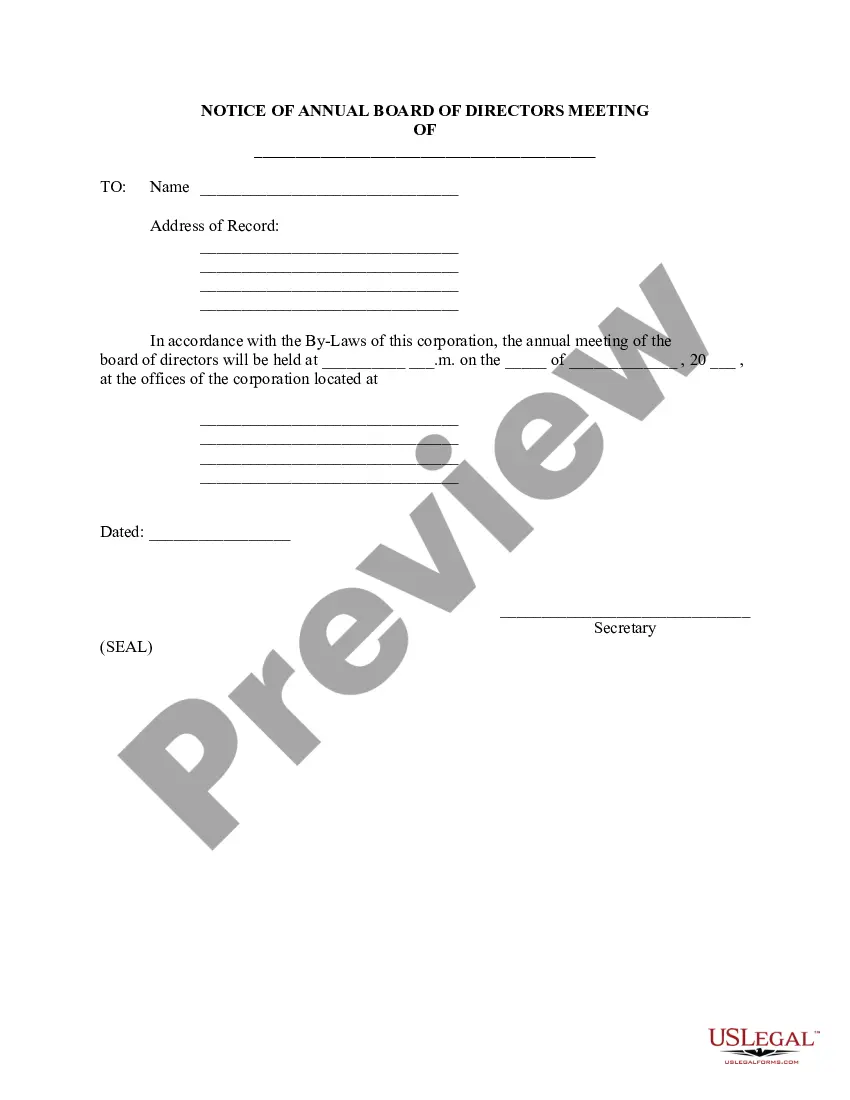
Board Meeting In Camera In Contra Costa
Description



Get your form ready online
Our built-in tools help you complete, sign, share, and store your documents in one place.
Make edits, fill in missing information, and update formatting in US Legal Forms—just like you would in MS Word.
Download a copy, print it, send it by email, or mail it via USPS—whatever works best for your next step.
Sign and collect signatures with our SignNow integration. Send to multiple recipients, set reminders, and more. Go Premium to unlock E-Sign.
If this form requires notarization, complete it online through a secure video call—no need to meet a notary in person or wait for an appointment.
We protect your documents and personal data by following strict security and privacy standards.

Make edits, fill in missing information, and update formatting in US Legal Forms—just like you would in MS Word.

Download a copy, print it, send it by email, or mail it via USPS—whatever works best for your next step.

Sign and collect signatures with our SignNow integration. Send to multiple recipients, set reminders, and more. Go Premium to unlock E-Sign.

If this form requires notarization, complete it online through a secure video call—no need to meet a notary in person or wait for an appointment.

We protect your documents and personal data by following strict security and privacy standards.
Looking for another form?







Form popularity
FAQ
Many people believe these meetings are exclusive to board members and staff, but that is not always the case. Depending on the organization's bylaws and state laws, various stakeholders, including donors, community members, and volunteers, may be allowed to attend.
The Directors shall attend Board Meetings in person. If unable to attend, a Director may appoint another Director to attend on his behalf by proxy which specifies the scope of authorization; any appointee shall not act as proxy for more than one Director.
State-specific sunshine laws and public disclosure Local government meetings must be public; exceptions include litigation, labor negotiations, and real estate discussions. All public board meetings are open; exceptions include discussions on security and pending litigation.
The term in camera is Latin for in a chamber or in private, and these meetings provide the board with the opportunity to discuss sensitive or confidential matters, such as potential conflicts, legal issues, or financial information.
In-camera means a part of a Board meeting without administration or other parties present for which there is no agenda, at which no minutes are taken, and from which recommendations may be moved to a Board or Committee meeting for a decision to be entered into the minutes.
Nonprofit board meeting minutes are generally not automatically made public, but the accessibility of these minutes depends on various factors, including the organization's policies, legal requirements, and state laws. Read on to learn more about transparency and nonprofit board meetings minutes.
In some states there are laws known as “Sunshine laws” that require groups to open their meetings to the public, however, these laws generally only apply to governmental or quasi-governmental groups. Unless the nonprofit is a governmental entity, there is no obligation to open board meetings to the public.
The Board of Supervisors holds regular meetings at the County Administration Building, 1025 Escobar Street, Martinez. Meetings are held on Tuesdays beginning at a.m., however they do not occur on every Tuesday.
In the case of a Public Limited Company, the first board meeting has to be held within the first 30 days, since the incorporation date. Additionally, a minimum of 4 board meetings must be held in a span of one year. Also, there cannot be a gap of more than 120 days between two meetings.
The term “in camera” is Latin for “in a chamber” or “in private,” and these meetings provide the board with the opportunity to discuss sensitive or confidential matters, such as potential conflicts, legal issues, or sensitive financial information.

